
U.S. federal agents questioned former Iraqi leaders regarding illicit funding tied to envoy Mark Savaya. Managed by Tom Barrack, Washington used the inquiry to sideline political rivals, secure $200 billion in energy deals, and enforce strict governance terms on Baghdad.
American intelligence operations in the Green Zone have fundamentally redefined Baghdad Politics, transforming a routine criminal inquiry into an instrument of direct authority over Iraq’s executive office. As federal agents probe shadow transactions involving foreign emissaries, Washington is asserting direct oversight over Baghdad Politics to dictate the boundaries of government formation and regional security alignment.
Baghdad Politics Facing Security Alert
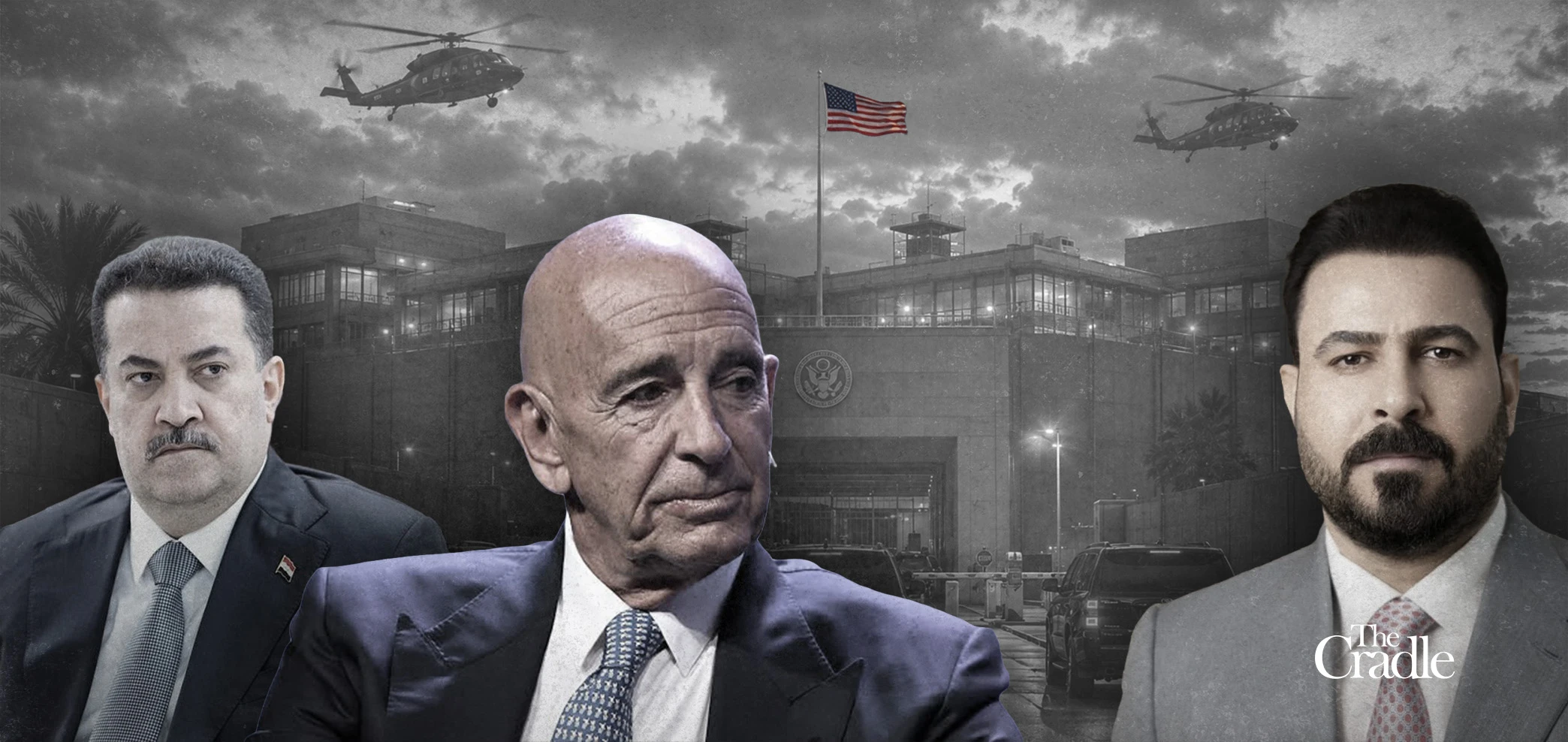
On 23 June, the familiar security choreography of Baghdad’s Green Zone suddenly changed. The district that houses the Iraqi government, parliament, foreign missions, and the vast US embassy was guarded by the Iraqi Special Division, whose troops and armored vehicles are a permanent presence. That day, however, the posture shifted from routine vigilance to alert.
Two helicopters reported to be AH-64 Apache gunships landed at Washington Landing Zone near the US embassy compound. The same sources reported an unusual deployment of US personnel, including FBI agents, near the embassy and opposite the headquarters of Iraq’s Joint Operations Command.
Sources inform The Cradle that the force had arrived to secure a US delegation. The investigators then left in armored vehicles bearing diplomatic plates, while another group secured the airport perimeter and a bridge overlooking the compound.
According to the sources, it may have been the first time a newly arrived foreign force had taken charge of that position. The precautions appeared to reflect concern that the delegation could be targeted by drones.
Such movements carry added weight in the Green Zone, where the institutions of the Iraqi state sit alongside the foreign missions that continue to exercise influence over them.
A journey of a few hundred meters can therefore reveal who controls access, who provides protection, and whose security assessment prevails. On this occasion, the unusual US deployment turned an otherwise discreet investigative visit into a visible demonstration of authority at the center of the Iraqi state.
How Baghdad Politics Handles Investigations
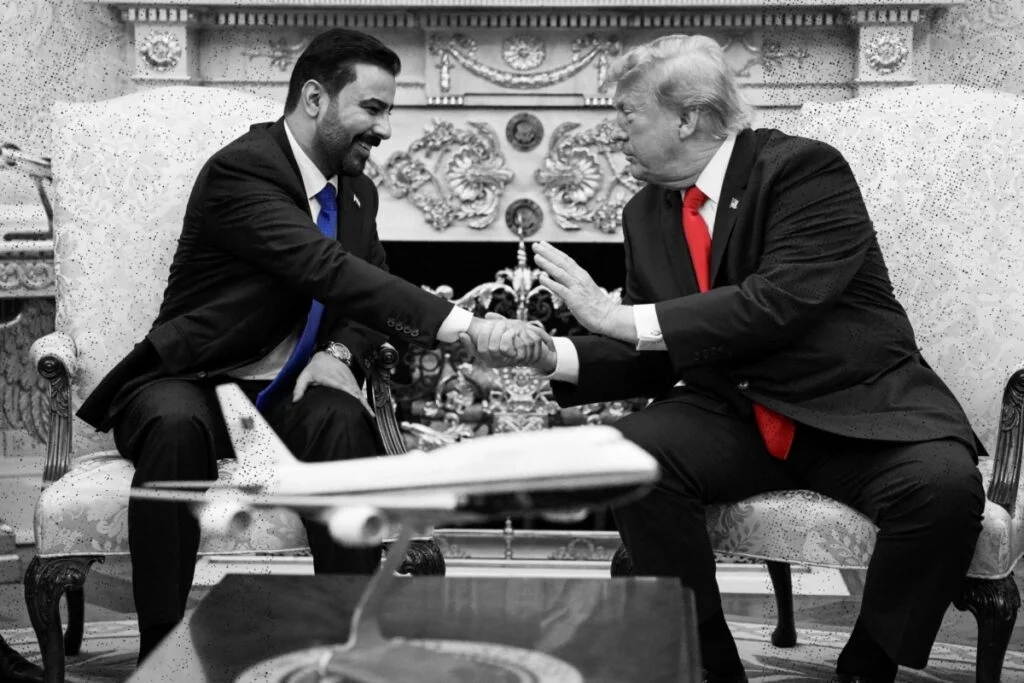
Escorted by security units, the FBI team traveled in a convoy of four-wheel-drive vehicles from the embassy to the Government Palace. After a meeting lasting about an hour, the delegation returned to the embassy compound, which lies on the same stretch of the Green Zone, separated from the palace by a road and roundabout.
The Cradle’s sources say the investigators’ visit centered on former Iraqi prime minister Mohammed Shia al-Sudani and one politically explosive file: Mark Savaya, US President Donald Trump’s former special envoy to Iraq.
Savaya, an Iraqi-American businessman with close ties to Trump but no diplomatic experience, was named envoy in October 2025. By the end of January, he was no longer in the role. Reuters reported that Savaya never formally became a State Department employee and had made no official visit to Iraq after his appointment. His brief and irregular tenure nevertheless coincided with direct US pressure over the selection of Iraq’s next prime minister.
According to information obtained by The Cradle, the FBI questioned Sudani over claims that Savaya had received Iraqi money for several purposes. One alleged objective was to prompt Trump’s public intervention against the return of former prime minister Nouri al-Maliki, whose candidacy Washington openly opposed.
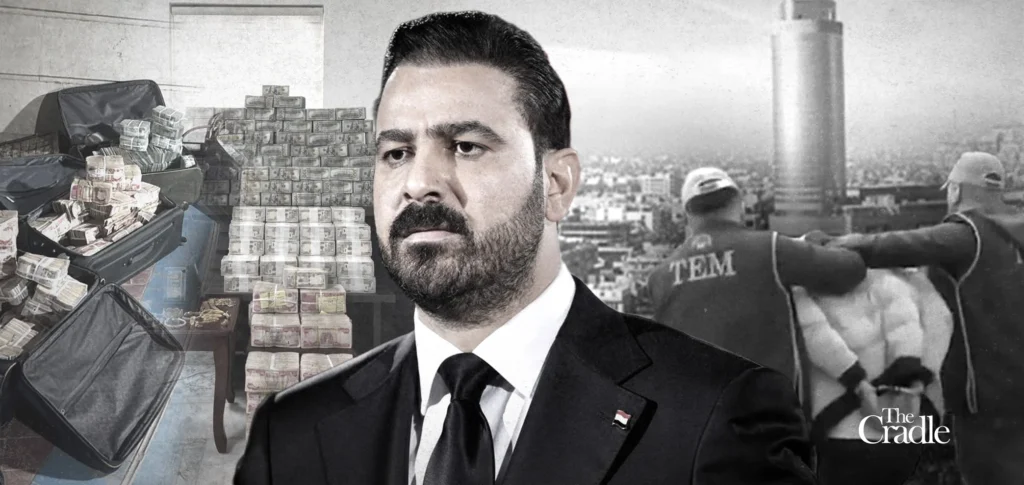
US sources tell The Cradle that investigators focused on how the money was allegedly transferred, the senior Iraqi figures involved, and what each expected in return. The sources claim Savaya received funds from Sudani and struck arrangements with as many as 30 Iraqi officials.
Barrack Controls Baghdad Politics
Details emerging from the inquiry suggest that the alleged payments formed part of a broader political project. Savaya was reportedly tasked with building a lobby close to Trump that could press Washington to impose sanctions on the head of Iraq’s judiciary, Judge Faiq Zaidan.
Zaidan, however, had established a strong channel with Tom Barrack, the US ambassador to Turkiye and presidential envoy for Syria who subsequently assumed responsibility for the Iraq portfolio. Sources say Barrack informed Zaidan about Savaya’s reported mission and told him that an Iraqi party stood behind the effort.
The episode helps explain what followed. Savaya’s removal did little to reduce Washington’s reach in Baghdad. Instead, the Iraq file passed to a more powerful official with direct access to Trump and a widening role across West Asia.
Under Barrack, Washington began dealing more directly with Iraq’s political transition, sidelining the competing intermediaries through which it had previously exerted influence.
The change also narrowed the room available to Iraqi actors accustomed to cultivating separate lines into Washington. Savaya’s reported dealings, whether substantiated or not, reflected a familiar system in which political factions sought influence through personal access, lobbying, and competing promises.
Barrack’s arrival brought those channels under an envoy already empowered to negotiate across several regional files. Iraqi politicians could still bargain, but Washington would decide the terms and determine who had access to the White House.
Baghdad Politics Navigates White House
In the days before Iraqi Prime Minister Ali Faleh al-Zaidi traveled to Washington in July, Baghdad was preparing more than the economic and political files formally placed on the negotiating table. His team knew that the Trump administration would judge the new government on three connected issues: bringing weapons under state control, confronting corruption, and reducing the influence of resistance factions inside Iraqi institutions.
Zaidi’s advisors also understood that allegations involving money and access to Trump’s circle could overshadow the visit. They therefore presented his government as a break with the previous administration, stressing that it had inherited a heavy political burden and was not responsible for understandings or contacts established before it took office.
The message was directed squarely at Washington, with Zaidi promising greater transparency and direct engagement with the US administration.
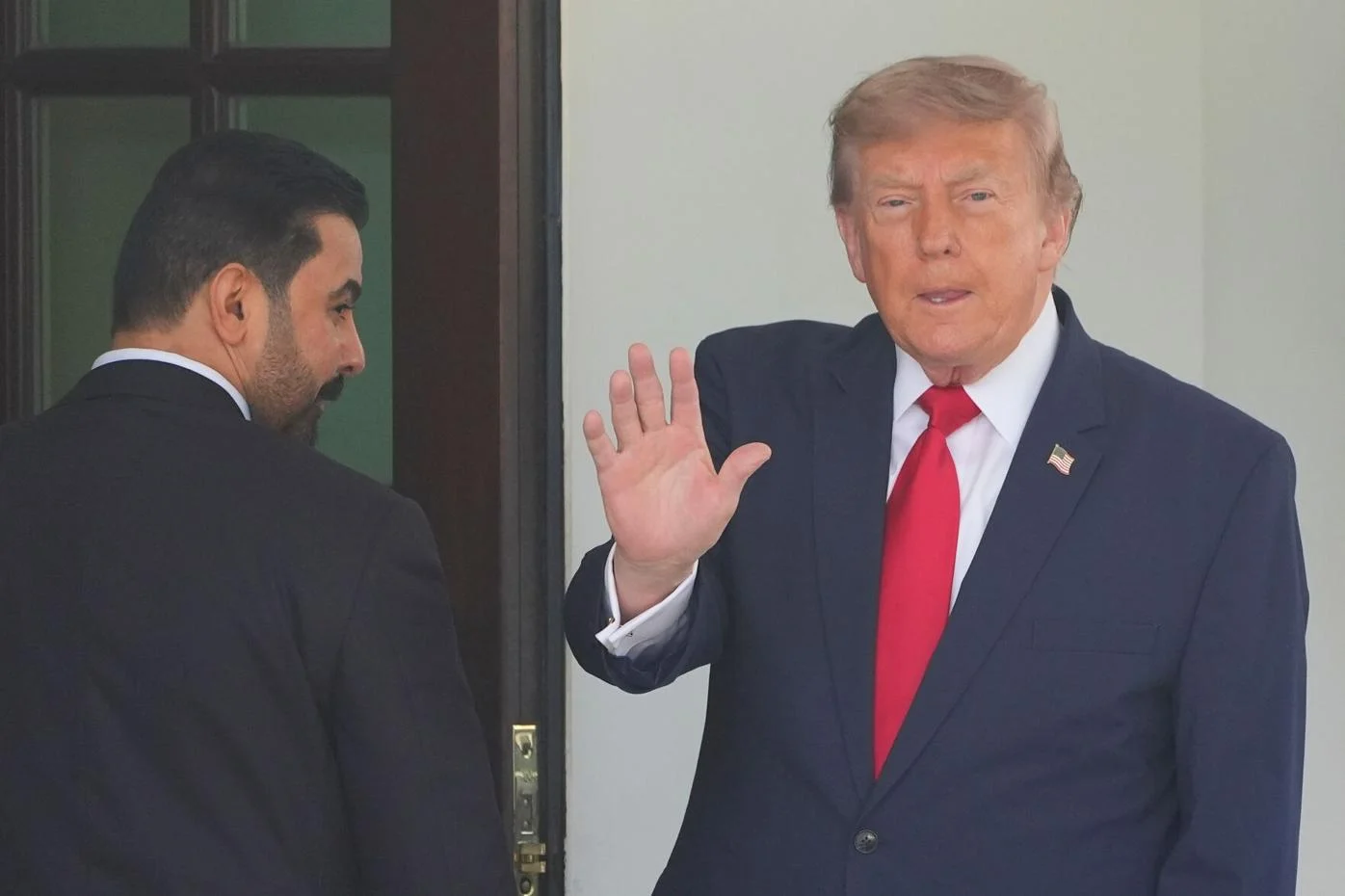
The political signaling extended well beyond closed-door meetings. Trump gave Zaidi a warm White House reception, portraying the new prime minister as the face of a different phase in US–Iraqi relations. Extensive security measures accompanied the visit, with roads closed around Zaidi’s residence and destinations and helicopters assigned to escort parts of his motorcade.
Trump made Washington’s role in Zaidi’s rise unusually explicit. Apparently referring to Maliki, he said it had been “very important” to him that another candidate take office, adding, “I played a role.” Trump later declared, “I fought for that,” before predicting that Zaidi would become “a great leader in the Middle East, beyond Iraq.” The reception amounted to a public endorsement of the Iraqi leader Washington had helped bring to power.
How Baghdad Politics Evolves
The visit ended with agreements involving US companies across oil, energy, infrastructure, and investment. Iraq’s oil minister later valued energy agreements reached during the trip at about $200 billion, while separate deals promised a larger role for US firms in Iraqi production and export routes.
Yet Washington’s offer carried clear political conditions. Economic cooperation depended on Baghdad advancing what the US calls reform, including tighter control over the resistance factions, greater distance from Tehran, and a stronger central government aligned with Washington’s priorities.
The Savaya affair places those conditions in a sharper light. Corruption is no longer treated solely as an internal judicial matter, but as an instrument through which Washington measures obedience, identifies acceptable partners, and disciplines figures who operate outside its preferred channels.
For Zaidi’s government, Washington’s promised partnership comes at a political price. The events of 23 June suggest that the US endorsement of a new face in Baghdad is tied to a wider effort to manage the transition, sideline networks it considers hostile, and keep Iraq’s political boundaries firmly within Washington’s control.