
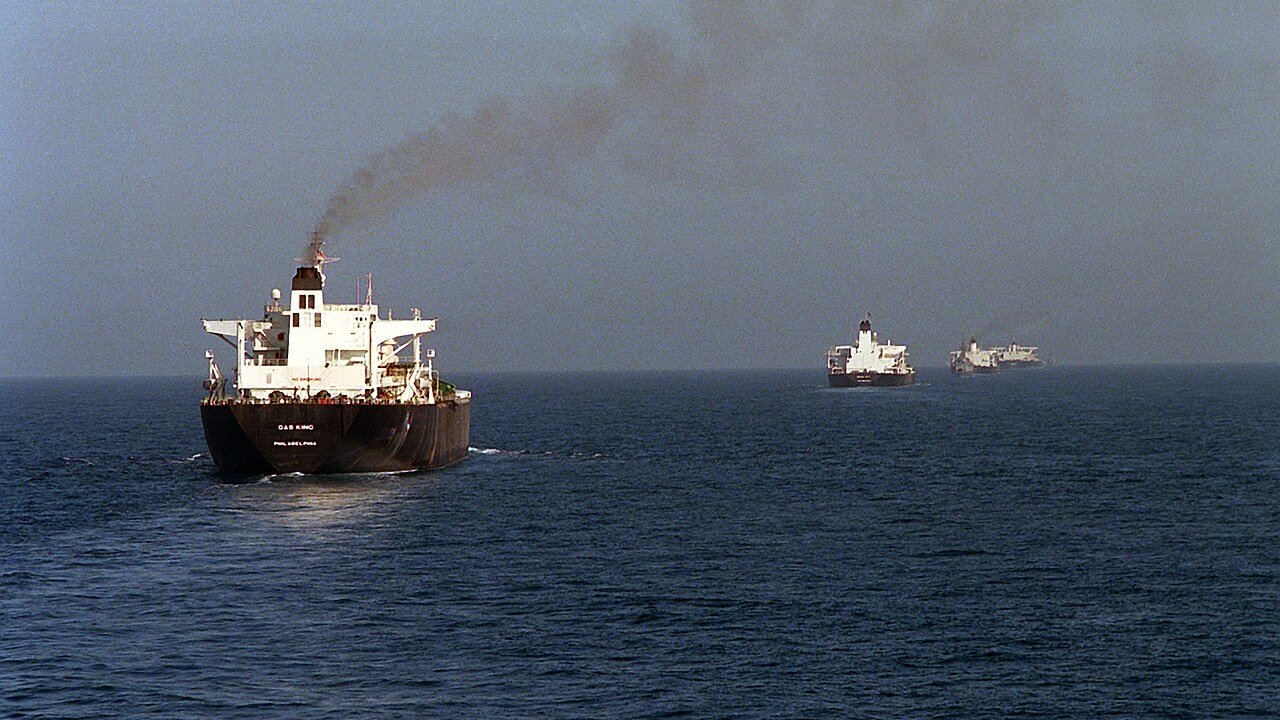
The U.S. Navy’s refusal to mount Hormuz tanker escorts during the US-Iran conflict is driven by direct belligerency, a diminished fleet, Iran’s asymmetric preparedness, mine warfare deficits, and institutional disdain for convoys.
The persistent absence of Hormuz tanker escorts amid the US-Iran conflict presents a strategic puzzle. During the 1980s, Operation Earnest Will saw the U.S. Navy reflag and convoy Kuwaiti tankers through the Persian Gulf, effectively countering Iranian threats.
Yet today, under Operation Epic Fury, American warships remain outside the Gulf, enforcing a distant blockade while airstrikes target Iranian military infrastructure. This operational divergence stems not from a single factor but from a confluence of transformed strategic conditions. The United States is now a direct belligerent confronting an Iran far better prepared for asymmetric warfare in the narrow Strait of Hormuz.
The Islamic Republic’s investment in missiles, drones, hardened sites, and decentralized command structures creates a vastly more lethal environment for any close escort mission. Simultaneously, the U.S. Navy’s diminished fleet size, at barely half its late–Cold War strength, amplifies the consequences of losing advanced destroyers to mines or swarm attacks. Institutional memory of past tragedies—the Stark, Samuel B. Roberts, and Vincennes incidents—further cools enthusiasm for risking capital ships in confined waters.
Moreover, atrophied mine countermeasures capabilities and a shrunken shipbuilding industrial base make fleet reconstitution after losses profoundly uncertain. The calculus for Hormuz tanker escorts thus reflects a collision of heightened threat, reduced margin for error, and deep cultural aversion within naval institutions toward the unglamorous work of convoy operations.
A Strategic Riddle in the Gulf
Here’s a puzzling aspect of the Iran war: why hasn’t the US Navy reprised its convoy strategy from the “tanker war” almost 40 years ago in order to force open the Strait of Hormuz?
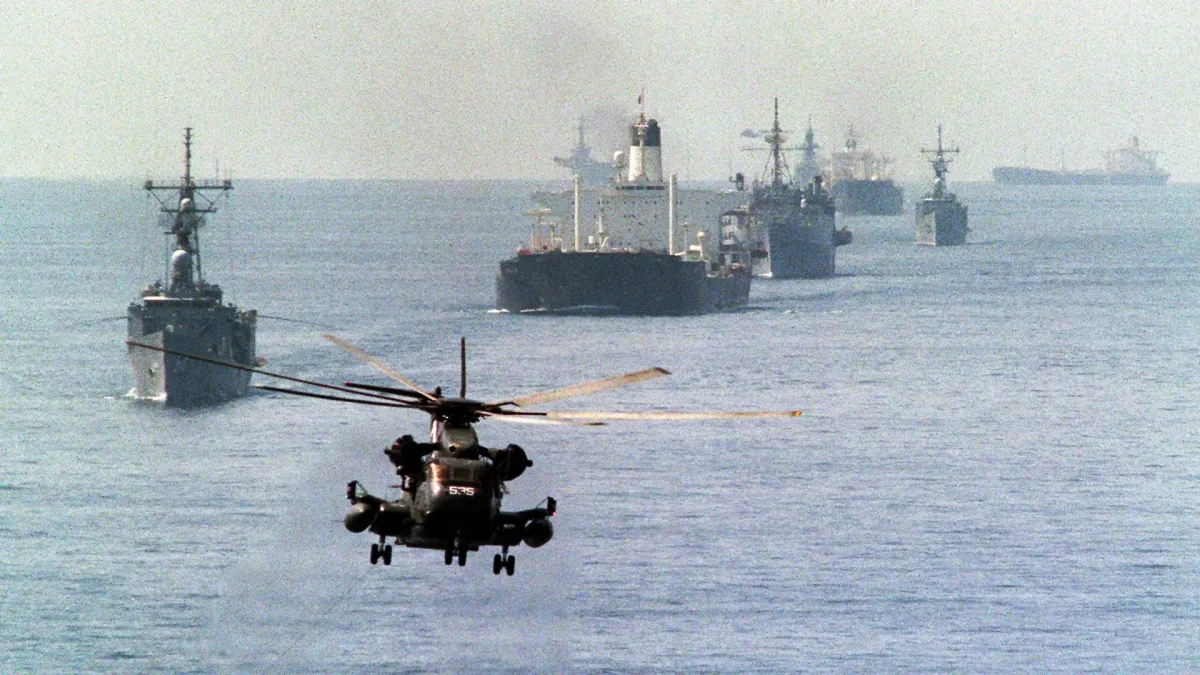
The tanker war was a subplot to the Iran-Iraq War, wherein the chief combatants, Ayatollah Ruhollah Khomeini’s Islamic Republic of Iran and Saddam Hussein’s Iraq assailed each other’s hydrocarbon infrastructure, including oil rigs, along with tankers traversing the Persian Gulf. Iranian targets included tankers sailing under the Kuwaiti flag. In response, the Reagan administration arranged to “reflag” Kuwaiti tankers under the Stars and Stripes to provide legal cover for the Navy to escort tankers through the embattled waterway. The administration dubbed the escort endeavor Operation Earnest Will.
And it worked—eventually. Naval warfare is intrinsically slow-moving. In fact, Julian Corbett, arguably the GOAT among maritime strategists, maintains that strategies like blockades only work through gradual exhaustion. And he seems skeptical, even about that. Sea power is an enabler for success on dry earth—not a decisive force in itself.
So one might think that convoys would be a logical solution during Operation Epic Fury, today’s campaign against the Islamic Republic. Instead, US Navy warships have stayed out of the Gulf altogether, taking station in the Gulf of Oman and Arabian Sea to mount a distant blockade of Iranian seaports while Navy and Air Force warplanes pummel Iranian sites in hopes of suppressing threats to mercantile shipping in the Strait of Hormuz.
I am not privy to decision-making at the Pentagon or the US Central Command, the superintendent of operations against the Islamic Republic, but four differences between the 1980s and now stand out.
Facing a Direct War Footing
#1: The US Wasn’t at War with Iran Then—It Is Now
The politics and strategy are different than they were during Earnest Will. The United States was not a participant in the Iran-Iraq War, so the US Navy assumed a defensive stance vis-à-vis Iranian attacks on mercantile shipping. The Iranian Navy already had enough on its hands fighting against Iraq; it made no strategic sense to draw the United States into the war by attacking its vessels.
This time around, the United States is a direct participant, and in fact the leading combatant. The US military has gone on offense in concert with Israel, placing the Islamic Republic regime on what Sun Tzu, ancient China’s martial sage, dubs “death ground.” Death ground connotes a battle for survival. A combatant bestriding death ground fights to its utmost, knowing that it will perish with a loss. It expends all resources available to it in order to survive, and it keeps up the expenditure for as long as it takes.
Hence the stubborn stance Tehran has taken during this year’s fighting, even as US aircraft pound military sites and infrastructure while the Navy chokes off shipping bound for Iranian harbors—the engine of economic activity for the Islamic Republic.
Iran’s Readiness for Hormuz Tanker Escorts
#2: Iran Is Much Better Prepared for War in the Gulf Today
Iran is a different belligerent today. Then as now, Iran was under clerical rule. But its military chieftains spent the decades after the end of the Iran-Iraq War in 1988 studying the United States, which entrenched itself in the Middle East starting with Operation Desert Storm in 1990 and fought the War on Terror in Iraq and Afghanistan, Iran’s western and eastern neighbors.
The regular military and Islamic Revolutionary Guard Corps (IRGC) modeled its strategy, operations, and forces to withstand an onslaught from the United States, the next likely foe. The Iranian armed forces amassed a formidable arsenal of missiles and, as the technology matured, drones. They fortified military sites by digging into Iran’s rugged terrain and storing weaponry in underground bunkers. They geared their forces to harry Iran’s neighbors along with shipping transiting the Strait of Hormuz. And they decentralized command-and-control, delegating firing decisions to local commanders.
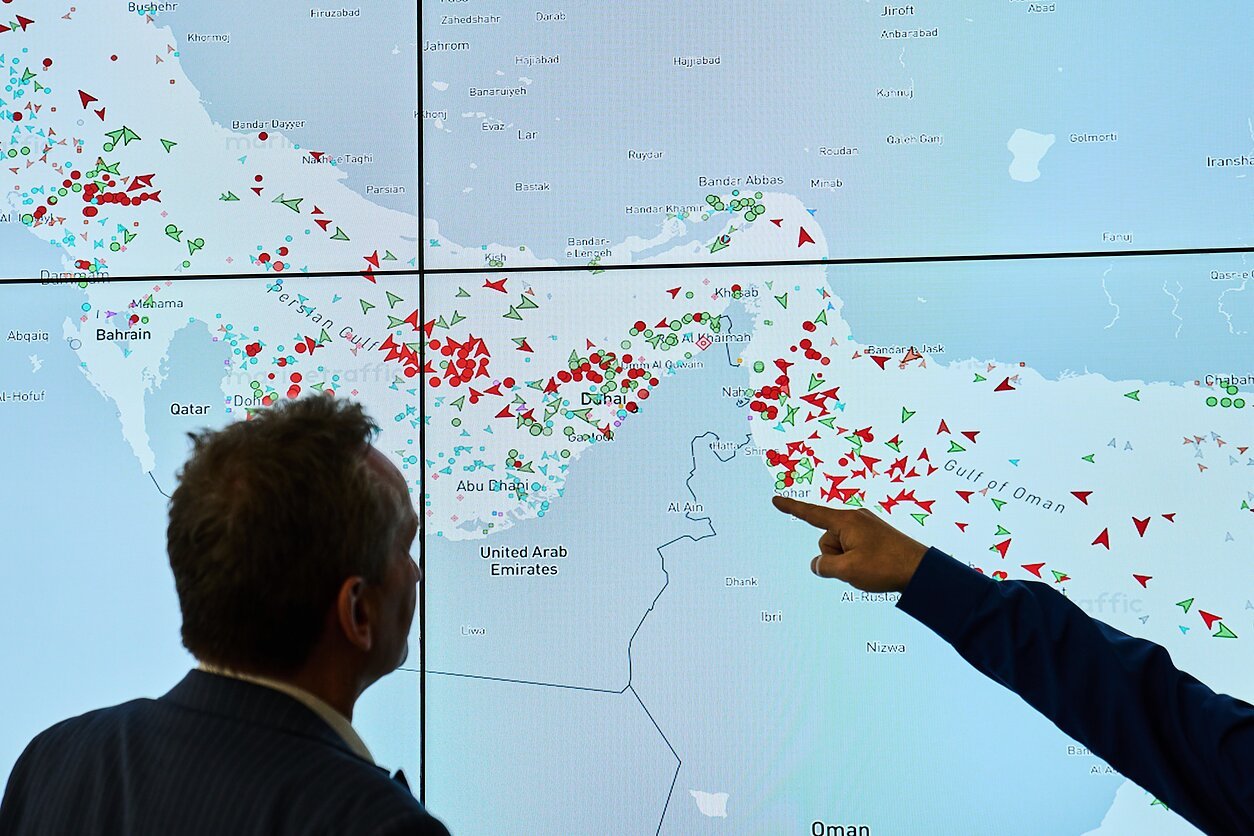
That series of steps blunted the impact of decapitation strikes in Epic Fury’s opening phase. And the Iranians understood that they didn’t need to sink every passing merchantman transiting the Strait of Hormuz. They merely needed to carry out the occasional attack. Deterrence happens in people’s minds; spooking shipowners and maritime insurers into refusing to take the risk of sending ships through the strait was as good as sinking vessels.
Dangerous Memories of the Tanker War
#3: Tanker Escorts Are Dangerous
The US military leadership has undergone generational change since Earnest Will. Today’s senior commanders were junior officers during the 1980s—my vintage—and probably retain visceral memories of the tanker war.
Events in decisionmakers’ youth inflect attitudes and assumptions later in life. In 1987, an Iraqi fighter jet mistakenly bombed the frigate USS Stark in the Gulf, killing 37 sailors. In 1988, the frigate Samuel B. Roberts struck a sea mine and could have sunk. On another bad day for the US Navy in 1988, the Aegis cruiser Vincennes mistakenly shot down an Iranian Airbus airliner during a surface battle with Iranian naval forces, killing 290 people and enraging Tehran.
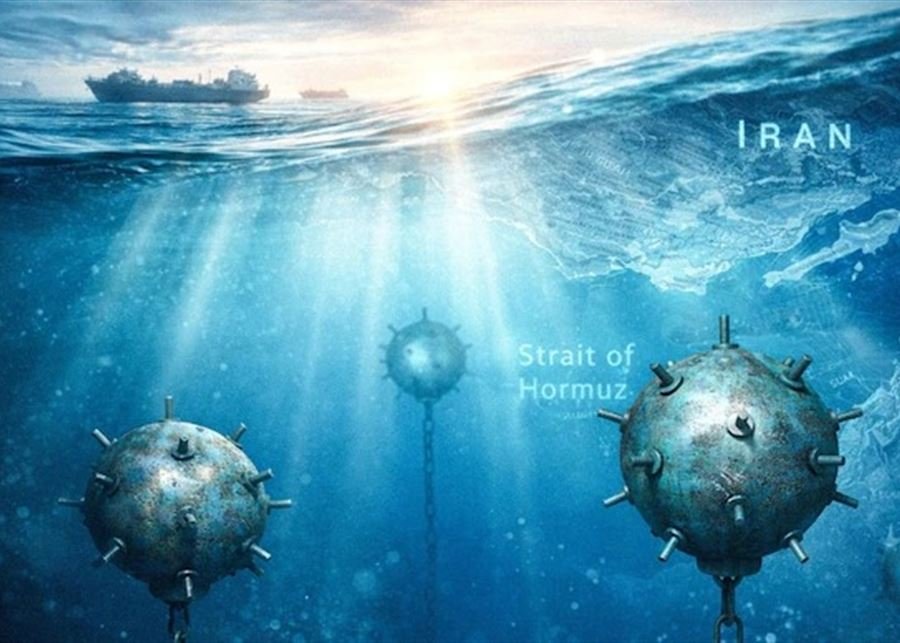
No one relishes repeating such experiences—and as noted, Operation Earnest Will would likely be a cakewalk compared to what the US Navy will face in 2026. Commanders may blanch at risking precious assets like Arleigh Burke-class Aegis destroyers in mine-infested waters close to Iranian seacoasts.
Fewer Hulls, Higher Stakes
#4: The US Navy Doesn’t Have Many Ships to Lose
Fleet design also relates to risk calculations. To continue with the psychological theme, it’s worth pointing out that the US Navy of 2026 is not the supersized armada of the 1980s.
Most obviously, think about brute numbers of hulls constituting the fleet. Today’s Navy battle force stands at 293 ships of war, compared to the (almost) 600-ship navy of the late Cold War. Quantity matters in martial affairs. With many more hulls constituting a fleet, it is easier to risk fleet warships in close action. You lose a smaller percentage of your combat power when you lose one ship of war. A commander can afford to be venturesome.
More than 20 US Navy ships are blockading Iranian shorelines today. That’s a sizable fraction of today’s 293-ship fleet, but about half the fraction of the Reagan-era 600-ship force. Back then, commanders could accept risk back then in a way they might balk at today.
Managing risk is huge. A common actuarial formula defines risk as the product of multiplying probability by consequences—in this case the probability of something bad happening through losses to the fleet. A larger fleet can absorb damage or sinkings more readily than a smaller one. Overseers of yesterday’s US Navy could run this calculation with greater confidence than today’s that the consequences of battle damage would not set back the Navy from a strategic standpoint.
There’s also the matter of fleet design. Today’s fleet is top-heavy, with nuclear-powered aircraft carriers and large destroyers like Arleigh Burkes, whereas the 1980s fleet was balanced. It benefited from a healthy contingent of small surface combatants like guided-missile frigates, which tended to anchor the US presence in the Persian Gulf region. It was relatively easy to dispatch plentiful low-cost frigates into harm’s way in the Gulf, a confined waterway that would have significantly fettered the freedom of maneuver of a larger ship.
Again, senior officialdom tends to jealously guard prized assets like capital ships—which concentrate a major fraction of the Navy’s combat power in a few hulls, not to mention the outsized taxpayer resources that go into constructing and operating these heavyweights. Risking a capital ship demands a gut check.
Since the turn of the century, however, yesteryear’s force of small surface combatants has withered. Progress at rebuilding it has proved fitful, to say the least. The littoral combat ship, the natural successor to frigates, underwhelmed to the extent that US Navy leaders canceled the program early. Just last year, moreover, the project to field a new frigate proved such a debacle that Secretary of the Navy John Phelan truncated the class to two vessels and ordered the service to start over with a new class, the FF(X), derived from Coast Guard’s national security cutters.
All of this is to say that the US naval leadership has to hazard capital ships in Iran’s environs in order to blockade Iranian coasts or escort commercial shipping through the narrow Strait of Hormuz. The risk calculus relating to convoys looks more forbidding now than during the heyday of the 600-ship Navy.
Why Mine Warfare Stops Hormuz Tanker Escorts
#5: The US Navy Isn’t Very Good at Minesweeping Today
Also of concern are specialty capabilities such as mine warfare. Over the decades, the US Navy has tended to supply the heavy firepower to a combined fighting force while leaning on NATO allies or Japan for niche capabilities like hunting and clearing sea mines.
That was not the case during the tanker war, but it stood out clearly during Operation Desert Shield and Storm scant years later. Allied minesweepers led the combined amphibious fleet through minefields to its station off the Kuwaiti coast, where it feigned preparing to land Marines from the sea. But thus far, NATO allies have been recalcitrant about taking up arms in the Strait of Hormuz in 2026. The Navy has to go it alone against IRGC minelaying at a time when it just retired its specialized mine-warfare contingent and replacement technologies have not fully proven out.
Plus, the industrial factor weighs on the minds of senior commanders and their political masters. A navy without a vibrant industrial sector is brittle. It struggles to repair stricken ships or build replacements, and as a result a ship lost to battle damage may be lost for the duration of the war. The US shipbuilding sector has wilted since the halcyon 1980s. Shipyards are struggling to get warships through maintenance, repair, and overhaul, even during a time of ostensible peace. It’s hard to imagine the yards’ somehow ramping up the capacity to return battle-damaged ships to the fray amid the clangor of war, or furnish new ones.
Navies Hate Convoy Operations
#6: Everyone Hates Convoys
And lastly, there’s institutional culture. Convoys have been unpopular with most everyone since time immemorial. Great navies prefer to equip and train for major sea battles, which they regard as their first and foremost function. Shippers believe escort operations detract from efficient and low-cost voyages. Insurers detest the idea of paying out when a ship encounters damage. In other words, convoy operations cut against the cultural grain for most everyone.
Convoys resemble counterinsurgency in a way. They’re unglamorous. Martial institutions regard them as a distraction from their chief purpose. As a result, navies have to rediscover the importance of escort duty during each major seaborne conflict. Couple that with other nettlesome capabilities such as mine warfare and drone defense, and it’s understandable why senior leaders shy away from risking the fleet in restricted waters like the Strait of Hormuz.
So in a sense, the tanker war is not a historical precedent for any convoy effort off Iran today. The comparison between now and then is valuable because the differences between Earnest Will and Epic Fury throw problem areas into stark relief. The tanker war represents a negative precedent—and a comparison worth undertaking.