
A profound strategic analysis evaluating how an IAEA-supervised uranium escrow framework in Central Asia can resolve technical gridlock and let Kazakhstan help Iran nuclear deal talks succeed by establishing verification parameters independent of state mistrust.
This nalysis addresses the critical impasse confronting Washington and Tehran, highlighting how an external verification framework can bypass entrenched political gridlock. By leveraging nonproliferation-minded middle powers, international policymakers can establish key mechanisms to let Kazakhstan help Iran nuclear deal efforts succeed without relying on mutual trust.
Kazakhstan help Iran nuclear deal: Navigating the strategic deadlock
President Donald Trump does not need Iran to become trustworthy to close a nuclear deal. He needs a deal that makes mistrust manageable. That is the real problem at the center of the Iranian nuclear program question. The hardest issue is no longer simply whether Tehran signs another promise not to build a bomb. It is what happens to the uranium stockpile that could shorten the path to a nuclear crisis. Washington wants the most sensitive material removed, destroyed, diluted, or otherwise placed beyond Iran’s immediate reach. Tehran treats removal as humiliation and surrender.
That deadlock is exactly where diplomacy usually fails. One side turns a practical security demand into a test of seriousness and sincerity. The other side turns compliance into a test of sovereignty. The result is the familiar cycle of maximalist language, stalled talks, threats of force, and a growing verification problem.
There is a way through this impasse. If a new agreement requires Iran to move its most proliferation-sensitive uranium out of the country, it should not be transferred to the United States, Russia, or China. It should be placed in a Kazakhstan-based, IAEA-supervised escrow arrangement, with legal custody, monitoring procedures, technical conditions, and release rules written into the deal.
Escrow safeguards inside the Kazakhstan help Iran nuclear deal framework
This would not solve every problem in the Iran file. It would not settle the long-running dispute over Iran’s claimed right to enrich uranium. It would not erase the need for intrusive verification. It would not make Tehran suddenly cooperative. But it could solve the most urgent problem: how to keep the most sensitive material outside Iran’s immediate reach without looking like an American seizure.
Before the 2025 strikes on Iran’s nuclear facilities, the stockpile of uranium enriched to 60 percent stood at roughly 440.9 kilograms (972 pounds). That material is dangerous not because it is already weapons-grade, but because it is much closer to that threshold than ordinary reactor fuel. A deal that leaves this question unresolved would leave the most politically explosive part of the nuclear file intact.
Kazakhstan is one of the few places where a practical answer could be found. Astana has already indicated openness to storing Iran’s uranium stockpile if Washington and Tehran reach an agreement. That does not mean that Kazakhstan can simply absorb the material tomorrow. The significance is that Kazakhstan already has the political record, nuclear infrastructure, and international credibility needed to host a carefully designed mechanism.
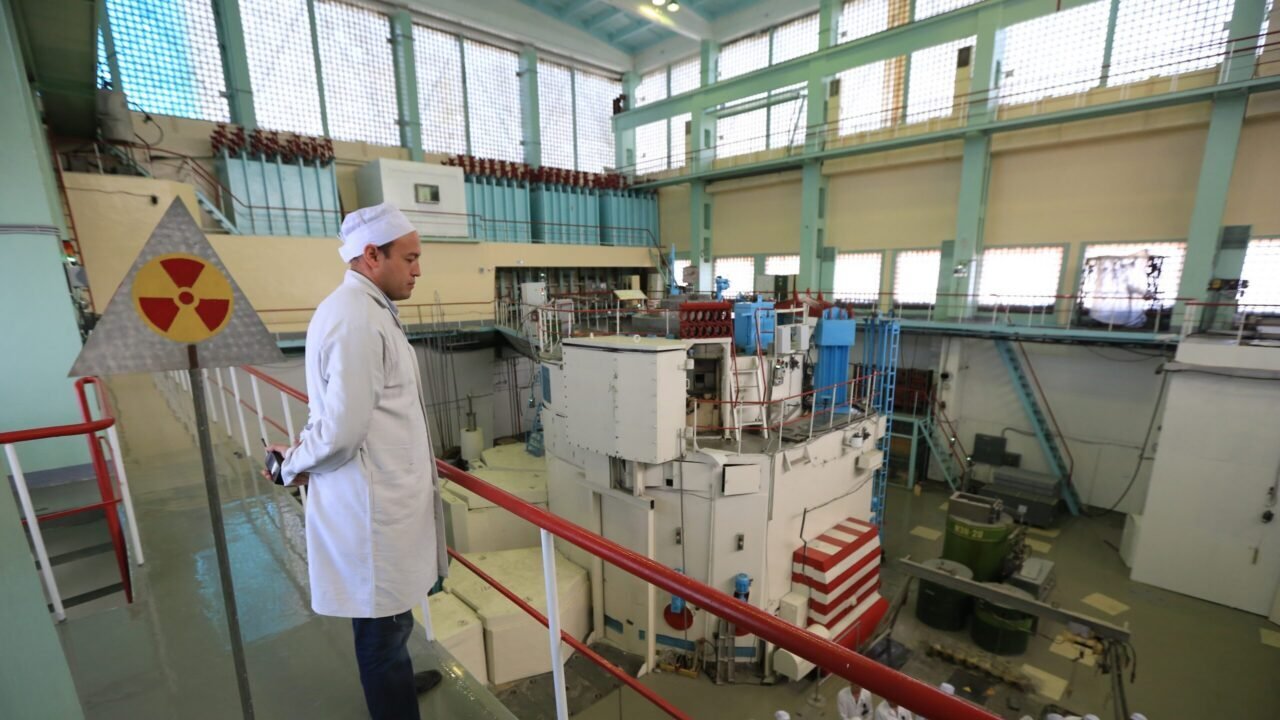
The existing IAEA Low Enriched Uranium Bank in Kazakhstan should not be treated casually as a warehouse for 60 percent of the material. It is a physical reserve of low-enriched uranium hexafluoride owned and controlled by the IAEA, located at the Ulba Metallurgical Plant in Oskemen. It is stocked with 90 metric tons of low-enriched uranium hexafluoride and functions as an assurance-of-supply mechanism for eligible member states whose access to nuclear fuel is disrupted.
Operationalizing a robust Kazakhstan help Iran nuclear deal
A workable deal would require adaptation. Depending on the material’s chemical form and enrichment level, it may need to be diluted, converted, or placed under a separate IAEA-mandated mechanism before long-term storage. The agreement would need to define who has legal custody, who pays, how transport is handled, what safeguards apply, what happens if either side violates the deal, and under what conditions the material could be returned, further diluted, or disposed of. Kazakhstan’s consent, domestic regulatory approval, and public safety assurances would be essential.
Those details are not obstacles to the idea. They are the idea. The next Iran nuclear deal is to be made by custody, sequencing, verification, and face-saving. For Washington, the advantage is straightforward. The United States does not need to pretend that Iran has become a normal nuclear partner. It needs to ensure that the most dangerous material is placed where Iran cannot quickly use it. An IAEA-supervised escrow gives American negotiators a concrete answer to the hardest question: where does the material go?
For Iran, the advantage is different but just as important. Tehran could argue that it had not handed its uranium to Washington. It could announce instead that the material had been placed under an international mechanism in a third country, subject to negotiated conditions. That distinction may sound narrow, but in diplomacy, narrow distinctions often make the difference between humiliation and compromise.
For the IAEA, the arrangement would restore verification’s centrality. Iran’s reduced cooperation with inspectors has made it harder to provide confidence about the peaceful nature of its nuclear activities. A deal that moves the most sensitive material into monitored third-country custody would not solve every safeguards question, but it would directly address the most urgent custody problem.
How can Kazakhstan help Iran nuclear deal parameters redefine regional security
For Kazakhstan, the role would fit a strategic identity built over three decades. After the collapse of the Soviet Union, Kazakhstan inherited part of the Soviet nuclear program but chose to abandon it. It closed the Semipalatinsk test site, joined the Nuclear Non-Proliferation Treaty as a non-nuclear-weapon state, and turned nuclear restraint into a core element of its foreign policy.
This is why Kazakhstan is useful in a way Russia is not. Moscow has the technical infrastructure, but it is politically the wrong answer. Any arrangement that gives Russia a central role in a US-Iran settlement would immediately become entangled in the Ukraine War, sanctions politics, and the perception that Moscow was being rewarded with diplomatic leverage at Washington’s expense.
China would raise a different but related problem. Beijing may have the technical capacity, but placing Iran’s most sensitive material under Chinese custody would create a new geopolitical vulnerability inside a deal already burdened by mistrust. Trump himself has shown little appetite for an arrangement that leaves the stockpile in Russian or Chinese hands.
Kazakhstan is a nonproliferation-minded middle power with a record Washington can defend and Tehran could accept without appearing to capitulate to the United States.
Diplomatic mechanisms enabling a Kazakhstan help Iran nuclear deal structure
That is the diplomatic sweet spot. An escrow in Kazakhstan would not require Iran to trust the United States. It would not require the United States to trust Iran. It would require both sides to trust a mechanism: IAEA supervision, third-country custody, defined conditions, and consequences for violation.
The sequencing could be simple.
First, Iran transfers, dilutes, or otherwise neutralizes the most sensitive stockpile in accordance with agreed technical procedures.
Second, the United States and its partners provide limited and reversible sanctions relief, humanitarian financial channels, or phased access to frozen funds.
Third, broader negotiations continue over enrichment limits, monitoring, and long-term guarantees. If Iran violates the arrangement, the material remains beyond its immediate reach. If Washington walks away, Iran can argue that the material was not surrendered to the United States but held under an international framework.
This may sound too complicated. But every serious Iran deal is complicated. The alternative is a choice between military action that may damage facilities without resolving the custody problem, and diplomacy that collapses because neither side can accept the optics of the other’s demands.
This should appeal to Trump’s own instincts. A successful deal would not have to be sold as a revival of the 2015 Joint Comprehensive Plan of Action (JCPOA). It could be presented as something more concrete and more verifiable: the removal or neutralization of Iran’s most sensitive material under international supervision, at a location acceptable to neither side’s enemies and controlled by neither side’s rivals.
The next Iran nuclear deal will not be saved by trust. It will be saved by a mechanism that makes distrust survivable. And an IAEA-supervised uranium escrow in Kazakhstan could turn the hardest demand in the talks into something Washington, Tehran, and the world can verify. In a negotiation where every side needs proof more than promises, that may be the bridge President Trump has been missing.