
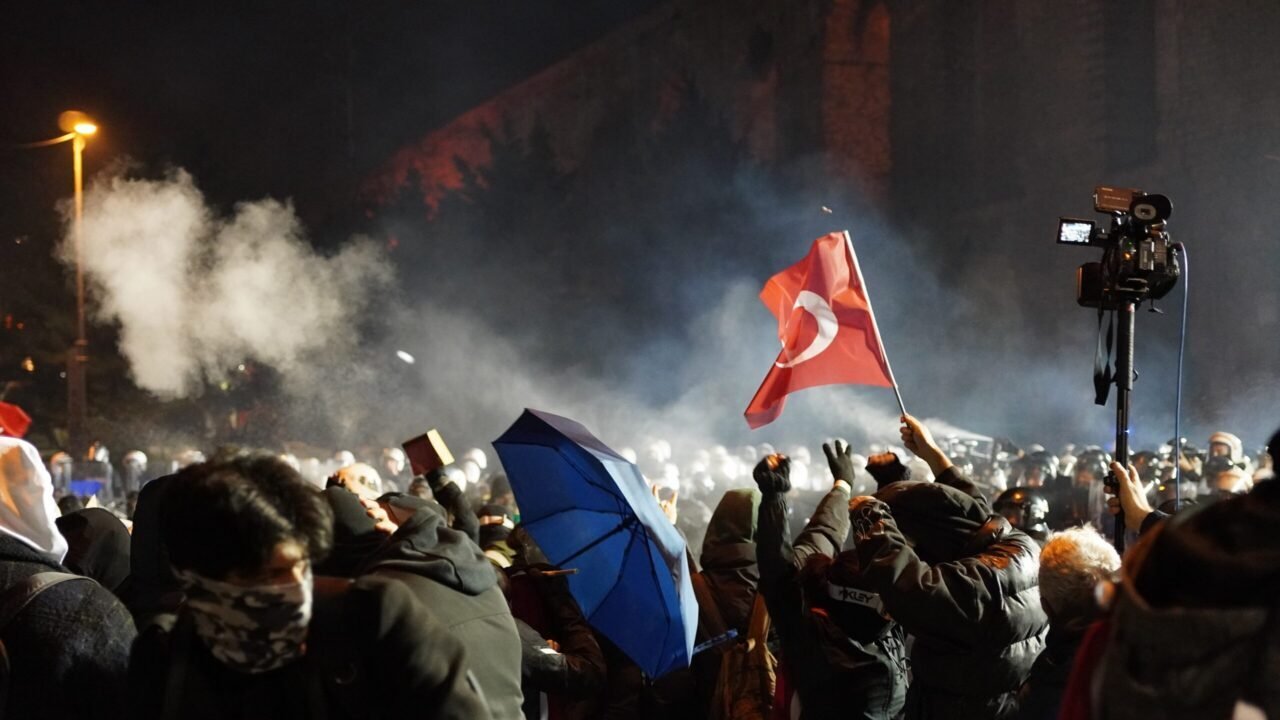
Under Erdogan’s 23-year rule, state-imposed religiosity, court suppression, and police brutality have backfired. Mass protests and soaring youth exile desires reveal deep rejection. The regime’s own education weapon now fuels its gravest threat.
Turkey’s authoritarian pivot under Erdogan has systematically alienated its young, educated citizens through state-imposed religiosity and suppressed dissent. The Erdogan regime weaponizes education, courts, and police brutality, yet youth protests continue to crack the façade. This Erdogan regime contradiction now threatens its own survival as 64% of young adults dream of exile.
Erdogan regime education politicization
After more than 23 years of rule, Recep Tayyip Erdogan’s Turkey has all the characteristics of a repressive regime. The legal system, which apparently is at Erdogan’s beck and call, and a battery of laws are calculated to suppress dissent, but there are cracks.
Erdogan said in February 2012 that the aim of his governing Justice and Development Party (AKP) was to “raise a religious generation,” which he has since set out to do.
Seven years earlier, when the Grand Chamber of the European Court of Human Rights ruled that a university could prohibit a student from wearing a headscarf, Erdogan said the court had no right to speak. He said the issue belonged to the scholars of Islam (ulema). Consequently, the tightly worn Islamic headscarf (türban) is now permitted in schools, universities, public offices, law courts, and the military.
Erdogan himself is a graduate of an imam hatip (a religious high school). When elected mayor of Istanbul in 1994, he said, “We will turn all our schools into imam hatips.”
With the establishment of the Turkish Republic in 1923, the state abolished religious schools (madrasas) and supervised the training of imams. In 1951, the first imam hatip schools opened for vocational training. When the AKP government came to power in 2002, students were given full access to universities. With the 2012 educational reform, students were not only given access to imam hatip high schools but also to middle school from the age of 10.
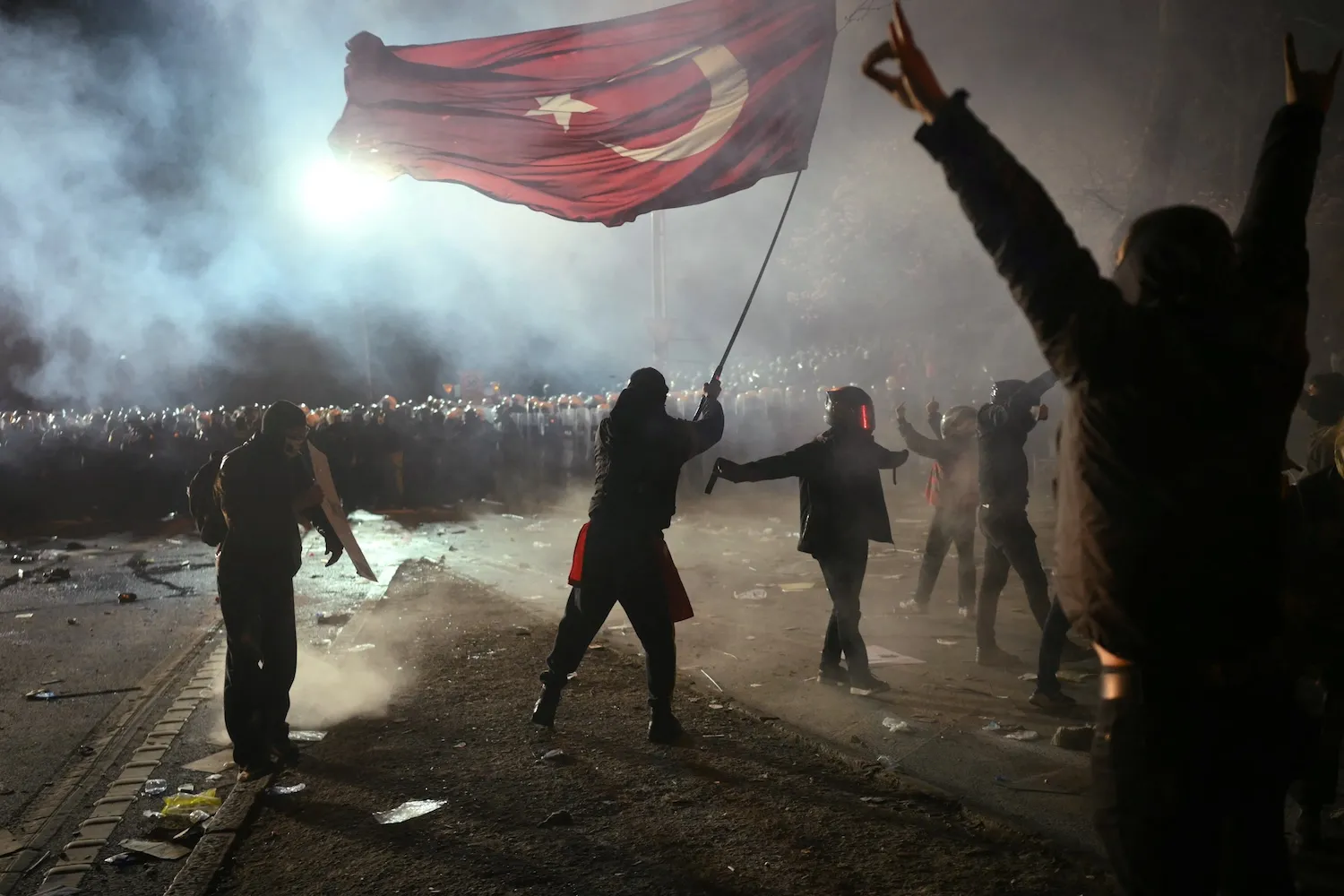
Forcing the Erdogan regime
As a result, the number of students at these schools, where the curriculum is 40 percent religious and 60 percent secular, has risen from 84,000 in 2002 to over 1.4 million today.
A Reuters review in 2018 showed that they received almost a quarter of the total upper schools budget, although they constituted only 11 percent of that segment. However, key metrics showed they underperformed relative to the regular ones.
At the same time, under the Religious Affairs Directorate (Diyanet), there has been a massive increase in the number of Quran courses and summer schools. A project has also been launched to provide values education (ÇEDES), where imams and Quran course teachers are assigned as “spiritual advisors” to schools.
The curriculum in Turkish schools has also been tailored to fit in with Erdogan’s views. Charles Darwin’s theory of evolution has been excluded from science textbooks. In March 2009, the journal Bilim ve Teknik (Science and Technology) had planned a special edition to commemorate the 200th anniversary of his birth. TÜBITAK (the Turkish Scientific and Technological Research Council) intervened, and the cover picture of Darwin, a 16-page article, and the editor were removed.
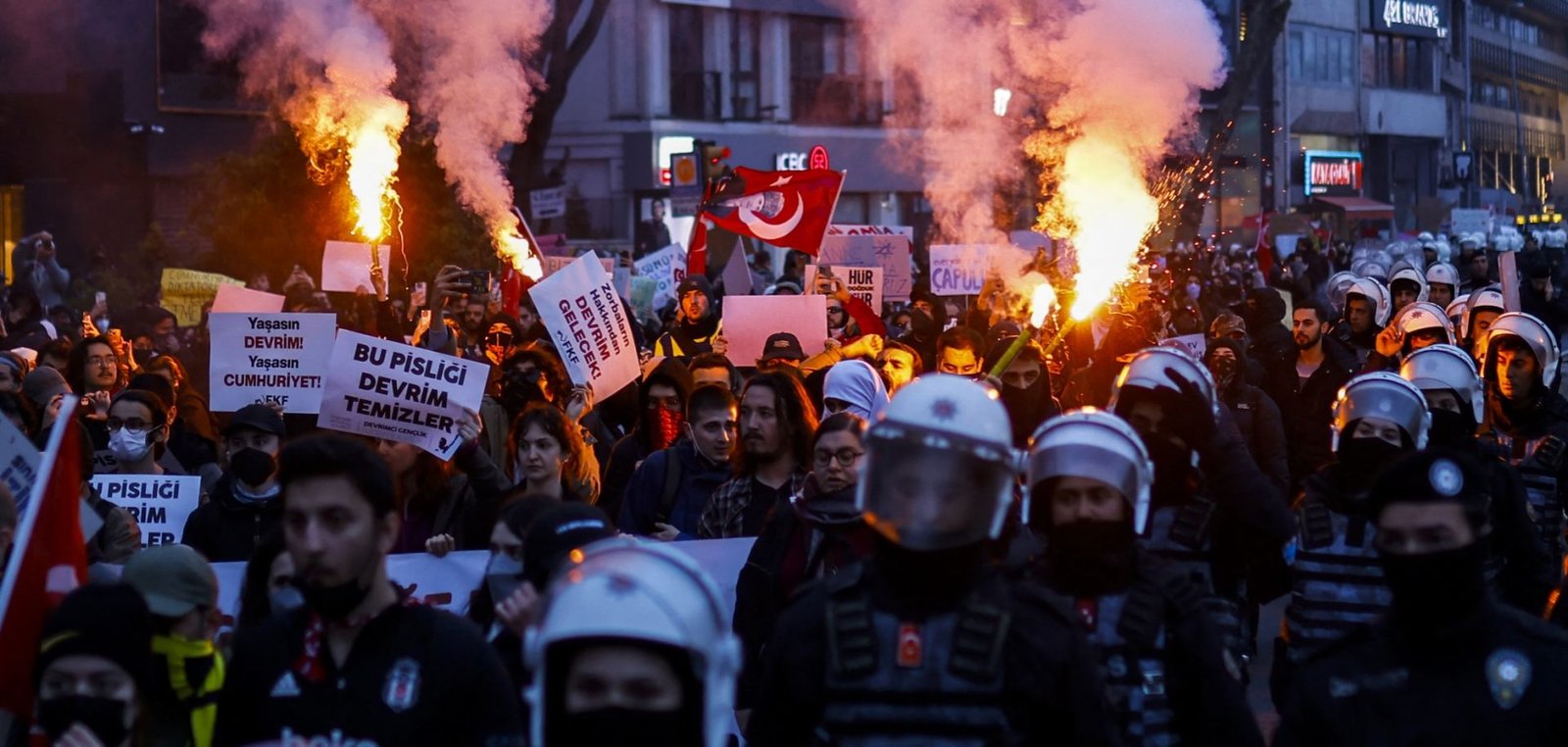
Rejecting the Erdogan regime
The Diyanet plays a central role in Erdogan’s plan to promote religiosity in Turkey, and its president, Ali Erbaş, has the same status as a government minister. With its 90,000 mosques and hundreds abroad as well as over 140,000 personnel, its budget exceeds that of several ministries. As Erdogan’s extended arm, it keeps a vigilant eye on the Turkish diaspora. Nine years ago, the Diyanet’s attaché at the Turkish embassy in Copenhagen admitted that this was what he did, and was recalled.
What must have come as a shock to Erdogan was that at the end of May in 2013, when an environmental protest against the demolition of Gezi Park in Istanbul to make way for a shopping mall developed into a nationwide protest involving over three and a half million people. The protests were met with police brutality and the disproportionate use of force; eight protestors died, 8,163 were injured, and 5,300 were arrested.
Protesters came from a broad cross-section of Turkish society, Kurds, Alevis, the religious poor, anti-capitalist Islamists, young revolutionary Islamists, feminists, football fans, and environmentalists, with an average age of around 30. Erdogan denounced the protesters as “marauders” and “looters.” Still, a report published by KONDA, a public opinion polling institute, found most were college students in their final years, recent college graduates, or young professionals.
As English PEN concluded, “A culture of protest and dissent has been established amongst a previously politically disenfranchised younger generation.”
Erdogan regime crackdowns escalate
Erdogan claimed “the interest rate lobby” was behind the protests, and that foreign media outlets, in particular, the BBC, were part of an international conspiracy to destabilize Turkey. Erdogan’s aide, Yigit Bulut, who later became his economics advisor, even claimed foreign powers were trying to kill Erdogan through telekinesis.
Erdogan found a convenient scapegoat in Osman Kavala, a civic leader and founding member of the Open Society Foundation in Turkey. Kavala was held in pre-trial detention in 2017, indicted in 2019, and sentenced to life imprisonment in 2022.
After the arrest of Istanbul’s popular mayor in March last year, Turkey was faced with the largest anti-government protests in more than a decade. The demonstrations were condemned by Erdogan as “street terror,” and nearly 1900 were detained.
A Turkish delegate from the Council of Europe’s Youth Forum made it clear that Turkey’s youth have had enough. “The police forces used disproportionate brutality, including pepper spray, plastic bullets, and water cannons. We are ready to go on the streets to regain our freedom. We are running out of time when it comes to saving democracy in Turkey. If you’re looking for a wake-up call, this is it.”
Youth defy the Erdogan regime
When he returned to Turkey, he was immediately arrested, but a month later, he was released. In February, he was acquitted of all charges.
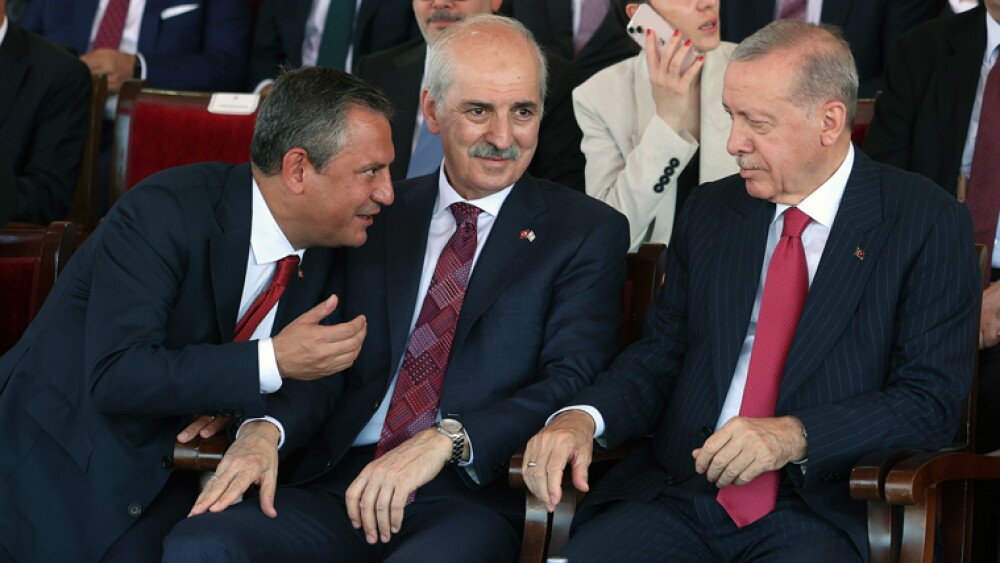
The day after Özgür Özel, the leader of Turkey’s main opposition party, CHP (Republican People’s Party), was removed by a court order, President Erdogan issued a decree closing one of Turkey’s most prestigious universities, Bilgi University, a private university in Istanbul. The following day, thousands of students and protestors gathered on campus, which led to clashes with riot police armed with rubber bullets and tear gas. On Monday morning, President Erdogan issued a new decree, rescinding Friday’s decree.
The mood in Turkey is grim, particularly because millions can’t make ends meet. Metropoll’s survey, “Societal burnout, trust and expectations for 2026,” reveals high levels of societal burnout and deep pessimism.
A survey by another polling and research institute, MAK, reports that 64 percent of young people aged 18 to 29, the generation that has grown up with Erdogan, would consider leaving Turkey if they were granted citizenship in another country.
Given the fact that President Erdogan has declared, “We are walking towards the Century of Türkiye with our youth,” he must be disappointed.