
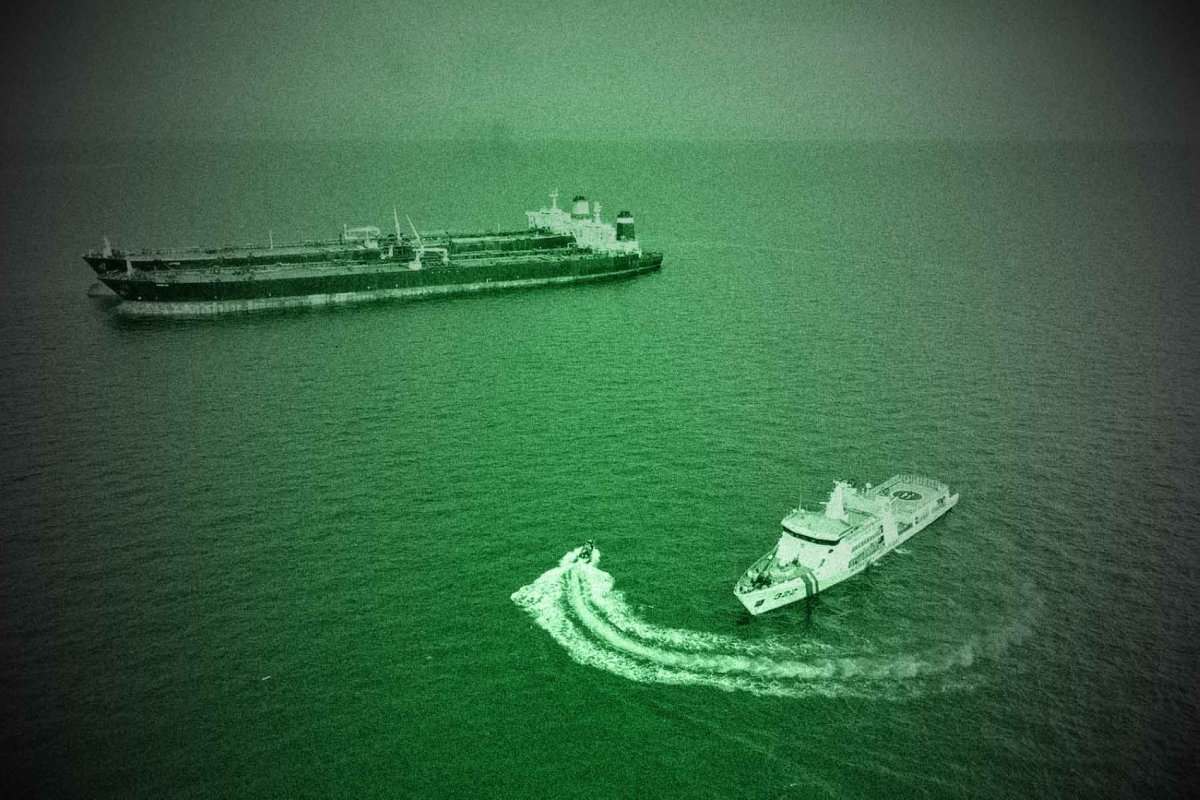
Operation Economic Outcast, launched 24 August, targets foreign banks, insurers, and intermediaries sustaining Iran’s shadow economy. Tehran adapts via shadow tankers and shell companies, but rising costs, corruption, and dependence on China create exploitable vulnerabilities.
The Iran Shadow Economy has evolved into a sophisticated transnational architecture designed to withstand successive waves of U.S. sanctions. Operation Economic Outcast, launched on 24 August, targets not only Iranian entities but the foreign banks, insurers, flag registries, and intermediaries that make evasion commercially viable. While Tehran’s networks can adapt by renaming tankers, rotating shell companies, and rerouting payments through exchange houses, each workaround imposes cumulative costs: discounted oil, slower transactions, trapped capital, and greater leverage for intermediaries.
The system’s reliance on China for oil purchases and yuan-denominated settlements creates a new dependency that Washington can exploit. Enforcement success will be measured by whether Iran can move comparable volumes at similar cost and speed after each action. The paradox is that the more elaborate the Iran Shadow Economy becomes, the more enforcement points it creates for the U.S. Treasury. This contest between Iran’s ability to regenerate networks and Washington’s capacity to shrink the economic space they occupy will determine whether sanctions achieve strategic pressure or merely provoke further adaptation.
Iran Shadow Economy Adapts to Sanctions
On 24 August, Washington launched Operation Economic Outcast, an additional set of measures aiming to further suffocate Iran’s economy. At the time, US President Donald Trump and Treasury Secretary Scott Bessent used the term “economic D-Day” to describe their severe financial offensive and sanctions campaign. Iran’s economic vulnerability is likely to increase not only because of those new sanctions but also because of the expansion of Iran’s own sanctions-evasion system. Each additional layer of concealment raises transaction costs and can paradoxically expose Iran’s networks to international tracking.
Iran’s multifaceted sanctions-evasion system can give the impression that it has become so proficient that new sanctions merely generate new workarounds. But that underestimates both the cumulative cost of evasion and the vulnerabilities embedded in the system. While Iran’s shadow economy can adapt to new sanctions, its capacity to adapt is not infinite.
Iran has spent decades building one of the world’s most sophisticated sanctions-evasion systems, in which it cooperates with allies like Russia and China. Iran’s oil travels aboard a shadow fleet of tankers that change names, flags and owners. Cargoes are transferred between vessels at sea to obscure their origins. Front companies in commercial centres in Europe, Asia, Latin America, and Africa provide layers of separation between Iranian entities and international markets. Exchange houses, offshore accounts and shell companies allow oil revenues to be moved or spent without money necessarily passing through Iran itself. And the Iranian Revolutionary Guard Corps (IRGC) uses all this to generate revenue in hard currency, making it richer when the Iranian riyal depreciates.
Shadow Tankers Hide Oil Origins
The most visible component of Iran’s transnational shadow commercial architecture is its shadow tanker fleet. Iranian oil is transported by vessels whose ownership can be concealed behind multiple shell companies, whose flags and managers change frequently and whose Automatic Identification System signals may disappear or be manipulated. Ship-to-ship transfers add another layer. The US Office of Foreign Assets Control has documented Iranian cargoes undergoing successive transfers before reaching their ultimate destinations, making the provenance of the oil progressively harder to establish. Iran also conceals the origin of its oil and petroleum products, marketing them as originating in other countries.
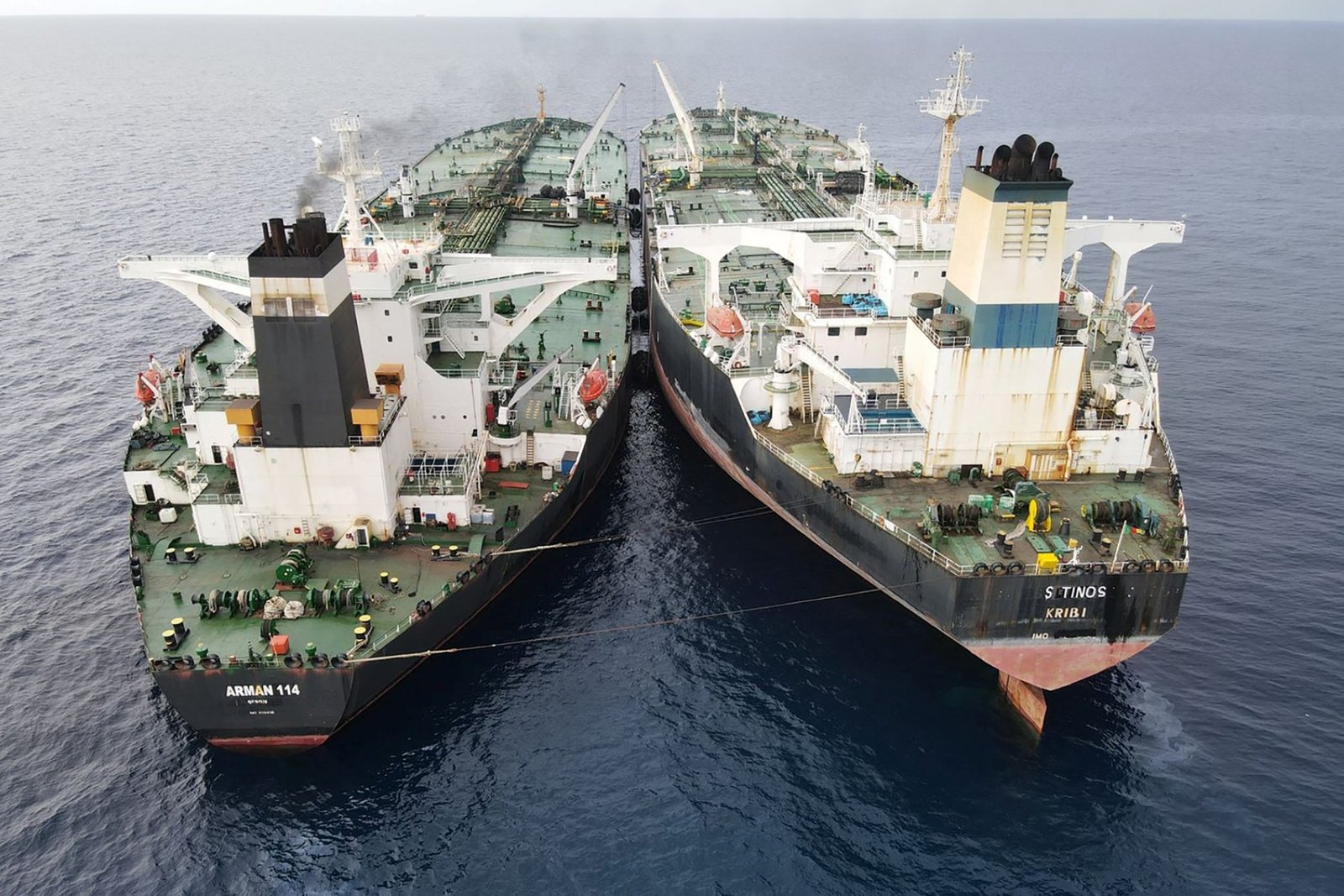
Corporate structures perform a similar function. Iranian-linked networks use apparently ordinary shipping, consulting, logistics, commodity and financial services companies to conceal who ultimately owns an asset or benefits from a transaction. The sprawling network associated with Iranian shipping magnate Mohammad Hossein Shamkhani illustrates the model. The US Treasury says the network has relied on companies operating across multiple jurisdictions, including Hong Kong and the Marshall Islands, repeatedly changing vessel operators and managers while maintaining the appearance of legitimate commercial activity.
Exchange Houses Bypass Banking Systems
Iran also uses exchange houses and intermediaries to maintain pools of foreign currency abroad and networks of shell companies to make payments on behalf of sanctioned Iranian banks and other entities. Iran’s oil sales generate large quantities of Chinese yuan; exchange houses and foreign companies can then use those revenues to pay for Iranian imports or settle unrelated obligations without necessarily repatriating funds to Iran first. These examples show that Iran’s shadow economy survives by embedding itself in the legitimate international economy.
The merger of the licit and the illicit makes sanctions enforcement difficult. Iran constantly replaces shell companies that are closed and intermediaries identified by US authorities. It transfers beneficial ownership, forges paperwork, and reroutes payments, relying on its global network to keep its shadow economy running.
Corruption Drains Iran’s Shadow Networks
Yet this should not be mistaken for cost-free success. Every workaround imposes additional costs. Iran must discount its oil to compensate buyers for risk. It pays intermediaries to hide transactions and move money. It has fewer reputable shipping, financial, and insurance providers to choose from. Capital can become trapped abroad. Transactions become slower and more complicated. The intermediaries themselves gain leverage because Tehran increasingly depends upon them.
The shadow economy also creates corruption. When billions of dollars must pass through opaque companies and informal arrangements, opportunities for diversion multiply. Indeed, the US Treasury itself has argued that corruption and mismanagement are draining resources from Iran’s shadow-banking system.

So while adaptation allows Iran to withstand sanctions, it is gradually making its economy less efficient and more fragile. Operation Economic Outcast has the potential to add to Iran’s fragility not because of adding items to the US sanctions lists but because it targets the foreign infrastructure that makes Iran’s network commercially usable: banks, insurers, flag registries, port service providers, bunker suppliers, commodity traders, exchange houses and ultimately the purchasers of Iranian commodities.
US Targets Foreign Banks and Insurers
The US Treasury has explicitly warned foreign institutions that assisting Iranian sanctions evasion could cost them access to the US financial system. Treasury Secretary Scott Bessent has said Washington intends to roll out secondary sanctions repeatedly, initially concentrating heavily on financial institutions. That is qualitatively different from sanctioning another shell company. It signals to banks handling the shell companies that they, too, can become targets. This makes it harder for Iran to access reputable banks, dollar clearing, insurance, ports and large-scale commodity markets.
China remains the greatest test. Iran’s sanctions-evasion model has increasingly oriented itself eastward, both as a destination for Iranian oil and as a source of currency, goods and financial intermediation. Iranian oil proceeds in China can effectively finance Chinese exports back to Iran, reducing reliance on traditional cross-border banking altogether.
Can the Iran Shadow Economy Outrun Enforcement?
On one hand, Iran’s alliance with China has helped with the former’s economic resilience. On the other hand, there is a clear power imbalance in the relationship. Iran sells most of its oil to China, but Beijing does not depend on Iran as its primary oil source. China has also largely failed to implement the Comprehensive Strategic Partnership it signed with Iran in 2021. If Iran becomes overwhelmingly dependent on Chinese demand, the yuan, and a relatively small number of intermediaries willing to handle its trade, it becomes less diversified. Tehran may escape dependence on Western financial institutions only by replacing it with dependence on another set of external gatekeepers.
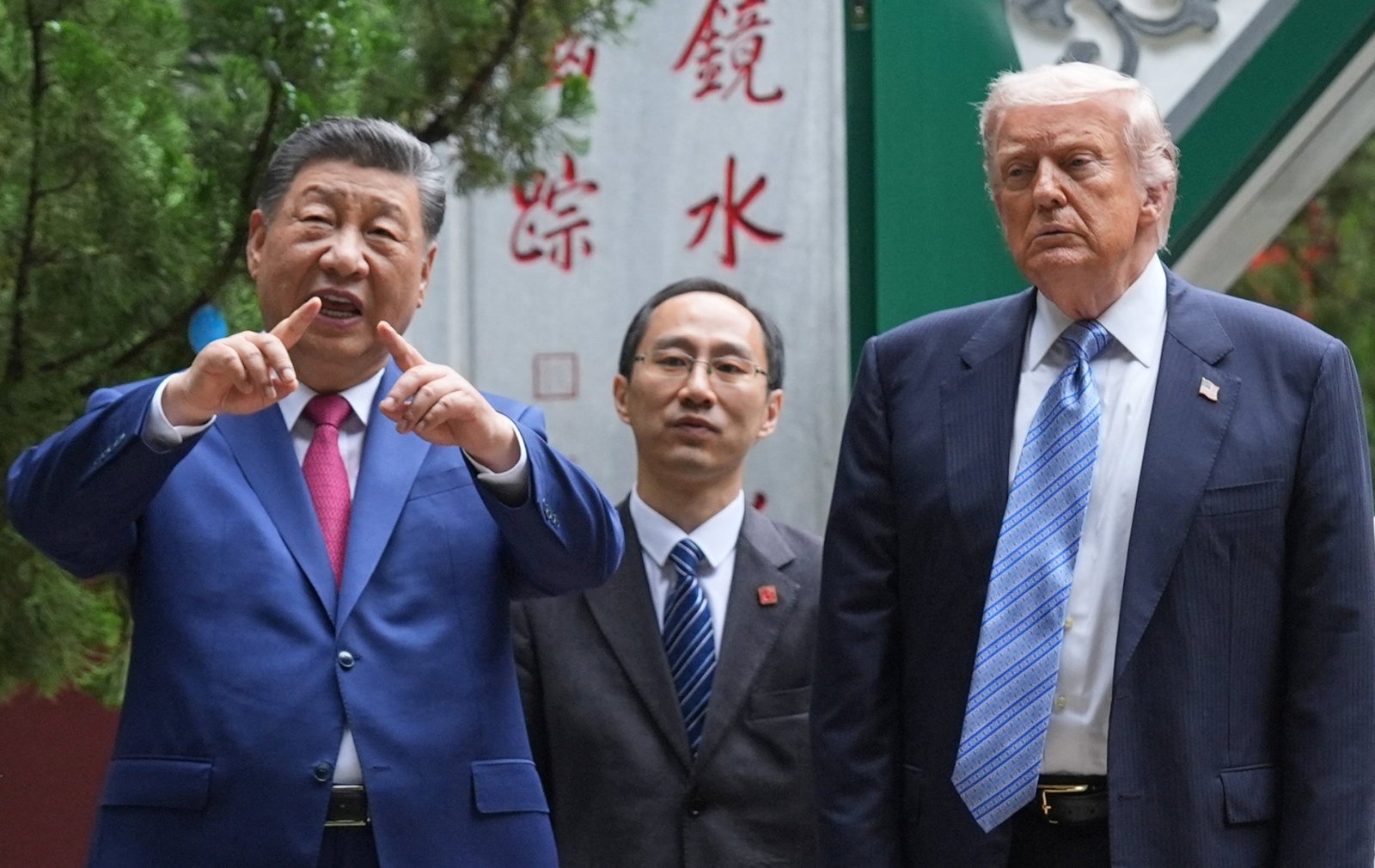
China also raises the political stakes for Washington. Pressuring major Chinese banks, refiners or commercial institutions risks repercussions for US-China relations and the wider global economy. The effectiveness of Operation Economic Outcast will ultimately depend upon how far Washington is willing to move up this chain.
Defining success
The success of Operation Economic Outcast can be assessed by whether enforcement can progressively constrict the infrastructure upon which evasion depends. For example, if Iran can move the same volumes of oil and money, at comparable speed and cost, with the same range of counterparties, after each successive enforcement action by the US.
Because of the current US naval campaign, physical restrictions on Iranian exports are reinforcing financial pressure. If maritime conditions eventually ease, Iran will almost certainly try to reconstruct the commercial and financial networks needed to restore previous levels of trade. But it is not guaranteed that it will find alternatives—such as networks of intermediaries—available at an acceptable price. The contest is therefore between Iran’s ability to regenerate networks and Washington’s ability to shrink the economic space in which those networks can operate.
Iran’s shadow economy is adaptive. But precisely because it depends on access to the global economy—foreign banks, foreign ports, foreign buyers, foreign currencies and foreign commercial services—it is not autonomous. Those dependencies are its vulnerability. And this includes dependencies on Iran’s own allies, who have the upper hand in their bilateral relationships with Iran.
Operation Economic Outcast will succeed or fail depending on whether Washington exploits Iran’s dependencies, especially its situation with China. What works in the US’s favour is that Iran’s shadow economy is a paradox: the more elaborate it becomes, the more intermediaries and partners it needs—and therefore the more enforcement points it creates for the US.