
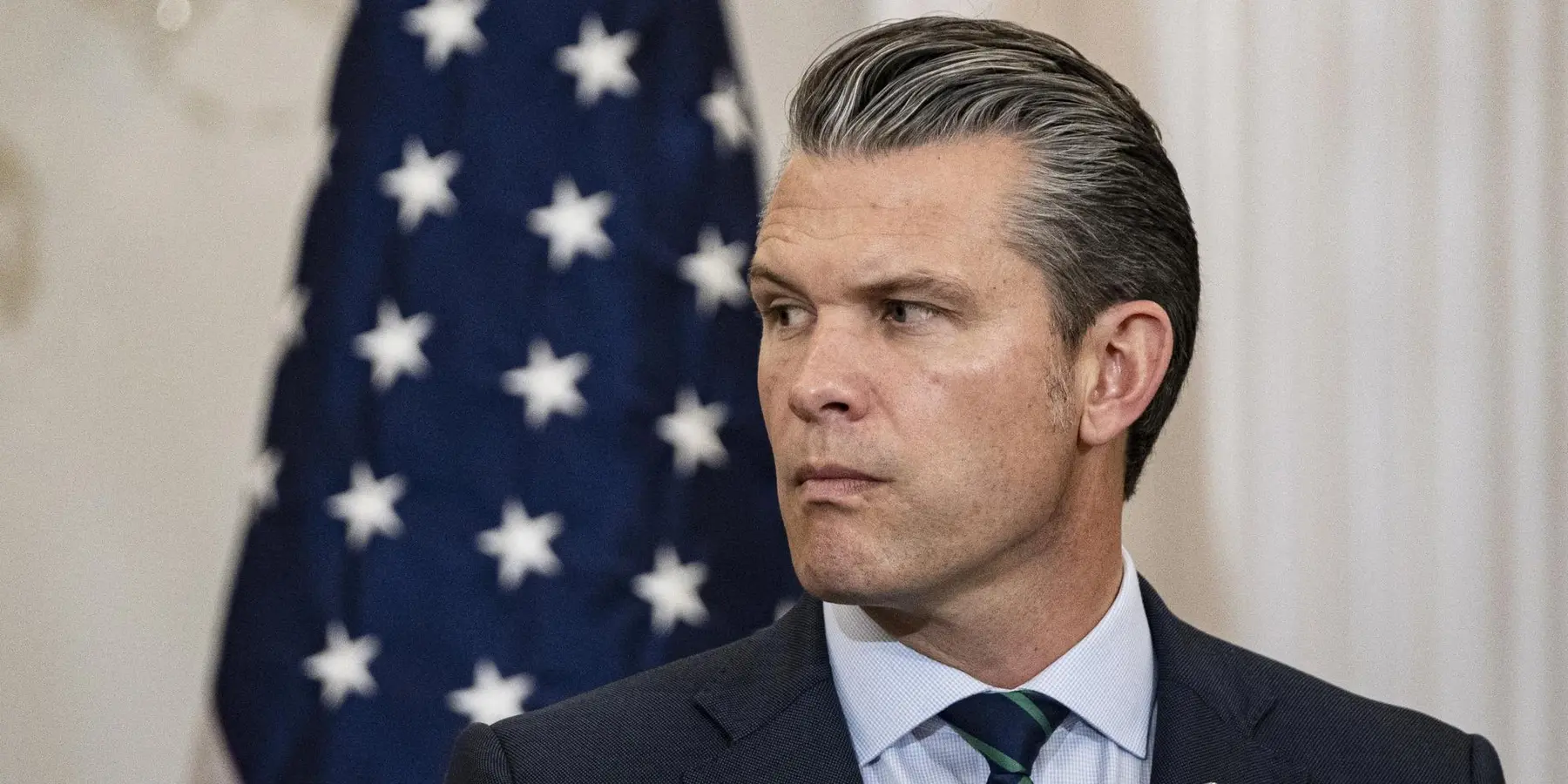
Secretary of Defense Pete Hegseth endorsed an air-only Iran war, failed to warn about unachievable objectives and depleted missile stockpiles, and dismissed reports of low troop morale, leaving President Trump trapped in a conflict without a viable path to victory.
The confirmation of Pete Hegseth as secretary of defense placed a political loyalist at the center of a war whose strategic premises remained untested. According to the president’s own account, Hegseth encouraged military action against Iran rather than challenging its feasibility.
A defense secretary bears responsibility for telling the commander in chief when available force cannot achieve declared political objectives. The secretary instead endorsed an air and missile campaign that lacked any plausible path to regime change, while failing to warn that such operations would deplete critical munitions. Those stockpiles include long-range cruise missiles, interceptors, and naval weapons essential to deterrence in Europe and the Pacific.
The war has not produced victory, and it has eroded readiness, morale, and congressional confidence. The secretary also dismissed reports of exhausted sailors and shrinking inventories as media distortions, deepening the gap between official claims and conditions on the ground. President Trump now owns a conflict he cannot win and a defense chief who cannot manage it. Removing the secretary would not repair the strategic damage, but retaining him guarantees further drift. The case for dismissal rests on competence, not politics.
Hegseth Misled Trump on Iran
It’s hard to determine who is more under siege today – the mullahs of Iran or the U.S. secretary of defense who is prosecuting the war against them.
For months, negative stories about Secretary of War Pete Hegseth have peppered major newspapers. These include everything from his seeming “war on DEI” within the department, to combative engagements with members of Congress, to shade being thrown even by President Donald Trump himself on the lack of success in the (second) Iran War. As the midterms loom, one wonders if the president is ready to pull the plug on Hegseth in an attempt to distance himself from the failure of the Iran war.
President Trump should have pulled the plug long ago.
A Nominee With Two Caveats
On November 12, 2024, I went on NBC News when Hegseth had been announced as Trump’s nominee for secretary of defense and argued that Hegseth might be just what we need, instead of another standard military-industrial-complex “veteran” who never met a war he didn’t like. But I included two key caveats in my support.
First, I argued that he had to be different from his predecessors and not just be a yes-man who prosecutes wars even if a sober analysis reveals we could not win them. Second, I warned that if we continued to support other wars and saw our stocks of key weapons systems plummet – especially missiles – he had to tell the president we could not go down that path (as it would put our own national security in unnecessary peril). Hegseth violated both of those warnings.
No Viable Air-Only Strategy
On the first point, when the president said he wanted to launch an air and missile-only war against Iran, the Hegseth should have been the first person to tell the Commander-in-Chief that it doesn’t matter what policies he wants to accomplish, there was no viable air-only military strategy that could bring the Iranian regime to its knees. To try anyway would be to set the country into certain failure.
Missile Stocks Drained Dangerously
On the second point, to make the attempt would be to drain the stocks of our key offensive and defensive missiles (JASSM Long Range Cruise Missiles, Tomahawk missiles, PAC3 interceptors, and THAAD interceptors) to alarmingly low levels, which would put our global security requirements into danger.
Trump Blames His Cheerleader
Hegseth failed on both of these points, and in doing so, helped set the president up for failure.
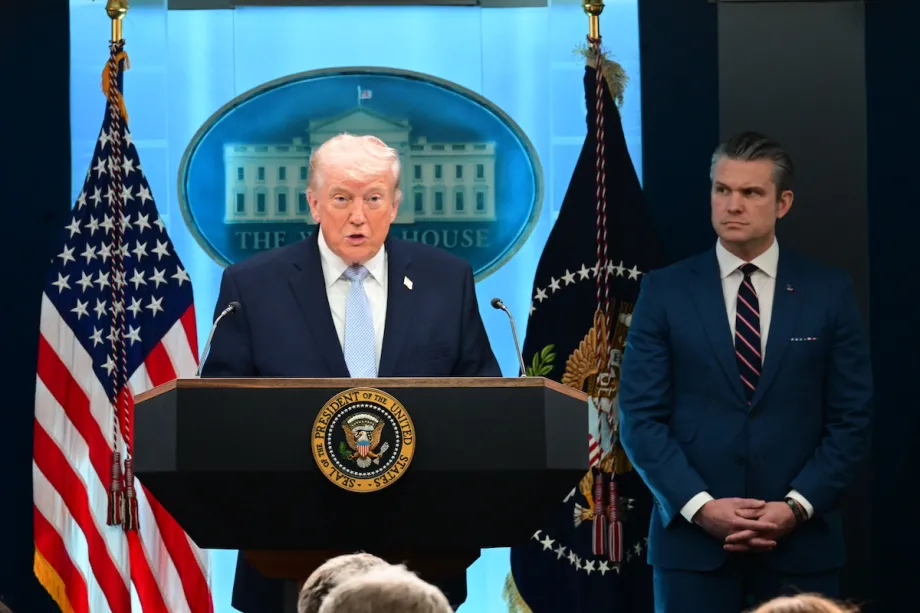
In fact, Trump himself threw Hegseth under the bus in late March, claiming that far from arguing against the war, Hegseth was its chief cheerleader. “Pete, I think you were the first one to speak up,” Trump said. “And you said, ‘Let’s do it.’” On March 4, just days into the war, Hegseth went to the Pentagon podium and declared, “I stand before you today with one unmistakable message about Operation Epic Fury: America is winning decisively, devastatingly and without mercy.”
Any objective assessment showed that we were not, in fact, winning. Now more than six months later, it is painfully clear there is no path to winning this war short of a full-scale ground invasion.
Ignoring Depleted Stockpiles
The regime change effort has badly depleted our most vital offensive and defensive missile stockpiles. Has the secretary of defense acknowledged this depletion and done something to reverse it? To the contrary, he ignores the problem and pretends it doesn’t exist. Just days ago he said, “We’ve got no shortage of munitions,” adding “our stockpiles of defensive and offensive weapons allow us to sustain this campaign as long as we need to.” That’s not even fooling the president; Trump reportedly blasted Hegseth at a Camp David meeting for running low on ammunition.
The secretary also is unwilling to acknowledge that the war is having a devastating impact on deployed troops, including those aboard the USS Abraham Lincoln. Like he did when he downplayed the dwindling ammunition stockpiles, Hegseth also accused troops’ and their families of ‘fake news’ and declared that morale aboard the aircraft carrier was good and that the media had “completely misrepresented” conditions. Sailors and their family members disagree.
Hegseth Must Go Now
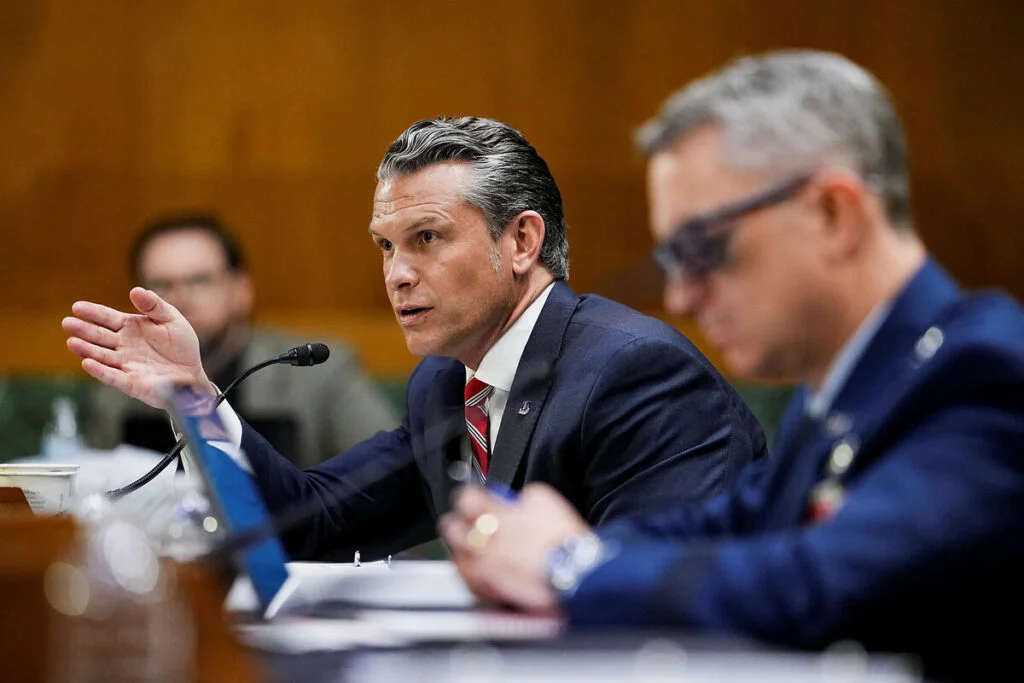
Whether it was failing to advise his boss about the genuine capabilities and limitations of the U.S. Armed Forces, not knowing whether a war was winnable, or failing to provide leadership to the deployed troops, Secretary of Defense Pete Hegseth is clearly unqualified for the task.
President Trump is now deep in a war we cannot win. The last thing he needs is a defense secretary who doesn’t know how to do his job. Whether politically expedient or not, it’s time for Hegseth to go.