
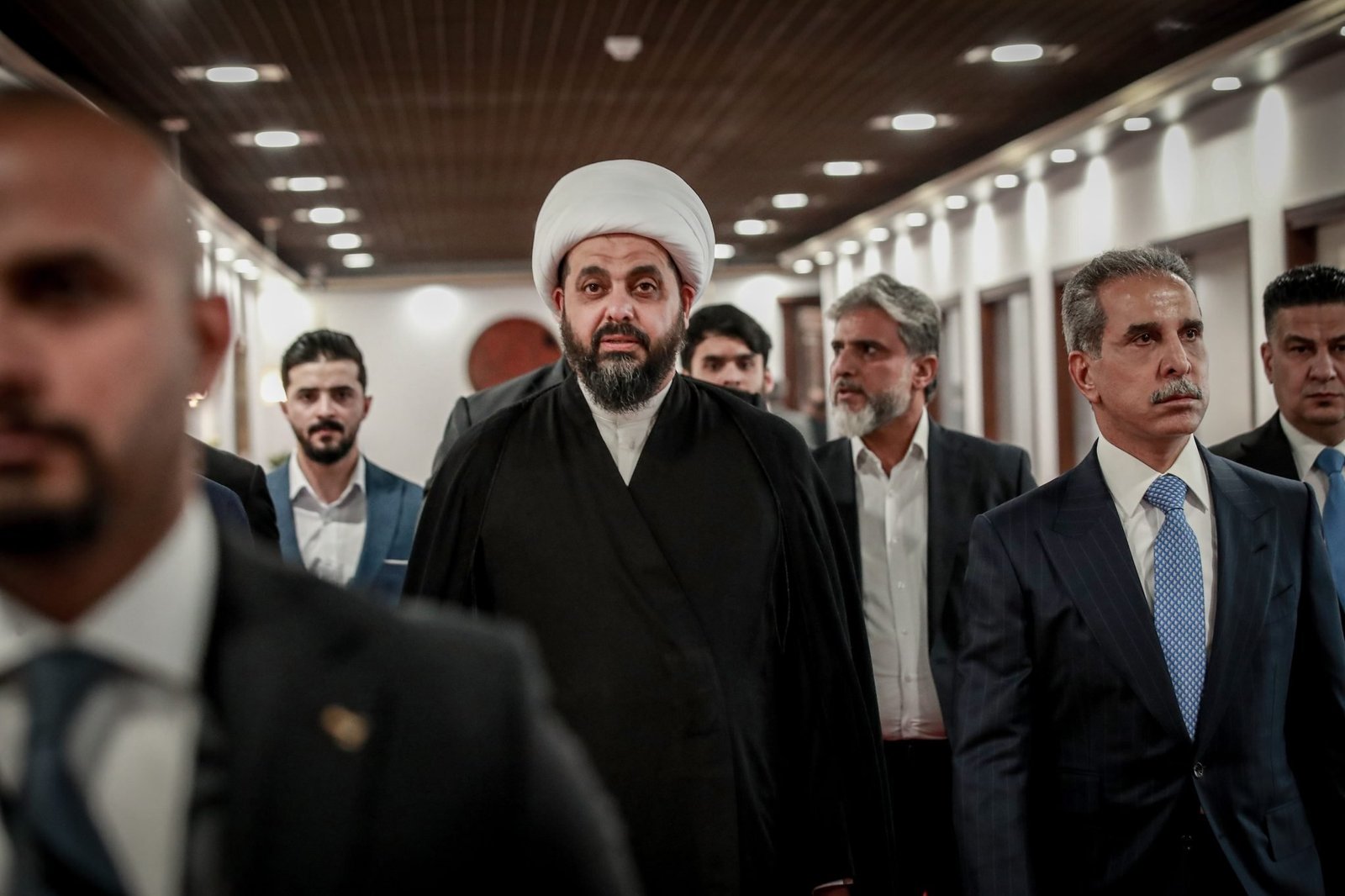
Iraq’s most powerful armed factions recalibrate from ideological resistance to institutional preservation, driven by external pressures, political entrenchment, and a shared survival calculus with Tehran that renders disarmament insufficient to dismantle their influence.
Iraq’s post-2003 landscape has served as a laboratory for hybrid security governance, where non-state armed groups have repeatedly outperformed formal institutions in consolidating territorial and political control. The arc of Iraqi militias from the Mahdi Army’s sectarian mobilization through the Popular Mobilization Forces’ anti-ISIS campaign to their current ministerial strongholds encapsulates a broader regional pattern: violent non-state actors convert battlefield legitimacy into durable state capture.
This transformation has not followed a linear path of ideological commitment but rather a pragmatic calculus of institutional survival. As external pressures from Washington, Israeli military operations, and Tehran’s regional retrenchment converge, the strategic priorities of these armed factions have undergone a measurable shift. Confrontational “resistance” postures are being downgraded in favor of safeguarding parliamentary blocs, economic networks, and patronage systems accumulated over years of political penetration.
The central tension no longer hinges on whether Iraqi militias will relinquish their weapons but whether the state can absorb them before their embedded influence becomes irreversible. This reorientation, marked by factional announcements of disarmament and a conspicuously subdued response to alleged Israeli bases on Iraqi soil, signals an organizational maturity that prioritizes longevity over ideological theatrics.
Iraqi Militias Rise from Ashes of War
Iraq has long offered fertile ground for armed groups operating outside state authority. The Mahdi Army that emerged after 2003 showed how readily such forces could take root, and sectarian militias played a major role in the upheaval of the mid-to-late 2000s—confounding the U.S. occupation, deepening Iraq’s fault lines, and setting the stage for the rise of the Islamic State (ISIS) the following decade.
The war against ISIS united Iraq under one cause and led to a renaissance for the militias. Following the fall of Mosul in 2014 and Grand Ayatollah Ali al-Sistani’s call for Iraqis to defend the country, the mobilization that produced the Popular Mobilization Forces (PMF) transformed scattered armed actors into powerful organizations with fighters, weapons, and popular legitimacy. After ISIS’ territorial defeat within Iraq in 2017, these groups rebranded themselves as defenders of sovereignty against the United States, Israel, and perceived external threats. Their tight-knit organization and ability to effect change on the street, combined with Baghdad’s relative weakness, gave them the space to entrench themselves within the state, taking over ministries and lucrative sources of patronage.
Baghdad’s Dual-Power Reality Bites
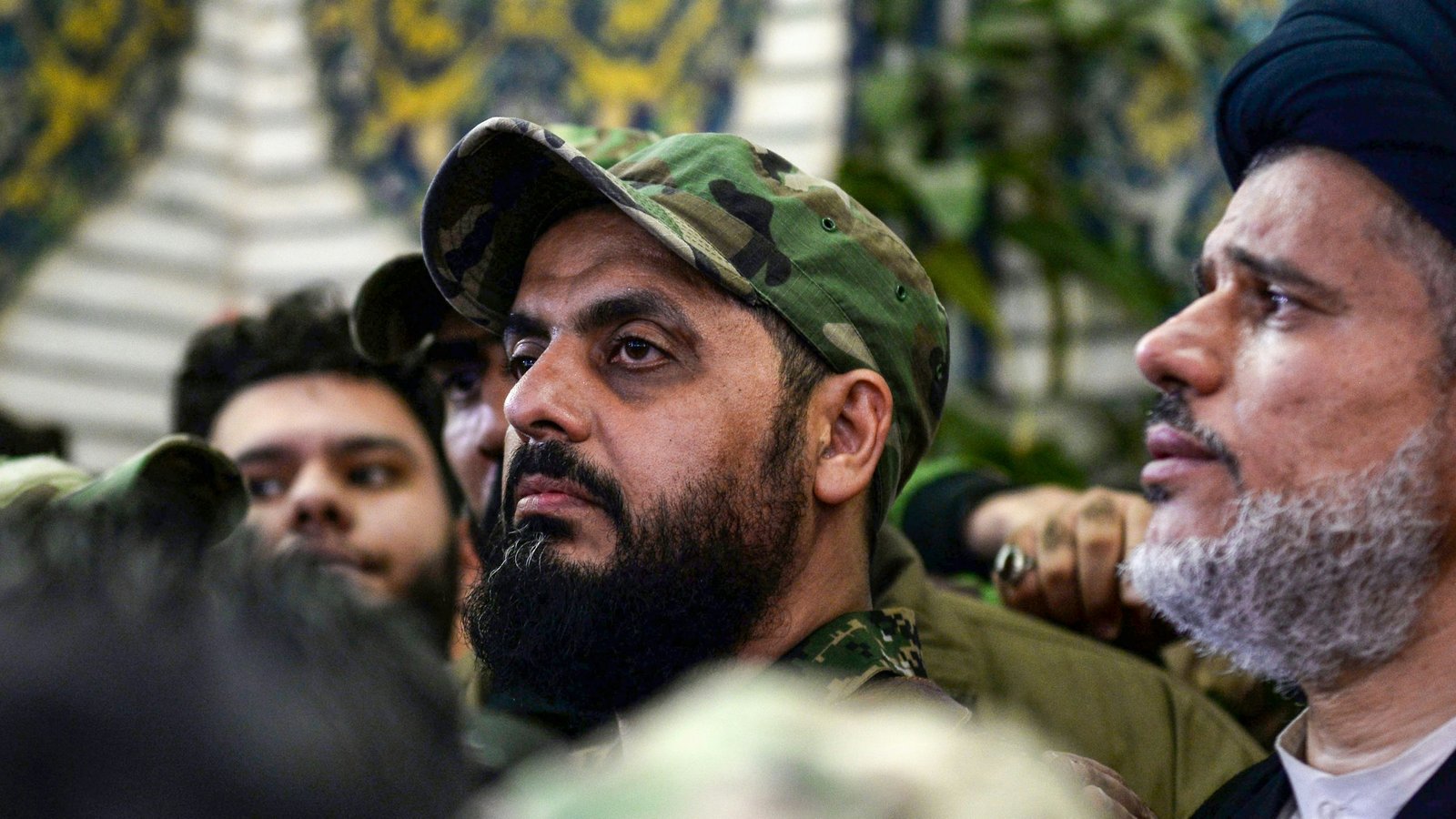
Today, Iraq operates under a dual-power structure in which a formally legitimate government coexists with armed networks that hold the real decision-making power. Over time, the priorities of these groups have shifted. Growing American pressure on Baghdad to curb the militias, ongoing Israeli military operations across the region, and Iran’s increasingly constrained position have transformed the strategic calculations of Iraq’s most powerful non-state actors. These pressures do not necessarily signal decline. Instead, they may be accelerating the integration of armed organizations into Iraq’s political order.
Signs of recalculation are already visible. After months of regional escalation and attacks on Gulf states, U.S. facilities, and the Kurdistan region of Iraq, several factions have announced plans to sever ties with the PMF and place their weapons under state control.
At the end of May, Muqtada al-Sadr announced that his faction, Saraya al-Salam, would move in this direction, with Asaib Ahl al-Haq and the Imam Ali Brigades making similar announcements the following week. Whether these moves will actually amount to lasting change for the militia structure in Iraq remains far from certain. Still, these decisions reflect a broader reality: the central challenge today for Iraqi militias is not expanding control through acts of “resistance,” but preserving the influence they have accumulated over years of political expansion.
From Armed Movements to Political Stakeholders
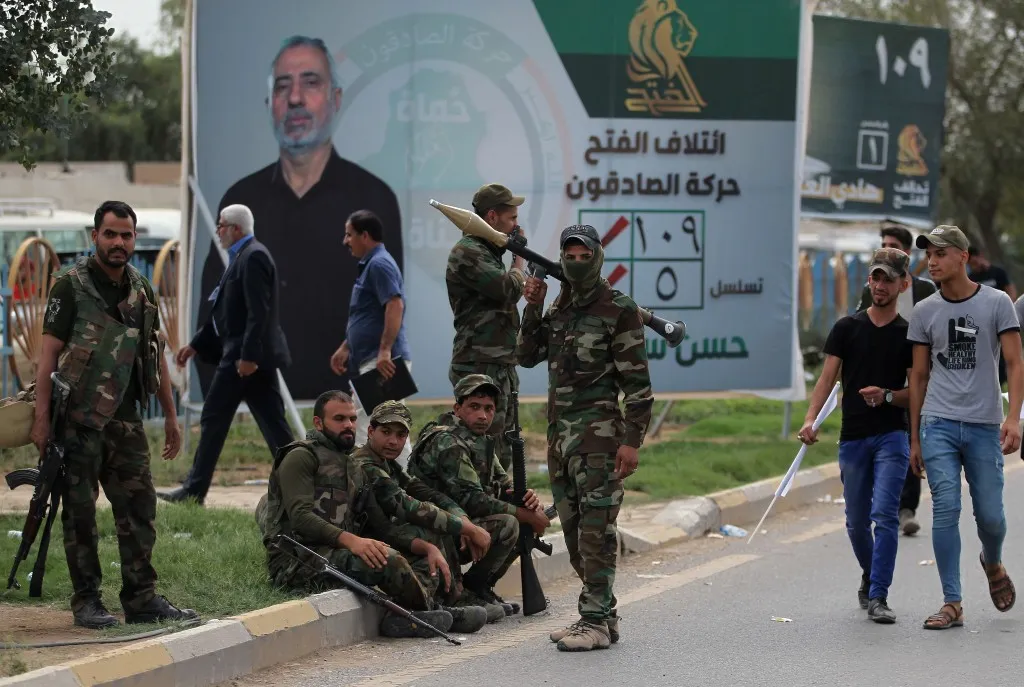
What began as armed organizations operating outside state structures evolved into actors capable of competing in elections, securing parliamentary representation, influencing legislation, and shaping government formation. Their leaders moved fluidly between security institutions and electoral politics. In Iraq’s November 2025 elections, parties linked to major factions won roughly 80 of 329 parliamentary seats, a weight that makes executive representation likely and gives them a durable foothold in the state.
The militias’ transformation from street brawlers to politicians with a stake in Iraq’s formal governance underscores how deeply they have become embedded within the state. Even if armed formations were dissolved, reorganized, or formally integrated into the state, the political networks these organizations built would remain intact.
Patronage Trumps Insurgency for Leaders
More importantly, this transformation gave faction leaders something they previously lacked: a stake in the survival of the existing political system. In the past, chaos and unrest served as the militias’ primary tool for maintaining relevance, showing their ability to effect change independent of the formal government. Now that the militia leaders have positions within that government, they depend on its continuing function in order to preserve their political capital, economic interests, and patronage networks.
While these groups still present themselves as part of a resistance axis, their actions increasingly suggest that preserving influence now outweighs direct confrontation. The factions’ identity remains tied to narratives of resistance, yet direct confrontation with militarily superior adversaries now threatens the institutional gains accumulated since their rise in the war against ISIS.
The Israeli Question and the Limits of Resistance
As part of their transformation into members of the Iraqi establishment, the militia leaders have avoided provoking conflict, even when that conflict serves the interests of anti-American “resistance.” The clearest illustration of this shift lies in their muted response to reports of Israeli bases inside Iraqi territory. Various armed groups have previously been linked to attacks on U.S. interests, facilities in Erbil, and regional targets in Jordan and the Gulf.
Since late February, more than 500 attacks have reportedly been launched from or against targets inside Iraq, the majority attributed to factions aligned with Iran. These incidents demonstrated a willingness to act in ways carrying significant regional consequences. Yet allegations concerning Israeli bases in western Iraq, specifically in Anbar Province and areas near Najaf, have failed to produce a comparable military response.
If “resistance” was still the primary organizing principle of these groups, why did an issue seemingly aligned with their stated objectives fail to trigger the expected reaction? The discrepancy suggests that strategic calculation outweighs ideological impulse. Part of the answer lies in a straightforward assessment of consequences. Unlike attacks against regional targets, direct confrontation with Israel risks escalation that could fundamentally alter the balance of power facing these factions, inviting a military response far beyond anything they have previously experienced. A confrontation with Israel or the United States could threaten parliamentary influence, economic networks, and patronage systems whose loss would be difficult to reverse.
Iraqi Militias Heed Tehran’s Survival Calculus
The factions’ behavior cannot be understood apart from Tehran’s own recalculations. The erosion of Iranian influence in the region, increasing pressure on allied organizations, and shifting regional dynamics have forced Tehran to reconsider its priorities. Within this contracting map, Iraq occupies a unique position, offering geographic proximity, political access, economic connectivity, and long-established relationships unmatched elsewhere. Following setbacks to its proxy networks across the region, Iraq has become one of Tehran’s most important remaining pillars of influence.
Preserving these networks has therefore become more valuable to Tehran than sacrificing one of its last major centers of influence in a confrontation. That calculation is shared by faction leaders, who have spent years converting battlefield influence into valuable political capital. A convergence of interests has emerged in which survival for both Tehran and the factions has become the strategic objective, and the language of resistance persists even as decision-making is shaped by preservation and adaptation.
Disarmament Alone Will Not Solve Iraq’s Militia Problem
This reality challenges a persistent assumption in Iraqi and international policy circles that dismantling, integrating, or restructuring armed factions would fundamentally alter Iraq’s balance of power. That argument was persuasive a decade ago, when military strength was the primary source of factional influence. Today, many of these groups derive influence from their positions within political institutions, state structures, and economic networks, meaning their long-term survival is dependent on preserving access and influence within the state itself. Yet much of the debate surrounding Iraq’s factions still focuses on weapons, military structures, and the prospect of integration or dissolution, overlooking the deeper transformation that has already taken place.
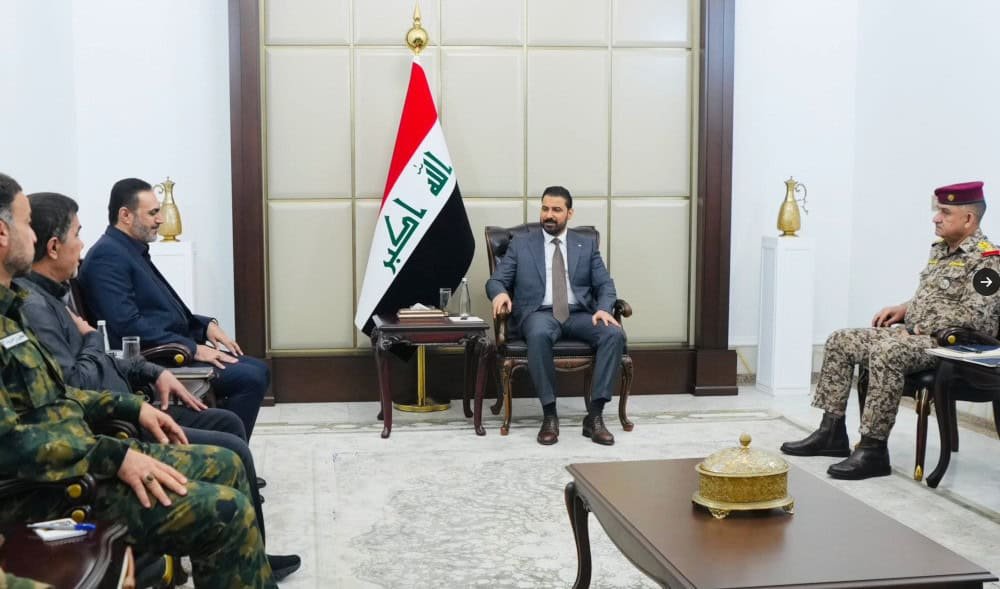
This carries direct implications for policymakers in Baghdad and Washington. Efforts focused exclusively on disarming or restructuring armed factions address only part of the challenge. Such measures might alter the military balance, but they will not eliminate the political influence that militias have garnered. The PMF, established as an official state body in 2014, remains the institutional channel through which these factions access state funding, weapons, and legal legitimacy. This is precisely why a purely security-focused approach falls short.
As the priorities of armed factions have evolved, Iraq is left facing both an opportunity and a risk: groups with a stake in stability may be less inclined toward reckless escalation, but their deep integration into state institutions also complicates efforts to reduce their long-term influence. The deeper question is no longer whether factions will hand over their weapons, but whether the state can absorb them before their influence becomes further entrenched.