
US-hosted Lebanon-Israel talks reassert state sovereignty but Hezbollah’s refusal to disarm and capacity for coercion constrain durable outcomes. Progress requires sequenced confidence-building: Israeli restraint toward Lebanese infrastructure paired with institutional curbs on Hezbollah’s financial and operational spac
Rare direct talks are unlikely to succeed in the long-term without Hezbollah disarming, but they are a welcome opportunity for the Lebanese state to regain its authority in foreign policy and pursue confidence-building measures with Israel.
The US hosted direct talks between Lebanon and Israel in Washington this week against the backdrop of Israel’s ongoing strikes targeting Hezbollah in Lebanon.
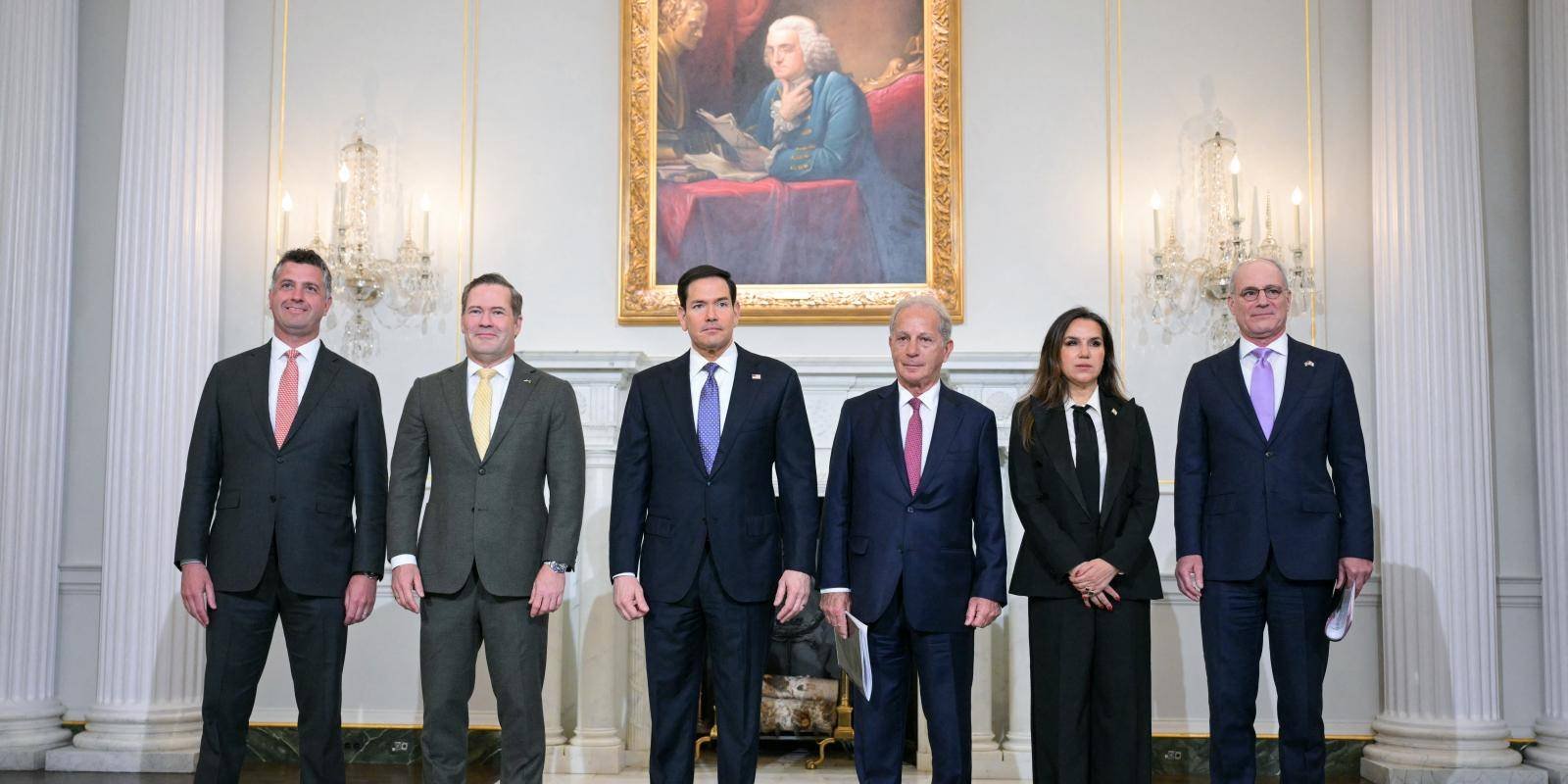
The Lebanese and Israeli ambassadors to the US, along with the US ambassador to Lebanon, met in Washington on Tuesday. US Secretary of State Marco Rubio chaired the meeting, which he hailed as a ‘historic gathering that we hope to build on.’
The State Department said that both sides agreed to ‘launch direct negotiations at a mutually agreed time and venue.’
While significant hurdles remain, most notably the issue of Hezbollah’s disarmament, these talks should be welcomed as an important initial confidence-building measure that lays the ground for much-needed future negotiations. Importantly, this reasserts the Lebanese state’s independence and authority in foreign policy.
New cast, same plot?
The talks bring back memories of when the two sides met directly and signed a short-lived accord during Lebanon’s 1975-1990 civil war.
In 1983, a year after Israel launched an invasion of Lebanon with the aim of expelling Palestinian militants, Lebanese President Amin Gemayel entered into negotiations with Israel. On May 17 of that year, both parties reached an agreement that briefly ended the state of war between the two countries.
However, the agreement lasted only a short while due to opposition from Syrian President Hafez Assad and pro-Syrian factions in Lebanon.
Today, the threat to Israel from Palestinian militants in Lebanon is gone. So is the Assad regime. But Hezbollah remains a formidable security challenge to Israel. This is despite the group having been severely weakened over the past two years due to Israel decapitating its leadership, penetrating its ranks and degrading much of its military capacity.
But Israel cannot simply oust Hezbollah – a Lebanese party with Lebanese fighters, parliamentarians, ministers and supporters – from Lebanon like it did with the Palestine Liberation Organization in the 1980s. Nor can it disarm Hezbollah without launching another deep and costly ground invasion, with severe consequences for Lebanon.
Instead, Israel says it is trying to create a buffer zone in southern Lebanon – like it did in 1985-2000 – to push Hezbollah away from the border and reduce the threat of missile attacks or ground infiltration. Hezbollah restarted drone and missile attacks against Israel following the US-Israeli war on Iran, the group’s main patron.
These Israeli strikes and evacuation orders have created a dire humanitarian situation in southern Lebanon. More than 80 towns and villages have been emptied and more than 15 per cent of Lebanon’s population displaced.
Last week, Israel bombed more than 100 targets across the country in 10 minutes, killing hundreds of people. The wave of strikes came despite the US-Iran ceasefire, which Tehran and Islamabad said included Lebanon (a claim rejected by the US).
Hezbollah’s opposition
Lebanese President Joseph Aoun called for direct talks with Israel in March, but until last week Israeli Prime Minister Benjamin Netanyahu had refused.
President Aoun enjoys a popular mandate, but he faces stiff resistance from Hezbollah. The group insists on a ceasefire and an Israeli withdrawal from Lebanese territory as preconditions for talks.
US Vice President JD Vance said last week that Israel had offered to ‘check themselves a little bit in Lebanon’ to avoid undermining the US-Iran ceasefire. However, Israel has continued to strike southern Lebanon and has intensified its ground operations in the town of Bint Jbeil.
Israel is likely aiming to push the Lebanese government to demonstrate its commitment to disarming the group, which it is committed to under UN Security Council Resolutions 1559 and 1701, as well as the 2024 ceasefire deal. Hezbollah has categorically refused to disarm.
While Hezbollah’s support base is a minority within Lebanese society, the group has the military and intelligence capabilities to eliminate its domestic political opponents and pressure the Lebanese government, both of which it has done before.
This week, Hezbollah political council member Wafiq Safa said that his group will not abide by agreements that may result from the talks. During the talks in Washington, the group claimed it launched at least 24 attacks against Israel and Israeli troops.
Unable to prevent talks
Given these challenges, it’s easy to be pessimistic about the fate of any future negotiations.
But neither Tehran nor Hezbollah have been able to torpedo the talks so far. In a combative speech, Hezbollah chief Naim Qassem urged the Lebanese government to cancel the talks but was unable to prevent Tuesday’s meeting in Washington.
Politically, Hezbollah doesn’t have the numbers in Parliament to reverse the Lebanese government’s decision. And if it withdraws its ministers from the cabinet in protest, Prime Minister Nawaf Salam can replace them with other Shia figures with no allegiances to Iran.
Last week, Hezbollah’s supporters protested against the government. But the small demonstration appeared to have little participation from Hezbollah’s political allies including Amal, led by Shia Lebanese parliament speaker Nabih Berri.
Hezbollah could use its weapons against its fellow Lebanese, as it has done previously. But this would be a high-risk move at a time when its ally, Iran, has been severely weakened by the US and Israel.
Hezbollah also has much to lose from a return to civil war. It would likely face armed conflict with the Lebanese army, other Lebanese factions that might seek to re-arm, and fighters loyal to Syrian President Ahmed al-Sharaa. The near-constant threat from Israeli drones would make it virtually impossible for Hezbollah to mount any effective military campaign in Lebanon.
Confidence-building measures
None of this means that Lebanon–Israel talks going forward are likely to yield positive results.
The current mess is primarily a result of Hezbollah again dragging Lebanon into war with Israel. Moving forward, Israel will expect results, not just speeches, on Hezbollah’s disarmament.
Given the deeply rooted nature of the Hezbollah problem, the only way to approach the next round of negotiations is for both sides to pursue confidence-building measures. The initial meeting in Washington is a welcome and historic first step, but both sides should now take more concrete action.
Israel must recognize that this Lebanese government presents the best chance to disarm Hezbollah and disassociate the country from Iran. It should avoid further attacks on state infrastructure and urban centres, and particularly Beirut, which risk civilian casualties, undermine the Lebanese government and bolster Hezbollah’s narrative of resistance.
The Lebanese government, meanwhile, should make it as difficult as possible for Hezbollah to operate. Politically, it should consider expelling Hezbollah ministers from the cabinet, given that officials from the group have accused the government of treason. Financially, the government must outlaw all of Hezbollah’s financial activities. And militarily, it could instruct the army to deploy in all of Beirut including its southern suburbs, confiscate any arms belonging to Hezbollah in the capital, and arrest anyone endangering civil peace.
To succeed in the negotiations with Israel, the Lebanese government needs the diplomatic backing of Saudi Arabia and other Arab countries as well as increased military assistance from the US. The Lebanese army requires more tools and funding to be able to carry out the various tasks related to Hezbollah’s disarmament.
The more quickly and credibly the Lebanese government acts, the more likely Israel will cooperate, and Washington and the Arab states will lend their support. Tangible progress on Hezbollah’s disarmament, even if gradual, will help both sides discuss how to institute a new security arrangement in the south.
Eventually, this could lead to the demarcation of the Lebanon-Israel land border, a total Israeli withdrawal, the freeing of all Lebanese prisoners in Israel, and ultimately, a formal peace deal. It’s a long and winding road, but there’s no better alternative.