
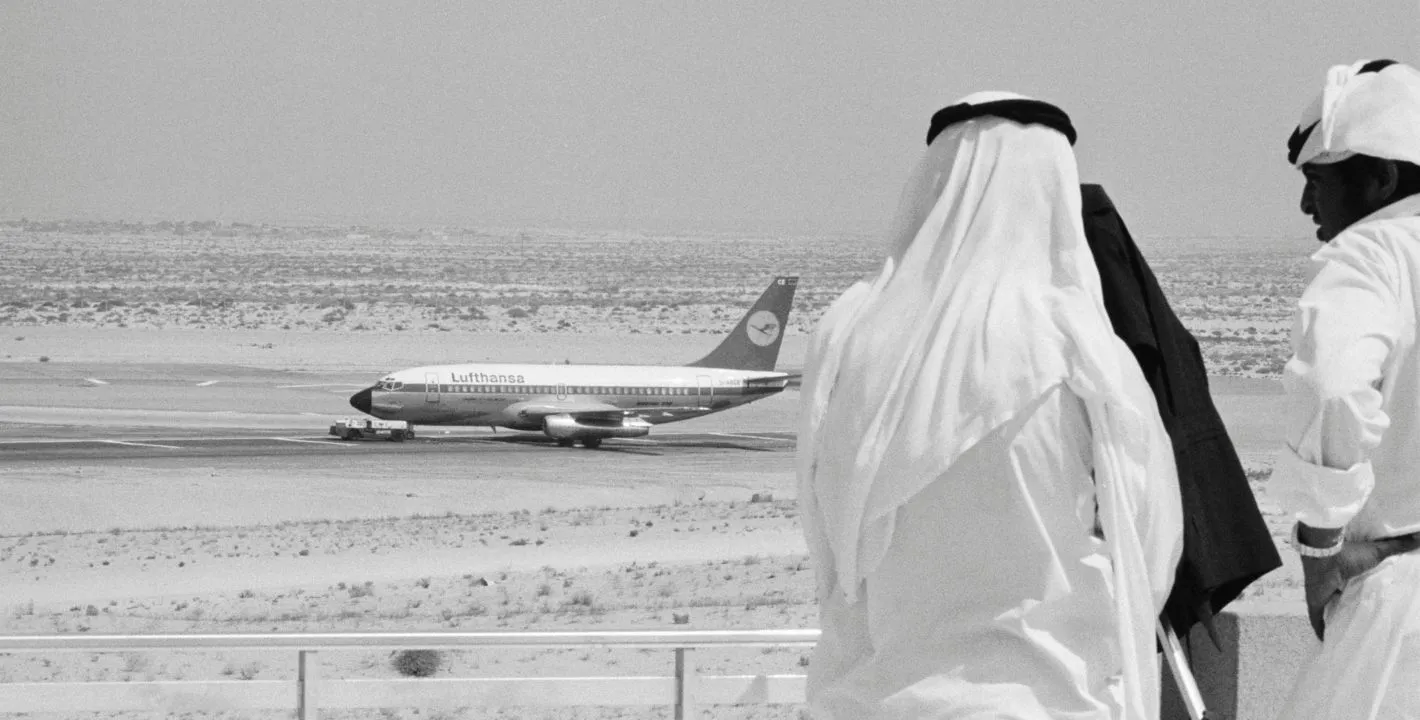
Jason Burke discusses The Revolutionists, arguing that Marxist and Islamist militants in the 1970s and early 1980s shared revolutionary goals, borrowed tactics, and reemerged through new actors when repression blocked reform.
The revolutionary ferment that swept the Middle East during the 1970s and early 1980s did not belong to one ideological camp. Jason Burke’s account places self-described Marxist vanguards and radical Islamist factions in the same analytical field, treating both as responses to acute state failure and blocked mass participation. For many Middle East revolutionaries, the destruction of existing political systems was inseparable from the promise of total social renewal.
Burke argues that leftist militants supplied the vocabulary, organizational methods, and repertoires of urban violence that later Islamist groups absorbed after the left had been repressed and fragmented. This transfer of tactics rather than doctrine reveals a deeper continuity: when mass grievances are suppressed instead of addressed, revolutionary energy does not disappear; it migrates.
The book’s treatment of figures such as Ilich Ramírez Sánchez and events from the Iranian Revolution to the Grand Mosque seizure shows how weak states, Cold War rivalries, and expanding global transport networks allowed non-state violence to escalate before modern surveillance and incarceration capacities existed. By calling his subjects revolutionists rather than terrorists, Burke foregrounds political content without excusing the harm they caused. Middle East revolutionaries, in this reading, are not aberrations but products of a particular regional history.
Middle East revolutionaries shared one battlefield
Michael Young: What motivated you to write The Revolutionists, and take it in the rather original direction of placing both purported Marxists and Islamists in the same category? What did you want readers to take away with them?
Jason Burke: Original or not, I think it’s quite unavoidable if you’re going to be writing about extremist violence in the 1970s and early 1980s in the Middle East to write about both the left and Islamists. For a start, both are revolutionary projects seeking to wholly transform society, politics, economics, and culture too. In their most extreme forms, both originate in the mid to late 1960s and both share some targets, notably the United States and Israel.
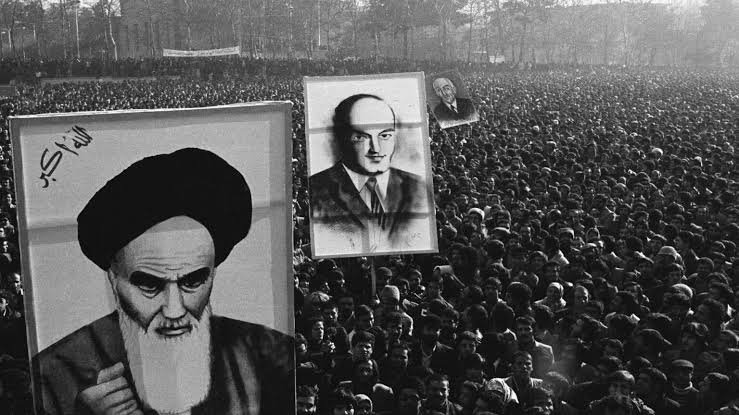
How the Left Fed Islamist Militancy
The left was quite obviously an enormous influence on the Islamists. How could this be otherwise given the environment in which even the most radical religious activists were operating and formulating their ideas? The Islamists borrowed significant concepts and much vocabulary as well as tactics from the left.
There were many former leftists who became radical Islamists, particularly in Lebanon and particularly in the later years of the period that I look at when the left had been repressed and had fragmented and Islamism appeared to offer a new and potentially successful way of radically changing the world in which these individuals lived. In a sense, the revolution that was sought became “Islamized”—but that it was still a revolutionary project seems to be without doubt.
Repression Does Not End the Fight
I think this is important for a variety of reasons, but chief among them is the obvious conclusion that if grievances that lead people to violence and protest are not addressed in some way, shape, or form, and the individuals or organizations who are seeking change are destroyed or repressed, then other individuals and organizations will take their place. These may not use the same language or even tactics and may appeal to different sections of the population, but they will still in many cases bring violence in their turn.
Why “Terrorist” Obscures More Than Explains
MY: In the 1980s, the writer Christopher Hitchens wrote a famous essay titled “Wanton Acts of Usage,” in which he shot down all definitions of the word “terrorism,” describing the word as a “pseudoscientific propaganda word,” one that was often tautological or circular. Your thoughts on this, and did it shape your thinking while writing? Were you trying to say something by identifying the subjects of your book as revolutionists and not terrorists?
JB: Absolutely, these are all legitimate questions and debate about the definition of terrorists and terrorism is a useful and important one. Successive regimes everywhere in the Middle East region and well beyond have used the word “terrorists” to describe those they don’t like.
The French used it in Algeria, the Americans used it in Vietnam, the Israelis use it to describe Palestinian armed groups, and so on. Then of course there’s the whole question of state terrorism, which is to some extent beyond the scope of my book but is also an important and justified focus of study and discussion. This is all dealt with to an extent in the book itself, particularly when I describe the bitter debates at the United Nations in the early 1970s about the nature and definition of terrorism and really the argument over that classic aphorism that “one man’s terrorist is another man’s freedom fighter.”
So, I don’t ever use the noun terrorist in my book or my reporting. I don’t think it is helpful to reduce individuals, with all their complex motivations, identities, and experiences, to a single descriptor as a noun. But then, with all the caveats, I still think it is useful to be able to use the word “terrorist” as an adjective to describe what is a particular set of tactics which aim to use violence, or the threat of violence, to inspire fear among civilians with the aim of influencing governments or communities, or otherwise bringing about change according to a particular recognizable agenda.
So, to answer your specific question about the title of the book, yes it is a way of avoiding using “terrorists” as a noun, but also using “revolutionaries,” which was another way people described these actors at the time, clearly in a much more sympathetic way. It’s a compromise between the two and therefore has all the disadvantages of any compromise, but it has advantages too.
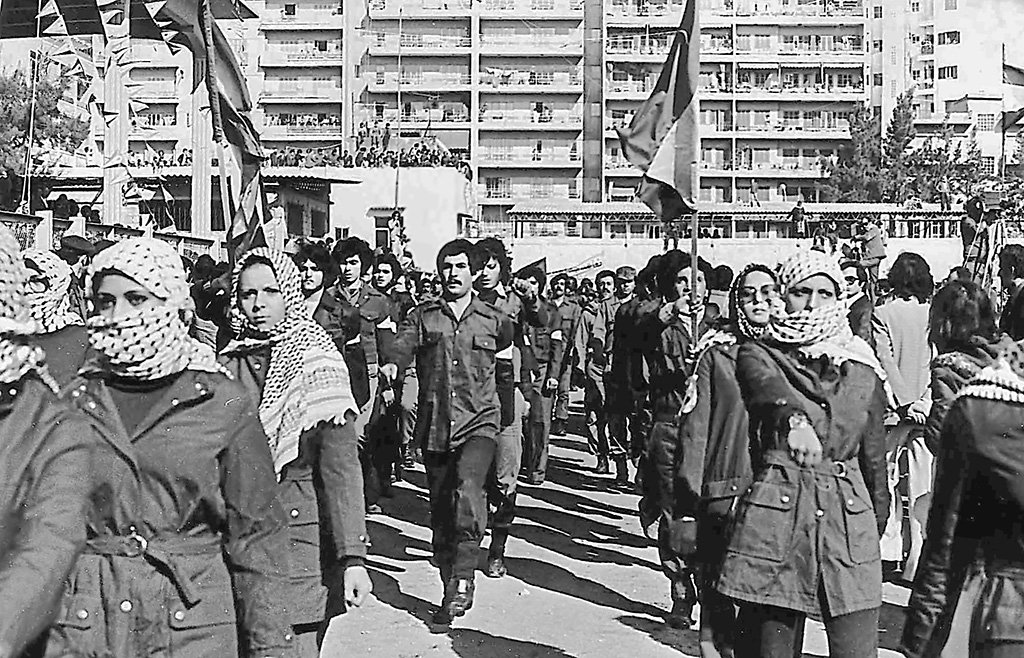
Carlos and the Mercenary Turn
MY: One of the main characters in your book is Ilich Ramirez Sanchez, better known as “Carlos.” His path, in many regards, indicates the direction that some of these movements took, in that he began as an alleged Marxist revolutionary, before establishing a gun-for-hire organization, one with no real ideological agenda, which acted on behalf of states wanting to eliminate their enemies. How would you interpret his choice and what does it tell us about this period?
JB: There’s a lot to say about Ramirez Sanchez—I use his real name in the book because I don’t see why he should be exceptionally allowed an alias whereas others aren’t. That’s all part of the really unsavory and glamorized myth about a man whose activities were in fact sordid and narcissistic and pretty much devoid of any real ideological motivation whatsoever.
I’m not sure he’s representative of the broader Marxist revolutionary movement. He’s certainly very very different from the West Germans or the Japanese or the Italians during that period. He’s really interesting for two main reasons. One is that he’s the world’s first real “celebrity terrorist,” as some have called him, and this says a lot about the media in this period of the 1970s as well as other really interesting issues to do with violence and the consumer society.
The other related reason is that he was the product of a new type of globalization—the word was actually coined by the New York Times in 1974 when Ramirez Sanchez was approaching the height of his notoriety. It created the transport infrastructure that not only allowed him to move around with such ease, but also offered the targets that he and others exploited so easily.
I suppose a third important reason would be that Ramirez Sanchez was allowed to do what he did because of the Cold War and how the dynamics of the superpower conflict played out on the ground, but also how states were really quite weak during this period. They simply didn’t have the capabilities in terms of surveillance or coercion or incarceration that they developed in the decades that followed and that they have now.
Right-Wing Revolutions Are Still Revolutions
MY: Commendably, you cover developments in the Middle East in your book, as opposed to focusing on how militant groups, many from the region, carried out attacks against Western countries. You focus on the Iranian Revolution and the failed takeover of the Grand Mosque in Mecca, but to what extent did these two events constitute revolutionary actions, or counterrevolutionary actions, in that they actually sought to impose more conservative orders?
JB: I think the whole idea of “counterrevolution” assumes that it is an attempt to reverse progress or at least radical change. First of all, I don’t think that either the Iranian Revolution or the failed takeover of the Grand Mosque in Mecca could be described as attempting to reverse any previous change.
They were both very different, in that the former had a very clear and relentless project for the immediate moment that Iran was experiencing, whereas the latter was rooted in a much more apocalyptic vision that was almost deliberately unworldly. Nonetheless, both sought to establish entirely new societies from the ground up, if you like, and so I don’t see why they would be described as counterrevolutions rather than straight revolutions. Otherwise, this would seem to imply that only the left can carry out a revolution while the right is condemned to counterrevolutions. This all feels too much like classic Marxist dialectics for me.
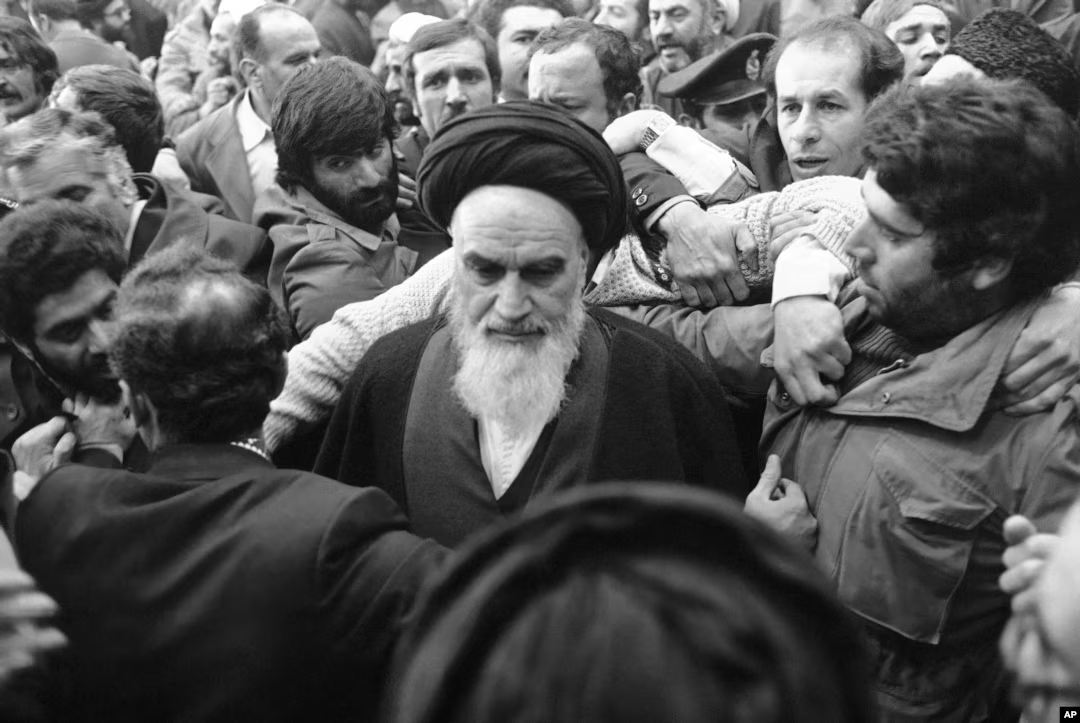
Middle East revolutionaries find new carriers
MY: When it comes to the Arab world, how would you compare the period of revolutionary ferment you cover, which principally encompasses the 1970s and early 1980s, with the revolutionary mood that followed the Arab uprisings in 2010–2011? What do the similarities, if any, or differences tell you?
JB: That’s a great question. I really think it’s very difficult to compare the two periods in any meaningful sense. They are just so radically different in almost every way, other than the fact that a lot of young people wanted to act in a very direct way to improve their own futures and that of millions of other people.
I think this just really speaks to what I said at the outset, which is that people will always want to change and improve things according to their own values and views and vision, and that if they are repressed or eliminated or simply ignored, then radical transformative and often violent energy will simply seek other outlets through other actors.
I think that if you look at the different trajectories of 1960s leftist radicalism in Western Europe and the Middle East you can see this very clearly.
In Western Europe, you had a series of reforms that answered many if not all of the demands of protesters in the 1960s, at least on the social, political, and cultural front, if not the economic one. By the early 1980s, revolutionary extremism in Western Europe had almost disappeared, with those energies now directed into environmental campaigning or identity-based protests, but not into activities that called for the overthrow of capitalism as a structure and system. In the Middle East, there was nothing but violent repression, and this left a vacuum that was swiftly filled by Islamists.