
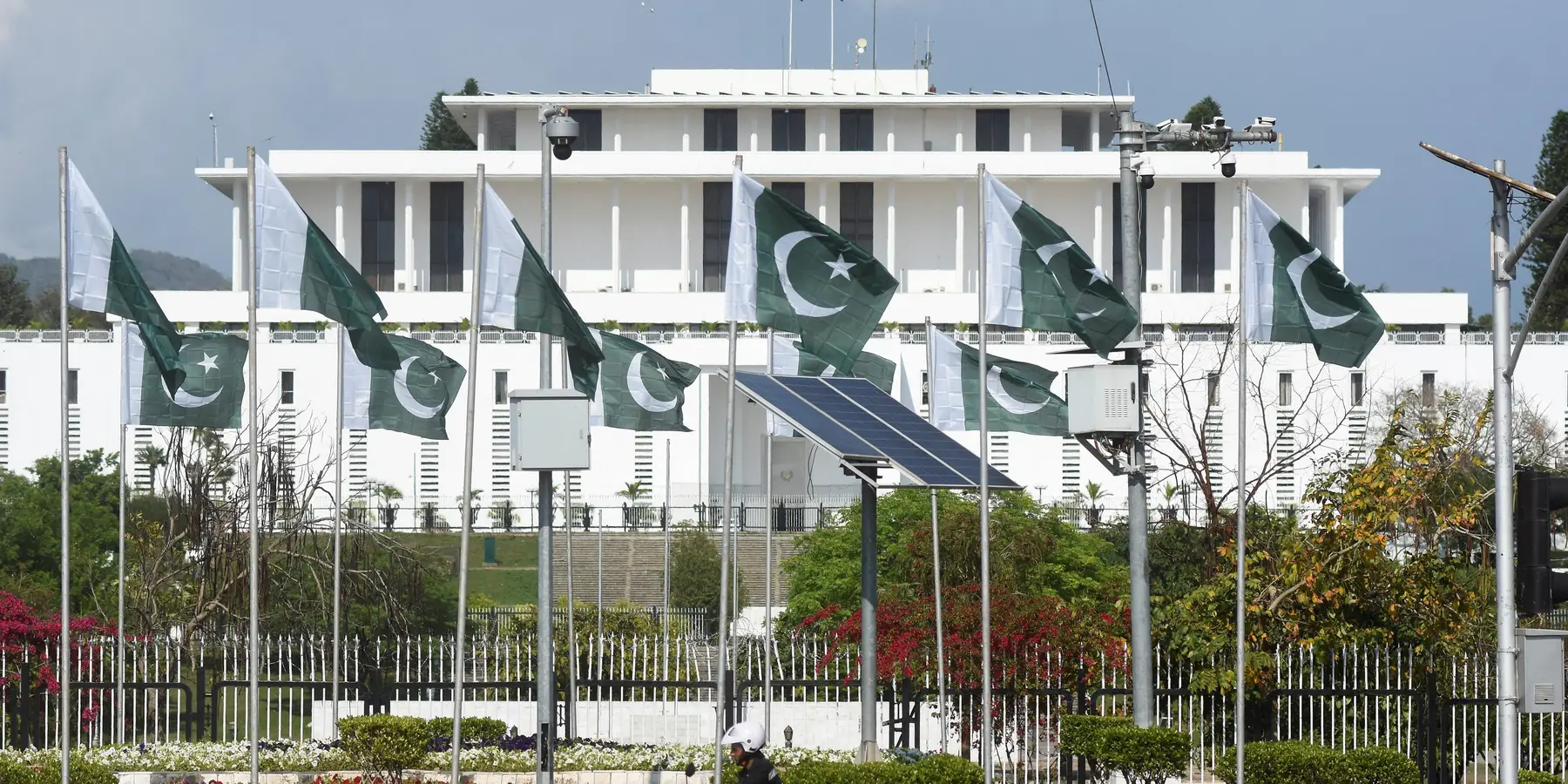
Pakistan opened overland trade corridors to Iran during the US naval blockade, easing Tehran’s economic pressure while mediating the war. Islamabad balances Washington and Tehran, positioning itself as a regional stabilizer and trade hub—risking US sanctions but prioritizing strategic relevance.
Pakistan Iran Trade Routes are rapidly transforming overland logistics across the region as maritime chokepoints face continued disruption. Analysts suggest that these Pakistan Iran Trade Routes present a significant bypass to international shipping blockades currently restricting gulf traffic. The implementation of these Pakistan Iran Trade Routes introduces highly complex regulatory hurdles regarding international compliance frameworks. Consequently, tracking the development of these Pakistan Iran Trade Routes remains critical for evaluating regional economic survival.
Geopolitical Strategy Driving Pakistan Iran Trade Routes
Timing is everything. Late last month, Pakistan announced the opening of overland trade corridors with Iran that will allow Tehran to import goods from Pakistan’s deepwater ports at a time when the U.S. blockade has closed off the country’s access to shipping through the Hormuz Strait. The initiative was first conceived in 2008 through an Iranian-Pakistani road transport agreement but that will likely not satisfy Washington, which had hoped to completely squeeze Iran economically until it capitulated on its war demands. For sure, more than just a technical trade arrangement, Pakistan’s seemingly modest two-page order has the potential to reshape the economics of the conflict while carrying broader implications for commercial connectivity between Iran, Central Asia, and South Asia.
Infrastructure Expansion and Pakistan Iran Trade Routes Mapping
The order designates six transit routes linking three Pakistani ports — Karachi, Port Qasim, and Gwadar — to the Iranian border crossings at Gabd and Taftan through key nodes in Balochistan. Of particular significance is the Gwadar–Gabd corridor, the shortest of these routes. Its activation reduces travel time for bringing goods from Pakistani ports to the Iranian border from roughly 16–18 hours to just two to three hours, dramatically lowering transport costs and accelerating overland trade flows.
Iran’s economy has suffered greatly under the U.S. blockade of the Strait of Hormuz, which has all but cut off the flow of goods to and from the country’s ports. The national currency has plummeted to historic lows, oil production has declined, and reports indicate widespread job losses across the nation. Now, Pakistan’s opening of these transit routes to Iran has potential to ease the effects of the Trump administration’s “maximum pressure,” at least to some extent.
Sanctions Risks Surrounding Pakistan Iran Trade Routes Approval
How these trade routes impact Pakistan’s relationship with the United States is worth examining. These new transit corridors inevitably raise delicate questions surrounding U.S. sanctions. However, it is not necessarily the case that these land routes to Iran violate Washington’s sanctions. Under the current framework, non-U.S. entities are generally permitted to export most consumer and industrial goods to Iran, provided that the end users are not Iranian entities designated by Washington.
The situation is nonetheless complicated by the Pakistani government’s development of extensive infrastructure to facilitate trade with heavily sanctioned Iran. Islamabad faces the challenge of ensuring that cargo destined for Iran via Pakistan complies fully with U.S. sanctions. This constitutes a challenge that could make compliance costs sky high for the Pakistanis.
Diplomatic Leverage Behind Pakistan Iran Trade Routes Operations
According to Pakistani diplomatic sources who spoke to The National’s Sulaiman Hakemy, Islamabad calculates that its strong relationship with the second Trump administration, combined with Pakistan’s mediator role in the conflict, will dissuade Washington from imposing punitive measures on Pakistan. If the White House is indeed seeking to de-escalate the war, antagonizing the very country that brokered last month’s ceasefire and hosted negotiations would appear counterproductive. However, not everyone in Washington sees Islamabad as a mediator worth working with to resolve this war.
On May 12, Sen. Lindsey Graham (R-S.C.) called Pakistan untrustworthy, citing reports that the country permitted Iranian military aircraft to use the Pakistan Air Force Base Nur Khan and other airfields to shield them from American-Israeli strikes. Yet, it remains to be seen whether Graham rallies more lawmakers behind him as he rails against Pakistan as a mediator. As of now, there are no signs that the Trump administration plans on abandoning Pakistani-mediated engagement with Iran despite the extent to which the ceasefire has become fragile.
Regional Connectivity Shaping Pakistan Iran Trade Routes Evolution
What the opening of these trade routes reveals about Pakistan’s geopolitical and geoeconomic positioning is striking. Rather than seeing it as a “gesture of bloc politics,” Arhama Siddiqa, a research fellow at the Institute of Strategic Studies Islamabad, told RS that it is more a “measure aimed at strategic relevance at a moment of regional disruption.” Pakistan is “signaling that it can serve as a stabilizing land bridge when maritime chokepoints become vulnerable,” Siddiqa said. Islamabad is pursuing a “policy of constructive engagement” with a direct neighbor whose energy interests and regional security considerations continually shape bilateral relations, explained Siddiqa.
However, these trade routes to Iran do not signify Pakistan’s endorsement of all Tehran’s positions. Rather, they reflect Islamabad’s conviction that “sustained connectivity, trade facilitation and diplomatic access are better instruments of influence than isolation.”
Security Considerations Impacting Pakistan Iran Trade Routes Longevity
These routes linking Pakistani ports to Iran must be viewed within the broader context of connectivity between energy-rich Central Asian countries and energy-starved South Asia, including Pakistan, India, and to some extent Bangladesh, according to Ibraheem Bahiss, a senior analyst with the International Crisis Group’s Asia Program. Since the Soviet Union’s implosion in the early 1990s, Pakistan has had hopes of importing energy resources from Central Asian countries through Afghanistan. Yet, decades of wars, insurgencies, and a lack of financial resources in Afghanistan prevented such an idea from becoming a reality.
Then, around the time of the Taliban returning to power in August 2021, Pakistan’s thirst for oil, gas, and electricity sparked discussions about the country importing energy from Uzbekistan, Turkmenistan, and Kazakhstan via Afghanistan. At the time, expectations were that the “Taliban 2.0” regime would be very much under Pakistani influence.
But since 2022, cross-border violence has plagued bilateral relations, culminating in an “open war,” which makes plans for energy corridors linking Pakistan to Central Asian republics through Afghanistan increasingly unrealistic. As a result, both Afghanistan and Pakistan are seeking alternative trade routes through Iran. While landlocked Afghanistan has sought access to global trade through Iran’s ports of Chabahar and Bandar Abbas, “Pakistan’s response,” noted Bahiss, has been to try to “connect to Central Asia while bypassing Afghanistan,” with Islamabad’s chosen route running through Iran.
For Pakistan, the logic is clear. Given that its northern border with Afghanistan and southern border with India are both closed, the Iranian frontier remains Pakistan’s only major open gateway. From Islamabad’s perspective, the opening of these trade routes to Iran is a move toward regional stabilization, not a challenge to Washington. Recognizing that conflict and instability in the Gulf and Iran threaten Pakistan’s economic, energy, and security interests, the leadership is motivated to maintain channels of communication among all parties while encouraging key actors (e.g. the United States, Israel, the United Arab Emirates, and Iran) to refrain from further militarizing the crisis.
Understanding why Islamabad might be willing to accept some degree of risk vis-à-vis U.S. sanctions on Iran requires considering that Pakistani authorities are constantly contending with their own persistent security challenges along their border with Iran. Longstanding tensions in the Balochistan region — spanning southern Afghanistan, southeastern Iran, and southwestern Pakistan — have fueled violent conflicts along the Pakistani-Iranian border.
In this underdeveloped region, where lasting peace has long been elusive, armed separatist Baloch groups have killed scores of Pakistani and Iranian security personnel, displaced local communities, and targeted Chinese nationals and interests since the China-Pakistan Economic Corridor was launched in 2015. Islamabad’s leadership hopes that the accelerated development of Gwadar, driven by growing connectivity with Iran, will generate economic opportunities capable of undercutting militant groups that exploit the hardships of Pakistan’s most impoverished and volatile province.
Amid the disruption of global trade caused by the U.S.-Israel war on Iran, countries are increasingly seeking overland alternatives to bypass the paralyzed Strait of Hormuz. In this context, Pakistan has emerged as a broker of the fragile ceasefire and a mediator in the conflict and now appears poised to establish itself as a corridor state and regional stabilizer. Rather than taking sides, Islamabad is pursuing a careful balance between Washington and Tehran, advancing Pakistan’s economic and security interests while facilitating avenues for all parties to move toward de-escalation. This dual role underscores Pakistan’s growing influence as both a practical trade hub and a balancing force in an increasingly volatile region.