
Europe’s anxiety over a US-China grand bargain in Beijing is misplaced. The summit will yield limited deals, not strategic reset. A wary détente suits both powers. Europe should focus on its own de-risking from China, not transatlantic coordination.
US China Policy Shifts are rapidly destabilizing transatlantic diplomatic strategies as leadership circles in Washington re-evaluate their long-term position. Observers note that these sudden US China Policy Shifts leave international partners without a clear framework for supply chain planning. The ambiguity surrounding these US China Policy Shifts highlights deep-seated divisions between economic advisors and defense planners. Consequently, keeping track of these US China Policy Shifts is essential for protecting domestic industries from sudden market fluctuations.
European Expectations for US China Policy Shifts
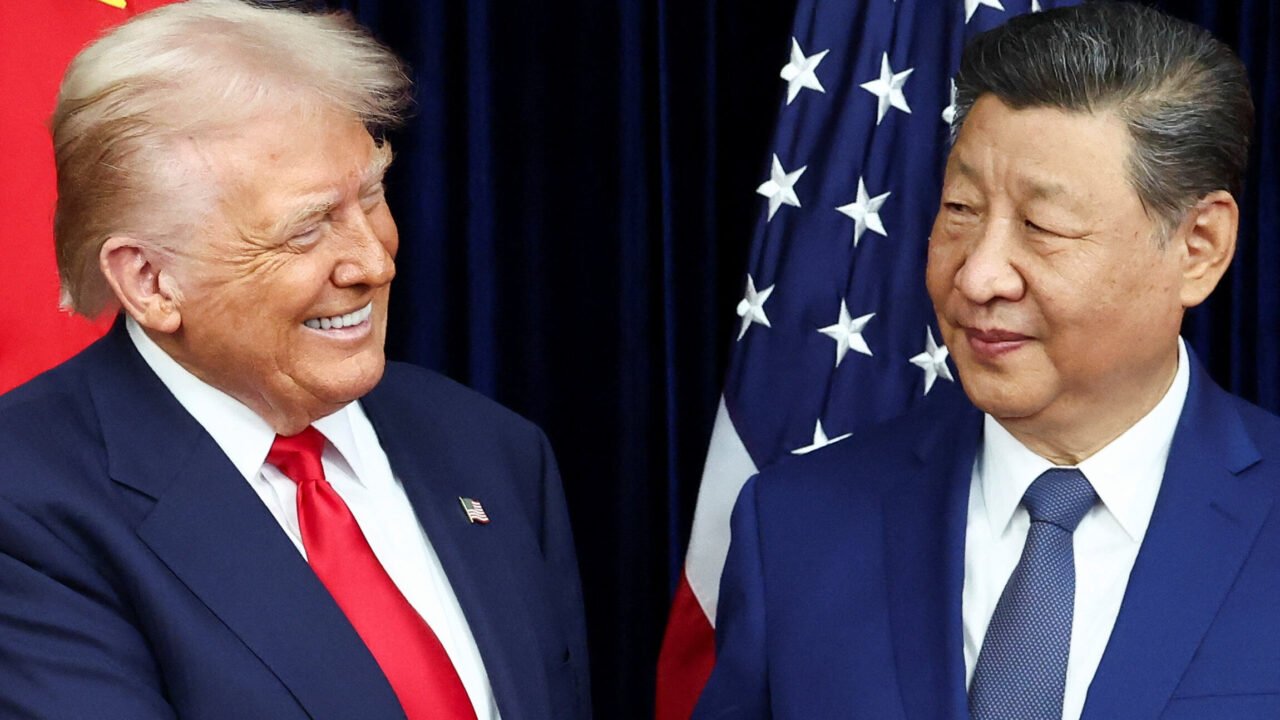
European policymakers are craving clarity about where US-China dynamics are heading—and they are looking to President Donald Trump’s visit to China for clues. The summit, which is scheduled for May 14th and 15th, is expected to cover issues including bilateral trade and investment, Taiwan, the ongoing war in Iran and AI safety. For Europeans, a settlement between Washington and Beijing or an acceleration of strategic competition would at least provide some organising logic on which to base their plans. But, as usual with the Trump administration, they are not going to get it.
Before Trump took office for his second term in January 2025, most European policymakers bet on the US pursuing an even tougher line on China. With an administration dominated by China hawks, a bipartisan China consensus in Congress and a president whose first term had considerably hardened America’s approach towards China, the expectation was that strategic competition would intensify.
Bureaucratic Tension Behind US China Policy Shifts
However, soon after the trade confrontation early in Trump’s second tenure, they worried that the exact opposite might occur. The president’s deal-making proclivities and indifference to the strategic competition agenda instead seemed set to unravel US-China policy on everything from Taiwan arms transfers to advanced semiconductor exports. Trump’s trip to Beijing has now become the locus for anxieties that the US president will reach a grand bargain with Xi at the expense of America’s allies in Asia and Europe—whether weakening US commitments to the security of Taiwan, or trading off sensitive technology controls for sales of US agricultural products.
But the summit suggests that Europeans should not expect American policy on China to break in the direction of Trump’s dovish instincts, nor for it to resume the no-holds-barred rivalry. The Trump administration’s failed trade war, which saw sky-high tariffs dialled back after China’s rare-earth export restrictions came into effect, has convinced Washington that Beijing has escalation dominance if confrontation resumes. While parts of the administration continue to tighten US restrictions on Chinese entities, many other economic security moves—such as the Department of Commerce’s Bureau of Industry and Security (BIS) Affiliates Rule—have been frozen as a result.
The Wary Détente Restricting US China Policy Shifts
Yet, within the administration, the China sceptics have not given up. Trump’s attempts to open the door to US technology exports and Chinese investment have run into deep resistance. Beijing knows it can only agree limited deals with Washington given the consensus on China that still exists across the US system. The result is a wary détente, which suits both sides: Chinese policymakers believe that their self-reliance drive will put China in an even stronger position to withstand future US pressure.
For their part, US policymakers are convinced that progress in reducing dependencies on Chinese rare earths will leave it less vulnerable to Beijing’s export controls. In the meantime, China is seeing what commitments it can extract from Trump on Taiwan while the US considers the purchasing commitments it can extract from China. Although there are grounds for trepidation, not least in Taipei, Europeans should limit any expectations that this trip will lead to major developments. They should also anticipate there being less than meets the eye in anything Trump announces regarding Iran, trade or technology.
The Impact of US China Policy Shifts on the EU
European policymakers should therefore refrain from deal FOMO on the one hand, and from pinning excessive hopes on transatlantic China cooperation on the other. The EU is not going to have to match any grand bargain after Trump’s visit. China committing to soybean and Boeing purchases will not be a game-changer for European policy.
At the same time, the Trump administration is no closer to becoming a reliable anchor for European efforts to build alternative “ex-China” supply chains, nor for any other China policy framework. Although the US-China trade truce looks set to hold, volatility and infighting over the US approach will continue, as will Trump’s scepticism about cooperation with allies on China. While limited areas for EU-US coordination exist, such as critical raw materials, most of the EU’s efforts will need to run through the rest of the G7 and a cluster of partners in Asia.
Strategic Autonomy Amidst Unpredictable US China Policy Shifts
Europe’s focus should be unchanged: ensure that China’s vast export levels do not deindustrialise Europe, that Europe’s China dependencies do not subject it to coercion and debilitating shocks, and that deindustrialisation and dependency do not become a self-perpetuating cycle. Indeed, the latest trade data and the largest bilateral trade deficit on record suggest that the “China shock” for the EU is worsening. The French government’s strategic planning and foresight body recently warned that Chinese state-backed competition now threatens two-thirds of Germany’s domestic production, with the prospect that “entire segments of European industry could collapse within a few years”. It is these trends which Europe needs to address with even greater urgency.
Global Alliances Shielded from US China Policy Shifts
Consequently, these shifting international paradigms compel regional blocks to reinforce independent safety protocols. Rather than leaning on erratic external agreements, sovereign manufacturing hubs are building resilient lateral ties with regional trading consortiums. This decentralized protective effort ensures that domestic infrastructure survives regardless of how the administration pivots next.