
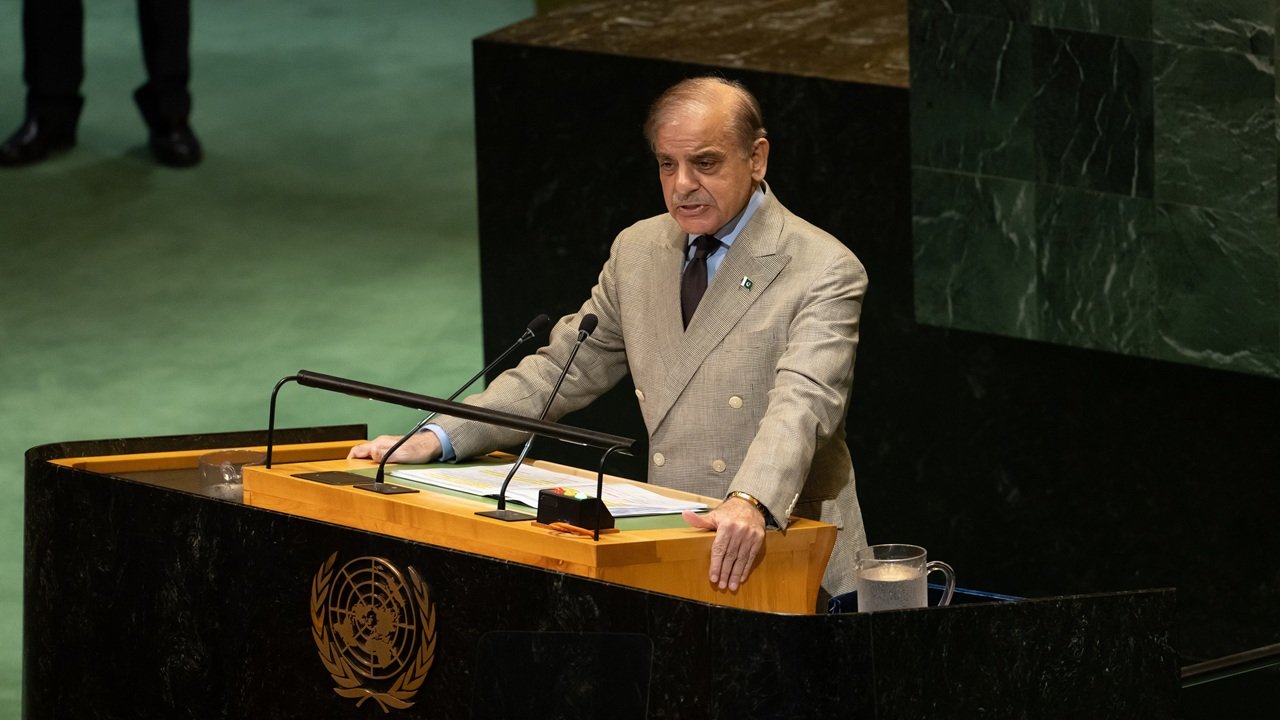
Pakistan’s Iran mediation is faltering: Tehran sees Islamabad as biased toward US demands, while Washington questions Pakistan’s double-dealing (overland trade corridors to Iran). Oman is emerging as a quieter, more trusted alternative mediator for both sides.
The ongoing diplomatic friction in Southwest Asia has reached a critical juncture. As regional powers maneuver for influence, Pakistan mediation is being reassessed by both sides as they navigate an increasingly complex and fragile geopolitical deadlock.
Pakistan Mediation Faces a Strategic Standoff
Today, more than two months after the start of the Iran conflict, both Iran and the United States have essentially reached the limits of what force alone will achieve. America has realized that although it can damage Iran, blockade it, and increase pressure on its leadership, it cannot easily force Tehran into surrender without significant escalation—such as a ground invasion—that it is politically unwilling to take. Similarly, Iran can disrupt the Persian Gulf and raise the cost of conflict, but doing so does little to ease the economic pressure and political uncertainty at home.
In effect, both countries are locked in a staring contest. Iran is unwilling to agree to humiliating concessions that could mean the end of the regime, and the United States is unwilling to admit failure of its central objectives in Iran after investing tens of billions and vast irrecoverable stockpiles of advanced weapons. Though neither side trusts the other, both understand the need for a channel that could facilitate negotiation to finish the war without either side admitting defeat.
Pakistan—the two sides’ diplomatic mediator of choice—is in a certain sense the ideal nation for the task. It is a Muslim-majority country with a cordial relationship with Tehran, close ties to Washington in general and President Donald Trump in particular, and deep connections in the Gulf region. The first series of negotiations were held in Islamabad in mid-April; although they ended without a deal, both sides agreed to leave the door open to further dialogue.
But that mediation, which at the beginning looked strong, is now losing the one thing it needs most: trust on both sides of the ledger. Pakistan’s highly visible role as a supposedly neutral mediator has begun to damage its credibility in the eyes of both Washington and Tehran.
The more it performs the role of mediator, the more Iranian officials appear to wonder whether Pakistan is simply carrying messages between two sides or slowly becoming a vehicle for America’s preferred outcome. At the same time, the United States is beginning to question whether Pakistan is genuinely helping to move Iran toward a settlement, or whether it is using the mediation process to advance its own regional interests while giving the Islamic Republic diplomatic breathing space.
The Limits of Pakistan Mediation Today
From Iran’s side, the concern is out in the open. Many Iranian politicians increasingly see Pakistan not as a balanced intermediary, but as a state trying to manage American pressure and push Iran toward terms that would weaken Tehran’s strategic position. Far from a neutral mediator, the argument goes that Pakistan is pressing Iran to accept a framework shaped largely by American demands.
Ebrahim Rezaei, the spokesman for the Iranian parliament’s National Security and Foreign Policy Commission, is perhaps the most prominent Pakistan skeptic in the Iranian government—recently writing on X (formerly Twitter) that “Pakistan does not have the necessary credibility for mediation.” Rezaei added that Pakistani leaders had taken the Trump administration’s interests into account in its positions, while refusing to openly acknowledge that Washington had first accepted Pakistan’s proposal and then stepped back from it, including alleged commitments on Lebanon and Iran’s blocked assets. According to Rezaei, this was proof that Pakistan was not acting as an impartial mediator; it was willing to pressure Tehran, but unwilling to publicly hold Washington responsible for changing its position.
One reason for Iran’s suspicion is how Pakistan carries Washington’s demands to Tehran. Pakistan has claimed that, as mediator, it is only carrying Washington’s demands. But the issue for Iran is not the transfer of messages, but rather the political weight Pakistan is perceived to give those messages. Washington’s demands have centered on Iran’s nuclear program, missile capacity, regional allies, and the Strait of Hormuz. Iran has been clear that it views these areas—partiuclarly the last three—as core pillars of its deterrence architecture, and its willingness to make concessions on them is limited.
If Pakistan merely passed on Washington’s demands to Tehran while also pressing the Americans on Iranian demands—sanctions, the blockade of Iranian ships, frozen Iranian assets, and security guarantees—Tehran might still see Islamabad as a neutral channel.
Rightly or wrongly, however, many Iranian officials have complained that Pakistan appears more eager to persuade Iran to accept American demands than to urge the United States to listen to Iranian ones. If this is correct, Pakistan is no longer simply delivering the American position, but rather helping turn that position into the starting point of the talks: treating the American position as the framework for agreement and Iranian strategic concerns as the problem to be managed. Ultimately, the more Iran perceives a potential “deal” to be slanted against it, the less likely it will be to engage in good faith; indeed, Iranian President Masoud Pezeshkian recently griped to Pakistan’s prime minister that Tehran would not accept “imposed negotiations.”
Why Pakistan Mediation Is Losing Trust
Iran’s suspicions of Pakistan’s motives have been underscored by ongoing Pakistani military cooperation with Saudi Arabia, Iran’s longtime nemesis across the Persian Gulf. At the same time that Islamabad has portrayed itself as a neutral broker, its fighter jets were deployed to Saudi Arabia to help protect it from Iranian drones. For Iran, the optics were deeply contradictory when they saw their mediator visibly moving military assets into the camp of a Gulf power closely aligned with Washington and opposed to Iran’s regional posture.
This is why Iran is already looking beyond Islamabad. After the Pakistan-hosted track stalled, Iranian Foreign Minister Abbas Araghchi moved quickly through Oman and then toward Russia. In Oman, he met Sultan Haitham bin Tariq and discussed the security of the Strait of Hormuz, broader issues affecting the Gulf states, and diplomatic efforts to end the war. He also argued that the US military presence in the region was fueling insecurity and called for a regional security framework free of outside interference.
At the same time, Pakistan has also begun to confuse Washington with its contradictory diplomacy. On April 25, Islamabad announced the Transit of Goods through Territory of Pakistan Order 2026, which allows any third country goods destined for Iran to move through Pakistan, including six designated corridors linking ports and border routes. Earlier in April, Pakistan had also operationalized the Gabd-Rimdan corridor through Iran, reducing reliance on the Afghanistan route and opening access toward Central Asia.
If Islamabad is mediating a process in which the US blockade of Iran is one of Washington’s main pressure tools, then opening overland channels that help Iran bypass the blockade and sanctions through Pakistan soil complicates attempts to exert pressure on Islamic Republic. Pakistan is trying to be useful to Saudi Arabia as a security partner and useful to Washington as a mediator, but also trying to keep Iran in the negotiations by dangling sanctions-free trade corridors as a carrot.
New Challenges for Pakistan Mediation Now
This may appear clever at first glance, but it hardly endears Pakistan to the United States as a neutral mediator. It also plays into long-running American tropes about Pakistani duplicity; it is widely believed in Washington that Pakistan stoked the conflict in Afghanistan during the War on Terror in order to make itself indispensable to the Americans as a security partner. Islamabad’s present double-dealing appears to have frustrated Trump as well; the American president recently called off the dispatch of US envoys Steve Witkoff and Jared Kushner to Pakistan after Araghchi left Islamabad without meeting American officials, explaining that the talks involved “too much travel and expense.”
If Pakistan Can’t Mediate the Iran War, Who Can? This shaking of Pakistan’s position as mediator is why a new diplomatic space now appears likely to return to the scene. The most likely candidate for a second venue for negotiations is Oman.
Unlike Pakistan, Oman does not need to perform mediation loudly to prove relevance. Muscat has long served as a go-between for Washington and Tehran, including before the beginning of the current war and in the past as back-channel diplomacy that preceded the JCPOA nuclear deal in 2015. More importantly, Oman is not trying to convert mediation into a public display of strategic arrival and politics. It has experience of performing as quiet and useful channels—and has a direct geographic interest in the peaceful reopening of the Strait of Hormuz, meaning its interests are best served through a genuine and enduring peace deal.
Oman is a desirable choice for Iran as well. Oman’s recent talks with Araghchi focused on the Strait of Hormuz, Gulf security, and efforts to end the Iran-US conflict, which are the issues Tehran wants to bring back into the center of the talks rather than US demands over limitations on Iran’s arms. Bringing Oman back into the picture as a mediator could allow Iranian diplomats to narrow the agenda, protect the format, and frame the crisis as a regional security problem. Iran sees in Oman what it no longer sees in Pakistan: a mediator that can remain a mediator without pushing an agenda beyond keeping the diplomatic channel open and preserving the possibility of a balanced settlement.
The Future Risks to Pakistan Mediation
For now, Pakistan’s time as the primary mediator is not finished, but it is shaken. Its problem is that it is increasingly distrusted by Tehran and disappointing Washington at the same time, which is the most dangerous position for any mediator. The more audiences a mediator performs for, the less trusted it becomes inside the room.
Pakistan has sought to convince all sides of the ongoing conflict that it is their best hope for an agreement on terms most beneficial to them. Instead, it has convinced no one.