
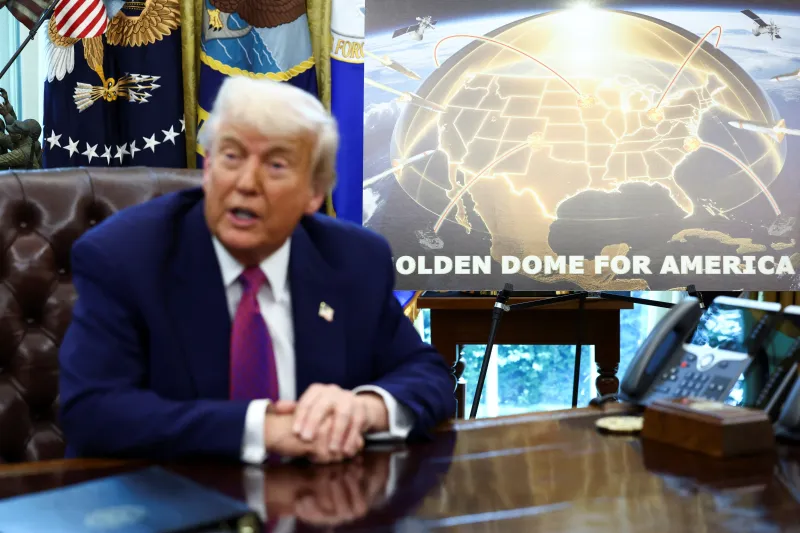
The United States, Russia, and China are expanding nuclear and space capabilities as Golden Dome raises fears that defensive systems could intensify offensive force expansion and undermine strategic stability.
The emerging Space Arms Race is no longer confined to speculative competition over future military capabilities; it is becoming intertwined with nuclear force planning, missile defense, and the survivability of strategic command systems. The United States, Russia, and China are simultaneously modernizing nuclear arsenals while developing increasingly sophisticated capabilities to monitor, approach, disrupt, or destroy satellites. That convergence creates a security problem distinct from traditional arms competition because offensive and defensive systems in space can affect both conventional military operations and nuclear deterrence.
The prospect of a large-scale U.S. missile-defense architecture under Golden Dome is especially consequential, since Moscow and Beijing must plan against capabilities whose eventual scale and effectiveness remain uncertain. Their likely response is to expand offensive forces, introduce additional countermeasures, and develop means of attacking the satellites and interceptors on which U.S. defenses may depend. The resulting interaction could erode strategic stability even before any system becomes operational. The Space Arms Race therefore raises a fundamental arms-control question: whether limits on offensive nuclear forces can remain credible without parallel constraints on defenses and destabilizing antisatellite capabilities.
How Space Arms Race Is Taking Shape
The United States, Russia, and China may not yet be in an arms race, but they are gearing up for one. Washington is building a new intercontinental ballistic missile, strategic bomber, and ballistic missile submarine. Russia is developing a heavy ICBM and a new warhead while planning upgrades to its submarines and bombers.
China has dug more than 300 new missile silos and fielded air-launched ballistic missiles, and it is developing a new generation of submarines and a stealth bomber. All three countries are making decisions about modernizing their nuclear weapons programs that will bear fruit in the decades to come—a notable reversal after decades in which the United States and Russia dismantled thousands of nuclear weapons and China seemed content maintaining a minimal deterrent.
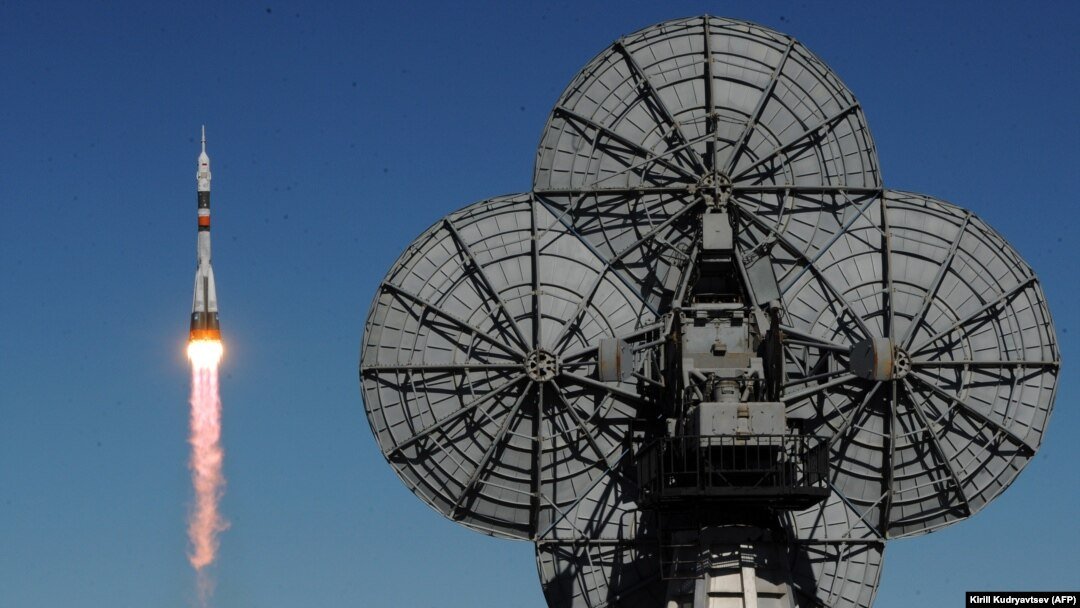
Yet it is in the space sector that the competition is intensifying most quickly. In the past decade, U.S. firms have pioneered highly capable small satellites, sent large constellations of them into orbit, and dramatically reduced launch costs. Russia has parked a satellite in an orbit that almost no other satellite uses, in a band of intense radiation more than 1,000 miles up, in what U.S. officials believe is a testing process for a nuclear antisatellite weapon that could one day take out satellite systems en masse.
Russian satellites have sidled up to American and European spacecraft, and a Chinese satellite has towed a defunct spacecraft to a new orbit—maneuvers that demonstrate the ability to linger close enough to inspect another country’s satellite or, worse, eavesdrop on it, jam it, grab it, or disable it. Both Russia and China have tested missiles that destroy satellites; a Russian test in 2021 shattered an inactive satellite into more than a thousand pieces. The United States has demonstrated similar capabilities, though with less fanfare, and President Donald Trump has proposed placing thousands of antimissile interceptors in orbit as part of his Golden Dome project.
Golden Dome Changes Strategic Calculations
Golden Dome aims to shield the entire United States from all missile threats launched from anywhere, including from Russia and China. This aspiration will shape the brewing arms competition more than anything else. Whether or not the so-called dome ever materializes, the decision to pursue this defensive buildup has likely already compelled Russian and Chinese planners to rethink their countries’ nuclear force structure. Given the long timelines of weapons development, they cannot risk doing otherwise.
Both Moscow and Beijing will now plan for larger offensive forces—more missiles, more warheads per missile, more decoys, and more exotic delivery systems designed to fly under or around space-based interceptors—as well as weapons to attack the interceptors and sensors themselves. This will accelerate an arms race as each side fears losing its ability to retaliate, a fundamental requirement of nuclear stability. If the United States is to head off this dangerous cycle now, it needs to relearn a lesson that helped stabilize the U.S.-Soviet competition in the 1960s: arms control only works when countries agree to place limits on their defenses.
GAME CHANGER
Arms competition is a symptom of great-power enmity, but enmity alone does not induce an arms race. Powerful countries begin amassing arms when they grow concerned about a change in the strategic balance. The change that Russia and China have been responding to recently dates back to 2002, when U.S. President George W. Bush withdrew from the 1972 Anti-Ballistic Missile (ABM) Treaty, paving the way for the United States to deploy a nationwide missile defense that Moscow and Beijing worried might one day be able to neutralize a retaliatory strike.
Washington never created the system they feared. Today, the United States has only 44 ground-based interceptors—which have performed poorly in tests—to defend against intercontinental ballistic missiles. Although a few dozen interceptors is more than the zero the United States had in 2002, this number would be overwhelmed by even a small fraction of Russia’s roughly 1,500 deployed strategic warheads.
Why Moscow and Beijing React
But instead of responding to the system Washington actually built, Russia and China upgraded their offensive arsenals in response to the system they feared Washington might construct. When Russian President Vladimir Putin stood before his country’s legislature in March 2018 and unveiled a menagerie of exotic delivery systems—such as a nuclear-powered cruise missile, a nuclear-armed underwater drone, and a hypersonic boost-glide vehicle, all designed to evade U.S. defenses—he presented them as Russia’s answer to the U.S. withdrawal from the ABM Treaty 16 years earlier.
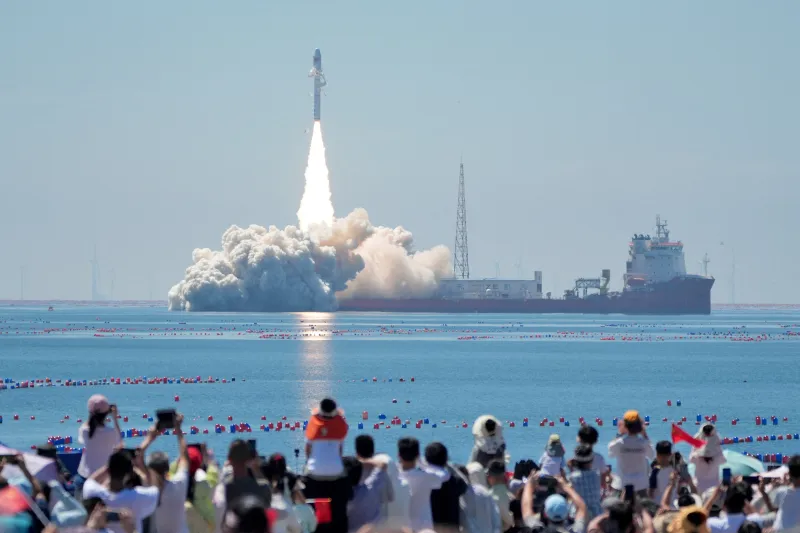
China’s leaders also objected loudly to American missile defense plans, and over the past decade Beijing has sought to guarantee that it can overwhelm any U.S. defense by roughly doubling its nuclear stockpile and fielding an air-launched ballistic missile and a new submarine-launched missile to complete a triad. China has also practiced the launch of key strategic systems into the Pacific—in September 2024 it conducted its first full-range ICBM test in more than 40 years—and developed an orbital bombardment system that could evade U.S. radars and attack the United States. Both Russia and China have built and tested weapons that can threaten the satellites on which U.S. missile defenses depend.
There is always a lag between identifying an alarming shift in the strategic balance and developing a response to it. Budgets and bureaucracy can move at a glacial pace, and internal politics often determine the weapons and strategies a country pursues in surprising ways. In the 1970s, for instance, the Soviet Union developed a new generation of seemingly more accurate missiles, the SS-18 and SS-19—large, silo-based ICBMs that could each deliver multiple warheads to targets across the United States.
The program was the outcome of a years-long bureaucratic battle in the late 1960s over how to respond to Washington’s development of the multiple-warhead Minuteman III missile. Chinese engineers, meanwhile, began exploring ways to counter U.S. President Ronald Reagan’s proposed missile defense system, the Strategic Defense Initiative, in the 1980s.
But plans to improve China’s space-based capabilities languished for years until the 1999 U.S. bombing of the Chinese embassy in Belgrade. The U.S. government said the attack was accidental—the target was a Yugoslav arms procurement agency—but the uproar loosened Chinese funding for various defense programs, including the development of an antisatellite weapon that Beijing finally tested in 2007 by smashing one of its own weather satellites in orbit.
It’s too early to understand fully how internal politics are driving Russian and Chinese decisions about arms development today. Yet leaders in both Moscow and Beijing clearly see a need to respond to a U.S. defensive buildup.
They may have overreacted after 2002, given the underwhelming nature of the missile defenses the United States has actually deployed and the efforts of U.S. officials across several administrations to reassure their Russian and Chinese counterparts that the purpose of those defenses was protection against North Korea and Iran, not to neutralize Russian or Chinese nuclear forces. But now, the Trump administration has explicitly embraced the goal of defending against “peer and near-peer adversaries”—a phrase that in Pentagon usage means Russia and China. This has surely made Moscow and Beijing believe that they were right all along.
FICTION NO MORE
The United States’ Golden Dome project will supercharge this competition. The space-based interceptors at the center of the U.S. proposal would attack Russian and Chinese missiles in their first minutes of flight, before they released their warheads and decoys, threatening to thin out the retaliatory strike that each country relies on to deter a U.S. attack. Russia and China will be seeking new missiles, warheads, and delivery systems that can breach those defenses.
Even if there is some doubt about the viability of the Golden Dome, Russian and Chinese officials are obliged to take it seriously. When Reagan introduced the Strategic Defense Initiative in 1983, it was widely derided as “Star Wars”—science fiction. At the time, satellites were too large and launching them was too expensive to send an enormous cluster into orbit, as the project proposed. But today, SpaceX’s Starlink network, composed of thousands of relatively small satellites, demonstrates that very large constellations are feasible. Launching swarms of small, light interceptors to defend the United States from incoming nuclear missiles may no longer be so far-fetched.
That is not to say the Golden Dome does not face problems. Missile defense systems have always struggled to be what analysts call “cost-effective at the margin.” An attacker can usually build and deploy a missile (or another warhead or a decoy) more cheaply than a defender can build and deploy enough interceptors to stop it.
At the moment, the U.S. military plans to use four interceptors to target each warhead in space, and the kill vehicle—the technology that locates and collides with the warhead to destroy it—is particularly expensive. When North Korea paraded six mockup ICBMs in 2012, the United States responded by ordering 14 more interceptors. What those launchers and any missiles cost Pyongyang is unknown, but it was surely a tiny fraction of the roughly $1 billion Washington spent in response.
Nor will the cost problem likely be solved with space-based interceptors. In theory, space-based interceptors might be cheaper than ground-based ones because an interceptor already in orbit does not need a large booster and can target a missile early, while it is moving slowly and easy to track. But even though satellite launches are getting cheaper, just a thin defense against the simplest targets will require thousands of satellite-based interceptors that must be continuously refreshed.
A few thousand could easily turn into tens of thousands if the interceptors’ boosters do not accelerate quite as quickly, their sensors are not quite as sensitive, and communication with them is not quite as smooth as U.S. military planners anticipate, requiring a greater quantity to make up for shortcomings in quality. Relatively inexpensive efforts by Russia or China to increase their missile stocks or improve the effectiveness of their warheads would make it necessary for the United States to deploy even more interceptors.
Starlink satellites may only cost a few hundred thousand to a million dollars, but they do not have an expensive kill vehicle built in. Those that have that capability are enormously expensive. The last space-based interceptor the United States designed—the Near Field Infrared Experiment, developed two decades ago—cost roughly $65 million per unit, adjusted for inflation.
THE DANGER MOUNTS
It is tempting to take comfort in the slow pace of an arms race. It is entirely possible that by the time these new systems are ready to be deployed, the conditions in which they might actually be used will have passed. Consider AUKUS, the 2021 agreement reached by Australia, the United Kingdom, and the United States, to jointly produce a nuclear-powered submarine in response to China’s military buildup. When the first boat enters service in the early 2040s, a China led by a 90-year-old Xi Jinping—if he is even still alive—will be vastly different from the China of today.
But slow is not the same as stable. The United States, Russia, and China are now all able to harass one another’s satellites in ways that have real consequences. Private companies would find it harder to operate commercial satellites if international cooperation on tracking space objects deteriorates amid this hostile maneuvering, and they would be on the hook for billions of dollars’ worth of assets that are not and will not be insured against acts of war or sabotage.
Reuters
All three countries are also locking themselves into decades-long force postures without knowing exactly what their adversaries’ forces will look like and despite the fact that space capabilities and frontier artificial intelligence models are advancing on much faster timelines.
No one can really predict what technologies will be available in the early 2030s, when the U.S. Air Force hopes to deploy the first Sentinel ICBMs, which will replace the 1970s-era Minuteman III in 400 silos as the land-based leg of the U.S. nuclear deterrent. By then, Chinese missiles may be accurate and numerous enough to threaten those silos. AI-enabled reconnaissance could make mobile and concealed forces far easier to find. Or perhaps new space capabilities or AI-enabled cyberattacks will make space-based sensors, on which U.S. early warning depends, vulnerable in ways no one has anticipated.
There is a risk that in their efforts to develop capabilities that threaten their adversaries’ space assets, one of the main players could wind up with a temporary incentive to strike first in a crisis—even if it would prefer not to strike at all.
If Russia, for instance, places nuclear weapons in orbit, which it appears interested in doing, it might attempt to use those weapons to wipe out satellites to blind the United States at the outset of a conflict. China may similarly develop dangerous methods for destroying large numbers of satellites, including ground-launched “pop-up” boosters that could loft a nuclear warhead into space and detonate it before U.S. defenses could respond. Chinese military scientists have already published models of such a nuclear detonation.
The blast would damage any unshielded satellites in line of sight and, as a 1962 U.S. test demonstrated, leave behind a belt of radiation that would continue killing satellites for months. Because this kind of mass attack in wartime would very likely degrade U.S. nuclear command-and-control systems, Washington would have to take seriously the prospect that such a strike in space could be the precursor to a nuclear strike on Earth. The mere possibility of losing its critical space assets in a surprise attack could push the United States to use its forces early or to delegate launch authority in ways that raise the risk of an accident, to avoid the devastating consequences.
TIME TO TALK
The fear that rapid technological advances could threaten nuclear stability is not new. U.S. and Soviet planners had the same concern in the 1960s, when missiles capable of carrying several warheads (known as multiple independently targetable reentry vehicles, or MIRVs), antiballistic missile systems, and antisatellite weapons became available all at once. The solution they chose was arms control. Arms control agreements aimed not only to reduce the number of nuclear weapons in U.S. and Soviet arsenals but also to provide a predictable basis for force planning.
The effort met with mixed success. The 1972 SALT agreement limited the number of U.S. and Soviet missile launchers, and later treaties gradually reduced each side’s deployed strategic warheads from more than 10,000 then to 1,550 today.
In the 1972 ABM Treaty, Washington and Moscow even managed to rein in some of the defensive deployments that can induce an adversary to develop its offensive capabilities—which is why the nuclear strategist Thomas Schelling, writing in Foreign Affairs four decades ago, identified that agreement as the “high point” of arms control. But negotiations stopped short of limiting MIRVs or antisatellite weapons, and arms control efforts stalled in the early 1980s; after Reagan unveiled his Strategic Defense Initiative in 1983, the project became the chief obstacle to reviving them.
A renewed arms control effort can slow today’s arms race. The last remaining arms control agreement between Moscow and Washington, New START, lapsed in February, and for the first time since 1972, nothing limits Russia’s and the United States’ expansion of their offensive or defensive nuclear forces. Both countries—and China—are largely making decisions on the basis of fear and suspicion, not the joint pursuit of nuclear stability.
For now, U.S. plans for space make a comprehensive deal difficult to imagine. Moscow is at least conditionally open to one: Putin proposed in September 2025 that both sides informally observe New START’s limits for a year after it expired, and when Washington did not respond, Russia announced that it would hold to those limits only as long as the United States did.
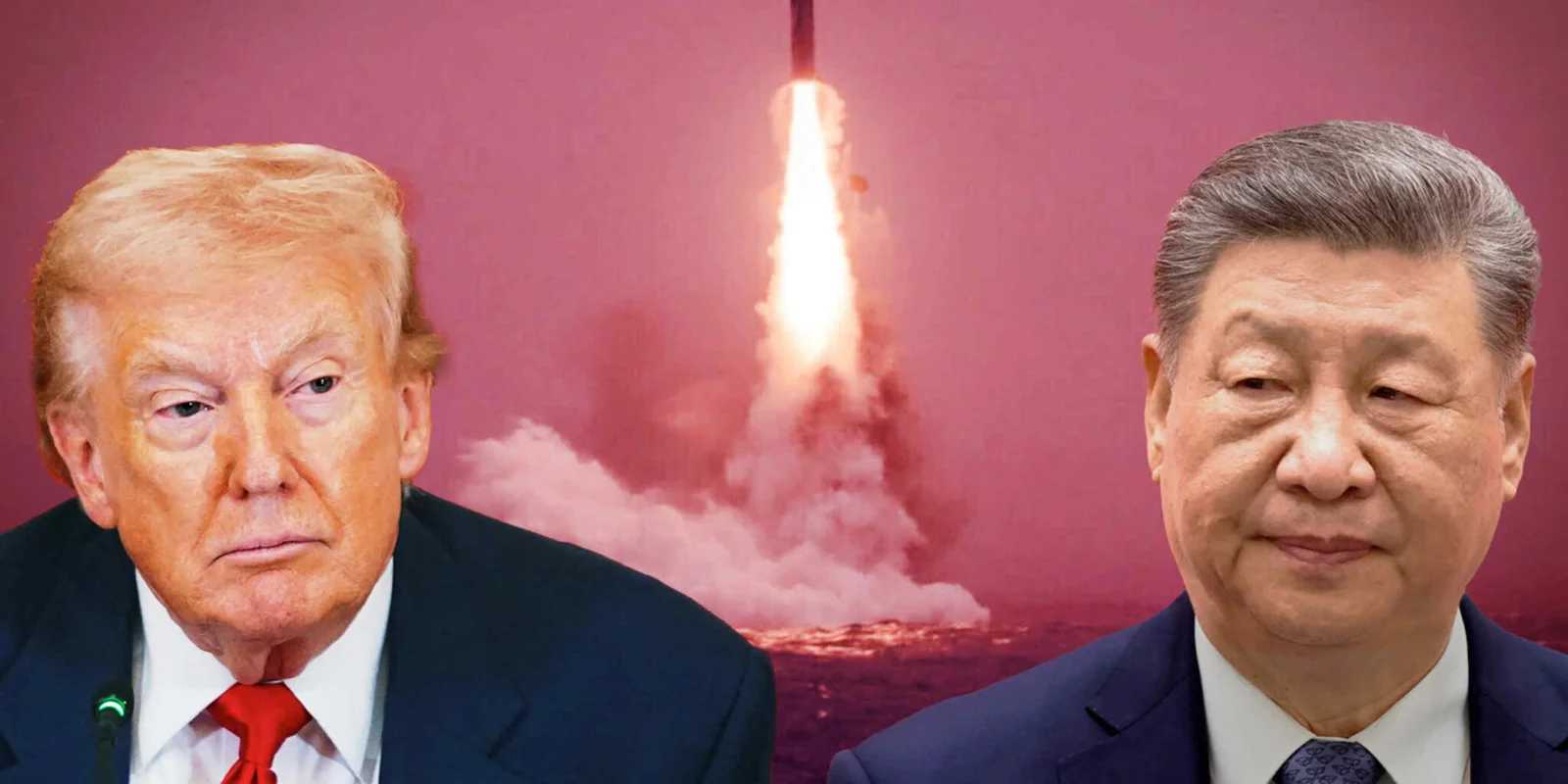
Beijing is less enthusiastic, but Chinese officials have been hinting at what they call a “constructive relationship of strategic stability.” Writing on social media this year, Trump expressed interest in a “new, improved, and modernized Treaty that can last long into the future”—a treaty that administration officials have suggested might constrain all nuclear weapons, strategic and tactical, and include China as well as Russia. Yet the U.S. president is equally enthusiastic about the Golden Dome.
Ultimately, these ambitions are in tension: Trump can have the treaty or the dome, but not both. Neither Moscow nor Beijing will limit their offensive forces or growing space capabilities without at least some predictability regarding the American defenses those forces are intended to defeat. Limiting offenses without also limiting defenses might allow the United States, in a crisis, to attempt a surprise attack on Russia or China and then rely on its powerful defenses to neutralize any surviving forces. This would leave Russia and China unable to retaliate and, as a result, vulnerable to coercion.
A Treaty Could Reduce Space Dangers
The good news is that because most countries have a stake in expanding the commercial use of space, they have reason to try to reduce the dangers in that domain alongside efforts to negotiate a new treaty to limit strategic arms. The 1967 Outer Space Treaty, to which the United States, Russia, and China are all parties, already bans placing nuclear weapons in space.
It lacks verification, but this problem could be addressed if the signatories agreed to inspections of payloads either before launch or, in extraordinary cases, while on orbit. Every country with satellites in orbit should support a ban on antisatellite weapon tests that result in debris and pursue cooperation on space traffic control to reduce the risk of collisions.
All of this becomes more feasible with some defensive limits in place. The idea of restricting defenses against nuclear attack has long been a third rail in American politics, especially among Republicans. But many former Republican orthodoxies have proved negotiable; the party staunchly supported free trade and NATO, and opposed Russia just as strongly, until Trump decided otherwise. An agreement, moreover, does not have to eliminate defenses entirely.
The ABM Treaty allowed each party to maintain two missile defense sites, later reduced to one. What a new deal needs to do is to place verifiable limits on defenses that give the other parties a sense of predictability. Without such limits, the United States, Russia, and China are likely to continue expanding their offensive forces, developing ever more exotic delivery systems, and pursuing new ways to attack each other’s satellites. All three will blame their adversaries for making the buildup necessary, but in truth each country will be racing itself, driven by its own fears and internecine politics. It’s hard to imagine how anyone wins such a race—other than by not running at all.