
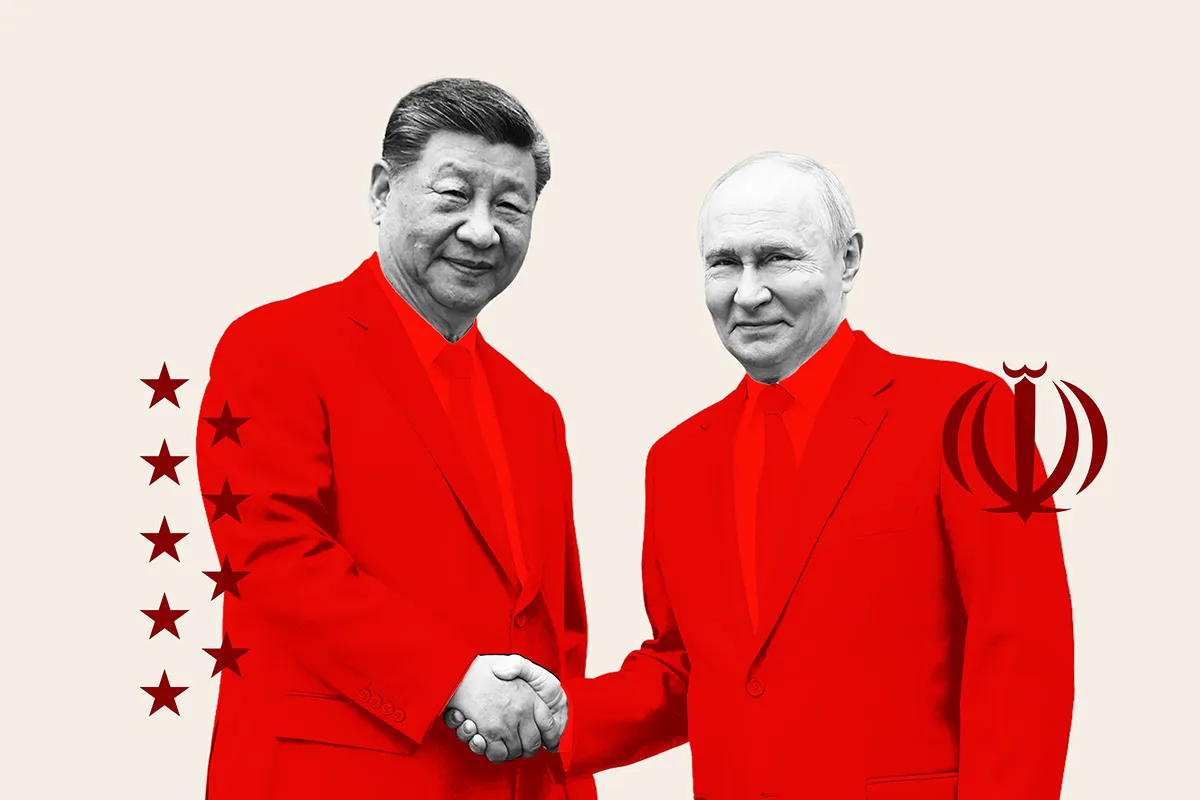
As Washington and Tehran test attrition limits, the US-Iran Endurance Match hinges on economic lifelines from Beijing and Moscow. In this US-Iran Endurance Match, transactional support from Russia and China will determine which power outlasts the other in a protracted war.
As Washington and Tehran test the limits of attrition, the US-Iran Endurance Match increasingly hinges on economic and diplomatic scaffolding from Beijing and Moscow. In this protracted US-Iran Endurance Match, the White House faces waning domestic support, while Iran relies on strategic partnerships to survive a prolonged war of attrition.
US-Iran Endurance Match shifts calculus
With negotiations hitting a new wall over Israel’s continued strikes in Lebanon, China and Russia are positioned to play an influential role in determining the degree to which the United States and Iran can outlast one another in a long war.
Tehran has long invested in deeper cooperation with Beijing and Moscow. And while neither relationship amounts to a military alliance, the two powerful partners have maintained critical lifelines on economic, diplomatic and defense fronts despite Washington’s efforts to isolate the Islamic Republic.
Even as the White House faces its own growing pressure to end the confrontation due to declining popular support, rising energy costs due to the disruption to traffic in the Strait of Hormuz and the sustainability of depleting munitions stockpiles, however, an extended conflict is expected to severely test the limits of Iran’s resilience and underline the importance of its foreign partnerships.
“In Iran, a growing perception has emerged that Trump is primarily seeking to buy time,” Mehdi Kharratiyan, head of the Institute for Revival of Politics think tank in Tehran, told Newsweek.
“In response to such a strategy,” Kharratiyan said, “Tehran would logically pursue an unprecedented strengthening of its relations with Beijing and Moscow in order to address economic challenges and, if necessary, prepare for a return to military confrontation.”
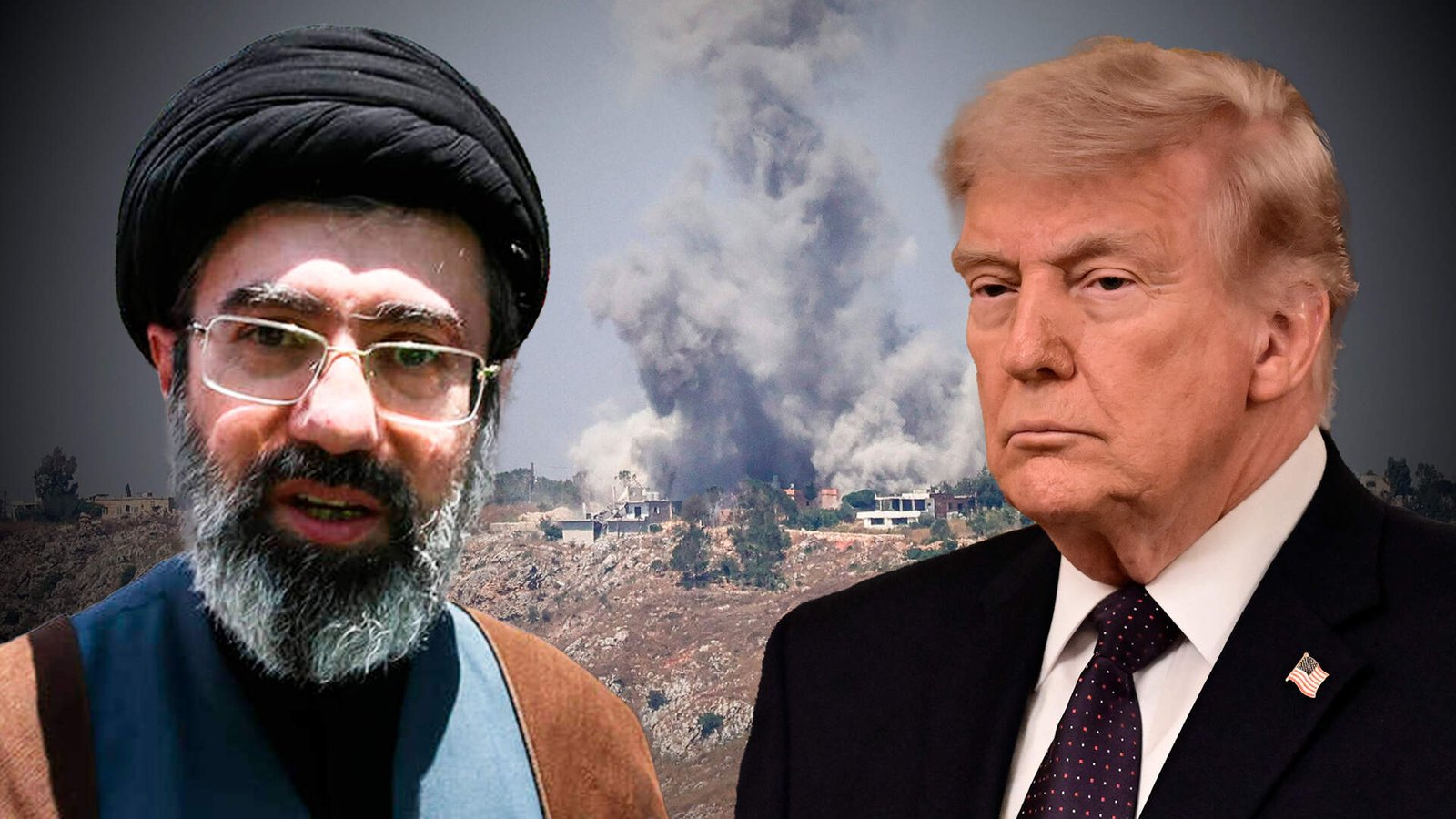
Inside the US-Iran Endurance Match
Test of Endurance
The notion that Iran could ultimately outlast the U.S. in a protracted battle has long been at the core of Tehran’s military strategy. The Islamic Republic’s decentralized “mosaic” doctrine has helped the government and its defense apparatus, notably the Islamic Revolutionary Guard Corps, not only survive decapitation strikes but also exert powerful leverage through missile and drone strikes targeting U.S. military sites, Israel, neighboring Arab states and commercial vessels throughout the region.
Even Trump has acknowledged that Iranian retaliation has surpassed expectations, a factor that likely contributed to his decision to call for a ceasefire on April 8. Clashes have steadily intensified since then, however, and a U.S. naval counter-blockade of vessels docking in Iranian ports has exacerbated Iran’s already precarious economic plight.
“The United States appears to assess that, due to maritime pressure and mounting economic challenges, Iran would capitulate before the United States in a prolonged confrontation,” Kharratiyan said. “At the same time, President Trump has little interest in allowing a new war to spiral beyond control and leave him in a politically unfavorable position on the eve of the World Cup and crucial midterm elections. He is also operating under pressure from the Israeli lobby.”
“Under these circumstances, his most advantageous strategy is to keep Iran engaged through negotiations within parameters favorable to Washington while signaling to financial markets that the war is likely to end soon,” he added. “In practice, however, by prolonging the negotiations and maintaining a state of ‘neither war nor peace,’ the United States can deprive Tehran of both time and strategic initiative, ultimately increasing the likelihood that Iran will accept Trump’s terms.”
Still, Iran’s insistence on key demands, including the cessation of hostilities on all fronts, especially Lebanon, continues to frustrate U.S. negotiators. Iranian media reported Monday that Tehran’s team suspended talks due to Israel’s ongoing operations against Iran’s ally, the Lebanese Hezbollah movement.
“Iran views the issue of Lebanon—and preventing a transformation of the Shiite geopolitical position in the Middle East—as an existential and prestige-related matter,” Kharratiyan said. “In all of the proposals and documents it has presented, Tehran has emphasized that the war must end on all fronts, including Lebanon.”
“It is therefore difficult to envision a scenario in which Iran and the United States reach a ceasefire while the Lebanon issue remains unresolved or unaddressed,” he added.
The dueling U.S. and Iran hard-line approaches constitute costly bets for both sides. Yet China and Russia appear prepared to raise the stakes for the White House, even if neither power has an interest in becoming directly involved in the conflict.
“China and Russia have helped Iran since the war broke out, but that help has supported Iranian policy rather than shaping it,” Jon Alterman, former U.S. State Department official serving today as chair in global security and geostrategy at the Center for Strategic and International Studies, told Newsweek.
“Russia and China each have an interest in the United States being distracted by threats other than themselves, and they have an interest in challenges to U.S. dominance,” Alterman said. “Russia, China and Iran all object to the United States being able to sanction any country it doesn’t like and then force the world to support those sanctions.”
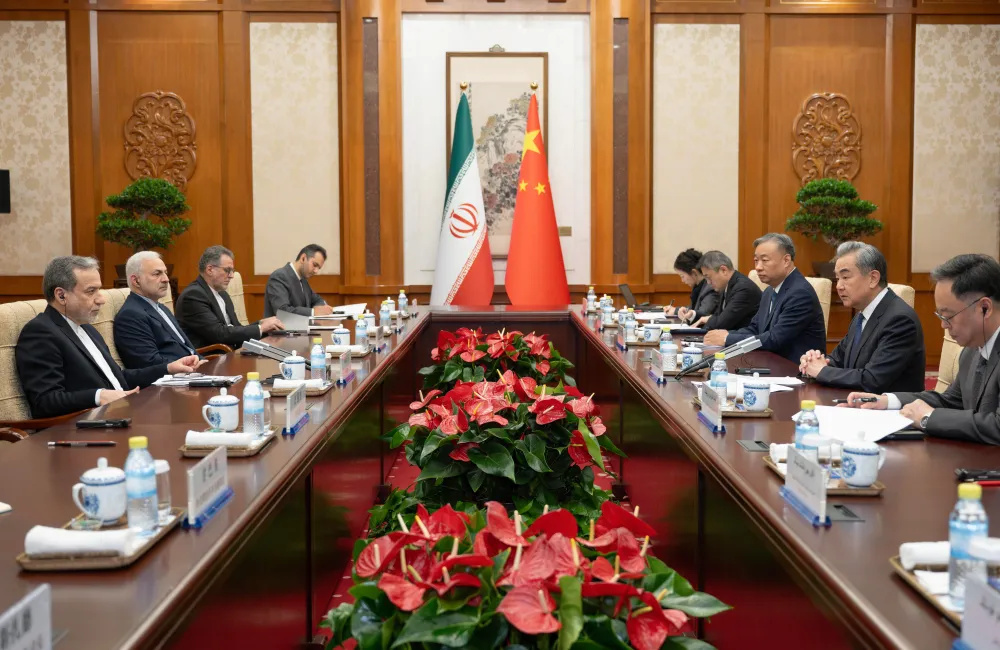
Decisive factors in US-Iran Endurance Match
Opportunities Abound
Just how far either China or Russia is willing to go to support Iran remains subject to debate. The three nations defied mounting U.S. threats to conduct trilateral naval exercises in South Africa in January and in the Persian Gulf region in February, just days leading up to the war, though material aid has proved fleeting.
Iran, whose signature Shahed-style loitering munitions have emerged as a key tool in Russia’s arsenal against Ukraine, has faced persistent delays in receiving advanced Russian Su-35 jets it first agreed to purchase years ago. Reports indicate that Iran has acquired some other Russian aircraft, such as Yak-130 fighters and Mi-28 attack helicopters.
The countries finalized a long-awaited comprehensive strategic partnership agreement in January of last year, which included bolstering military cooperation. Unlike a similar deal forged months earlier between Russia and North Korea, it did not involve any mutual defense clause
And while Tehran and Moscow have coordinated on the battlefield before, namely during their joint support for the former Syrian government prior to its sudden downfall in December 2024, neither side is expected to intervene directly on the other’s behalf.
China inked an earlier strategic partnership deal with Iran in 2021. The 25-year agreement focused primarily on sizable Chinese investment in the economy and infrastructure of Iran, which sells nearly all of its oil to China.
Meanwhile, since the beginning of the U.S.-Israeli war against Iran, Chinese officials have denied U.S. intelligence allegations that Beijing had supplied Tehran with new anti-air platforms, including over-the-shoulder man-portable air defense systems, or MANPADS. U.S. intelligence has also reportedly linked one such system to the downing of a U.S. F-15E jet last month, the first such incident to befall a U.S. warplane in decades.
Other reports have indicated Iran has benefited from Chinese and Russian intelligence sharing, including satellite imagery platforms that may have supported Iran’s precision in striking U.S. military sites and oil and gas facilities in the region. On the economic front, Iran’s trade with both countries appears to be growing, utilizing the landlocked Caspian Sea to Iran’s north and rail routes extending across Asia.
“China has purchased large volumes of sanctioned Iranian oil, and Chinese buyers have worked closely with Iran to build what U.S. researchers and officials describe as one of the world’s largest sanctions-evasion networks,” Christopher Walker, vice president at the Center for European Policy Analysis, told Newsweek.
“Russia has reportedly been supplying Iran with intelligence on the locations of American troops, ships, and aircraft,” Walker said. “Since the U.S. and Israeli strikes against Iran began in February of this year, Russia has continued delivering weapons components and technical expertise.”
Adding to this is a confluence of narratives critical of U.S. foreign policy that justifies closer partnership among Beijing, Moscow and Tehran. Iran has also formalized its drift to China and Russia by formally joining two blocs led by the powers, the Shanghai Cooperation Organization in 2023 and the BRICS group in 2024.
“These countries already have built a good deal of shared muscle movement that enables them to work together and in common cause against the U.S.,” Walker said. “This includes what is now an extensive international media and propaganda infrastructure that has enabled these regimes to reinforce each other’s messages to systematically assail the U.S. and the West.”
“It will take a concerted and sustained approach from the U.S. and its allies to contest this already mature and resilient authoritarian support network,” he added.
Alterman also saw China and Russia’s motivation in aiding Iran as being primarily driven by a mutual desire to counter U.S. influence.
“China and Russia are more important to Iran than vice-versa,” Alterman said. “China, for example, is Iran’s largest oil customer and represents more than one-third of Iran’s overall trade. Iran, by contrast, represents less than 1 percent of China’s overall trade. They each see Iran presenting opportunities, especially weakening the United States as a global power.”
“Each uses Iran, but neither one really ‘needs’ Iran,” Alterman said. “Iran is much more reliant on them for external support.”
Also weighing on China and Russia’s calculus are their strategic ties with other regional actors, particularly the influential, oil-rich nations of the Gulf Cooperation Council, which have come under direct attack by Iran in response to their hosting of U.S. military bases.
“Saudi Arabia exports more oil to China than Iran does, and the UAE is an important base for many wealthy Russians,” Alterman said. “But the important thing to keep in mind is that China and Russia don’t really believe in allies. They are transactional.”
“That means their goal is to balance support for Iran with not antagonizing Gulf Arab partners and not helping Iran so much that it creates major problems with the United States,” he added. “As the line from ‘The Godfather’ goes, ‘it was only business.'”
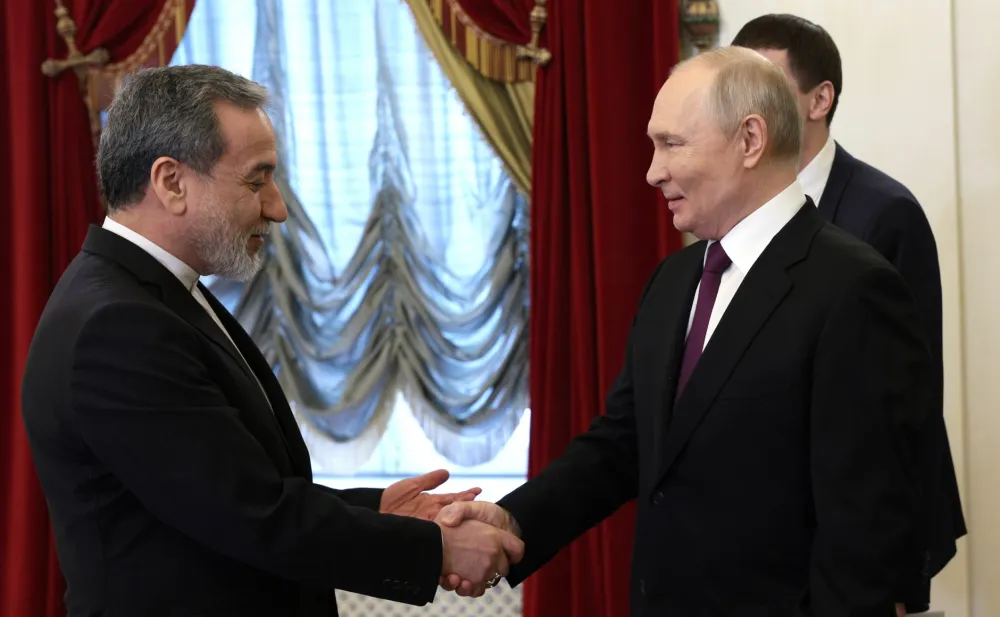
US-Iran Endurance Match limits alignment
Alignment Without Alliance
From Iran’s perspective, there are limits to alignment rooted in historic skepticism toward reliance on foreign powers. Post-revolutionary Iran fought its last major war largely alone, while the majority of international support went to Iraq throughout the eight-year bloody conflict in the 1980s—a situation that helped fuel Tehran’s strategy of instead investing in its own coalition of ideologically aligned actors.
More recent experiences have reinforced this aversion to formal security pacts, according to Arash Reisinezhad, visiting assistant professor at Tufts University’s Fletcher School.
“During the recent wars, the Twelve-Days War and the Iran War, both countries offered political support and diplomatic backing, but neither provided the kind of decisive and unconditional support associated with military alliances,” Reisinezhad told Newsweek. “This is not necessarily because either country is hostile to Iran. Rather, their own national interests discourage transforming their relationships with Tehran into formal alliance commitments.”
“As a result, a widespread perception exists among Iranian policymakers that, in moments of existential crisis, neither Moscow nor Beijing can ultimately be relied upon as guarantors of Iranian security,” Reisinezhad said. “This perception has historically shaped Iranian strategic thinking and helps explain why Tehran continues to place greater emphasis on self-reliance and indigenous deterrence capabilities than on external security guarantees.”
Yet, he argued that “the debate inside Iran appears to be evolving,” with a growing chorus of voices calling for closer security coordination with China, in particular. And while Beijing may not be willing or able to match Washington’s status in the Middle East, nor Moscow capable of eschewing Ukraine war commitments to substantially increase military aid to Tehran, there are ways in which the trio could optimize coordination.
“Where China and Russia may become more important is not through alliance formation but through accelerating Eurasian connectivity,” Reisinezhad said. “Future cooperation is likely to focus on trade routes, logistics networks and continental corridors linking East Asia, Central Asia, Russia, and the Middle East.”
Such cooperation also serves core Chinese and Russian interests extending across the heart of Asia and beyond.
“Despite years of sanctions, underinvestment, and policy mismanagement that have limited Iran’s ability to fully capitalize on regional connectivity projects, Iran retains a unique geoeconomic position,” Reisinezhad said. “It is the only country capable of providing China with direct overland access to the hydrocarbon-rich Persian Gulf region. For Beijing, Iran represents both an east-west economic bridge and a gateway connecting Central Asia to West Asia and the Middle East.”
“For Russia, meanwhile, Iran serves a broader geopolitical function,” he added. “From Moscow’s perspective, Iran constitutes an important component of the southern Eurasian rimland.”
The resulting formula makes Iran a partner worth preserving for the U.S.’ two top rivals.
“A severe weakening or collapse of the Islamic Republic could generate greater strategic pressure along Russia’s southern flank while simultaneously increasing pressure on China’s western periphery,” Reisinezhad said. “This does not mean that either power will fight on Iran’s behalf. It does, however, help explain why both Moscow and Beijing have strong incentives to preserve stability in Iran and maintain cooperative relations with Tehran.”