
Houthi forces seized Mayyun and Perim islands and captured Mokha, collapsing government lines at Bab al-Mandab as command failures, drone strikes, and weak morale exposed Riyadh’s unclear role and regional strategy.
The rapid loss of Yemen’s western coast to Houthi forces has exposed a fragile military architecture that could not withstand sustained pressure. Within days, government units abandoned Mokha, Hays, al-Wazi’iyah, Perim Island, and Mayyun Island, surrendering the Bab al-Mandab Strait to a movement that combined drone strikes, missile barrages, and mass infantry assaults.
The Yemen Forces Collapse was not simply a tactical setback; it revealed unresolved disputes over command, weak morale, and dependence on external patrons who hesitated to authorize a broader campaign. Government statements described the withdrawals as redeployment, yet no coherent explanation emerged for why defensive lines dissolved within hours after earlier advances. Houthi officials framed the operation as an assertion of sovereignty while promising that navigation remains safe, a claim that regional and international actors view with skepticism.
Saudi Arabia’s calculations remain opaque, caught between diplomatic channels and military support for allied formations. The Yemen Forces Collapse also raises questions about whether any external power can substitute for unified Yemeni political will. As the Houthis consolidate control over one of the world’s most important maritime chokepoints, the strategic consequences for shipping, energy markets, and regional escalation will only deepen. The episode demonstrates that battlefield momentum can shift suddenly when command, morale, and coordination fail.
Yemen Forces Collapse at Bab al-Mandab
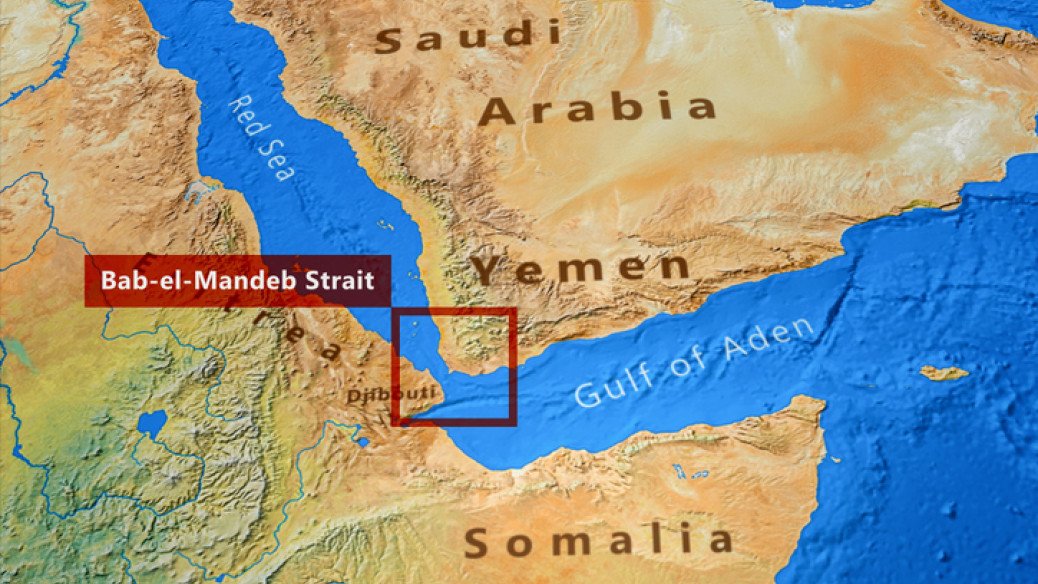
Yemen’s Houthi movement has taken control of the strategic Bab al-Mandab Strait after seizing Mayyun Island and government forces withdrew from Perim Island, following a rapid collapse of positions held by forces aligned with the internationally recognised government.
The developments came a day after the Houthis took control of the Red Sea city of Mokha, following about a week of heavy fighting.
The speed of the reversal has raised questions over the state of government forces on Yemen’s western coast. Until shortly before the withdrawals, reports from the area had pointed to government advances. Their lines then collapsed within hours.
A Houthi official told The New Arab on Friday that the group had taken control of Mayyun Island and completed its control of Bab al-Mandab.
Reuters, citing two government sources, reported that Yemeni government forces had withdrawn from Perim Island.
The strait is one of the world’s most important maritime chokepoints, connecting the Red Sea with the Gulf of Aden and the Indian Ocean.
Withdrawals Expose Command Failures
The latest reversal followed a series of withdrawals by government forces along Yemen’s western coast.
On Thursday, forces loyal to the internationally recognised government withdrew from Mokha, near the Bab al-Mandab Strait, after earlier withdrawals from the districts of Hays and al-Wazi’iyah.
Government sources told The New Arab that orders had been issued on Wednesday evening for troops to leave Mokha, without an explanation being given for the immediate reason.
The withdrawal was described to the troops as part of a “redeployment”.
Government forces then began leaving the headquarters of the Joint Forces formations in the city.
On Thursday morning, Presidential Leadership Council member Lieutenant General Tareq Saleh said forces on the western coast had been ordered to “reorganise their ranks”.
He said the Joint Forces had established a command centre south of Mokha after what he described as “Houthi forces breaking through the various fighting fronts under intense fire pressure in which the Houthis used various types of weapons”.
Saleh added that “the armed forces on the western coast, the National Resistance, Giants and Nation’s Shield forces, in addition to units of the Taiz axis west of the governorate, have paid a heavy price, in martyrs and wounded, throughout the past days as they confronted the Houthi attack”.
“We directed the formation of an alternative command centre in a safe location that would regroup the forces in consultation with the leadership of the Arab coalition and the Leadership Council,” he said.
No official clarification followed about Saleh’s location, the status of the forces under his command or the site of the command centre he said had been established south of Mokha.
Unconfirmed reports suggested it could be in the Dhubab area.
The Presidential Leadership Council, Joint Forces command and defence ministry also issued no further statements explaining the fate of the forces after the announcement that they were reorganising.
The lack of clarity has prompted widespread questions in Yemen about what happened, particularly after the government forces had announced advances before the balance on the ground changed rapidly.
Why Mokha matters
Mokha had been under heavy pressure in the days before the withdrawal.
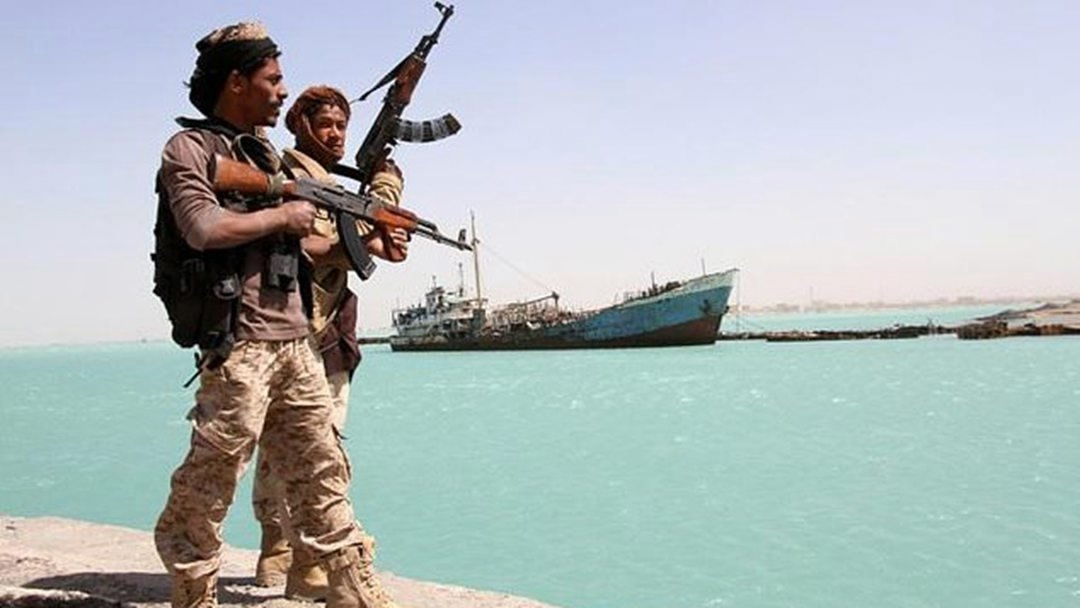
The city was struck by dozens of missiles and explosive drones, while the Houthi advance accelerated after the movement deployed thousands of fighters to fronts west of Taiz.
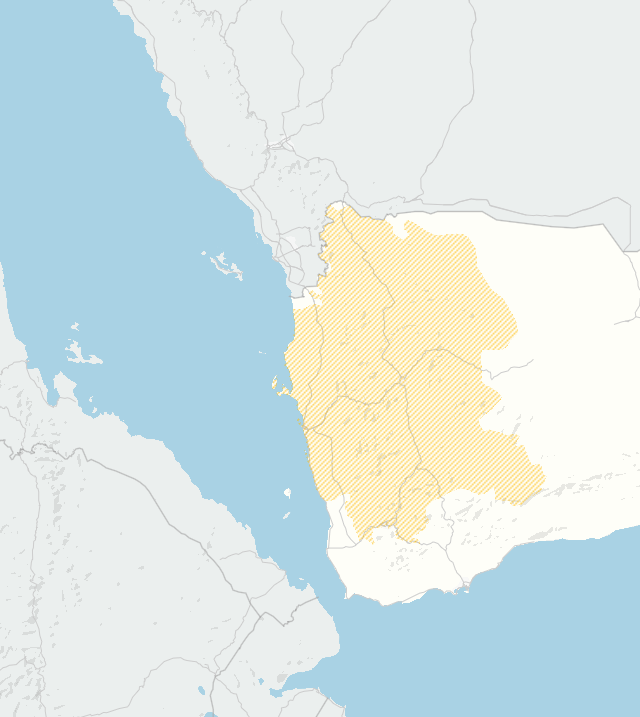
Mokha lies in the far south-west of Taiz governorate, about 90km from the provincial capital and roughly 60 to 70km south of the Bab al-Mandab Strait.
Its proximity to one of the world’s main maritime routes for energy trade and oil tankers gives it major strategic importance and links its security directly to shipping through the Red Sea.
The city had also housed the headquarters of the Joint Forces, one of the most important military groupings aligned with Yemen’s Presidential Leadership Council.
The formations include the National Resistance led by Tareq Saleh, the Southern Giants Brigades led by Presidential Leadership Council member Abu Zara’a al-Muharrami, and the Tihama Resistance Brigades.
The Joint Forces comprise about 30 military brigades.
They were reorganised and restructured at the beginning of 2026 into five main divisions and forces under direct Saudi supervision. These include the Guardians of the Republic, Tihama Brigades, Zaraniq Brigades and Giants Brigades, as well as a naval formation and specialised security forces.
Observers had regarded the formations as a major strike force and an integrated military institution protecting the southern gateway to the Red Sea.
Houthis Say Navigation Remains Safe
Houthis say navigation remains safe
Hizam al-Assad, a member of the Houthi political bureau, told The New Arab that “what our Yemeni armed forces have carried out in some coastal areas is an internal national operation within the framework of imposing Yemeni sovereignty and dealing with the challenges and ambitions that threaten civil peace”.
He added that “freedom of navigation and the movement of international trade in the Red Sea and Bab al-Mandab are safe and regular, and there is no need for any international concern about them, as there is no danger to them from the Yemeni side”.
“The operations currently taking place have specific objectives in accordance with what was previously announced and come within the defensive framework,” Assad said.
Asked whether the movement intended to impose fees at Bab al-Mandab after taking control of it, he said: “We have no such intention.”
Drones and Morale Shape Battle
Yasmine al-Eryani, executive director for knowledge production at the Sana’a Center for Strategic Studies, said government forces had remained largely defensive in the previous period, with the exception of counter-operations in al-Jawf intended to disperse Houthi forces and ease pressure on Mokha.
She said the Houthis’ determination to advance towards the city and their willingness to sustain heavy losses suggested they were seeking a rapid operation rather than a prolonged battle.
Eryani said the timing of the attack was significant in the context of regional escalation, arguing that Houthi moves appeared to coincide with “Iran’s escalation ladder”.
She warned that any attempt to impose fees or service arrangements at Bab al-Mandab could set a dangerous precedent and reshape the rules governing global maritime navigation.
Saudi calculations remain unclear
On the performance of government forces, Eryani said that despite some relative improvement in their capabilities and cohesion, the battle had tested whether the government had succeeded in unifying its military command.
“And it is clear that it has not done so yet,” she said.
She said confronting an experienced fighting force such as the Houthis required a flexible military strategy, unified command and a disciplined defensive doctrine.
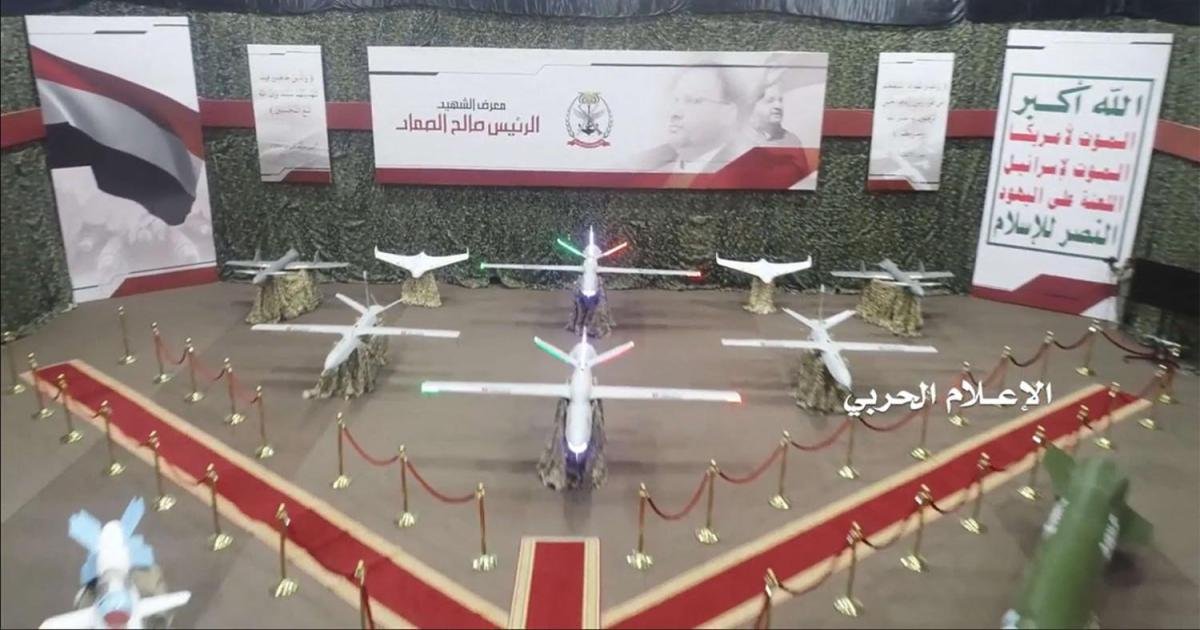
The growing use of drones and air power had altered the nature of the confrontation, she said, but was not sufficient on its own to determine the outcome.
Eryani also pointed to fragile military morale during the fighting.
She said the Houthis had invested in an information campaign that deepened doubts over whether reinforcements would arrive from other units.
Any military advance against the Houthis required simultaneous and coordinated mobilisation across multiple fronts, she said, something that did not happen during this confrontation.
Despite the setback, Eryani said the fighting reflected expectations among broad sections of Yemenis that advancing towards Sanaa and restoring state institutions could once again be possible, at least at a psychological level.
She cautioned, however, that it was too early to draw final conclusions from a battle taking place in a highly volatile environment where all scenarios remained open.
Eryani said Saudi Arabia’s calculations remained unclear.
Riyadh had not indicated full support for a broad military operation and continued to stress that diplomatic channels remained open, despite what she described as Houthi provocations.
At the same time, Saudi Arabia had continued to provide the Yemeni government with relatively high levels of support and was likely to have been part of the calculations preceding the decision to respond militarily.
Why Yemen Forces Collapse So Fast
Eryani said no outside state could ultimately decide the conflict on behalf of the Yemeni side.
Regional and international interests in maritime security and deterring cross-border attacks could provide the government with allies, she said, but could not substitute for unified Yemeni political will to build a stable state.
“No one will put their full weight behind a weak link,” she added.