
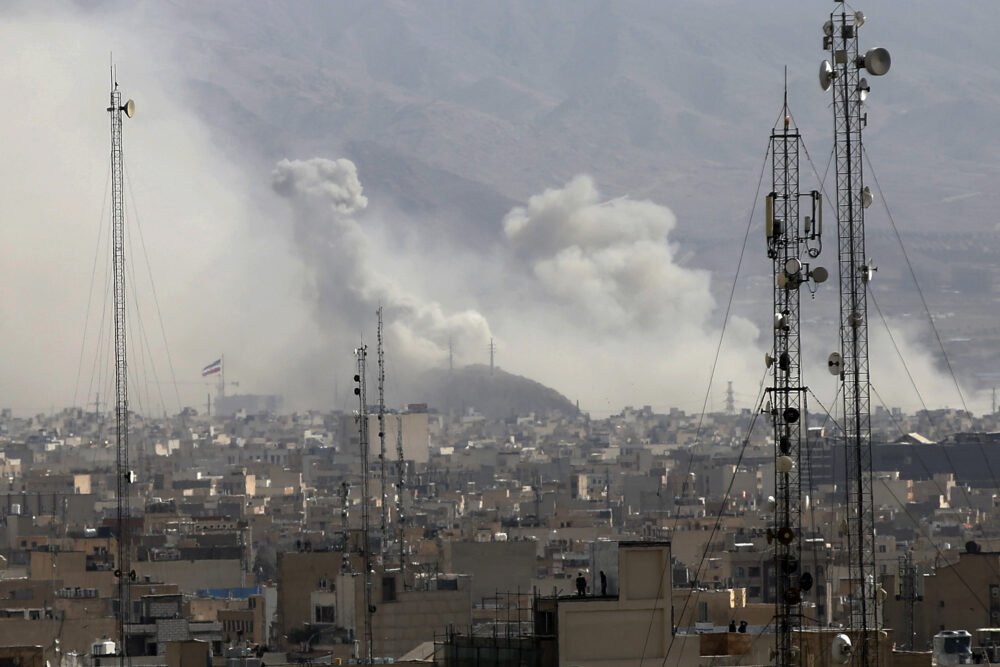
The war enters an uncertain phase. Key intelligence questions—Iran’s military resilience, regime cohesion, escalation thresholds, and proxy behavior—will shape outcomes.Without clear assessments, strategic drift risks prolonged conflict, regional spillover, and post-war instability outpacing US planning.
When the United States and Israel launched their joint military operations against Iran, analysts swiftly turned to examining the tactical surprise of the strikes, the decapitation of the senior leadership, the succession dynamics now unfolding in Tehran, and the evolving posture of Iranian proxies across the region. The decision to initiate this phase of conflict will be debated for years to come. For now, the more immediate task is to assess the intelligence judgments shaping what happens next, and how those judgments interact with allied positioning, diplomatic activity, and economic constraints.
Senior administration officials briefed congressional leaders prior to the February 28 strikes and later conducted classified briefings for members of Congress in early March. The briefings took place ahead of largely party-line votes in the Senate and House this week that rejected restrictions on the president’s actions under the War Powers Act. The sessions examined intelligence assessments that informed the Executive Branch’s decision to strike. Equally important, however, are forward-looking assessments that will guide escalation thresholds, alliance management, regional stability, and conflict termination. The scale and duration of this conflict will depend heavily on judgments about Iranian military sustainability, regime cohesion, escalation dynamics, regional spillover, allied responses, and plausible end states.
Military sustainability and adaptation
Initial strikes by the United States and Israel have degraded senior leadership and elements of Iran’s command structure. The central question is whether those effects are temporary or cumulative.
Assessments of Iran’s remaining capabilities across the missile, drone, naval, cyber, and air-defense domains will influence operational tempo and escalation risk. If capabilities are irreversibly degraded, sustained pressure may narrow Iranian options. If the regime proves to be adaptive and resilient, continued operations could generate more complex retaliation.
Key unknowns include redundancy in Iran’s command and control, the resilience of its communications and logistics networks, and whether the Islamic Revolutionary Guard Corps (IRGC) is decentralizing authority or dispersing assets. Trajectory matters as much as current status: Is Iran’s ability to sustain resistance eroding, stabilizing, or adapting? Uncertain estimates of degradation or regenerative capacity can impair strategic planning, emphasizing the importance of getting accurate information on losses and projection with clearly articulated levels of confidence.
Regime cohesion and internal stability
The death of Supreme Leader Ayatollah Ali Khamenei and other senior officials has forced succession under wartime conditions. Judgments about regime cohesion will shape expectations regarding escalation, stability, and possible termination.
Elite alignment in Iran remains the first-order variable. If consolidation is strengthening around interim leadership, external pressure may reinforce cohesion. If fragmentation is emerging, the same pressure could accelerate internal bargaining or instability. Indicators of alignment among the Interim Leadership Council, clerical institutions, and the IRGC are therefore critical, as are assessments of whether chains of command remain intact and operational control remains unified.
And elite cohesion is not the only determinant of internal stability. Given President Donald Trump’s call for a popular uprising, intelligence assessments must also address the probability of large-scale public mobilization and the regime’s capacity and willingness to repress it.
Iran has experienced repeated protest cycles over the past decade, triggered by economic distress and governance failures and suppressed through internet shutdowns and lethal repression, prompting strong international condemnation. Wartime conditions could dampen unrest through rally effects, or intensify it if the population perceives its authorities’ actions as reckless or the conflict as unbearably costly. Indicators to monitor include labor unrest in the energy and transport sectors, coordination across major urban centers, activity in minority regions, university mobilization, and signs of cross-class organization.
Equally consequential is the reliability of coercive institutions. Stability depends not only on whether command structures remain intact but also whether the IRGC, its subsidiary Basij paramilitary force, and other security forces would uniformly enforce repression at scale under wartime strain. Assessments of morale, cohesion, deployment patterns, and internal discipline are therefore central.
The key intelligence question is not simply whether the regime is unified at the top, but whether it can sustain control if confronted with simultaneous external conflict and renewed internal protest. Policymakers should understand both the metrics being tracked and the limits of analytic confidence.
Escalation dynamics and termination pathways
Public statements by President Trump and Defense Secretary Pete Hegseth have left open the possibility of expanded US military operations, including potential deployment of US ground forces in Iran. It is possible that they are raising the issue to enhance strategic ambiguity. In practice, such deployments would materially alter the conflict’s scale and political stakes.
Intelligence assessments on which political and military decisions are made should clarify the conditions under which expanded involvement might be considered necessary along with what assumptions underpin those judgments. Are escalation thresholds tied to Iranian behavior, force protection requirements, or defined operational objectives?
Termination pathways are equally important. Under what conditions might Tehran seek de-escalation? What incentives or pressures could make negotiations viable? How credible are potential intermediaries or informal channels?
If objectives include degrading specific capabilities, assessments must address the likelihood and timeline of Iranian reconstitution. Leadership decapitation and infrastructure strikes do not automatically eliminate institutional capacity. Intelligence assessments should distinguish clearly between damage to physical infrastructure and any change in breakout timelines, weaponization latency, or monitoring visibility under wartime conditions. Iran has previously replaced senior IRGC leadership rapidly, and its missile program has relied heavily on domestically sustained production. The head of the International Atomic Energy Agency has emphasized that nuclear knowledge cannot simply be erased through military action. The operative question is how quickly, at what scale, and under what constraints reconstitution could occur, and what that would imply for US force posture and operational commitments.
Regional spillover and maritime risk
Iran’s regional network introduces additional uncertainty. The behavior of proxy groups in Lebanon, Iraq, Syria, and Yemen will shape the geographic scope of the conflict. Apparent restraint may reflect strategic calculation, operational degradation, or temporary pause. Escalation in secondary theaters could alter force posture and expand the conflict’s footprint.
Maritime disruption represents a parallel risk. The Strait of Hormuz, through which roughly one-fifth of global oil and liquefied natural gas exports transit, remains central to global energy markets. Reporting indicates that Iranian warnings and attacks have reduced traffic, increased insurance and freight costs, and raised energy prices. Such interference can amplify risk premiums and feed into domestic inflation. Sustained disruption would affect energy markets, alliance politics, and regional stability. Assessments of the likelihood and duration of such disruption therefore bear directly on economic resilience and force protection planning.
Arab Gulf states’ internal calculations are similarly consequential. If regional partners assess the conflict as contained, cooperation is likely to continue. If they judge it open-ended or destabilizing, hedging behavior may emerge, particularly if economic disruption deepens or retaliation intensifies. Basing durability, overflight rights, and domestic political pressures are therefore strategically significant variables.
Alliance cohesion and institutional responses
Early international reactions suggest a complex landscape. Some close partners have emphasized that they did not participate in the strikes while condemning Iranian retaliation and calling for restraint and renewed diplomacy. Others, including in multilateral settings, have urged rapid de-escalation. These positions matter because they affect legitimacy, coalition durability, diplomatic leverage, and the range of plausible termination pathways.
Allied and institutional reactions will play a part in the conflict’s trajectory. Judgments about allied support or constraint across Europe, North America, and the Indo-Pacific will affect intelligence sharing, sanctions enforcement, diplomatic leverage, and operational flexibility. Institutional positioning within the United Nations Security Council and regional bodies will influence legitimacy, humanitarian access, and post-conflict diplomacy, regardless of the constraints of formal resolutions. These factors, too, should be incorporated in analytic assessments.
End states and post-conflict scenarios
Even if near-term military objectives are achieved, longer-term outcomes remain uncertain. Tactical success does not guarantee durable strategic advantage.
Plausible political end states inside Iran include consolidation under new leadership, negotiated transition, prolonged internal contestation, or fragmentation. Each carries distinct regional and global implications. Humanitarian and economic projections are also relevant, as infrastructure damage and economic contraction can shape internal stability and regional spillover.
Finally, Iran’s capacity to rebuild military and economic strength under varying degrees of isolation or reintegration will determine whether current operations produce temporary disruption or lasting strategic change.
Conclusion
The conflict remains fluid, and future decisions may prove as consequential as those already taken. In such circumstances, disciplined intelligence assessment, with explicit assumptions, confidence levels, dissenting views, and alternative scenarios, is essential.
Clear analysis cannot eliminate risk. It can, however, reduce the likelihood that escalation, alliance strain, economic spillover, or post-conflict instability outpace strategic understanding.