
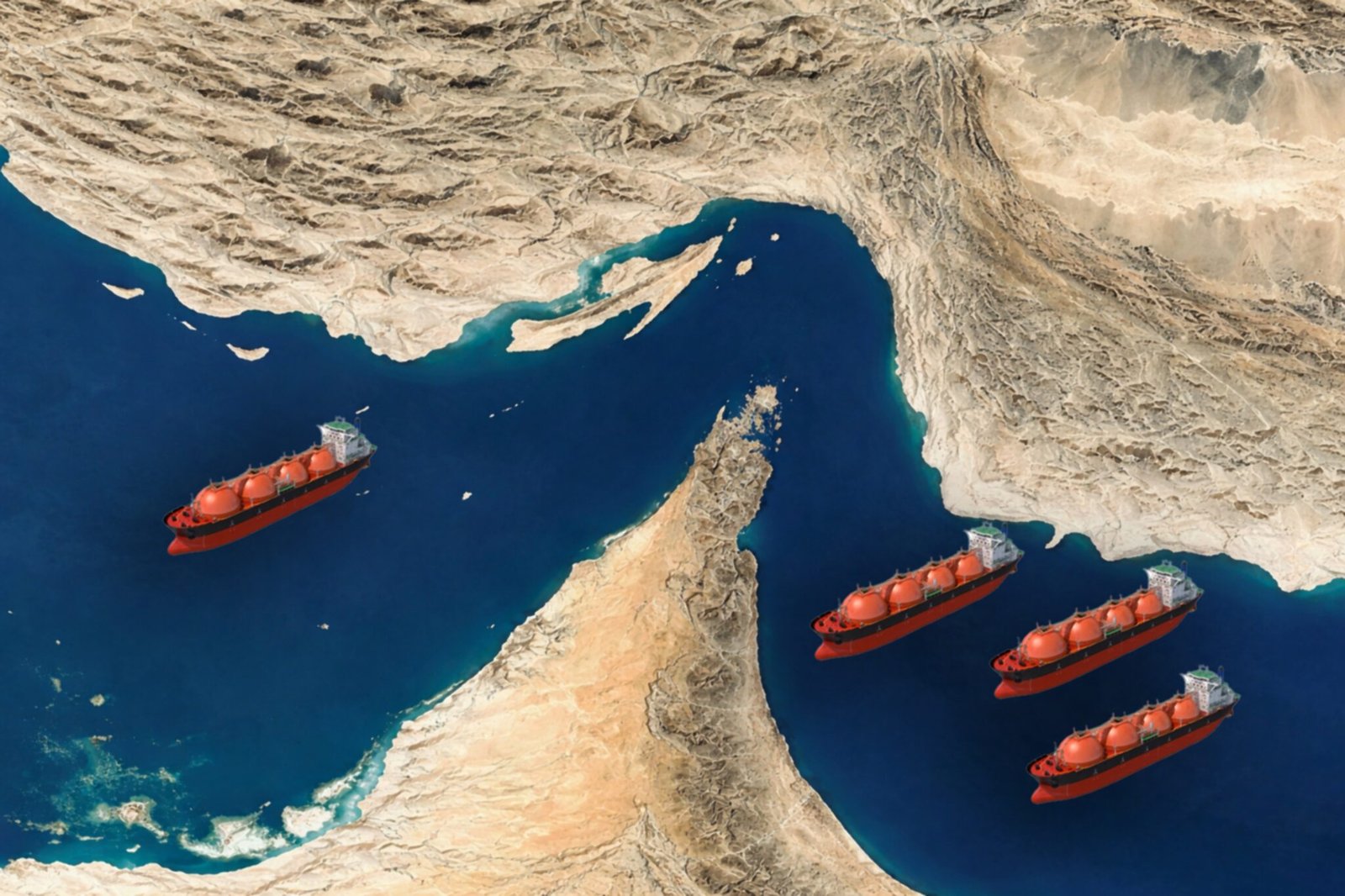
Iran’s Hormuz leverage is self-defeating; prolonged closure would cripple Tehran’s economy more than global markets. Gulf pipeline diversification and strategic reserves neutralize this coercive tool, exposing Iran’s structural vulnerability.
Strait of Hormuz Leverage is frequently cited as Iran’s ultimate strategic deterrent, yet structural analysis suggests this power is largely a facade. While the threat of closure creates market panic, the actual execution of such Strait of Hormuz Leverage would economically isolate Tehran more than its global adversaries.
Regional powers are already neutralizing Strait of Hormuz Leverage by investing in massive pipeline projects that bypass the chokepoint entirely. Therefore, the perceived Strait of Hormuz Leverage may be the very factor that leads to Iran’s long-term strategic exhaustion.
The Strategic Reality of Strait of Hormuz Leverage
Iran’s ongoing strategy of leveraging the Strait of Hormuz as a geopolitical pressure point is widely perceived as a source of strategic advantage. However, this assessment overlooks a fundamental reality: Iran is structurally more vulnerable to sustained disruption of the strait than are its regional adversaries.
With the overwhelming majority of its oil exports and trade dependent on this corridor, any prolonged closure would inflict severe economic damage on Iran itself, exacerbating internal instability and limiting its strategic endurance. Iran’s strategy of using the Strait of Hormuz as a means of extorting geopolitical advantage is inherently self-defeating, as it is itself deeply vulnerable to the consequences of the Strait’s prolonged closure.
At the same time, Iran’s escalation through the targeting of Gulf infrastructure and energy assets has failed to produce the intended political effect of coercing Arab states into distancing themselves from the United States. Instead, it has accelerated regional awareness of the risks associated with overdependence on a single maritime chokepoint. Gulf states, particularly Saudi Arabia and the United Arab Emirates, have already invested in alternative export routes and infrastructure that partially mitigate this vulnerability, with further expansion both feasible and strategically necessary.
The global energy system, moreover, is more resilient than often assumed. While disruption in the Strait of Hormuz would trigger short-term volatility, international markets possess adaptive mechanisms, including strategic reserves, diversified suppliers, and flexible logistics networks. Iran, by contrast, lacks comparable economic flexibility due to structural inefficiencies and ongoing sanctions, making it disproportionately exposed to prolonged crisis conditions.
Despite these realities, much of the Muslim world continues to align, implicitly or explicitly, with Iran’s anti-Israel narrative, a legacy of ideological frameworks established after the 1979 Islamic Revolution.
This alignment persists even as Iran’s actions increasingly threaten the economic and security interests of Muslim-majority states. Iran’s perceived leverage over the Strait of Hormuz is largely illusory. Its current strategy reflects a miscalculation of both regional dynamics and global economic resilience.
A coordinated Arab approach centered around economic integration, infrastructure diversification, and pragmatic geopolitical engagement can significantly reduce vulnerability to Iranian pressure.
Market Impact and Strait of Hormuz Leverage
The Strait of Hormuz remains indispensable to global energy markets. Approximately 20–21 million barrels per day of crude oil and petroleum liquids transit the Strait of Hormuz, accounting for roughly 20–25% of global petroleum consumption and nearly one-third of the seaborne oil trade. Yet the strategic value of the Strait is often overstated in the context of Iranian leverage.
While disruption would undoubtedly generate immediate economic shock, it would not create a stable or asymmetric advantage for Iran. On the contrary: the costs of sustained closure would fall disproportionately on Tehran. Iran’s economy is heavily dependent on maritime exports routed through the Strait. Export alternatives outside the Strait remain extremely limited.
Terminals like Jask, designed to bypass Hormuz, currently handle only a fraction of capacity (estimated below 300,000 bpd under operational constraints), leaving the vast bulk of Iranian oil flows structurally dependent on the Strait. Iran currently exports an estimated 1.3–1.6 million bpd of crude oil and condensates, of which over 90% is shipped via the Strait of Hormuz. Closing the Strait would therefore constitute a form of economic self-disruption, constraining state revenues and intensifying domestic economic pressures.
Unlike global markets, which can draw upon diversified supply chains and strategic reserves, Iran’s economy is characterized by structural rigidity. Sanctions, limited foreign exchange reserves, and institutional inefficiencies reduce its capacity to absorb prolonged external shocks. As a result, any extended disruption would likely exacerbate inflation, fiscal instability, and internal political strain.
Infrastructure Buffers Against Strait of Hormuz Leverage
Iran’s strategy also underestimates the degree to which the Gulf states have adapted to the risks associated with the Strait of Hormuz. Over the past two decades, regional actors have invested in infrastructure designed to mitigate reliance on the Strait.
Saudi Arabia’s East-West (Petroline) pipeline, with a capacity of approximately 5 million bpd, and the UAE’s Abu Dhabi–Fujairah pipeline, capable of transporting around 1.5–1.8 million bpd, provide partial but meaningful alternatives to Hormuz-dependent export routes. While these alternatives do not fully replicate the capacity of the Strait, they offer a significant degree of strategic flexibility.
More importantly, these initiatives reflect a broader shift in regional thinking. Rather than managing dependency, Gulf states are increasingly seeking to reduce it. Further integration is possible, including expanded pipeline networks and overland energy corridors linking the Gulf to Mediterranean markets via Jordan and other regional partners.
Such developments would not eliminate the strategic importance of the Strait of Hormuz, but they would significantly reduce its utility as a coercive instrument.
Global Resilience to Strait of Hormuz Leverage
The global energy system is more adaptive than commonly assumed in crisis narratives. While disruptions in the Strait of Hormuz will trigger immediate price volatility and supply chain stress, the international markets possess mechanisms for adjustment. Strategic petroleum reserves can be released to stabilize supply.
Alternative producers can increase output. Shipping routes, though less efficient, can be recalibrated. Over time, these adjustments can mitigate the long-term impact of disruption. Iran, by contrast, lacks comparable flexibility. Its economic structure does not allow for rapid adjustment to external shocks, and its access to international financial systems remains constrained.
Consequently, the relative burden of prolonged disruption would fall more heavily on Tehran than on global markets or regional competitors. A critical yet often overlooked dimension of the crisis lies in the initial US policy response during the first phase of the conflict.
Despite Iran’s partial disruption of maritime traffic, Washington refrained from fully interdicting Iranian oil exports through the Strait of Hormuz.
This apparent inconsistency can be understood through the lens of market stabilization priorities. At the time, the United States faced a strategic trade-off: enforcing a comprehensive maritime blockade against Iran risked removing an additional 1–1.5 million bpd from already stressed global markets, potentially triggering a sharp price spike with worldwide economic consequences.
By tacitly allowing limited Iranian exports to continue, Washington may have sought to maintain baseline supply levels while avoiding escalation into a broader naval confrontation. However, such a policy is unlikely to be repeated under similar conditions in the future. Any renewed attempt by Iran to selectively disrupt maritime flows while preserving its own exports would almost certainly provoke a more decisive US and allied response, including direct maritime enforcement measures, given the lessons drawn from the initial phase of the conflict and the reduced tolerance for asymmetric manipulation of critical energy corridors.
Ideological Factors and Strait of Hormuz Leverage
An important dimension of the current crisis is the continued alignment of many Muslim-majority states with Iran’s anti-Israel narrative. This alignment has historical roots in the ideological frameworks established following the 1979 Islamic Revolution led by Ayatollah Ruhollah Khomeini.
Since the Revolution, Iran has positioned itself as the self-proclaimed vanguard of resistance against Israel. The institutionalization of “Quds Day” became a powerful ideological instrument, embedding anti-Israel sentiment across large segments of the Muslim world. Over time, this narrative has shaped political discourse across the region, often conflating support for Palestinian rights with broader opposition to Israel’s legitimacy.
While this framing has retained political resonance, it has limited the scope for pragmatic policy responses. Today, that ideological legacy continues to shape political responses, even as Iran’s strategic behavior grows increasingly destabilizing.
Since the launch of coordinated military operations by the United States and Israel earlier this year, Tehran has retaliated with missile and drone strikes targeting Gulf states—many of them Arab partners of Washington. Airports, energy installations, and civilian infrastructure have all come under attack, raising alarm across the region. Continued adherence to ideological positions that align with Tehran’s agenda risks undermining national interests and regional stability.
Yet instead of a unified regional pushback against such aggression, there remains a conspicuous reluctance among many Muslim-majority nations to challenge Tehran’s posture. This hesitation reflects not only political caution but also the lingering influence of decades-long ideological conditioning.
Policy Shifts Reducing Strait of Hormuz Leverage
The evidence indicates that Iran’s perceived leverage over the Strait of Hormuz is significantly constrained by structural economic and geopolitical factors. Its strategy of disruption is unlikely to produce sustainable advantage and may instead exacerbate its own economic and political vulnerabilities.
For regional actors, the key policy implication is the importance of diversification and coordination. Investments in alternative energy infrastructure, enhanced regional integration, and strengthened maritime security frameworks can collectively reduce exposure to chokepoint risks. At the same time, a reassessment of ideological alignments may be necessary.
A more pragmatic approach balancing political considerations with strategic interests could enable greater flexibility in regional diplomacy and reduce susceptibility to external coercion. The Strait of Hormuz will remain a critical component of the global energy system for the foreseeable future. However, its role as a tool of strategic leverage is often misunderstood.
Iran’s ability to threaten disruption does not equate to an ability to sustain it. The economic and geopolitical costs of prolonged closure would fall disproportionately on Tehran, limiting the effectiveness of such a strategy. At the same time, regional and global responses are evolving.
Infrastructure diversification, market adaptability, and potential shifts in political alignment all point toward a gradual erosion of the Strait’s utility as a coercive instrument. Ultimately, sustainable influence in the contemporary geopolitical environment is defined not by the capacity to disrupt critical systems but by the ability to adapt, integrate, and endure.
The current crisis underscores the importance of moving beyond inherited assumptions and toward a more resilient and strategically coherent regional framework.