
The geopolitical escalation in the Middle East has introduced an unprecedented stress test for regional financial systems, forcing a sharp split in how state authorities manage market expectations.
As systemic War Pressures Gulf Economies, the strategic choices behind state transparency reflect differing stages of diversification and fiscal strength. How individual states frame this crisis will dictate their long-term credibility, particularly as localized War Pressures Gulf Economies force a stark re-evaluation of regional supply chain stability.
War Pressures Gulf Economies Directly
Since the outbreak of military confrontation between the United States and Israel on one side and Iran on the other in late February, Gulf economies have faced mounting strain from turmoil in energy markets and disruptions to regional shipping routes. The pressure intensified as traffic through the Strait of Hormuz — the narrow waterway that carries roughly one-fifth of the world’s oil trade and large volumes of liquefied natural gas — slowed to a near standstill, rattling exporters across the Gulf.
Yet while the region’s governments have confronted many of the same geopolitical and economic shocks, they have adopted markedly different approaches in describing the fallout to the public and to investors. Some states have openly acknowledged widening deficits, slowing growth and pressure on oil revenues. Others have emphasized corporate profitability, resilience in non-oil sectors and signs of continued economic expansion, even as international institutions downgraded regional growth forecasts.
Fiscal Deficits as War Pressures Gulf Economies
In Saudi Arabia, Finance Ministry data showed that the budget deficit reached 125.7 billion riyals, or about $33.5 billion, during the first quarter of 2026 — a figure approaching the government’s projected annual deficit of roughly $44 billion. The rise in spending came as Riyadh sought to shield the economy from the effects of regional instability and maintain momentum behind large-scale development projects tied to Vision 2030. At the same time, official figures showed Saudi oil revenues declined by about 3 percent year over year despite higher global crude prices, suggesting that the economic fallout has extended beyond oil prices alone to include shipping disruptions, insurance costs and logistical constraints affecting exports.
Severe Supply Contractions and War Pressures Gulf Economies
The economic picture in Qatar appeared even more severe. The country recorded a trade deficit of roughly 4.39 billion riyals in March, according to Bloomberg data released in April — the first monthly deficit in years. The International Monetary Fund also sharply lowered its outlook for Qatar’s economy, forecasting a contraction of 8.6 percent this year. Qatar suffered a direct blow after Iranian strikes targeted the Ras Laffan liquefied natural gas complex, one of the country’s most important economic assets. Qatari authorities said the attacks damaged nearly 17 percent of the facility’s production capacity, with repairs expected to take years.
Kuwait, meanwhile, projected a deficit of 9.8 billion dinars, or about $32.1 billion, in its draft budget for the 2026-2027 fiscal year, alongside a decline in expected revenues. According to Kuwaiti Finance Ministry estimates, oil revenues — which account for nearly four-fifths of government income — are expected to fall sharply from the previous fiscal year, reflecting the effects of volatility in oil markets and disruptions tied to the conflict.

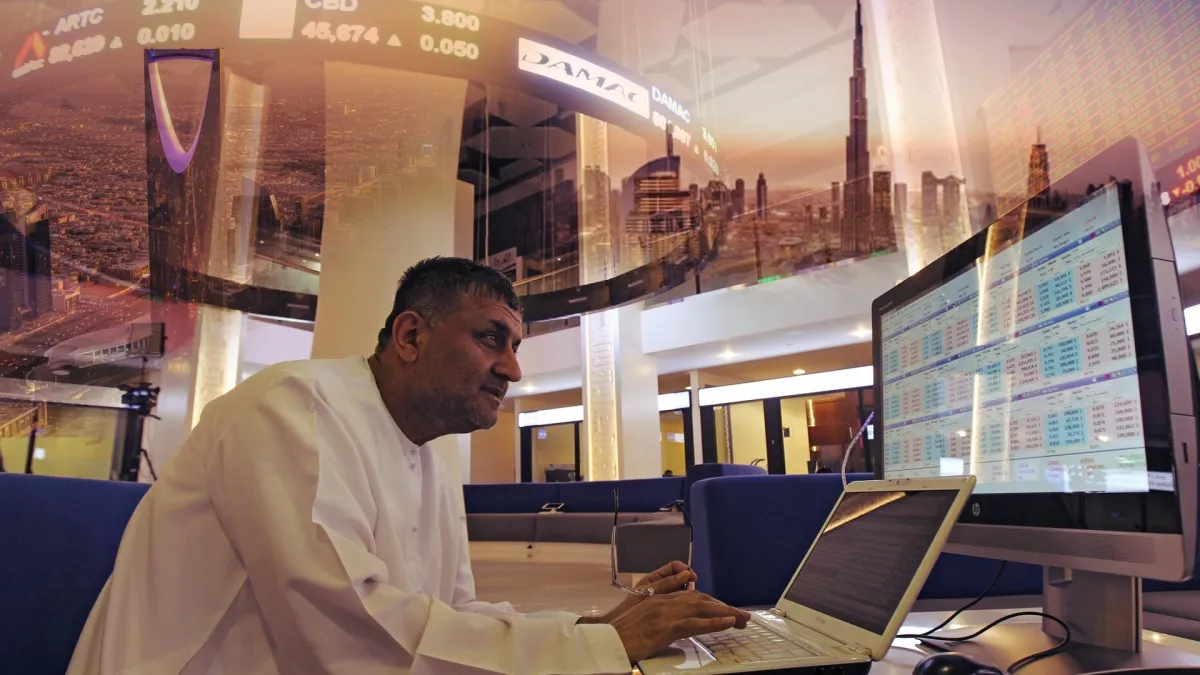
— RESTRICTED TO EDITORIAL USE – MANDATORY CREDIT “AFP PHOTO / HO / DUBAI GOVERNMENT” – NO MARKETING NO ADVERTISING CAMPAIGNS – DISTRIBUTED AS A SERVICE TO CLIENTS — (Photo by HO / DUBAI GOVERNMENT / AFP)
War Pressures Gulf Economies Mitigated Effectively
But the picture appeared different in the United Arab Emirates and Bahrain. Neither country reported a fiscal deficit during the first quarter, even after the International Monetary Fund lowered growth expectations for both economies. Bahrain is now expected to contract slightly this year, while growth in the UAE is projected to slow. Even so, major Emirati companies continued to report strong earnings. Emirates Group announced a rise in annual profits, while ADNOC Logistics and Services reported higher margins in the first quarter.
Divergent Communications Reflecting War Pressures Gulf Economies
Economists say the contrast reflects more than differences in economic exposure to the conflict. It also reveals diverging political and economic calculations about how governments in the Gulf want to present themselves during a period of regional uncertainty. Ali Al-Hamdi, an Omani economist, said that public acknowledgment of deficits and financial pressure can, in some cases, strengthen investor confidence rather than weaken it. “Some Gulf economies are in the middle of large-scale transformation programs that require heavy capital spending,” he said in comments to Alhurra.
“Others have already moved further toward diversified economic models and are beginning to generate more stable returns from non-oil sectors.” According to Al-Hamdi, Saudi Arabia and Qatar remain deeply engaged in long-term infrastructure and logistics projects that continue to absorb large amounts of state spending, while the UAE — particularly Dubai — benefits from an economy more heavily centered on trade, tourism and financial services.
Awad Al-Nassafi, an economic adviser and professor of finance and accounting, said the Saudi model depends on expansive public spending designed to create a more diversified economy over time, even if it places pressure on state finances in the short term when oil revenues weaken. By contrast, he said, the UAE’s broader non-oil base — including tourism, real estate, digital services and finance — has made it less vulnerable to swings in oil markets and more capable of maintaining fiscal stability during regional crises. For Jamal Banoun, a Saudi economist, the differences across the Gulf do not necessarily represent competing economic visions so much as different stages of economic transition.
Qatar, he noted, continues to hold substantial reserves and sovereign wealth assets despite its growing deficit, while Kuwait’s fiscal difficulties have been compounded by political disputes that have delayed approval of a long-debated public debt law. The debate over transparency has become increasingly important as Gulf governments compete for foreign investment in a region shaped by war risk, energy volatility and slowing global growth. Some governments have opted to present detailed accounts of deficits and economic strain as evidence of institutional credibility and fiscal discipline.
Others have focused on narratives of resilience, profitability and continuity in an effort to reinforce their reputation as stable investment destinations. For decades, Gulf states often moved in relative coordination on economic and political issues. But analysts say the current crisis has exposed a more fragmented regional landscape, one in which governments are increasingly pursuing their own economic priorities and crafting their own public narratives about risk, resilience and stability.