
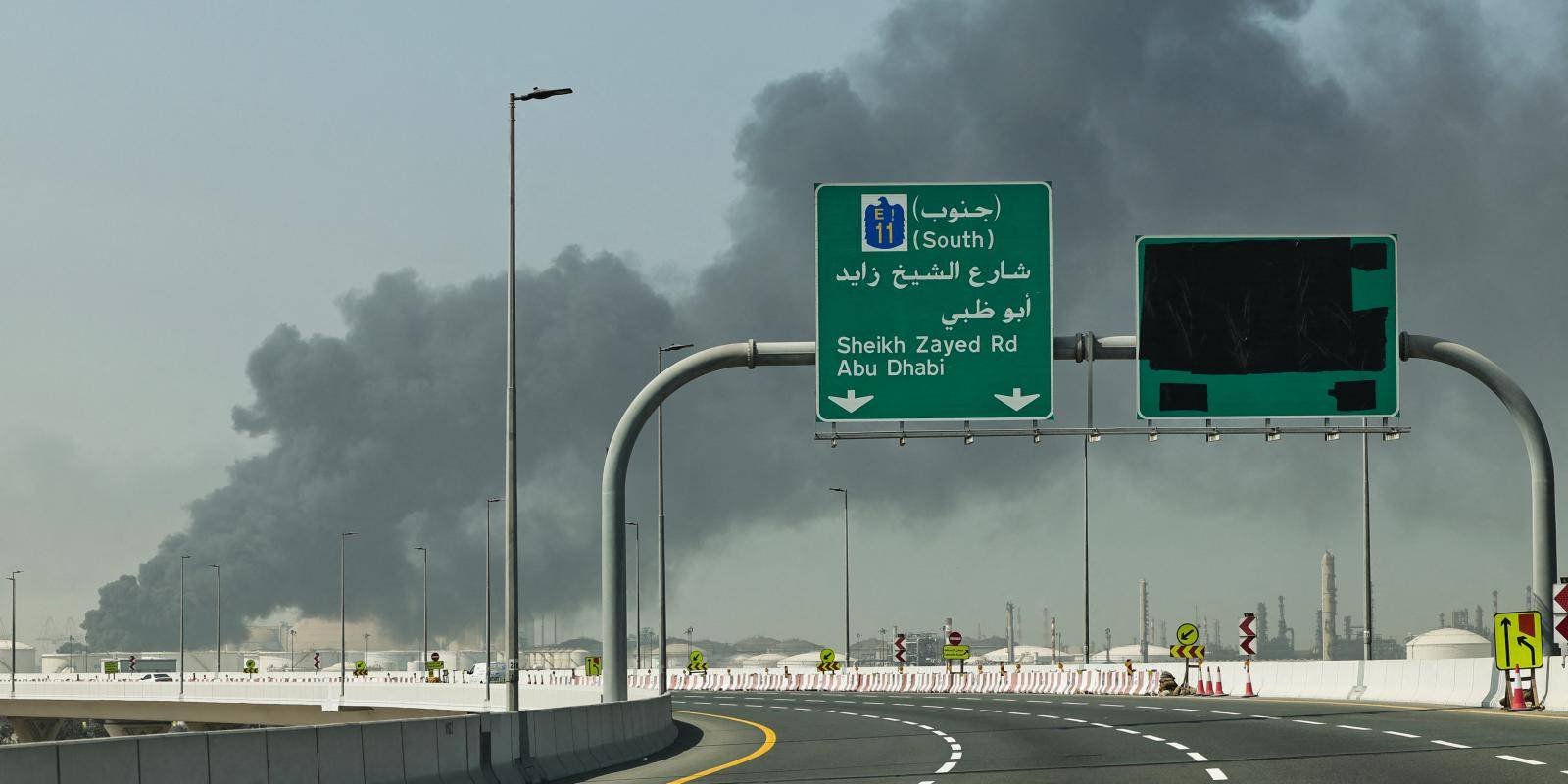
The Iran war exacts a heavy toll on Gulf exporters: lost revenue, damaged infrastructure, uncertain LNG futures. Saudi Arabia and UAE face fiscal strain despite price spikes. Iraq nears collapse. The Gulf’s economic model is under existential pressure.
The war unleashed on Iran by Israel and the US will have profound implications for Middle East economies – mainly negative for both producers and consumers.
For the oil and gas exporters in the Gulf, the US-Israeli war with Iran has already exacted a heavy toll through lost revenue. Matters could get even worse if major installations are seriously damaged.
Regional energy importers, meanwhile, are facing stresses from higher fuel costs and losses of foreign currency earnings, which will push up inflation and aggravate socio-economic tensions.
It is striking that amid the crisis, while its economy is being badly damaged by the war, Iran is still exporting oil to China using the Strait of Hormuz – even as it closes the passage to Gulf countries’ shipping.
It’s possible the US is refraining from attacking Iranian traffic in hopes of preserving the infrastructure that any new Iranian regime would depend upon. Gulf Arab states’ fear of further escalation, and Trump’s wariness of antagonizing China prior to a planned summit later this month, may also be playing a part.
Gulf state losses
Saudi Arabia and the UAE are managing to sell reduced volumes via pipelines to terminals outside the Strait of Hormuz. The East-West pipeline across Saudi Arabia to Yanbu on the Red Sea has the capacity to deliver 5 million barrels/day (b/d), while the line from Abu Dhabi to Fujairah, on the Arabian Sea, can carry 1.5 million b/d.
Yet even at full capacity these routes can only cover about one-quarter of the oil that normally goes through the Strait of Hormuz. And they are vulnerable to attack by Iran, and by Yemen’s Houthis. The Yemeni group has yet to enter the fray, but if it does, it could disrupt Saudi exports from Yanbu to Asia.
Saudi Arabia will be able to claw back some of its revenue losses thanks to higher oil prices. But its financial position was already showing signs of strain before the war.
The fiscal deficit was 5.3 per cent of GDP in 2025, and capital spending was being cut back. The kingdom has become increasingly reliant on capital inflows, including external borrowing, which has reached $156 billion. The net foreign assets of its commercial banks showed a deficit of $57 billion at the end of January. Foreign lenders and investors will be reappraising Saudi risk, even if oil exports climb back to pre-war levels within a few months.
The UAE has a more diversified economy than Saudi Arabia, and a smaller national population, and so it is less reliant on oil. Yet its Jebel Ali trading and manufacturing hub has been hit hard by the disruption to shipping, as have tourism, retail, aviation and the property market. And the UAE’s role as a services and trade outpost for Iran will be called into question by the war.
Qatar’s financial loss from a one-month interruption to its liquefied natural gas (LNG) exports will be a relatively modest $4 billion (assuming 6 million tonnes at $14/mmBtu). This could easily be recouped with a return to business as usual.
However, Qatar and the UAE’s long-term plans for major expansions to their LNG exports face uncertainty. The start-up of Qatar’s own expansion project has already been delayed to mid-2027. And assumptions about the prospect for a steady increase in Asian demand now look much less sure.
Asian buyers have the option of increasing imports from other producers, such as the US, Australia, Canada and Russia. And utilities in Asia can continue to rely on coal for electricity generation, while increasing investment in renewables, batteries and nuclear power. In order to safeguard market share, Qatar may have to soften its commercial terms, which are less flexible than those offered by US exporters.
Iraq’s economy is the most oil-dependent in the wider Gulf region. Some 90 per cent of its budget revenue derives from crude exports. The bulk flows from the Basra Oil Terminal and through the Gulf and the Strait of Hormuz.
The oil is produced in southern fields, which are not linked to pipeline systems in the north. Limited volumes are now flowing from smaller northern fields through the pipeline to Turkey. And some oil from the south is being moved by road tanker to Jordan. But a prolonged loss of oil revenue would make it hard for the government to cover public salaries and pensions, which account for over half of budget expenditure.
North Africa
Outside the Gulf, Egypt has been hit hard by rising oil and LNG prices and the loss of Qatari LNG. Egypt is a net oil importer, and depends on imports for about one-third of its natural gas supply. Roughly half of this comes from Israel, with LNG making up the remainder. Israeli supplies have been suspended, while Qatar accounted for a large chunk of LNG shipments that Egypt had ordered to boost its summer supply.
Foreign portfolio investors, on whom Egypt relies heavily to finance its fiscal deficit, have pulled some $6 billion out of the Egyptian market because of concerns about the impact of higher import costs, the potential loss of revenue from tourism and the Suez Canal, and the risk of a fall in remittances from Egyptians working in the Gulf.
The central bank has allowed the Egyptian pound to depreciate in response to these pressures, rather than releasing reserves. This has provided some assurance to investors, and there have been recent reports of a modest recovery in foreign purchases of government securities.
But the war has also created some opportunities. Egypt is in a position to provide alternative logistical services to the Gulf via Jordan and Saudi Arabian ports. Use of the Suez Canal to transport Saudi oil from Yanbu to the Mediterranean could increase. The Sumed pipeline, which runs from the Gulf of Suez across Egypt to the Mediterranean coast, could also see increased flows.
Additionally, Egypt’s exports of fertilizer and aluminium will command higher prices, as sales from the Gulf are blocked. And the tourism sector could benefit from the misfortune of Dubai.
However, the net effect on Egypt will be negative, with higher inflation and the possibility of a rise in interest rates. That would push up already high public debt-service costs while stifling private sector investment.
Among energy exporting countries in the region, Algeria stands to benefit most from the Iran war, although its ability to cash in on higher oil and gas prices is constrained by its limited ability to increase production – it is already producing at full capacity.
The impact on Morocco, which relies heavily on energy imports, will be mixed. It will be hit hard by the increase in oil prices, but this will be offset to some extent by the surge in fertilizer prices: Morocco is one of the world’s largest exporters of phosphatic fertilizers. However, production costs will be inflated by the requirement to import ammonia.
Lasting effects
If the intense phase of the conflict winds down over the next few weeks, and structural damage to energy infrastructure in the Gulf remains limited, confidence could gradually return to region’s energy sector and to an economic model that remains hugely dependent on oil and gas, for all the efforts at diversification.