
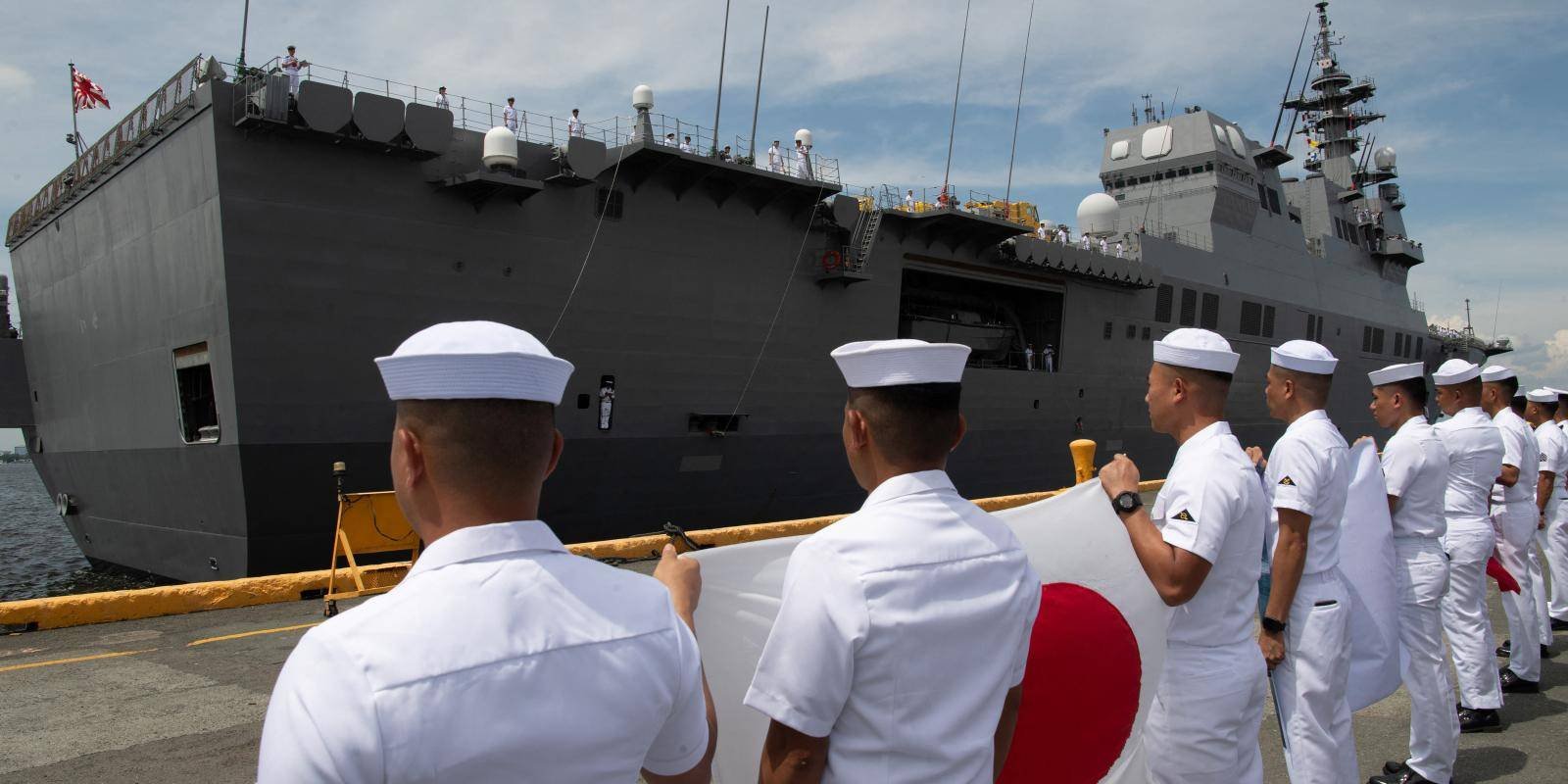
US redeployment of missile defenses from South Korea and Marines from Japan to the Iran war fuels Pacific ally anxiety. Japan, South Korea, the Philippines should form a trilateral security arrangement—building mutual defense independent of US assets.
The war is fuelling worries about US commitment to its Pacific partners. The ‘triangle’ of US-aligned countries must use the moment to strengthen their mutual defence.
The US war with Iran is shaking up security in the Indo-Pacific. Earlier this month, it was reported that the US had begun pulling THAAD and Patriot missile-defence systems from South Korea to boost its defences in the Middle East – even as North Korea continued cruise missile tests.
The Pentagon also redirected around 2500 marines and an amphibious warship from Japan to the Arabian Sea – at a time when Tokyo’s relations with Beijing are under significant strain.
Such moves raise questions in the wider region about the US’s reliability as a security partner. For decades, the US invested time, money, and troops to develop a strong web of security relationships across East Asia that countries have come to rely on – particularly Japan, South Korea, and the Philippines. As President Donald Trump wages war in the Middle East, that carefully constructed Pacific web is overshadowed by significant uncertainty. US allies in the region should meet this new security environment by boosting their interoperability.
Worries over US commitment
For now, the new liberal leadership in Seoul is presenting a strong front about US redeployments. But missile defence systems like THAAD are a vital buffer against ever growing aggression from their northern neighbour. Reportedly, concerns were raised strongly to the US but were overruled, highlighting the vulnerability of relying upon easily movable US assets.
This has caused additional consternation as these missile systems came at significant political and economic cost to South Korea. Following the purchase of THAAD, China punished Seoul with economic sanctions, indicating its displeasure at having US capabilities so close.
US and Korean forces are continuing to carry out military drills as scheduled. And for now, Washington has reaffirmed its commitment to helping to maintain peace on the peninsula. But any US move to redeploy assets away from South Korea will feed anxieties about a US administration that has repeatedly criticized Seoul for its defence spending.
In Tokyo, Prime Minister Sanae Takaichi has signalled interest in further cooperation with the US, by getting involved in Trump’s ambitious Golden Dome initiative.
Takaichi has also promised to accelerate an increase in Japanese defence spending, acknowledging US pressure for allies to do more on defence. But the Iran war is creating economic pressure for the prime minister at a time when she is trying to move forward an ambitious reform agenda. And Trump’s recent call for Japanese warships and others to help secure the Strait of Hormuz sits uneasily with Japan’s pacifist constitution – creating a rather complicated picture for Takaichi to navigate.
The Philippines is yet to see any US deployments change as a result of the Iran war. But concerns are rising. The longer the war continues, the more pressure will grow on US munitions stockpiles. That could yet affect the Philippines. As tensions continue with China over sovereignty disputes in the South China Sea, reliance on US for defence essentials is coming to be viewed as more of a risk, and anxiety is starting to grow in Manila.
Meanwhile, all three countries are facing increasing economic pressure caused by skyrocketing oil prices.
Domestic concerns
The war, and US deployments, also create domestic political issues. The head of Japan’s main opposition party, Junya Ogawa, signalled frustration following the US redeployment of assets, saying that Japan did not allow US troops on to their territory ‘so they can sortie from those bases to fire missiles towards the Middle East’.
In South Korea, where President Lee Jae-Myung is striving to rebuild trust in Korean democracy following an attempted coup by his predecessor last year, some conservative news outlets are anxious that recent US actions have diminished the country’s ability to defend itself.
In the Philippines, dependence on the US has long been a point of attack used against the administration of President Ferdinand ‘BongBong’ Marcos Jr – who is currently battling corruption allegations. And the war has ignited worries that ties with the US place a target on Filipino soil, should Iran choose to attack US assets in Asia.
The war in Iran also cuts more personally for the Filipino public. Around one in four seafarers are Filipino, and many now face danger and uncertainty as tensions continue to flare in the Strait of Hormuz.
Yet, even as these leaders share a common security challenge and domestic pressures, they also have a unique opportunity to overcome this predicament – together.
Establishing a triangle trilateral would benefit all (including the US)
Japan, South Korea, and the Philippines have been described by US military commanders as forming a security ‘triangle’ in the Indo-Pacific because of their strategic locations and important role in balancing Chinese power.
Yet, for all their mutual interests, the three allies do not have a trilateral security arrangement, only numerous bilateral agreements.
Japan, South Korea and the US undertook naval exercises in 2025. And Japan and the Philippines conducted joint naval exercises in June the same year. But ‘triangle’ joint naval exercises have not taken place without a US presence. More and better integration is needed.
In order to bridge the gap the US might leave in coming years, a formal and binding trilateral security arrangement is necessary to ensure strong interoperability, intelligence sharing, advanced military tactics and good munitions supplies.
There is a clear foundation for such an agreement: the three countries’ mutual cooperation with the US exhibits commitment to shared norms and principles, providing them with an excellent basis for multi-layered and trust-based cooperation.
The Philippines has enjoyed good bilateral relations with Japan and South Korea. And although Tokyo and Seoul have had a difficult history, their current leaders have shown commitment to bettering relations, sealed by a drum duet earlier this year. This foundation of friendship and respect will certainly smooth the process of integrating into a shared security community. Expanding current bilateral agreements to include a third country would accelerate this process as well.
For example, by extending the current Japan–Philippines reciprocal access agreement to include South Korea, waters within the triangle would see smoother movement of military vessels and more frequent joint training exercises. Disaster response would also likely improve.