
Five strategic questions as Iran war enters fourth week: realistic political end state in Iran; regional order; US priority; great power shifts; domestic political capital. Strikes without strategy risk chaos. Unanswered questions loom.
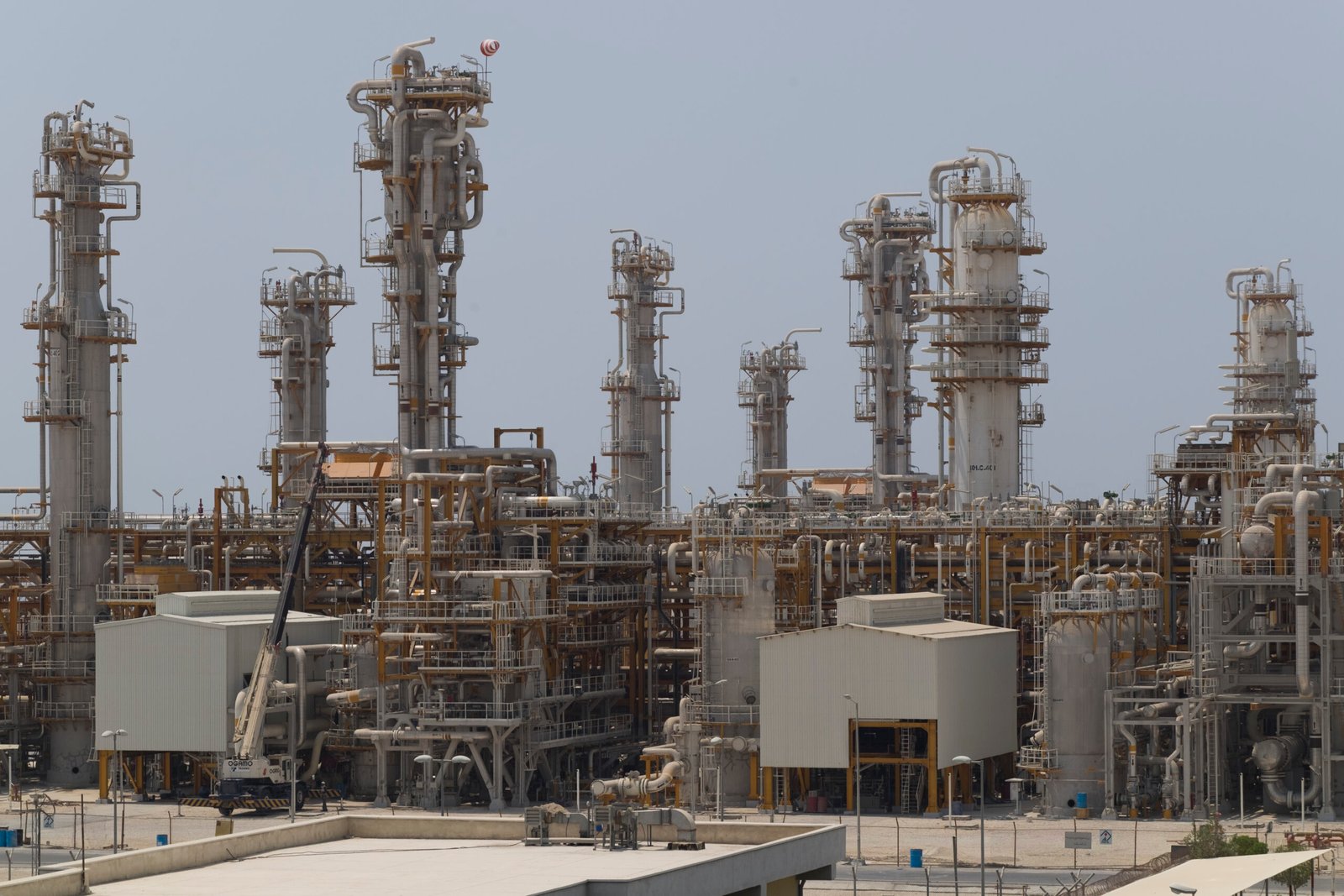
Oil and natural gas prices surged this week as the Iran war continues with strikes and counterstrikes against key energy facilities in the Gulf.
The conflict is currently just past the halfway mark, according to US President Donald Trump’s initial estimate that it would take four to six weeks to achieve his objectives. Trump hedged on that estimate and in typical fashion sent out a stream of confusing, mixed messages, in part because once a war like this begins, it can take on a life of its own.
On Iran policy, the United States has shifted from “maximum pressure” against the regime to “maximum uncertainty.” Little is clear at this moment beyond the notions that the Middle East and the wider world have moved into unchartered territory and that the effects of the Iran war will continue long after the final bomb is dropped and last ballistic missile fired.
Trump’s first year in office produced mixed results on several fronts across the Middle East, but it was all a prelude to an uncertain military operation against Iran with no end in sight in its early weeks. Here are five fundamental, strategic questions that require more attention as the media and political debates fixate on the day-to-day breaking news and tactics of this war.
President Trump initially defined “regime change” as the ultimate outcome of Operation Epic Fury, the current military campaign against Iran. In the early morning hours of the first day of the conflict, Trump declared, “all I want is freedom for the people.” At points he even suggested that he himself would pick Iran’s future leader. Alongside Israel, the United States has encouraged the Iranian people to stand up against the regime and take control of their own future — easier said than done against a brutal regime that has murdered thousands of its own people for decades.
Approaching the fourth week of this war, the United States and Israel are starting the see the limits of what air and naval power alone can do to remove a regime. Analysts can speculate ways that the two countries might recalibrate their military tactics to weaken the grip the Iranian regime has on its own people, but there are limits to how useful military tactics are without a clear desired end state on the question of who controls Iran. In the absence of a better idea of how a political transition might take place when a repressive regime appears to maintain a monopoly on the use of force inside of the country — and importantly, which factions inside Iran might stand the best chance of tipping the balance against the regime — the military operations will likely continue destroying its capabilities without paving a clear way to a transition to something that benefits regional security. It is still early days in this war, but initial US intelligence community assessments find that the Iranian regime has regenerated and consolidated power, even as it suffers devastating military blows and significant losses of top leadership.
Strikes without strategy — the current approach — risk any number of scenarios that could end up making the situation worse, not better, inside Iran and in the region. A hard(er) line set of leaders who are less predictable at home and abroad could emerge, or chaos and disorder resulting from a devastating military campaign could create conditions for civil war, as has happened in multiple Middle East countries over the past few years. Without a clearer conception of the preferred, realistic political end state in Iran, Operation Epic Fury risks making the same mistakes the United States made for decades in Iraq and Afghanistan.
Who controls Iran and serves as the legitimate power governing the country is likely to be contested for years to come — and it will also directly impact the ability of America and other outside powers to achieve their aims on key issues like the nuclear program and energy production.
At the center of this question are the Iranian people — they are a key variable in what comes next, as recent episodes of the podcast Taking the Edge Off the Middle East, hosted by the author, with Emad Shargi, Holly Dagres, and Behnam Ben Taleblu underscore. The struggles millions of Iranians have faced for years under this regime — along with decades of wars, sanctions, and international isolation — make the calculus and analyses centered solely on military tactics a bit abstract and academic in the face of the unpredictability of power and politics on the ground in Iran.
The second big question that comes after greater clarity on the preferred end state is how this new Iran situates in the context of a new Middle East. With fast-moving events and the addiction to breaking news dominant in our culture, the central focus of much media coverage and policy analyses today is like analyzing an entire baseball game through the lens of one player’s single at-bat against a pitcher in the early innings. This will likely be a long game in Iran — and it is one that has already affected the region.
In going it alone with Israel in this military campaign and mostly ignoring the pleas of key regional partners to pursue diplomacy, the Trump administration took America down a pathway that aligns it even more closely with Israel for now. America’s Arab Gulf partners have mostly assumed a passive defensive posture in the face of aggressive Iranian attacks against civilian and energy infrastructure along with military targets — and those partners will likely continue to subtly hedge and diversify their relationships to de-risk against the uncertainty coming from Washington, even as they maintain close strategic ties with the United States on military and defense issues.
One positive scenario for the region is that the Iran war produces a government that is much more interested in responding to its own people’s needs and in becoming more connected and integrated with the rest of the region. But in these first weeks of the war, with the conflict threatening to become a vortex that draws more powers in, the likely outcome is a much more negative scenario of a chronic threat to stability that undercuts the aspirations of Gulf countries to diversify their economies away from dependence on hydrocarbons. It was less than a year ago that President Trump traveled to Saudi Arabia, Qatar, and the United Arab Emirates on a “spring bling” tour centered on cutting high-value business deals for America — deals that will not move forward if instability caused by the Iran war takes root and persists.
As America and much of the rest of the world focus on the Iran war, other challenges loom: China, Russia’s war against Ukraine now into its fifth year, and climate change, all issues that will not likely get better with this war.
In the months before the United States launched attacks on Iran in concert with Israel, the Trump administration released national security and defense strategies that said one important thing about the Middle East: America will not invest as much time, resources, and attention in that part of the world as it has previously. The national security strategy issued by the Trump team in November argues, “the days in which the Middle East dominated American foreign policy in both long-term planning and day-to-day execution are thankfully over — not because the Middle East no longer matters, but because it is no longer the constant irritant, and potential source of imminent catastrophe, that it once was.”
This may not end up being the case in 2026, given the seeming trajectory of the Iran war — but it could in fact be the case that America seeks to pull back from the region in the medium to long term. This was a stated strategic priority over the past decade and a half by Democratic and Republican administrations alike, and the second Trump administration has placed a higher priority on the Western Hemisphere, too. If pullback from the Middle East is in fact America’s trajectory in the longer term, then the issues raised in question two above about the new regional order become all the more complicated.
A fourth strategic question to keep in mind at a time of fast-moving events is how other global powers are adapting and adjusting. Russia has already benefited from the first weeks of the Iran war — the runup in energy prices is lining its coffers, as is the Trump administration’s decision to lift some sanctions aimed at squeezing Russia financially just to relieve some of the domestic political pressures caused by rising gasoline prices in America. It made this move while Russia has continued to prosecute its war against Ukraine and work with the Iranian regime on drone warfare.
China is quietly biding its time and watching how the Iran war plays out — true to its long game strategy for the region of mostly free-riding when it can and avoiding the costs of direct intervention. European countries have largely rebuffed requests from the Trump administration to join in an effort to secure the Strait of Hormuz — at least initially. But as the economic and energy costs of this disruption increase, their calculus might shift. India remains a quiet and growing regional power that seems bound to have a stronger voice in the Middle East as it continues to expand economically and geopolitically.
With these dynamics already apparent a little more than three weeks into the war — the entire chessboard globally is likely to shift in ways that are difficult to predict as the conflict continues to evolve.
Last but not least is the internal debate in America about this war — how the public responds to events will determine how much staying power the Trump administration has in moving beyond a military operation to produce some form of strategic success or not. Most directly, the Pentagon will reportedly seek more than $200 billion in supplemental funding to support the Iran war — at a time when America is still facing a partial government shutdown and continued economic concerns about inflation due to rising gas prices and Trump’s ongoing trade wars with much of the rest of the world.
President Trump took America to war against Iran in a most peculiar fashion — he did very little to build public support or coalitions at home to back an ambitious yet ill-defined set of goals in Iran and the region — and the domestic political risks for Trump increase the longer this war goes on.
A political reckoning at home for Trump and a strategic reckoning in the world for America loom large if these fundamental questions are not answered.