
Latin America suffers economically from the Iran war through higher oil prices, fertilizer disruptions, and agricultural trade shocks. Brazil faces diesel costs and urea shortages. The region’s cautious official silence reflects dependency on Washington. Strategic loss extends beyond economics—a new era of U.S. hegemony threatens if Iran falls.
When tensions escalate between Iran and the United States, attention usually turns to the Gulf, Israel, maritime routes, and oil markets. But that focus obscures a quieter and more complex arena: Latin America. The region may lie far from the immediate battlefield, yet it is not insulated from the fallout. For Latin America, a war involving Iran is not just a distant geopolitical crisis. It quickly becomes an economic one, driving up fuel costs, disrupting shipping, threatening fertilizer supplies, unsettling agricultural trade, and adding fresh pressure to inflation and growth.
How a region far from the conflict still ends up paying part of its price.
On March 9, 2026, Brent crude jumped to about $119.50 a barrel, rising roughly 25 percent in a single day and reaching its highest level since mid-2022 amid fears of disrupted supply and shipping through the Gulf. The bigger cost is slower growth and more inflation in Latin America. When oil prices rise, the impact does not stop at the gas station. It spreads through the whole economy, pushing up the cost of transport, electricity, fertilizers, food, and distribution. That matters even more because the region is not going into 2026 with much cushion. The IMF expects Latin America and the Caribbean to grow by just 2.2% in 2026.
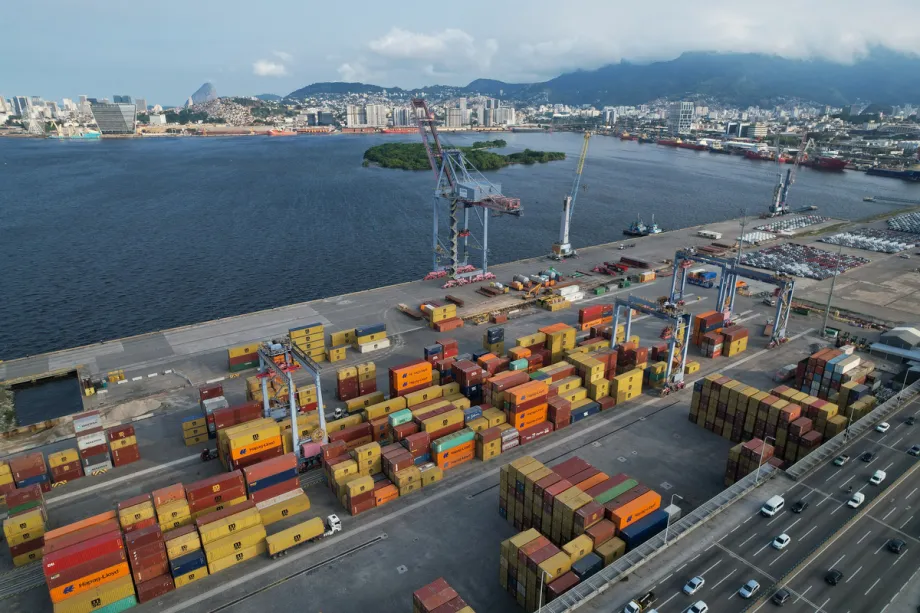
In a Bloomberg report, rising oil prices driven by the war in the Middle East were said to be increasing costs for Brazil’s agricultural exporters, underscoring the sector’s reliance on diesel-powered trucks to move crops across long distances. The timing is especially sensitive, with Brazil in the peak of its soybean shipping season and higher diesel prices making it more expensive to transport the country’s top export crop to terminals, adding pressure across the agricultural supply chain.
Reuters’ reporting shows that Brazil faces a two-sided vulnerability in its trade with Iran and the wider Gulf region. On one side, Iran was the largest buyer of Brazilian corn in 2025, importing 9.1 million metric tons, while Brazil also bought nearly $85 million in Iranian goods. Brazil imports all of its urea needs, and about 41% of those imports pass through the Strait of Hormuz.
With the war disrupting fertilizer plants in the region and interrupting cargo flows at a critical moment for farmers, the risk goes beyond higher prices. It also threatens the availability of supply, the timing of deliveries and the stability of the entire agricultural trade chain.
According to the Latin American affairs specialist, Ali Farhat, Latin America was the first victim of Donald Trump’s attacks. “he took control of Venezuela’s oil and of political decision-making in Venezuela. He himself said that once the war ends, he will turn to Cuba, the next target of the American war”.
“The main loss of Latin America is not that it enters the war, but that it pays for it without controlling its course. The region has little ability to calm the conflict, yet it absorbs part of the fallout through prices, supply chains, financing conditions, and trade disruptions”, Faraht said.
He sees that the loss goes far beyond the economic dimension; “the strategic loss would be extremely significant. If the American project in the Middle East is realized, the loss would certainly be far greater than any economic loss. Latin America would be facing a new era of hegemony and a new form of colonialism, especially in the event of the loss of Iran”.
“This war, as well as the American military buildup in the Caribbean before it, and the operation to abduct Venezuela’s Maduro, proved that Latin American countries are indeed fragile states. This is not on the economic level”.
He also explained that even Brazil’s stance “did not carry the same strong tone it had in the past,” pointing to “electoral calculations, political calculations, and geostrategic calculations” now shaping decision-making. According to him, governments across the region have been shaken by recent events and are therefore approaching the war with far more careful and precise caution.
The specialist Farhat clarified that the region’s core challenge is the need to “free itself from American dependency,” especially after the latest developments in Venezuela. He argued that Latin American countries now need “room to breathe” so they can reassess their internal calculations and protect their domestic interests. In his view, the absence of any strong or shocking official reaction to the US-Israeli war against Iran reflects the region’s deep caution in the face of overwhelming American influence.
In his assessment, the differing reactions across the region are mainly ideological: “the far right is certainly aligned with the United States,” while leftist governments are still trying to balance their own national interests with the need to avoid provoking Washington “at this stage.”
He also said these developments showed that Latin American countries have long concentrated on internal issues while remaining weak on the international stage, despite President Luiz Inácio Lula da Silva’s efforts to build a stronger regional alliance.
Farhat argued that Lula ultimately failed because of “divisions within Latin America and the rise of the right wing.”