
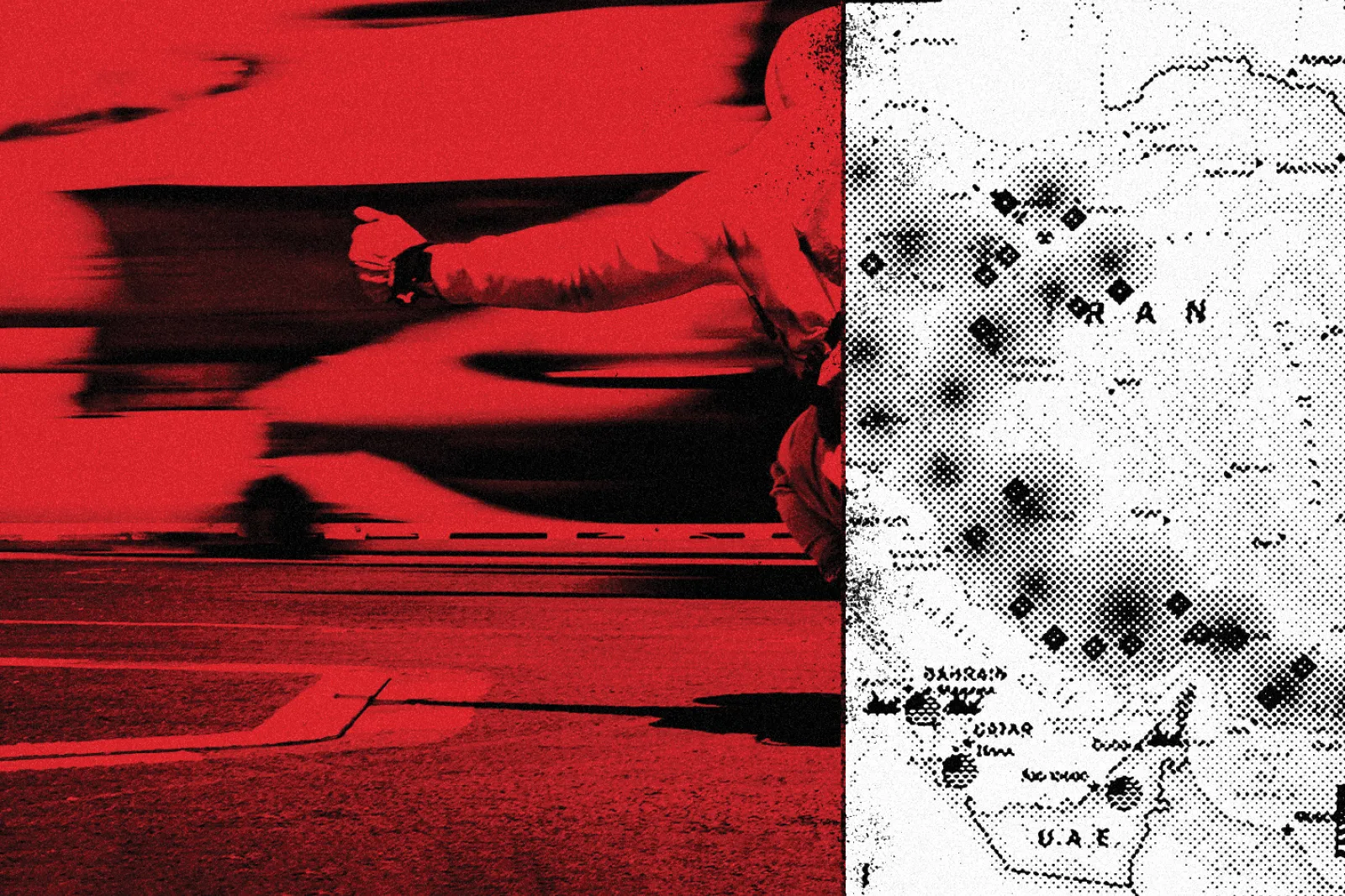
This article defends the strategic logic of the 2026 conflict. Yadlin and Golov detail the military successes of the campaign—including the elimination of Supreme Leader Ali Khamenei and deputy Ali Larijani—and argue that the war was a “necessity” that has empowered pragmatic domestic Iranian forces and solidified an alliance between Israel and key Arab states.
In early 2024, the Islamic Republic of Iran was riding high. It was the dominant external actor in four Middle Eastern states: Iraq, Lebanon, Syria, and Yemen. Its missiles and armed proxies menaced and coerced Arab countries. Israel, Tehran’s main enemy, had been damaged by Hamas’s October 2023 attack and was fighting a seven-front war against Iranian proxies. The Islamic Republic’s nuclear program was moving steadily closer to producing a weapon as Iranian officials enriched uranium to 60 percent and expanded their ballistic missile manufacturing. Suddenly, the regime’s long-standing calls for “death to Israel” and “death to America” seemed to have much more meaning. Iran appeared close to fulfilling its five-decade quest to become the most powerful country in the Muslim world.
Then, in April 2024, Israel struck a Quds Force meeting building situated adjacent to the Iranian embassy complex. The facility served as the operational headquarters for Brigadier General Mohammad Reza Zahedi, the commander of the Islamic Revolutionary Guard Corps’ operations in Syria and Lebanon, who was responsible for coordinating Iranian-led terror activities against Israel. Iran, in turn, directly attacked Israel. And in the months that followed, it quickly became clear that Tehran’s prior confidence was misplaced: the regime was much more vulnerable than it seemed. Israel, alongside France, the United Kingdom, and the United States, intercepted almost all of Iran’s drones and missiles. Israel then destroyed Iran’s air defense systems. Israeli forces dealt a severe blow to Hezbollah—Iran’s most vaunted proxy—by killing its longtime leader and destroying many of its weapons. In June 2025, Israel launched a military strike against Iran’s nuclear sites and ballistic missile facilities. Working with Washington, it bombed and buried much of Iran’s enriched uranium. And in February this year, the United States and Israel again went to war with Iran, severely damaging more of its military and security infrastructure, striking the regime’s defense production industries, and eliminating senior figures at the highest levels, including former Supreme Leader Ali Khamenei and his top deputy, Ali Larijani.
But despite these successes, not everyone in the United States is pleased. In fact, many American analysts believe the conflict has squandered U.S. resources in what is almost certain to be an unsuccessful attempt to change Iran’s regime. Some also think the war has happened at the behest of the Israelis, and that the conflict has undermined the United States’ reputation and churned through its munitions in order to weaken a country that is mainly a threat to Haifa, Jerusalem, and Tel Aviv.
But these objections are wrong. This was never a conflict of choice. Iran declared war on the United States (which it calls the “Great Satan”) as soon as the Islamic Republic came into being, when regime affiliates stormed the U.S. embassy and held 66 diplomats hostage for over a year. Tehran has since killed, directly or indirectly, thousands of American troops. Even in its weakened state, the regime still menaced Washington’s interests. Critics of this recent war also overlook its success. By greatly weakening Iran’s radical regime, the conflict has given more pragmatic officials an opportunity to seize control while increasing the confidence and relevance of domestic opposition forces. It has accelerated the creation of a broad anti-Iran alignment that includes Israel, the United States, key Arab states—including Bahrain, Kuwait, Saudi Arabia, and the United Arab Emirates—and some European countries. It has, in other words, laid the groundwork for a better Middle East.