
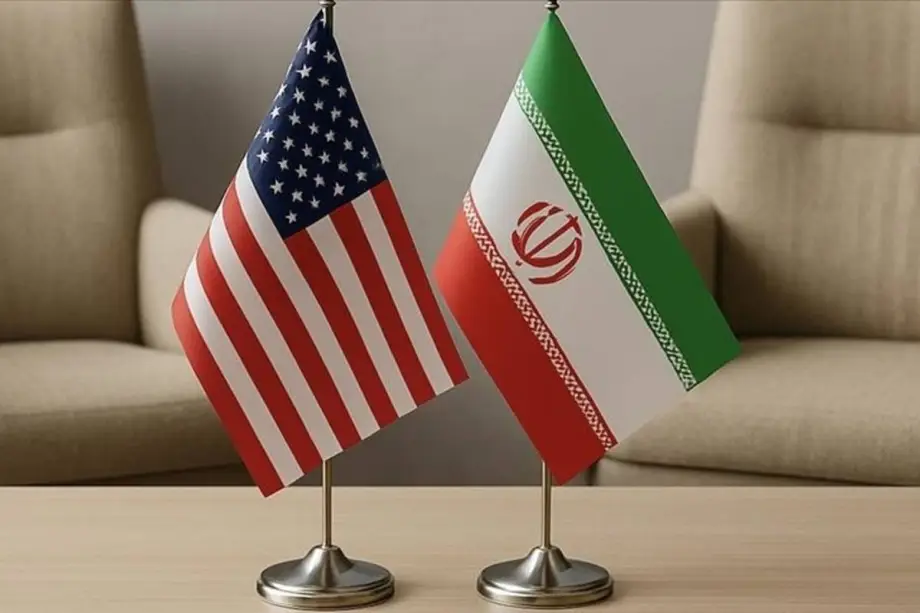
The current de-escalation is rooted in structural limitations where U.S. military primacy fails to translate into political outcomes. With Iran prioritizing survival over conventional victory and Israel diverging from Washington’s priorities via its continued campaign in Lebanon, the region has entered a state of “persistent tension.” For middle powers like Indonesia, this fragile stability necessitates economic resilience and a proactive diplomatic role to prevent the inevitable next phase of escalation.
The announcement of a ceasefire between the United States, Israel and Iran in April 2026 was widely framed as a moment of de-escalation in one of the most dangerous confrontations in the Middle East in recent years. Yet, a closer examination suggests something far less reassuring. The war may have slowed, but it has not ended. What has emerged is not peace, but a pause—fragile, conditional, and deeply uncertain.
This ceasefire did not arise from a shared strategic vision or a genuine convergence of interests. Instead, it reflects a mutual recognition of risk. The prospect of a wider regional war—one that could disrupt critical global energy routes such as the Strait of Hormuz—created incentives for restraint. However, restraint is not resolution. Agreements forged under pressure tend to stabilise situations temporarily, but they do not address the underlying drivers of conflict.
On the ground, military actions have not ceased entirely; they have merely shifted in scale, intensity and justification. At the political level, each actor advances its own narrative of success.
This ambiguity is not accidental. It serves a strategic function. For Washington, it allows the ceasefire to be framed as a product of coercive diplomacy—pressure that compelled Iran to step back. For Tehran, the same ambiguity enables the preservation of dignity and deterrence; it has neither capitulated nor relinquished its strategic capabilities. For Israel, ambiguity provides operational flexibility, particularly in continuing its military posture against Iran-aligned actors beyond the narrow interpretation of the ceasefire.
Iran’s approach to the conflict is especially revealing. Rather than seeking decisive military victory, it has pursued endurance. As Niall Ferguson observes, Iran does not need to win in conventional terms; it only needs to avoid losing. Survival, in this context, is a strategy. As long as Iran retains its military capacity, sustains its regional networks, and continues to exert influence over strategic chokepoints like the Strait of Hormuz, it remains a central actor that cannot be sidelined (Niall Ferguson, Why Iran Thinks It’s Winning, The Free Press).
The United States now finds itself navigating this reality. While its military capabilities remain unmatched, its ability to translate power into clear political outcomes appears increasingly constrained. The multiplicity of actors, the diffusion of conflict across state and non-state networks, and the complexity of regional dynamics all limit the effectiveness of traditional strategies. The ceasefire, in this sense, reflects not only diplomatic effort but also structural limitation.
Israel’s position further complicates the picture. Its continued military operations, particularly against Iran-aligned forces in Lebanon, highlight a divergence in strategic priorities.
Taken together, these dynamics point to a fundamental transformation in how contemporary conflicts unfold. War is no longer confined to clearly defined beginnings and endings. Instead, it evolves into a condition of persistent tension—oscillating between escalation and restraint. Ceasefires, in this context, function less as pathways to peace and more as mechanisms for managing instability.
This helps explain the inherent fragility of the current arrangement. It depends on a delicate balance of interests, one that can quickly unravel if any party recalculates its position. As long as the core issues—regional power competition, security dilemmas, and strategic mistrust—remain unresolved, the ceasefire will remain vulnerable.
For countries beyond the immediate theatre of conflict, including Indonesia, the implications are far from abstract. Disruptions in the Middle East reverberate through global energy markets, supply chains, and geopolitical alignments. The assumption of a stable external environment is increasingly difficult to sustain. This underscores the importance of resilience—both in economic policy and in diplomatic positioning.
At the same time, the shifting nature of global politics creates space for middle powers to play a more constructive role. In a landscape where major powers struggle to impose order, there is a growing need for actors capable of facilitating dialogue, maintaining communication channels, and reducing the risk of miscalculation. Such roles may not command headlines, but they are critical in preventing fragile pauses from collapsing into renewed escalation.
What we are witnessing, then, is not the end of war, but its transformation. Conflict persists beneath the surface, contained but not eliminated. As long as competing strategic interests remain intact, the illusion of peace will continue to mask the underlying tension.
The ceasefire may offer a moment of quiet. But it is, at best, a pause before the next phase.