
Structural U.S. disinterest, compounded by Israel’s limited defensive utility for Gulf partners, dismantles the foundational security paradigm. Iran’s successful asymmetric leverage over energy chokepoints forces Arab monarchies toward diversification of partnerships, internal capability building, and potential recalibration of Tehran relations.
For more than forty years, the security setup in the Persian Gulf has basically rested on one straightforward bargain: the Arab oil-producing states keep the oil flowing steadily, and in exchange, the United States promises to protect them. This “oil for security” arrangement didn’t just shape America’s ties with its Arab partners—it also helped keep global energy markets relatively calm and predictable.
But what we’re seeing now, in this so-called “Third Gulf War” between the U.S.–Israel side and Iran, has blown that old paradigm apart. And it might not be coming back.
This isn’t just another flare-up in a region that’s no stranger to conflict. It feels more like a harsh wake-up call, one that lays bare the growing disconnect between what Washington says it will do and what it actually delivers on the ground.
Maybe America simply didn’t have the full capacity to build an airtight defense against that kind of assault. Or maybe, with the Trump administration’s heavy “Israel-first” tilt, it just didn’t have the political will. Either way, the signal to the Arab allies is loud and clear: the U.S. security guarantee isn’t ironclad anymore. It’s not even reliably predictable.
What turns this from a one-off disappointment into a real structural shift is how it lines up with bigger changes in how America sees the world. Washington is increasingly preoccupied with China, tired of pouring resources into endless Middle East commitments, and eager to let local players shoulder more of the security load. In that bigger picture, even a full-blown war in the Gulf hasn’t been enough to push the region back up the priority list.
The most telling moment of the whole conflict might not have been any battlefield clash, but what happened around the Strait of Hormuz. Iran made a serious threat to shut down that critical chokepoint—the world’s main artery for oil and gas. In the past, that kind of move would have been treated as an absolute red line. This time, America’s reaction was muted and inconclusive. That restraint says a lot: even when core shared interests are on the line, you can no longer count on swift, all-in U.S. intervention.
At the same time, attempts to fill the gap by getting closer to Israel haven’t delivered the kind of comprehensive protection some hoped for. Sure, a few Arab states have moved toward security cooperation with Israel in recent years. But the war has shown the limits. Israel has impressive military power, no question—but it’s not positioned geographically, nor equipped doctrinally, to handle the wide-ranging, layered defence needs of the Gulf states.
On the Iranian side, Tehran has played its asymmetric cards effectively. Precision missiles, swarms of drones, and threats at sea have raised real costs for regional infrastructure and shown that raw conventional superiority doesn’t automatically equal battlefield dominance.
More crucially, Iran has turned the link between regional security and energy stability into a powerful lever—one that feels even sharper because the U.S. didn’t respond with overwhelming force.
For the Gulf Arab states, the takeaway is hard to avoid: it’s time for a serious rethink of how they handle their own security. Depending on an outside power—even the strongest one—as the ultimate backstop no longer looks sustainable. That leaves some tough choices ahead: building up their own defense capabilities, spreading partnerships across more countries, exploring new regional security frameworks, or even adjusting their approach toward Iran itself.
Zooming out, the breakdown of this oil-for-security bargain has ripples that go far beyond the Gulf. When the stability of one of the planet’s most important energy regions can no longer be taken for granted under a single dominant protector, instability starts to look like a permanent feature of global energy markets. That could shake up prices, trade routes, speed up geopolitical shifts, and push countries harder toward alternative energy.
But maybe the deepest impact is more philosophical.
In the end, the “Third Gulf War” shouldn’t be seen only as a fight. It’s a transition point toward a new, messier order in the Persian Gulf—one with more uncertainty, a wider cast of players, and responsibilities spread around rather than concentrated in one place. The states that figure this out first and adapt quickest will be the ones best placed to handle whatever comes next.
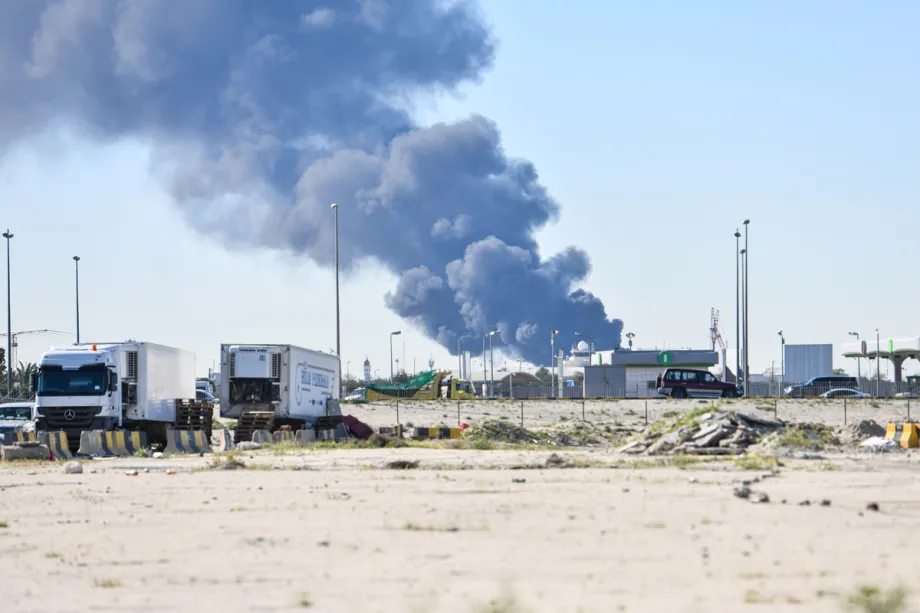
The old “oil for security” equation? It’s no longer workable. It belongs to a past that just went up in the smoke and flames of this latest Gulf war.