
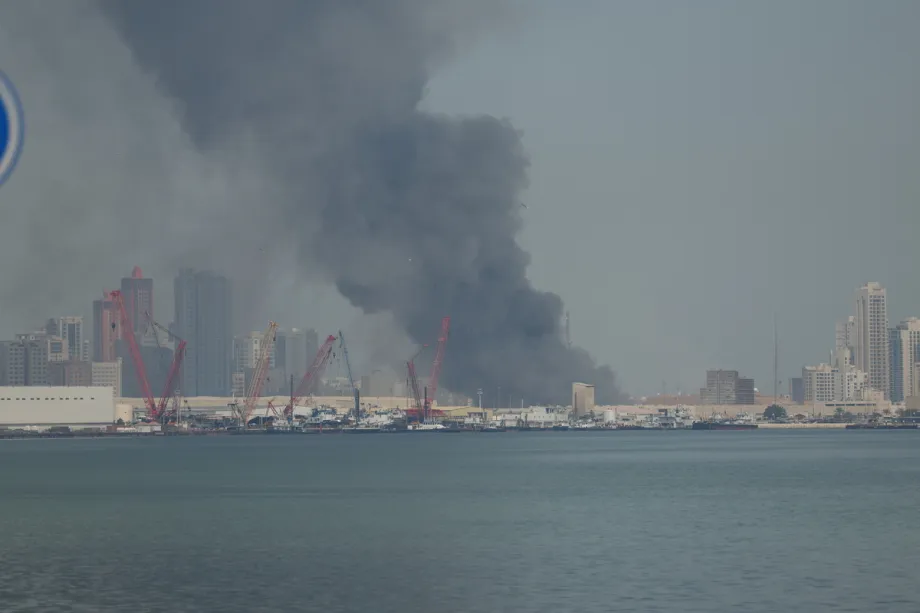
Iran’s demand for US base withdrawal from the Gulf is a strategic delusion. GCC states reject it; US bases protect oil flows, Israel, and regional order. Despite Iranian strikes, Washington remains—but the security guarantee is now conditional.
Gulf Military Bases have served as the cornerstone of Western influence in the Middle East for nearly a century. In the current 2026 landscape, the importance of Gulf Military Bases has only intensified due to rising regional tensions. Maintaining Gulf Military Bases allows the U.S. to project power while securing vital energy corridors. Ultimately, the presence of Gulf Military Bases represents a commitment that Washington is unlikely to ever abandon.
The Strategic Scaffolding of Gulf Military Bases
For more than eight decades, the United States has maintained a formidable military presence across the Arabian Gulf. US bases are dotted across Saudi Arabia, the United Arab Emirates, Qatar, Bahrain, Kuwait, and Oman. This military presence did not emerge by accident. It was shaped by three enduring strategic goals forged in the aftermath of World War II: the security of Israel, the uninterrupted flow of oil, and the preservation of the conservative Arab states that anchor regional order. These goals have never been formally revised, and despite the seismic geopolitical shifts of the intervening decades, they remain the bedrock of American strategy in the region.
The Carter Doctrine of 1980 crystallized this commitment in unambiguous terms. Triggered by the Soviet invasion of Afghanistan and the fear that Moscow might sweep southward toward the Gulf’s oil fields, President Jimmy Carter declared that the United States would defend its interests in the region by any means necessary, including, if required, nuclear force. That doctrine has never been rescinded. It remains the strategic scaffolding upon which four decades of American military stance in the Gulf have been constructed. As President Biden reaffirmed as recently as 2021, “The United States’ commitment to Gulf security is ironclad, and we will not waver in our defense of our partners and our interests.”
Psychological Fallout and Gulf Military Bases Security
The psychological fallout has been shocking. Before the strikes, the prevailing assumption among Gulf leaders was simple: the Americans are here, therefore we are safe. That assumption can no longer stand unchallenged. The Iranians demonstrated an ability to pierce America’s shield systems and inflict serious damage on military infrastructure, sending shock waves through the regional petrochemical and energy industries. When Iran briefly choked off traffic through the Strait of Hormuz, oil prices spiked, and fertilizer and petrochemical markets worldwide convulsed.
Against this backdrop, Iran has made the expulsion of American forces one of its stated demands in any future security framework for the region. Tehran’s position is ideologically consistent, but strategically delusional.
The Gulf Cooperation Council (GCC) states have no appetite for American withdrawal. Saudi Crown Prince Mohammed bin Salman has made clear that the Kingdom’s security architecture is inseparable from its partnership with Washington, stating that “the American presence is not a burden. It is a foundation upon which the stability of the entire region rests.“
Qatar, home to Al Udeid Air Base, the largest American military installation outside the continental United States, pays directly to host US forces and has repeatedly signaled that this arrangement serves its sovereign interests.
Shifting Equilibrium Near Gulf Military Bases
The GCC states were not passive observers of the recent conflict. They were targets. For years, they had cultivated careful commercial and diplomatic ties with Tehran, a pragmatic hedge rooted in geographic proximity and economic interdependence. The Iranian missile barrages have shattered that careful equilibrium. As UAE Foreign Minister Sheikh Abdullah bin Zayed stated in the aftermath, “What we witnessed was not a neighborly disagreement. It was a deliberate assault on the sovereignty and economic vitality of our nations.“
From a realpolitik perspective, Iran’s demand that US forces leave the Gulf is a negotiating posture rather than a realistic strategic outcome.
As Professor John Mearsheimer of the University of Chicago has argued, great powers do not voluntarily abandon strategic real estate, particularly when it affects three critical strategic interests: geography intersecting with global energy markets, rival great-power competition, and forward-deterrence requirements. Al Udeid, along with US bases in Bahrain, home of the US Fifth Fleet, represents not merely a Gulf security asset. They are Washington’s forward fortress in any future confrontation with China’s expanding naval ambitions in the Indian Ocean and beyond.
Multilateral Support for Gulf Military Bases
The architecture of Gulf security is also increasingly multilateral. French forces are based in the UAE; French-manufactured Rafale jets now form the backbone of the Emirati air force. Arms sales from both Washington and Paris run into the hundreds of billions of dollars. The diversification of military relationships does not diminish the United States’ position; rather, it strengthens the broader network of Western interests, rendering a complete US withdrawal politically and economically unfathomable.
Questions of cybersecurity resilience, the reliability of early-warning systems, drone countermeasures, and the vulnerability of critical energy infrastructure to precision-guided munitions will move from the margins to the center of bilateral security negotiations.
The Future Permanence of Gulf Military Bases
Iran’s demand that American forces pack up and leave the Gulf is, ultimately, a pipe dream and an expensive one, given the goodwill its missile strikes have incinerated across the GCC. The United States will remain. The bases will stay. The arms will keep flowing. But the nature of the American guarantee has been irreversibly complicated. Safety in the Gulf is no longer self-evident. It must now be earned, demonstrated, and continually renegotiated.
This shift in the fundamental dynamics of the relationship may ultimately stand as the most significant legacy of the joint US-Israeli strikes on Iran. Beyond the immediate military action, it signals a move toward a far more ambitious—and certainly idealistic—strategy: an attempt not only to collapse the Iranian government but also to fragment the nation into a collection of smaller, independent mini-states.