
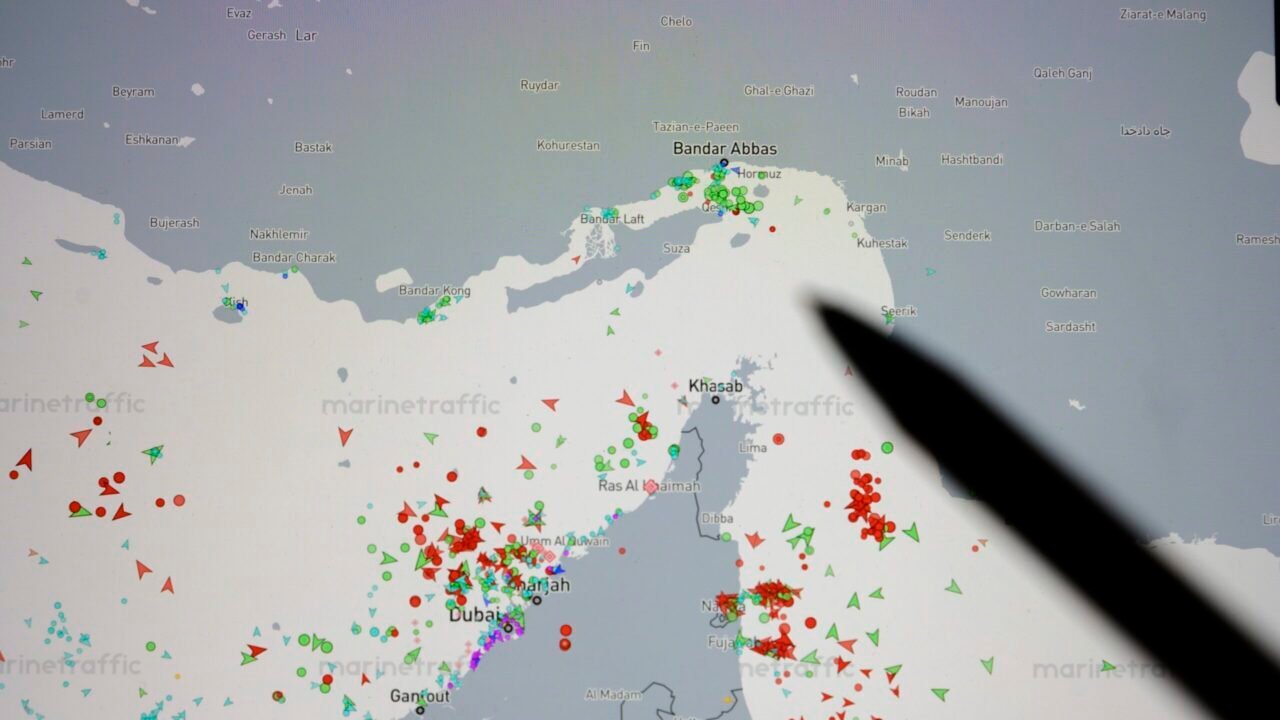
Iran War and US Leadership dynamics are shifting rapidly; Tehran’s effort to control shipping through the Strait of Hormuz is among a set of key challenges to US global leadership that have emerged from America’s war with Iran, and which demand short- and long-term responses. The conflict highlights how this Iran War and US Leadership crisis is emphasizing the importance of sea power in shaping geopolitical outcomes at a time when the US naval capacity is declining, especially vis-à-vis China.
In addition, the realities of the Iran War and US Leadership friction are depleting critical US military weaponry, and doing so at a time when threats are mounting in other hotspots. Finally, the strategic strain of the Iran War and US Leadership tension is further splintering the Western alliance, as our NATO allies remain largely on the sidelines and even mock US efforts.
The Strategic Fallout of Iran War and US Leadership
Tehran’s effort to control shipping through the Strait of Hormuz is among a set of key challenges to US global leadership that have emerged from America’s war with Iran, and which demand short- and long-term responses. The war is highlighting the importance of sea power in shaping geopolitical outcomes at a time when the US naval capacity is declining, especially vis-à-vis China. In addition, the conflict is depleting critical US military weaponry, and doing so at a time when threats are mounting in other hotspots. Finally, the war is further splintering the Western alliance, as our NATO allies remain largely on the sidelines and even mock US efforts.
To be sure, the United States (with Israel’s help) has severely reduced the immediate threat posed by Iran by eliminating its supreme leader and top military commanders, mostly wiping out its navy, destroying many of its missile launchers and weapons facilities, and severely damaging its nuclear sites. But Washington has paid a significant political price for all this, creating or exacerbating problems on the military and diplomatic fronts that will take years to address and will grow more acute if left unaddressed.
Military Weaponry Depletion in Iran War and US Leadership
Militarily, the Pentagon has “burned through” thousands of long-range cruise missiles, Patriot interceptor missiles, and ground-based missiles, forcing Washington to rush bombs, missiles, and other weaponry from its commands in Asia and Europe to the Middle East and, in turn, leaving those commands less ready to confront challenges in their regions.
Diplomatically, Washington made its dicey relations with our European allies even dicier by launching the war without consulting them, a war from which they are suffering the economic fallout. This explains why they’ve largely refused to send forces to help reopen the strait, even though Europe would benefit economically if it did.
Meanwhile, despite the US bombardment, Iran retains the capacity to continue limiting shipping through the strait. It has “restored operational access” to 30 of its 33 missile sites along the strait as well as 70 percent of its “prewar missile stockpile,” including ballistic and cruise missiles.
Freedom of the Seas and Iran War and US Leadership
In its post-war role as the leader of the free world, the United States has enabled “freedom of the seas”—ensuring that 90 percent of international trade moves by ship, confronting regional threats to maritime traffic, and, in the process, exerting broader US power and global influence.
It is a role that the United Kingdom played for more than two centuries, helping to power the Industrial Revolution and global economic growth. Similarly, the US role has helped to drive enormous economic growth and dramatically higher living standards over the last 80 years, both at home and abroad.
The Strait of Hormuz, a narrow waterway that Iran borders to the north, is vital to the global economy. About a quarter of the “global seaborne oil trade,” 20 percent of liquified natural gas (LNG), and a third of fertilizers move through the strait. Iran’s “grip” on it has boosted US gas prices by 50 percent, left about 1,500 ships and 20,000 ship workers stranded, and sent ship insurance rates soaring.
Strait of Hormuz Protocols: Iran War and US Leadership
Of late, Tehran has established a new protocol for ships transiting the strait, forcing shippers to comply or risk attacks from the Islamic Revolutionary Guard Corps (IRGC) navy. Tehran also has been charging $2 million in “transit fees” that some shippers have paid.
In response to these challenges, Washington needs to take four steps—two in the short term, two over the longer run.
In the short term, it must do whatever is necessary to reopen the strait and curtail Iranian efforts to control it, helping to restore both freedom of the seas and US credibility in the region and beyond.
In addition, Washington must finally set a firm, consistent goal for the war, communicate it clearly to domestic and international audiences, and pursue it with laser focus, which will also help restore US credibility.
Rebuilding Naval Capacity Amid Iran War and US Leadership
In the long term, the United States must rebuild its naval and broader military capacity to meet the challenges that lie ahead.
After a multi-year “rapid modernization effort,” China has built the world’s largest navy, with more than 370 ships, as compared to fewer than 300 for the United States. While America’s fleet remains far more powerful, China’s is newer and more diverse, and Beijing plans to build a “world-class navy” to spread its influence far beyond the Pacific. The United States will need more ships if it hopes to continue ensuring freedom of the seas as challenges mount at various chokepoints.
Repairing Fractured Alliances for Iran War and US Leadership
In addition, the United States must repair its fractured alliances because they are not only a “force multiplier” but also better enable it to project power and influence around the world.
These long-term efforts will have to stretch beyond the current administration before they bear fruit, but they are equally urgent as our short-term needs.