

A rigorous intelligence brief detailing Riyadh’s strategic paradox, assessing how the crown prince’s peripheral reliance on Muslim Brotherhood affiliates creates structural ideological vulnerabilities and directly challenges the regional stability required for Vision 2030.
The divergence between Saudi Arabia’s domestic modernization campaign and its external security arrangements reveals a profound strategic paradox. While Riyadh enforces an unyielding clampdown on political Islam internally to safeguard Vision 2030, geopolitical imperatives have forced the kingdom into a high-stakes Islamist Gamble in peripheral theaters. This calculated operational flexibility risks creating an ideological contagion effect, transforming the state’s transactional Islamist Gamble into a long-term liability that could validate the very networks it seeks to eliminate.
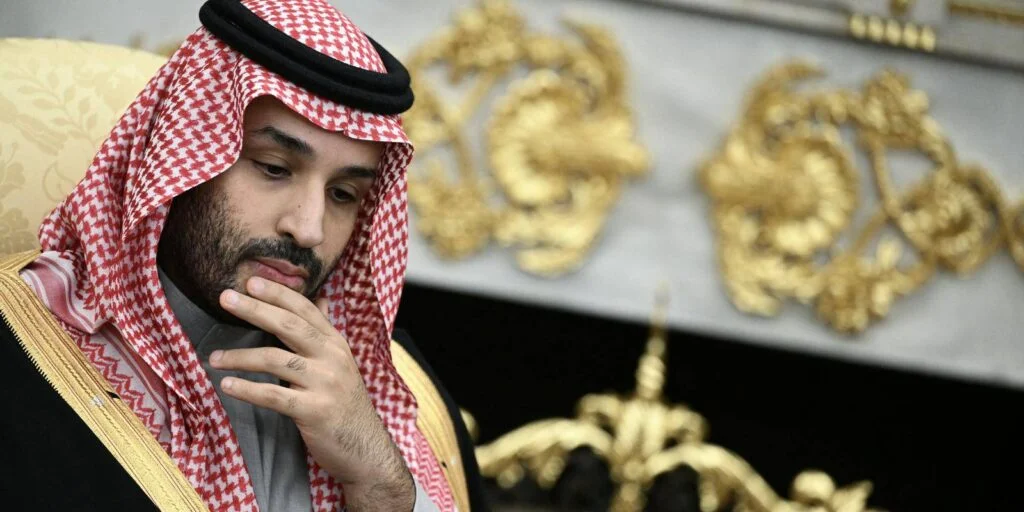
Islamist Gamble: Peripheral Pragmatism
At home, Saudi Crown Prince Mohammed bin Salman has cast himself as a leader determined to break with political Islam. He has focused on building a new economy, forging a more nationalist state, and creating a society less dominated by ideological religious movements. Abroad, however – especially in Yemen and Sudan – a striking contradiction has emerged. Riyadh, which brands the Muslim Brotherhood a threat to state stability, now finds itself once again engaging with factions tied to Brotherhood. This is not simply pragmatism. It is a compromise that risks undermining the very foundations of the new Saudi project.
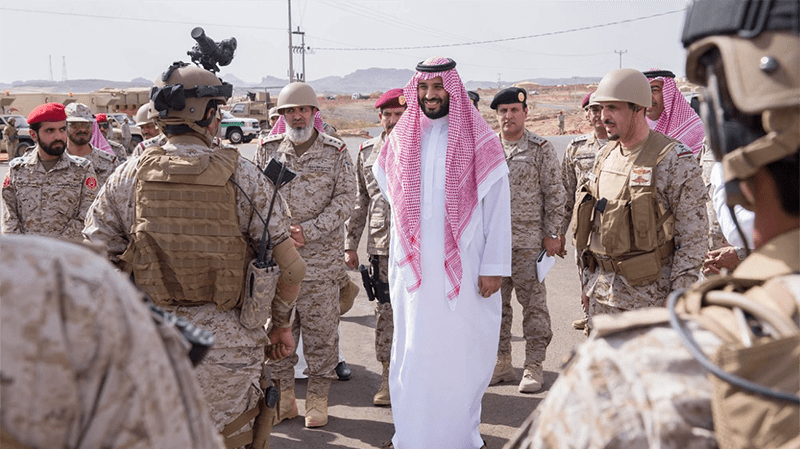
Navigating the Islamist Gamble in Yemen
In Yemen, Saudi Arabia’s relationship with the Islah Party (the local version of the Brotherhood) is no minor detail. The Washington Institute for Near East Policy has described Riyadh’s ties with Islah as “exceptional,” precisely because they diverge from the kingdom’s broader hostility toward the Muslim Brotherhood. The institute noted that the Saudis and the (Sunni) Islah have maintained a long partnership against the (Shiite) Houthis, with Riyadh pursuing a policy of limited integration of Islah into the anti-Houthi coalition. That is the heart of the problem.
By making common cause with Islah, Saudi Arabia is not building a stable Yemeni state. It is reproducing the same formula for perpetual instability: An ideological militia in the north, an entrenched Islamist movement embedded within state institutions, and an open-ended conflict in the south.
More troubling still, this policy has fractured the anti-Houthi camp itself. Saudi Arabia seeks a unified Yemen with a central government capable of securing the border and limiting Iranian influence.
The United Arab Emirates, by contrast, sees Brotherhood-linked forces in Yemen as a long-term strategic threat and has backed southern factions to counterbalance them. According to an analysis by the Institute for National Security Studies, this gap between Riyadh and Abu Dhabi has become one of the defining arenas of regional competition. Saudi Arabia, the report argued, has at times shown itself willing to work with Islamist movements when it sees no viable alternative — unlike the UAE’s near-total rejection of the Brotherhood. In southern Yemen, the issue becomes even more sensitive.
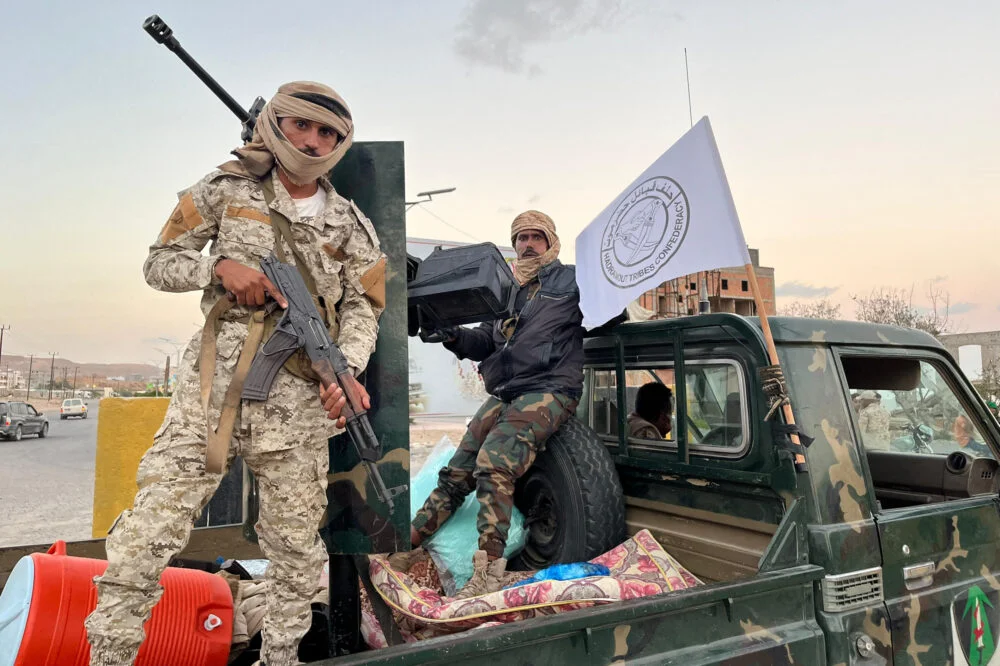
Reuters reports that Saudi Arabia announced roughly $500 million in development projects in southern Yemen after the UAE’s withdrawal and the decline of UAE-backed separatist influence, reflecting a more assertive Saudi policy to consolidate power in areas historically viewed as part of Abu Dhabi’s sphere of influence. The Associated Press notes that Riyadh pressured the UAE-backed Southern Transitional Council to withdraw from Hadramawt and Mahra provinces while reaffirming support for forces aligned with Yemen’s internationally recognized government.
Politically, this means Saudi Arabia is no longer merely managing the war against the Houthis. It is actively reshaping southern Yemen according to its own balance of power – even if that weakens southern anti-Brotherhood factions and creates greater space for Islah and its allies.
The question, then, becomes unavoidable: Is Riyadh courting the Brotherhood in Yemen in order to preserve the loyalty of the internationally recognized government, or is it offering the movement a golden opportunity to return through the machinery of the state?
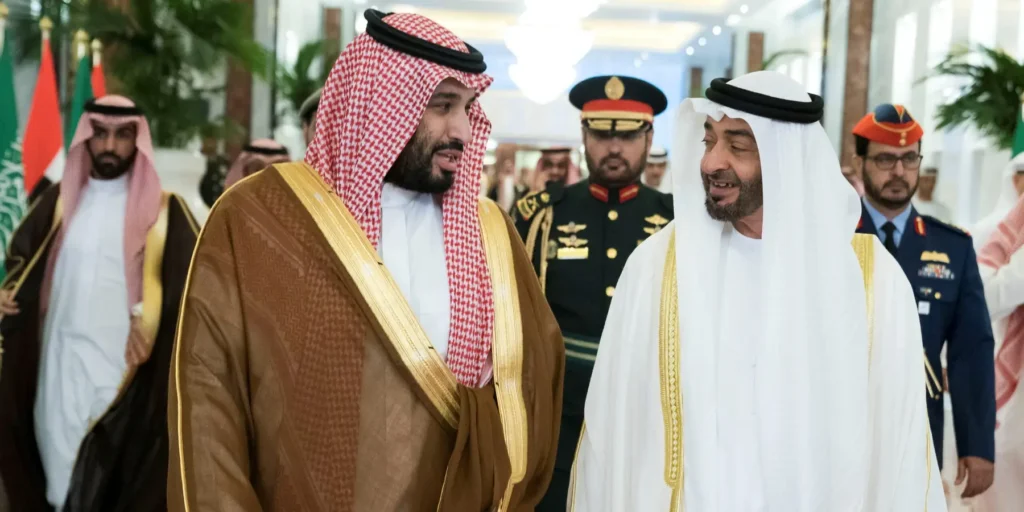
Geopolitical Alliances Testing the Islamist Gamble
There is a vast difference between using a political party within the context of war and allowing it to become the principal conduit for Saudi influence. The first is tactics; the second is dependency. History suggests that the Brotherhood does not enter state institutions as a temporary guest. It operates as a patient organization capable of transforming military necessity into bureaucratic influence, bureaucratic influence into political legitimacy and political legitimacy into parallel power.
In Sudan, the dilemma is no less dangerous. The United States has designated the Sudanese branch of the Muslim Brotherhood as a specially designated global terrorist entity and intends to classify it as a foreign terrorist organization beginning March 16, 2026, according to Reuters and the U.S. Treasury Department.
That development confronts everyone involved in the Sudanese conflict with a dilemma. Should the Islamist factions’ penetration of the Sudanese army (one of the country’s few remaining viable institutions) be ignored for the sake of a stable state?
A detailed Reuters investigation reveals that Sudanese Islamists tied historically to the regime of Omar al-Bashir are seeking their own political rehabilitation by supporting the army during the war. Some Islamist leaders, according to the report, view a prolonged military-led transition, followed by elections, as a viable route back to power. According to the report, Islamist networks have contributed fighters, training, and logistical support to the war effort, even as the army denies coordination with political parties. This is not merely a domestic Sudanese issue. It is a regional warning. Any state betting on an army deeply penetrated by ideological factions may eventually discover that Islamists control the levers of power from behind the scenes.
According to the Institute for National Security Studies, Saudi Arabia supports Abdel Fattah al-Burhan and the Sudanese military in order to preserve its influence in a strategically vital Red Sea state, while the UAE backs the rival Rapid Support Forces. From the standpoint of maritime security and competition with Abu Dhabi, Iran, Turkey and Qatar, such a policy may appear understandable. But from the standpoint of Saudi Arabia’s long-term future, it carries an obvious danger: supporting the Sudanese military without dismantling Islamist influence inside it may effectively empower the Sudanese version of the Brotherhood – even if that is not Riyadh’s stated objective.
This is where the central contradiction in the crown prince’s policy becomes clear: a domestic campaign against political Islam paired with a foreign policy pragmatism that reopens the door to it.
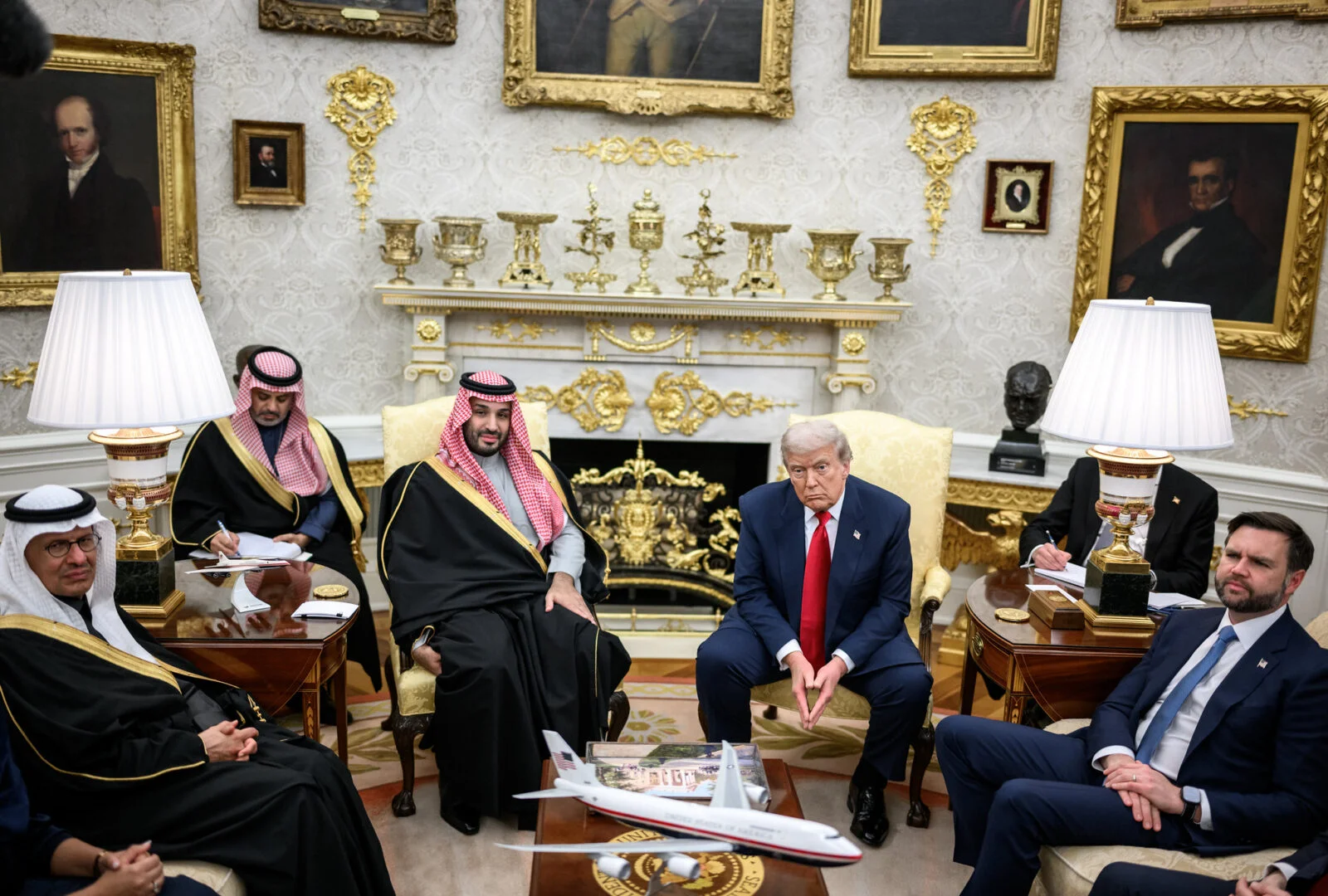
Islamist Gamble: Transnational Risks
In Riyadh, the Brotherhood is portrayed as a threat to the nation-state. In Sanaa, Aden, Marib, Khartoum and Port Sudan, its networks, allies and ideological fellow travelers are treated as instruments of influence. Such contradictions do not remain beyond the kingdom’s borders. Ideas do not require passports, and transnational movements rarely distinguish between the “external arena” and the “internal arena” except when it serves their interests.
The first danger to Saudi Arabia is ideological legitimacy. When the state wages war on the Brotherhood’s discourse at home while aligning with its affiliates abroad, it hands critics a potent argument: Why is political Islam considered a threat in Riyadh but a necessary partner in Yemen or Sudan?
That question alone is enough to complicate Saudi Arabia’s new national narrative, weaken the rhetoric of the modern state, and create an opening for advocates of “reconciliation,” “accommodation,” and political reintegration.
The second danger is security blowback. Yemen is not a distant country; it is Saudi Arabia’s southern flank. Sudan is not a peripheral issue; it is a gateway to the Red Sea and the strategic African hinterland. If Brotherhood-linked forces in both countries become entrenched partners through support, political cover or tacit understandings, Saudi Arabia may eventually face networks possessing money, weapons, combat experience, social reach and political leverage. Worse still, those networks will know exactly how they regained their foothold: through the vulnerabilities of Saudi policy itself.
The third danger is the fragmentation of Gulf alliances. The divergence between Saudi Arabia and the UAE in Yemen and Sudan is no longer merely tactical. It has evolved into a competition over how the threat itself is defined. The UAE sees the Brotherhood as a structural and existential challenge. Saudi Arabia, at key moments, has treated Brotherhood-linked actors as temporary tools to counter the Houthis, strengthen the Sudanese army, or offset Emirati influence.
The cost of this divergence could be substantial: fractures within the Gulf bloc, instability across the Red Sea and a diminished ability among Gulf capitals to build a unified front against Iran and radical movements.
The fourth danger lies in undermining the very foundations of Vision 2030. The vision is not simply a collection of megaprojects, tourism initiatives. and investment zones. It is a political project aimed at redefining Saudi Arabia as a modern nation-state.
Such a project requires a regional environment compatible with that transformation, not ideological belts of instability surrounding the kingdom’s borders. Saudi Arabia cannot build NEOM, Qiddiya, and the Red Sea tourism corridor while Yemen remains open to competing ideological factions. Nor can maritime trade and investment in the Red Sea be secured if Sudan evolves into a theater for Islamist resurgence, Iranian arms networks and war economies.
Strategic Consequences of the Islamist Gamble
The Limits of Pragmatism None of this means Saudi Arabia should surrender Yemen to the Houthis, abandon Sudan to chaos or behave idealistically in a ruthless region. The point is not to confuse tactics with strategy. Negotiating with all sides may at times be necessary. But no national security strategy can sustainably rely on movements that have repeatedly demonstrated that their commitment to the nation-state is conditional on advancing their own ideological project.
The Muslim Brotherhood does not become “moderate” simply because it is under pressure. Nor does it become “nationalist” merely because it needs funding or political cover. Such movements wait for moments of empowerment. And when those moments arrive, they do not thank those who opened the door for them; they change the locks.
For that reason, the greatest threat Saudi Arabia may face is not a direct attack from abroad, but a foreign policy that believes it is buying loyalty while actually financing influence; that believes it is containing the Brotherhood while rehabilitating it; that believes it is managing regional balances while giving opponents of its domestic transformation an opportunity to return through the kingdom’s southern and western frontiers. A crown prince seeking to build a new Saudi Arabia cannot wage war against political Islam at home while accommodating it on the periphery. A state that suppresses an ideology in Riyadh while reviving it in Marib and Khartoum plants the seeds of contradiction at the heart of its own project.
The conclusion is straightforward: Courting the Brotherhood or its affiliated environments in Yemen and Sudan is not strategic brilliance. It is a long-term gamble.
The policy may deliver temporary gains: leverage against the Houthis, influence in southern Yemen, a foothold in Sudan, or a counterweight to the UAE. But it could also produce a far greater danger: the return of political Islam to the regional arena through a Saudi gateway, and the exposure of Saudi national security to organizations that excel at patience, infiltration and institutional capture.
Saudi Arabia does not need a “tamed” Muslim Brotherhood. It needs a coherent strategy that leaves no gap between its domestic rhetoric and its foreign policy calculations — no opening through which the very threat it seeks to defeat can quietly return.