
An elite analysis of New Delhi’s evolving multi-alignment strategy in West Asia, evaluating the strategic opportunities, structural constraints, and geopolitical risks confronting India’s deep economic integration with the UAE amid intensifying regional polarization.
New Delhi’s expanding footprint in West Asia marks a critical pivot from historic rhetorical non-alignment toward a hard-nosed, capability-oriented pursuit of strategic autonomy. In an era defining multipolar volatility, India’s Gulf gamble serves as a high-stakes test of whether commercial integration can be successfully leveraged into durable geopolitical influence without triggering costly entanglements in regional proxy conflicts. This calculated positioning highlights how India’s Gulf gamble requires balancing competing ties across deeply fractured security architectures while simultaneously checking China’s mounting revisionist influence across critical Indo-Pacific maritime corridors.
India’s Gulf gamble across West Asia
Prime Minister Narendra Modi’s five-nation diplomatic tour across the United Arab Emirates, Netherlands, Sweden, Norway, and Italy from May 15-20, 2026 reflects India’s broader effort to establish itself as a consequential actor in an increasingly fragmented multipolar order. As geopolitical rivalries intensify, supply chains reorganize, and energy markets remain volatile, New Delhi is pursuing partnerships capable of supporting both economic modernization and strategic autonomy.
India’s outreach to Europe and the Gulf is driven largely by economic and technological considerations. Access to semiconductor ecosystems, renewable energy cooperation, logistics infrastructure, advanced manufacturing, and foreign investment has become central to India’s long-term development strategy. Negotiations surrounding the India-EU Free Trade Agreement and the India-EFTA Trade and Economic Partnership Agreement illustrate New Delhi’s attempt to integrate itself more deeply into evolving global production and technology networks.
At the same time, Indian foreign policy has evolved from diplomacy centered primarily on symbolism and political alignment toward a more capability-oriented approach focused on industrial resilience, artificial intelligence, defence manufacturing, and strategic connectivity. The UAE as India’s Gateway into West Asia
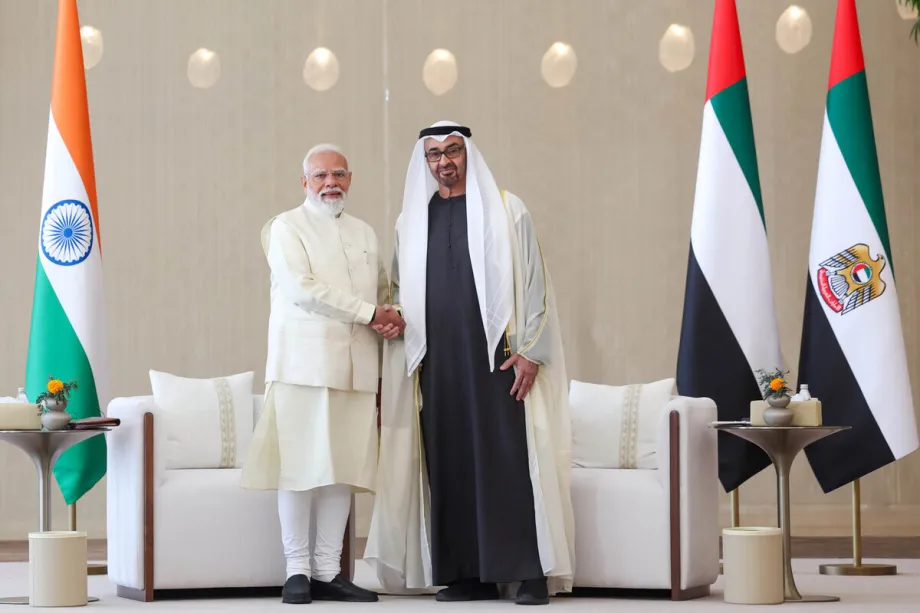
Among all stops on Modi’s tour, the UAE remains the most strategically significant. Modi’s meeting with President Mohamed bin Zayed Al Nahyan builds on a relationship that has acquired substantial geopolitical depth over the past decade. Trade, infrastructure investment, fintech cooperation, logistics connectivity, and energy coordination have transformed the India-UAE relationship into one of the most consequential partnerships in the broader Middle East.
India increasingly views the UAE not simply as an energy supplier or commercial partner, but as a gateway into West Asia through which it can expand regional influence and strengthen its geopolitical position across a strategically vital region.
This approach reflects India’s broader multi-alignment doctrine, where relations are cultivated simultaneously across competing geopolitical blocs without entering rigid alliance structures. However, unlike Europe’s relatively stable institutional environment, the Gulf remains deeply shaped by proxy conflicts, sectarian rivalries, and shifting regional power balances. External actors operating within such an environment inevitably become exposed to its underlying contradictions.
Navigating fragmentation with India’s Gulf gamble
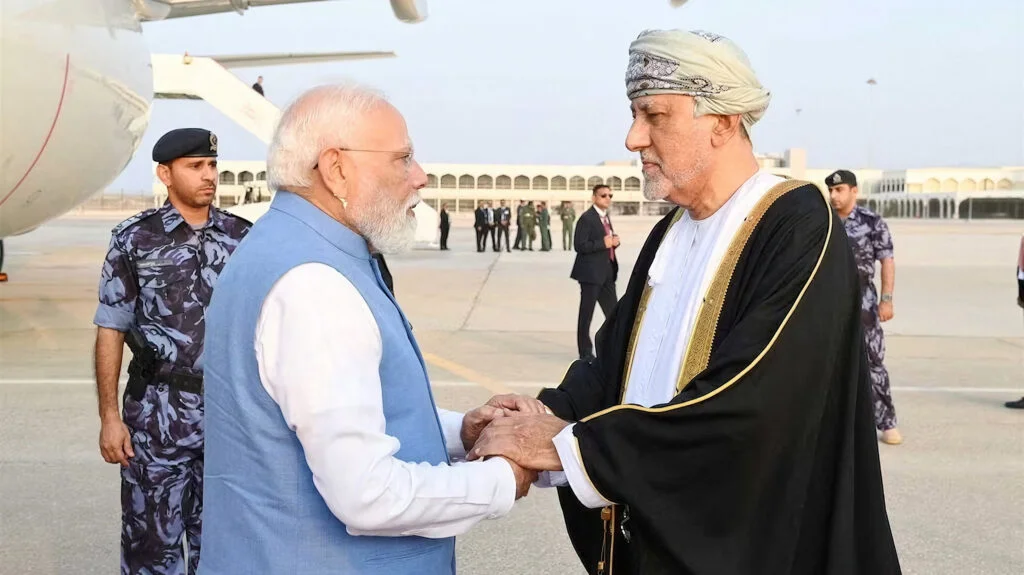
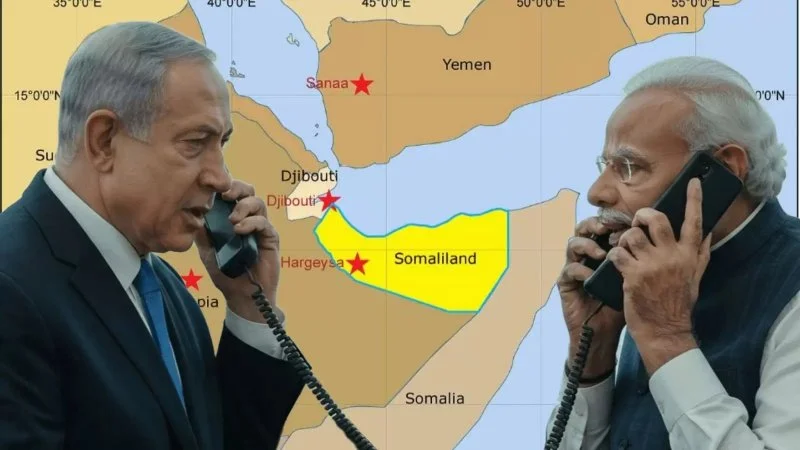
India’s expanding engagement with the UAE has increasingly generated debate regarding the broader implications of its Gulf strategy. This perception has become more pronounced as India deepens partnerships with both the UAE and Israel following the post-Abraham Accords regional realignment. Across parts of the Muslim world, these evolving alignments are increasingly viewed through the prism of shifting regional loyalties and changing political balances within the Islamic world.
The challenge for India is that the Gulf cannot be approached solely through commercial logic. Economic influence alone does not automatically translate into durable geopolitical influence in a region where security relationships and political legitimacy remain central to regional order.
The Limits of a UAE-Centric Strategy
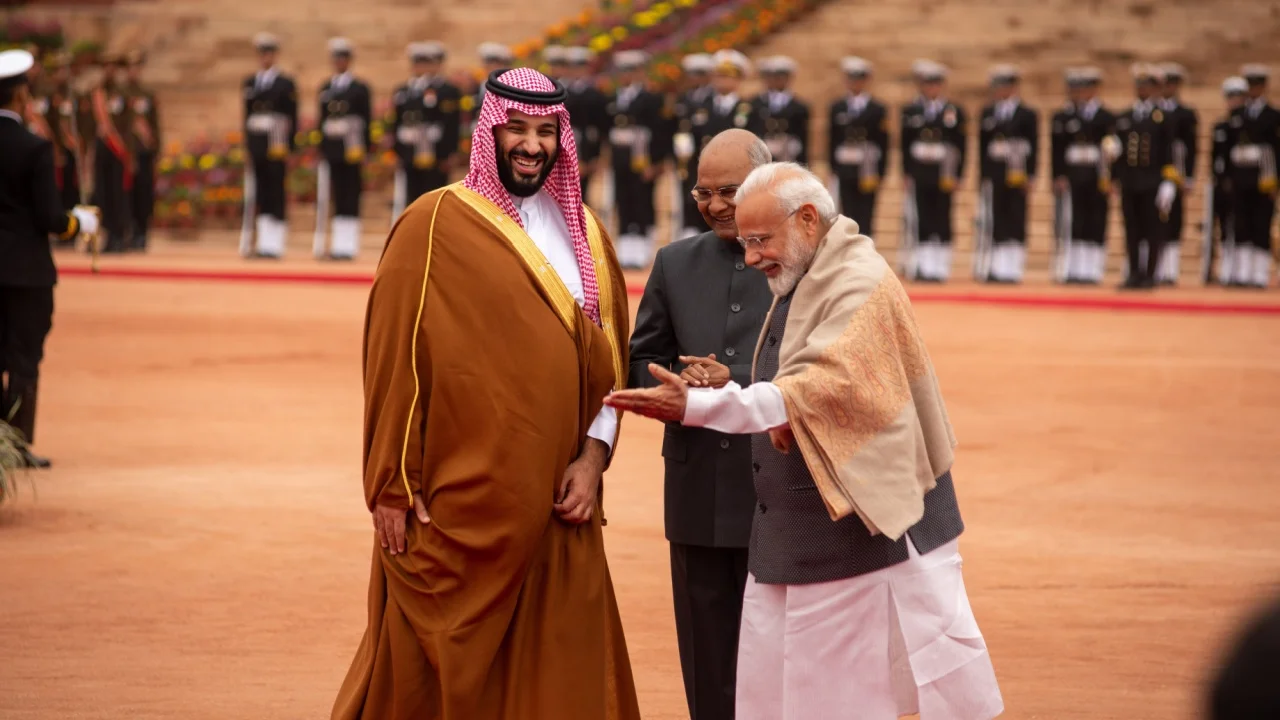
Although the UAE has emerged as one of the Gulf’s most dynamic economic and diplomatic actors, its influence still operates within broader regional structures where Saudi Arabia retains unmatched political, religious, and energy significance. Abu Dhabi’s increasingly assertive role in theatres such as Yemen, Sudan, Libya, and periodic OPEC+ production disagreements with Saudi Arabia has already exposed growing divergences within the GCC regarding regional leadership and security priorities.
The UAE’s expanding partnership with India therefore cannot fully offset its continued dependence on Saudi Arabia in areas including oil coordination, regional security architecture, and religious legitimacy. Emerging fractures within the GCC continue to demonstrate that Abu Dhabi cannot independently replace Riyadh’s central role within the Gulf order.
In this environment, India risks becoming increasingly exposed to regional rivalries it cannot easily shape or control.
Institutional constraints on India’s Gulf gamble
India’s Gulf strategy also encounters structural limitations that cannot easily be addressed through economic engagement alone. Gulf security architectures- particularly those linked to Saudi Arabia have historically maintained longstanding military and institutional relationships with Pakistan. Decades of defence cooperation, geographic proximity, labour integration, and religious affinity have embedded Pakistan within the Gulf’s broader strategic environment.
By contrast, India’s engagement with the Gulf remains driven primarily by economics, trade, energy interdependence, and diaspora connectivity. While India-UAE trade and investment ties have expanded rapidly, New Delhi’s regional presence remains more commercial than security-centered. China and the Emerging Gulf Order
India’s Gulf gamble counters Beijing
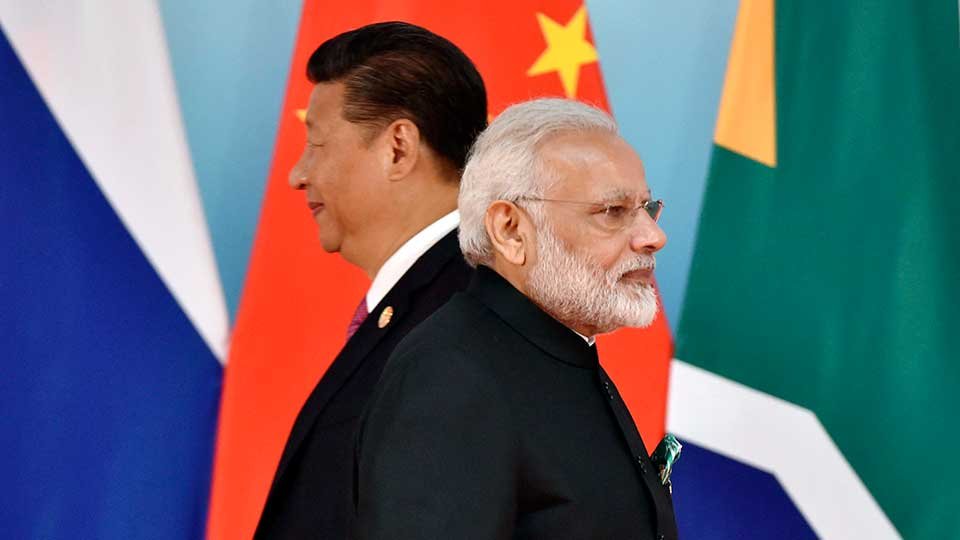
India’s Gulf outreach also reflects intensifying strategic competition with China across West Asia. Beijing’s expanding influence through energy partnerships, infrastructure investment, ports, logistics corridors, and technology cooperation has transformed the Gulf into a major arena of Asian geopolitical competition.
China’s Belt and Road Initiative, combined with deepening Gulf-China energy interdependence, has steadily expanded Beijing’s regional influence. At the same time, Gulf states themselves are increasingly diversifying partnerships amid uncertainty regarding the long-term trajectory of the international order and perceptions of gradual American strategic retrenchment.
This changing environment has created greater space for middle powers such as India to expand their diplomatic and economic footprint across West Asia. For New Delhi, deeper engagement with the UAE and broader Gulf economies is therefore not only about economic diversification, but also about preventing strategic marginalization within a region becoming increasingly central to Eurasian connectivity and Indo-Pacific competition.
Regional polarization tests India’s Gulf gamble
India’s expanding Gulf activism is unfolding during a period of heightened regional volatility. Continued instability in Yemen and Sudan, unresolved tensions surrounding Iran’s regional posture, fluctuating OPEC+ dynamics, and intensifying US-China competition have all contributed to an increasingly unpredictable strategic environment. India’s central challenge lies in preserving strategic autonomy while simultaneously deepening ties with regional actors whose interests often conflict sharply with one another. Balancing relations with the UAE, Saudi Arabia, Israel, Iran, and Western powers may provide diplomatic flexibility in the short term, but sustaining such equilibrium will become increasingly difficult as regional polarization deepens.
Beyond Economic Statecraft
Ultimately, Modi’s Gulf diplomacy reflects both the ambition and the vulnerabilities of India’s emerging geopolitical strategy. New Delhi is no longer satisfied with symbolic diplomacy or rhetorical non-alignment. It seeks tangible influence in energy markets, trade corridors, logistics connectivity, technology ecosystems, and regional governance frameworks.
Yet the Gulf remains a uniquely sensitive geopolitical arena where commercial partnerships alone cannot insulate external powers from entrenched regional rivalries and security competition.
As Gulf rivalries deepen and regional alignments become more fluid, India may discover that sustaining strategic flexibility in West Asia is far more difficult than expanding influence within it.