
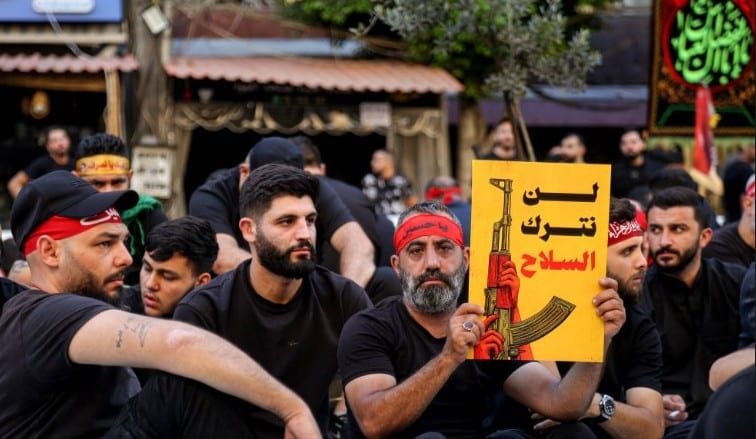
Lebanon faces an inescapable choice: disarm Hezbollah diplomatically or watch Israel do it militarily. Hezbollah Must Be Disarmed for any ceasefire to hold. Delusion only guarantees total national destruction.
The strategic deadlock in southern Lebanon collapses into one brutal equation: Hezbollah Must Be Disarmed or the war continues. Without this single condition, Israel has vowed to press its campaign indefinitely. Hezbollah Must Be Disarmed not as a slogan, but as a verifiable military reality before any ceasefire holds.
Hezbollah Must Be Disarmed First
The Lebanese government, which has voted three times to disarm Hezbollah since the summer of 2025, now faces an inescapable choice. If the cabinet decides to finish off Iran’s proxy militia, Israel will have no reason to continue its war in Lebanon. If Beirut instead plays games of evasion and delay, Lebanon will be razed village by village, its towns and infrastructure reduced to rubble. The sooner leaders in Lebanon, Saudi Arabia, Egypt, and France accept this reality, the sooner the conflict can end and reconstruction can begin.
Why Hezbollah Must Be Disarmed Now
Israel has provided the Lebanese government with substantial leeway to save face among its citizens, especially Shia Muslims. Recent polling reveals that 65 percent of Lebanese outside the Shia community support a bilateral peace treaty with Jerusalem. Yet Lebanon’s president and prime minister have instead presented framed diplomacy with Israel as a means to halt the fighting, secure an Israeli withdrawal, and rebuild the south. With such slogans, they are missing the point. Only negotiations focused on Hezbollah’s disarmament and disbandment can secure an end to the conflict.
The Truth: Hezbollah Must Be Disarmed
Israel has demonstrated unprecedented flexibility, going to great lengths to simplify matters for the Lebanese state. When accused of seeking to annex Lebanese land, Israeli leaders forcefully declared that the Jewish state has no such intentions. U.S. Secretary of State Marco Rubio echoed these statements, making clear that the campaign is not about territorial expansion but eliminating the threat Hezbollah poses to Israeli border communities.
Israeli officials have also directly addressed the Lebanese people, stressing that Israel harbors no hostility toward them and would welcome a formal peace treaty. The sole barrier to peace, they have repeatedly explained, is Hezbollah’s armed status. The militia must be dismantled.
Hezbollah Must Be Disarmed Completely
Unfortunately, these clear messages are falling on deaf ears in Beirut. Despite Lebanese cabinet directives to dismantle Hezbollah’s military apparatus, the country’s officials downplay or ignore this requirement entirely. They claim the talks aim only at stopping the war and enabling reconstruction, rarely referencing Hezbollah’s disarmament. In effect, Lebanese officials are trying to masquerade political theater as serious diplomacy.
The unavoidable truth is that Hezbollah will be disarmed. The only question now is how this will happen. Lebanon can achieve this goal through diplomacy and resolve, or it can watch Israel accomplish it through military means. More war will cast Lebanon dearly, ravaging the country’s economy, displacing its citizens, and destroying its future prospects. Sophistry might delay this outcome, but not avert it. Hezbollah will drink from the poison chalice.
Before Peace, Hezbollah Must Be Disarmed
Critically, Israel does not link Lebanon’s fate to that of the regional conflict with Iran. Whatever the results of U.S. negotiations with Tehran, Jerusalem will press ahead with disarming Hezbollah. For Israel, the militia poses an existential threat comparable to those Israel faced during its 1948 War of Independence. Hezbollah’s rockets and incursions cannot be tolerated.
Lebanon owes a paradoxical debt to Hamas for the shift in Israeli attitudes. The October 7, 2023 massacre of 1,200 Israelis profoundly changed Israeli policy and popular sentiment. Israelis will no longer accept the status quo of a dangerous Hezbollah on their northern frontier.
After the 1982 war, many Israelis regarded their country’s involvement in Lebanon as an 18-year mistake. An Israeli Channel 11 documentary termed it “a war without a name,” reflecting deep skepticism about the campaign’s value. Tolerance for further military campaigns in Lebanon was low.
That perspective has been upended since 2023. Israelis are now prepared to pay any necessary price in blood, treasure, and time to eliminate the Hezbollah threat once and for all. Their determination is unwavering, and their capabilities are overwhelming.
Lebanese officials and Hezbollah must grasp this new reality. This war will not conclude like the limited operations of 1993, 1996, or 2006, when Israel accepted partial Hezbollah setbacks in exchange for years of quiet. Israel no longer seeks temporary calm but insists instead on a complete and permanent resolution.
Lebanon has two potential pathways. The easy way involves the government using political and military pressure to force Hezbollah to surrender its weapons and dissolve its security structures. The hard way leaves the task to the Israel Defense Forces, which are already reshaping southern Lebanon. Hezbollah may fancy itself resilient, but Hamas’s current woes in Gaza offers a stark lesson in overconfidence.
There is no other way. Hezbollah must be disarmed for the war to stop. Beirut must choose wisely and soon, or watch Lebanon pay an ever higher price.