
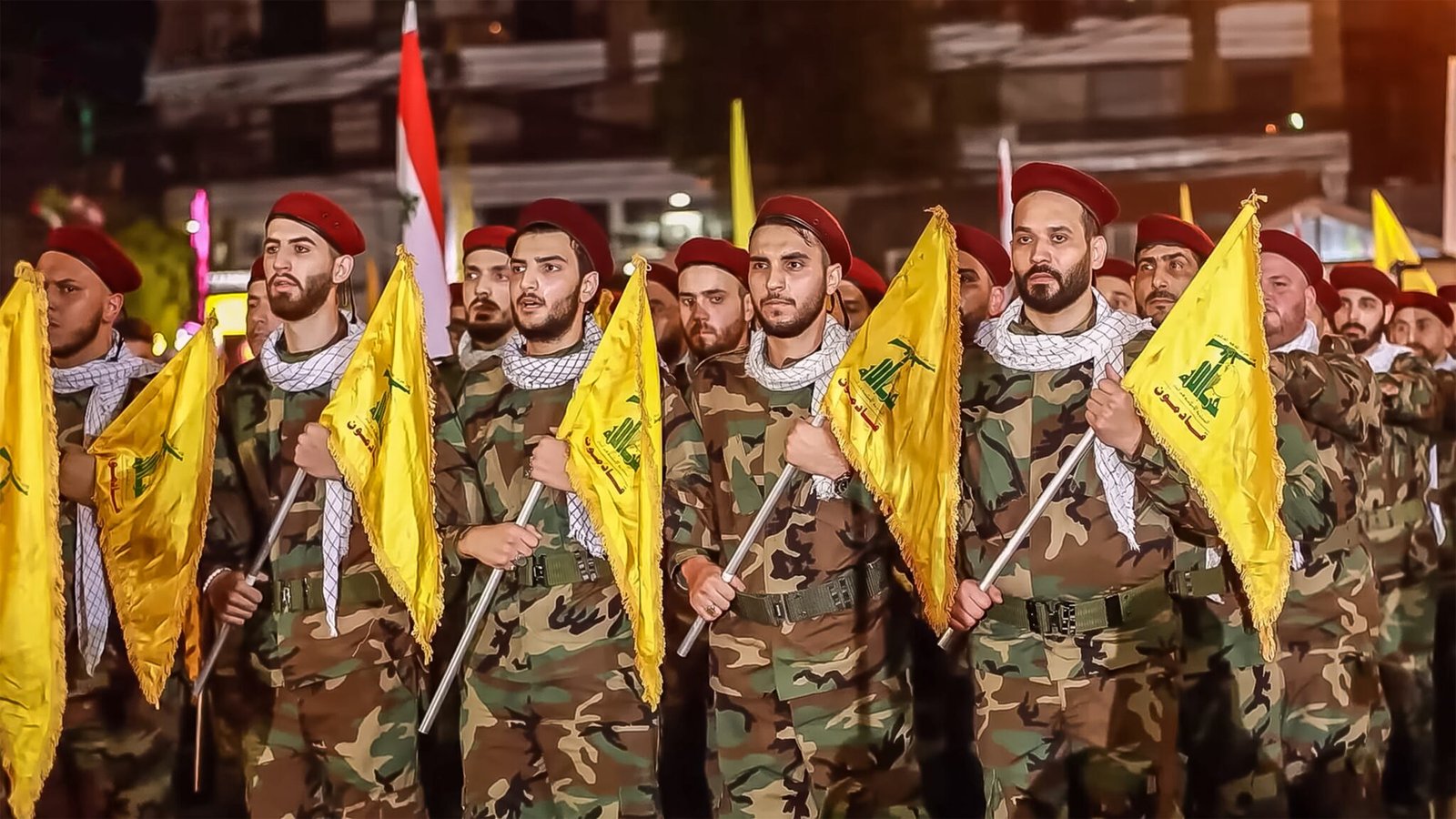
An Iran Deal that funds Tehran without proxy constraints guarantees Lebanon’s collapse, not stability. Hezbollah’s financial lifelines directly block state sovereignty. Any nuclear pact failing to constrain armed networks merely postpones the next catastrophic regional war.
A nuclear pact that funds Tehran while ignoring its most powerful proxy is not diplomacy—it is a down payment on Lebanon’s next war. Any successful Iran deal must directly address Hezbollah’s financial and military networks. Without that linkage, an Iran deal risks becoming the very mechanism that locks Lebanon into perpetual instability and external coercion.
An Iran Deal cannot ignore Hezbollah
As reports emerge, even amid renewed US strikes on Iran, that Washington and Tehran may be nearing another agreement, attention has focused overwhelmingly on uranium enrichment levels, sanctions relief, maritime security, and the reopening of energy flows through the Persian Gulf. But there is a dangerous risk that the most destabilizing dimension of Iran’s regional power projection may once again be treated as secondary: its network of armed proxies, foremost among them Hezbollah.
Today, there is a fragile effort by the US to help stabilize Lebanon and reduce the risk of another catastrophic regional war. The timing could not be more critical. Any agreement that provides Tehran with significant financial relief while failing to meaningfully constrain the flow of money, weapons, and operational support to Hezbollah risks undermining one of the few potentially constructive openings currently emerging in the Middle East.
Why Lebanon needs An Iran Deal now
For the first time in decades, Lebanon and Israel are engaged in direct talks under active US mediation. The process remains fragile and far from peace. Israeli operations continue unabated in parts of the country. Hezbollah is still armed and deeply entrenched. Southern Lebanon is now devastated. But diplomacy is moving forward against all odds, creating a narrow opportunity to shift Lebanon’s trajectory away from perpetual escalation and toward a more structured framework for stability.
That opportunity depends on one key issue: whether the Lebanese state can gradually reclaim authority from an armed organization that has operated outside state control for decades. Here, the Iran proxy issue becomes unavoidable.
Hezbollah is not simply an Iranian ally: it is the crown jewel of Tehran’s regional network, the most sophisticated, heavily armed, and politically embedded non-state actor in the Middle East. Its military infrastructure, financial networks, and strategic autonomy enable Iran to project influence far beyond its borders while maintaining plausible deniability.
The proxy test of An Iran Deal
This is precisely why the nuclear file and efforts to constrain Iran’s nuclear program cannot be cleanly separated from Iran’s broader regional architecture. Any agreement that focuses on enrichment while leaving untouched the financial, military, and proxy networks through which Tehran projects regional influence risks reducing the nuclear threat while reinforcing the regional infrastructure that sustains instability.
Lebanon’s collapse was driven by decades of corruption, financial mismanagement, and institutional decay. However, no serious effort to restore state authority, rebuild the economy, or attract sustainable, long-term investment can succeed while a parallel military and financial structure continues to operate outside the authority of the Lebanese state. This is also true economically.
An Iran Deal financial blind spot
Lebanon is currently attempting to rebuild a collapsed banking sector, restore transparency, curb illicit finance, and reverse the expansion of a massive cash economy that flourished amid institutional breakdown and sanctions evasion. The Lebanese government and international partners are committed to strengthening the Lebanese Armed Forces, restoring border control, and reinforcing the legitimacy of state institutions.
A major financial windfall for Tehran would place all of this at risk. Even if funds are not directly transferred to Hezbollah, liquidity is fungible. Expanded Iranian oil revenues, sanctions relief, or access to frozen assets would inevitably strengthen Tehran’s broader regional posture and increase its ability to sustain the very networks Washington claims it wants constrained.
The danger then is not simply that Hezbollah could become stronger militarily, but that the country once again becomes trapped in a suspended state between war and peace, sovereignty and collapse, and is permanently vulnerable to coercion and external manipulation. Such an outcome would merely postpone the next crisis.
Lebanon fails without An Iran Deal fix
Washington has spent years attempting to contain Hezbollah through sanctions, anti-money laundering measures, pressure on illicit finance networks, and support for Lebanese state institutions. If a broader regional agreement inadvertently restores financial oxygen to the very structures those policies were designed to weaken, the contradiction will become impossible to ignore.
Any serious agreement must therefore move beyond the illusion that regional stabilization can occur while the proxy architecture remains untouched. At a minimum, a future arrangement should include enforceable mechanisms to curb weapons transfers, disrupt sanctions-evasion networks, restrict financing channels to Iran’s network of armed groups, and strengthen sovereign state institutions vulnerable to Iranian influence.
Otherwise, Washington risks repeating a familiar cycle of securing temporary de-escalation while reinforcing the very regional structures that generate instability on the ground. And Lebanon will, perhaps more than anywhere else, bear the consequences.