
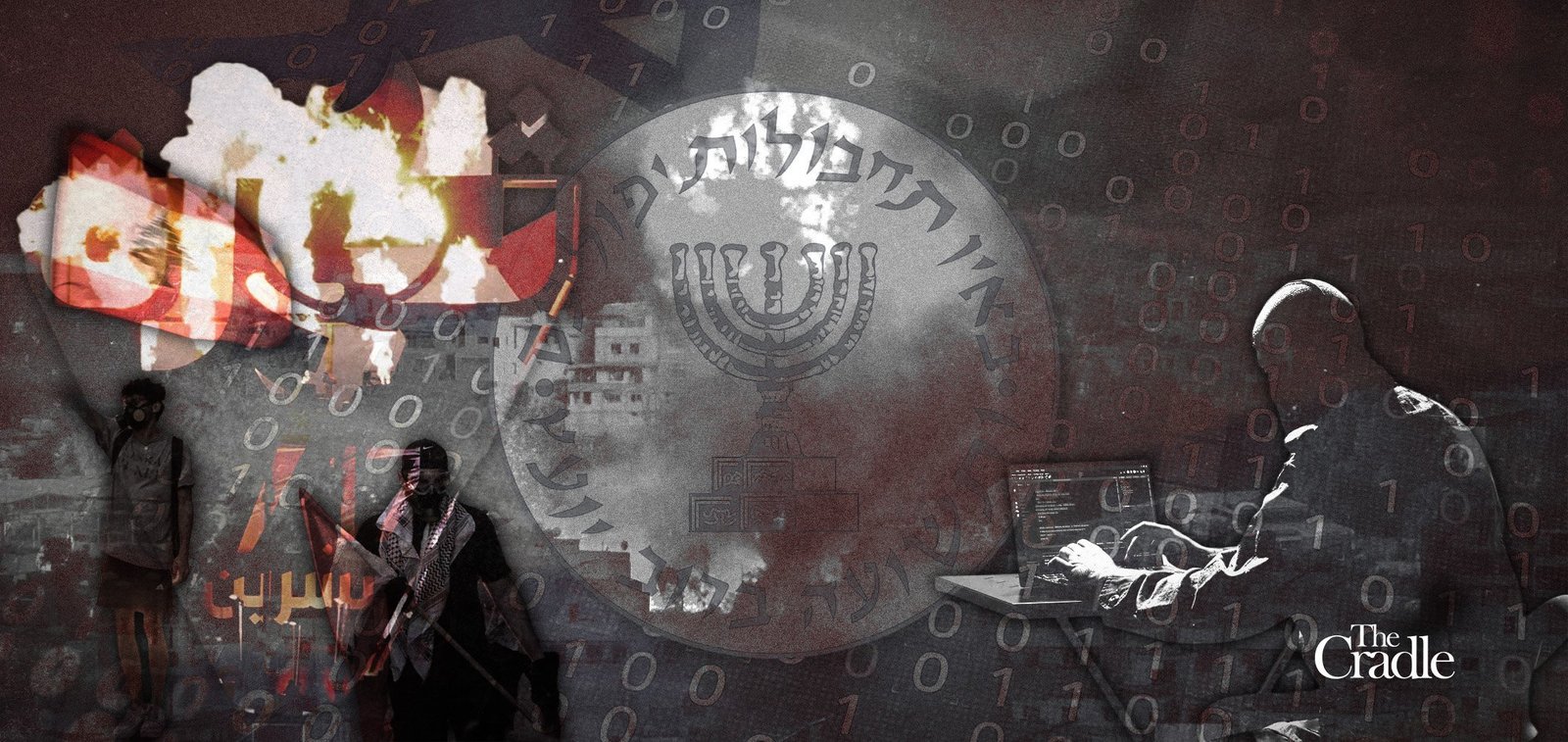
Human intelligence assets remain central to targeted military strikes in the Middle East. Analysis reveals five critical vulnerabilities exploited by agencies, including financial duress, social stigma, operational awareness gaps, leverage via blackmail, and unaddressed organizational grievances.
The lethal efficiency of modern targeted strikes in the Middle East depends heavily on human intelligence assets, making Israel spy recruitment a continuous priority on the shadow front lines. Rather than relying solely on advanced cyber tools, handlers exploit deep socio-economic fractures to turn insiders against their own networks. This systematic approach shows that the ultimate battleground remains the human mind, where minor personal vulnerabilities are transformed into catastrophic institutional breaches.
Israel Spy Recruitment Operationalized
The question of spies began to take on greater significance in Palestinian and Lebanese resistance thinking in the 1970s, particularly after Israel responded to the Munich operation with a wave of assassinations. Assassination, by necessity, relies on intelligence, and intelligence relies on people. At every stage of a military or security operation, from planning to execution and beyond, someone is providing information. Agents had always existed. What changed in that decade, according to specialists, was scale and structure.
What had once been scattered became organized, systematic, and embedded. Beyond scale, the intelligence confrontation extended beyond state services, moving from a contest between Israeli agencies and their Egyptian and Syrian counterparts into a wider field that included non-state actors: Palestinian factions such as Fatah and the Popular Front for the Liberation of Palestine (PFLP), operational arms like Black September, and later Islamic groups including the Palestinian Islamic Jihad (PIJ), followed by formations that emerged during the Second Intifada. This expansion forced Israel to adapt.
Its intelligence work could no longer rely on familiar hierarchies or centralized structures. It was now dealing with fluid networks, some local, some external, others operating across both. That required a different distribution of roles and a different reading of how recruitment works in fragmented environments.
How Israel Spy Recruitment Targets
How recruitment works in practice Former Mossad director Yossi Cohen outlines recruitment methods in his book ‘The Sword of Freedom.’ In both its older and newer forms, recruitment centers on identifying vulnerability, exploiting it, and sustaining leverage over time. Cohen describes recruitment as a process of establishing complete control over a source. “It is ownership. I need his intel. I need him to be mine … I will use him,” he writes, arguing elsewhere that “betrayal must be a conscious act.” Palestinian and Lebanese sources often reduce the issue to money, women, and blackmail. The picture that emerges from field accounts is broader. It can be grouped into five recurring pathways.
Gaps in awareness Despite efforts to build security awareness during recruitment and training, understanding remains uneven. Military cadres tend to focus on operational roles, while media, cultural, and institutional sectors often receive limited exposure to security discipline. This creates vulnerabilities. Not necessarily because individuals underestimate the seriousness of a message or contact, but because they do not recognize the process that turns interaction into recruitment. Those doing the recruiting are trained to read behavior quickly and identify weak points. Speaking to The Cradle, one Lebanese security source puts it bluntly: “A small mistake can lead to disaster.
The first mistake in this world may be the last. Fear of scandal or ignorance of the corrective step – let alone preventive measures – can quickly drag the target into the swamp.” Curiosity plays its part. Browsing certain platforms, engaging unknown contacts, or experimenting with remote work offers can become entry points. Recruiters often construct complete scenarios, guiding the target step by step until the line is crossed. In some cases, individuals attempt to outsmart the Israeli handler, for example, by taking money without providing services, intending to report themselves later or even to act as double agents. However, outcomes are not guaranteed, and “the Israeli is neither naive nor simple,” as the source notes.

Countering Israel Spy Recruitment
Financial pressure and incentive Most cases begin with money. Either the pursuit of fast income or the pressure of need. In many of the environments in question, economic conditions are severe. Limited opportunity, weak labor markets, and prolonged instability create constant financial strain. While these conditions help explain vulnerability, they do not legitimize it in the eyes of the surrounding society. Multiple sources inform The Cradle that the Israeli handlers are selective rather than generous. Payments may start high, then taper. In some Palestinian cases, they fall to between $50 and $100 per month.
Larger sums are reserved for specific roles, higher-value information, or long-term operatives. Some agents remain active for decades. A few effectively reach the end of their operational life after more than 25 years of collaboration. The turning point often comes when an individual tries to step away. Payment begins to matter less than pressure, and the relationship tightens. Threats and exposure follow, leaving little room to disengage. For some, the only exit is to reverse course and cooperate with resistance structures. Even then, the outcome is uncertain, with trust issues on both sides, especially if the individual has been involved in lethal operations.
Israel Spy Recruitment Through Pressure
Blackmail and fear of scandal In many cases, blackmail drives the process, pulling recruits in and keeping them in place. Individuals are drawn into financial traps, debt networks, or compromising relationships. These situations are then used to secure compliance. The method relies less on persuasion than on limiting alternatives. In Palestinian society, social conservatism once acted as a barrier. That barrier has weakened under economic pressure, particularly after the disruptions of the COVID period and ongoing financial decline. Similar dynamics are visible elsewhere. Syria’s prolonged conflict, Lebanon’s economic collapse, and the economic strains in Iraq, Iran, and Yemen all create conditions where recruitment becomes easier, and resistance to it becomes harder.
A particularly sensitive issue involves Palestinian workers entering areas occupied in 1948, whether legally or illegally. Both scenarios create opportunities for recruitment, often through threats related to work permits or legal penalties. Resistance groups have, at times, used the same channels to send couriers or information gatherers. Following Operation Al-Aqsa Flood in October 2023, Israel has sharply restricted labor access due to security concerns.

Where Israel Spy Recruitment Prospers
Social proximity and inherited pathways Differences in how Palestinian and Lebanese societies deal with collaborators have sparked debate. In Palestine, harsh measures – including social ostracism of families – have sometimes created a cycle in which the children of collaborators are pushed toward similar paths due to stigma and lack of reintegration.
Unresolved cases have resurfaced years later in the form of revenge or renewed accusations. The absence of consistent legal or social frameworks has allowed the issue to persist. Lebanon presents a different model, where the consequences have generally been less severe, though still present. Additionally, Israel has in some cases instructed existing agents to nominate others from their social or organizational circles, creating networks of recruitment based on trust and proximity.
One documented case involved a Hamas infiltration prior to Operation Al-Aqsa Flood. An individual placed a flash memory device into an isolated server, extracting more than a decade of sensitive data within minutes. The breach depended less on technology than on access and position. Grievance as motive In the most dangerous cases, individuals initiate contact with Israeli handlers themselves, sometimes without financial motive.
Motivations range from personal grievances against superiors or organizations to broader feelings of marginalization, jealousy, or resentment. Structural issues – such as lack of internal accountability, limited rotation in leadership positions, and absence of democratic processes – can exacerbate these dynamics. According to sources, some of the most damaging security breaches have been carried out by such individuals, as they are often highly experienced and operate in sensitive areas.

They are typically discovered only after significant damage has already occurred. Investigations frequently reveal deeper psychological factors, but only after the consequences have unfolded, including exposure of entire networks or high-level assassinations. One example involved an individual whose personal grievance shaped his conduct toward trainees under his authority. His actions contributed to repeated fatalities before the pattern was recognized and traced back to him. How recruitment endures Across all five pathways, a consistent pattern emerges. Espionage begins through coercion, access, and timing.
The environments in which resistance movements operate are defined by constraint. Economic hardship, social strain, internal divisions, and constant surveillance create conditions where small gaps carry large consequences. What appears, at first, as an individual failure often reflects a wider structural weakness. Recruitment succeeds not simply because of what an individual does, but because of what the surrounding system allows. This is what gives the intelligence war its persistence.