
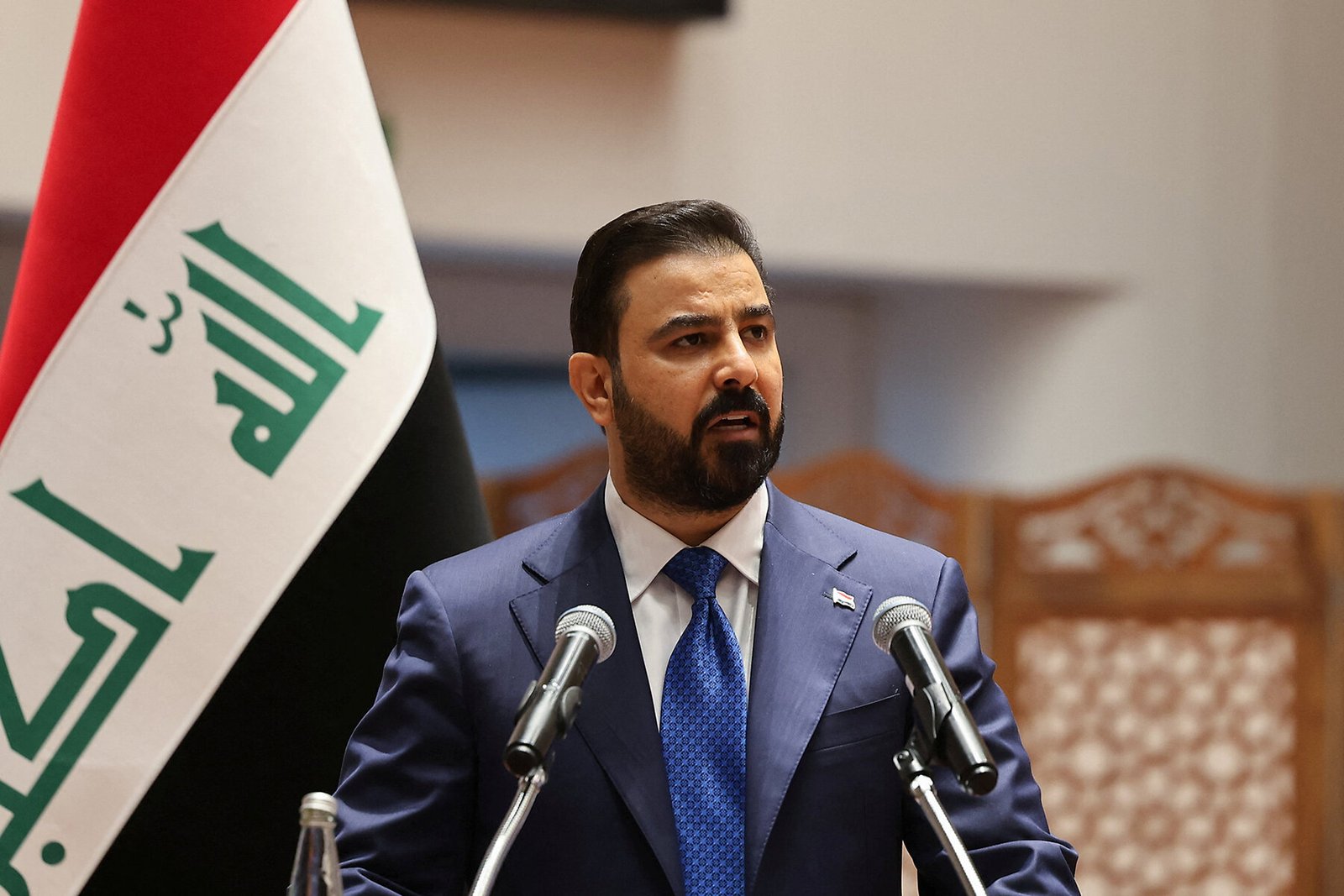
Can Baghdad’s new premier restore trust after Iranian proxy attacks shattered Gulf security? Ali al-Zaidi inherits a torn country, militia violence, and deep skepticism. His survival depends on proving sovereignty through enforceable action, not empty pledges.
As Iranian-backed militias transform Iraqi soil into a launchpad against Gulf infrastructure, Baghdad’s new leader faces a zero-sum test of sovereignty. Iraq-Gulf relations have collapsed into missile strikes and mutual suspicion, forcing Prime Minister Ali al-Zaidi to prove he can control militias or lose the last economic lifelines. Restoring Iraq-Gulf relations demands confronting Tehran’s proxies while convincing skeptical Arab states that this time, words will become enforceable action.
Iraq-Gulf relations hinge on militia control
Arab states in the Persian Gulf are worried about more than Iran. A common phrase being muttered by Gulf Arab officials and analysts is: “What do we do about Iraq?”
Not long before the war, Iraq was the focus of perceived Gulf investment opportunities. But now the country – which neighbors the Gulf – has been torn between competing U.S. and Iranian spheres of influence.
Heightening Gulf concerns, Iraqi territory has been used as a launching point for missiles and drones that are targeting key Gulf infrastructure, including Kuwaiti border posts, Saudi oil refineries, and an Emirati nuclear reactor.
In short, Iran is galvanizing its Shiite militia proxies inside Iraq; Gulf states are demanding action; Saudi Arabia has launched missile strikes on Iraq; and the U.S. is losing patience.
Amid these tensions, Iraq’s newcomer prime minister, Ali al-Zaidi, a 40-year-old banking mogul endorsed by President Donald Trump, is rhetorically taking on the most powerful factions in Iraq, including the Iran-backed militias, calling on them to submit to the Iraqi government.
Less than two weeks into his tenure, Mr. Zaidi, a relative unknown in political circles, is attempting to steer the country through an economic and diplomatic crisis that ranks as one of the most dangerous moments for Iraq since the 2003 U.S. invasion.
His goal, observers say, is to repair relations with Iraq’s Gulf neighbors, rein in the militias, and avoid having his country dragged further into a regional war.
Yet he faces an uphill challenge that includes American and Iranian pressures, and a skeptical Gulf.
Just last fall, Iraq was experiencing a countrywide building boom under then-Prime Minister Mohammed Shia al-Sudani’s program of economic development and pragmatic politics. Detractors, however, say the oil-fueled spending spree did little to confront the rising influence of Shiite militias or curb corruption, an important issue for Gulf countries looking for evidence they can trust Baghdad.
In November elections, Mr. Sudani’s party gained the largest number of seats in Parliament, but a court ruling barred him from forming a government coalition.
Iran’s changing calculation on Iraq-Gulf relations
Mr. Zaidi, a Shiite from southern Iraq, subsequently emerged as a consensus pick and took office in mid-May as Iraq’s youngest-ever prime minister. Neither Washington nor Tehran moved to veto the choice of Mr. Zaidi.
He is taking the helm of a country reeling from its involvement in the war and from the closure of the Strait of Hormuz. Oil exports make up 90% of Iraq’s government revenues.
Iran was once hesitant to destabilize Iraq, but its “calculation has changed,” says Dr. Renad Mansour, director of the Iraq Initiative at London-based Chatham House.
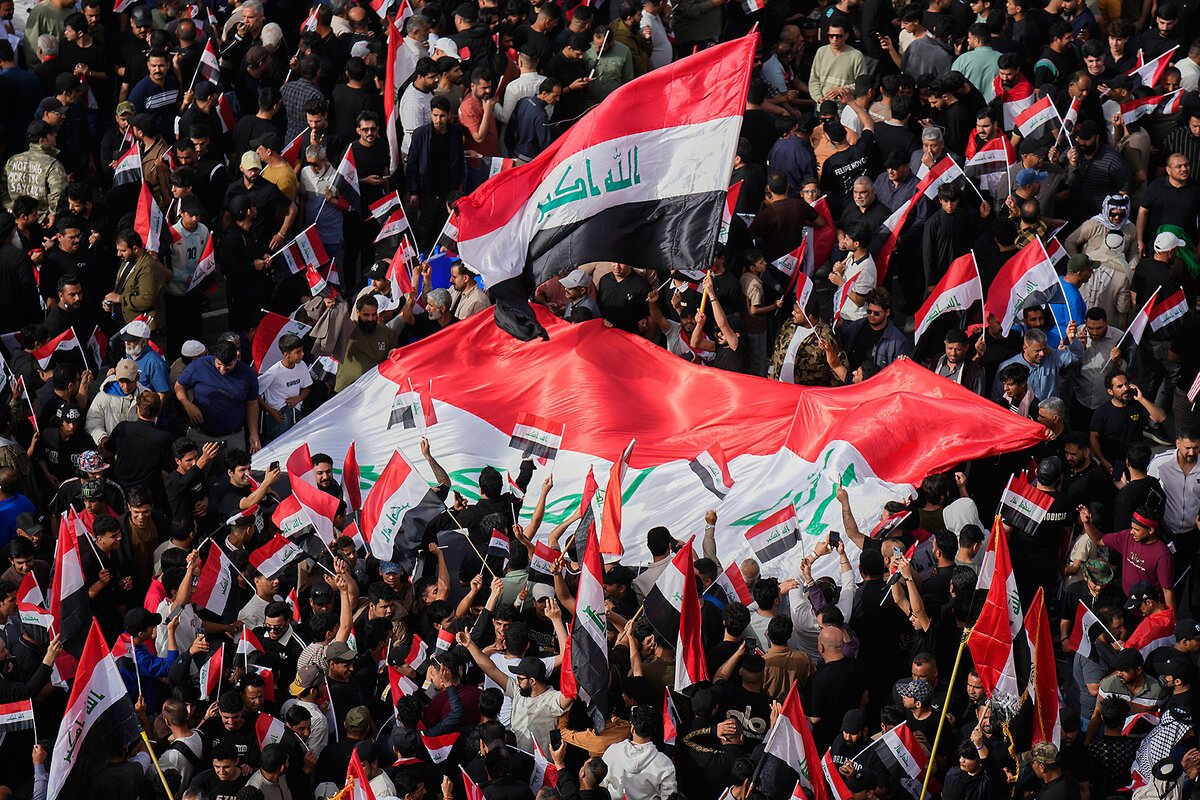
Followers of Iraq’s Shiite cleric Moqtada al-Sadr chant slogans as they wave national Iraqi flags during a protest against U.S. and Israeli attacks on multiple cities across Iran, in Tahrir Square, Baghdad, Iraq, April 4, 2026.
“Iran now sees Iraq as part of its war efforts. Iraqi militias will seek to use Iraqi territory and at the same time the U.S. will continue to strike Iranian proxies in Iraq,” he says. “Iraq will continue to be a battleground and the government does not have the sovereignty it would like to stop any of these attacks from happening.”
Within days of Mr. Zaidi’s nomination, the United States urged him to confront and disarm the powerful militias, some of whom have political allies represented in his own coalition.
Washington has levers at its disposal, namely declaring sanctions against members of the Iraqi government or withholding Iraq’s oil revenues, which due to an arrangement set up by the U.S. after its invasion of the country, are deposited at the U.S. Federal Reserve.
Focus on the militias and Iraq-Gulf relations
“Zaidi has to balance between the Iranians and the Americans, both of which have a significant influence on his everyday politics,” says Dr. Mansour.
“From the American side, the push has been very clear: He needs to show progress on going after militias. From the Iranian side, its militias must continue to be able to operate from Iraq.
“He is stuck between these two very strong powers and will try to balance them, but it will be very difficult,” Dr. Mansour notes.
Last week, Mr. Zaidi called on the militias to integrate into the armed forces and come under government control.
The prime minister was thrown a lifeline by the hard-line nationalist Iraqi cleric Moqtada al-Sadr, who declared late last week that his Shiite militiamen would integrate into the state security services – pressuring other militia leaders to do the same.
Mr. Zaidi subsequently called “on all armed factions to follow the same responsible national path and operate under the umbrella of the state and its official institutions.”
The move would “guarantee the protection of Iraq, preserve its sovereignty, and strengthen security and stability, based on the principle that the state is the sole authority entitled to monopolize arms and enforce the law,” he said.
Iraq-Gulf relations face unclear direction
Insiders say Mr. Zaidi has good relations across Iraq’s fractious politics, including various Shiite, Sunni, and Kurdish political groups.
The prime minister has indicated he wants to see a more balanced and independent Iraq with a diversified economy no longer solely reliant on oil.
On Sunday Mr. Zaidi suddenly announced he had turned down a $200 million bribe to cover up corruption in the Oil Ministry, announcing at a press conference that he was forming a corruption oversight body and would be reviewing all government contracts.
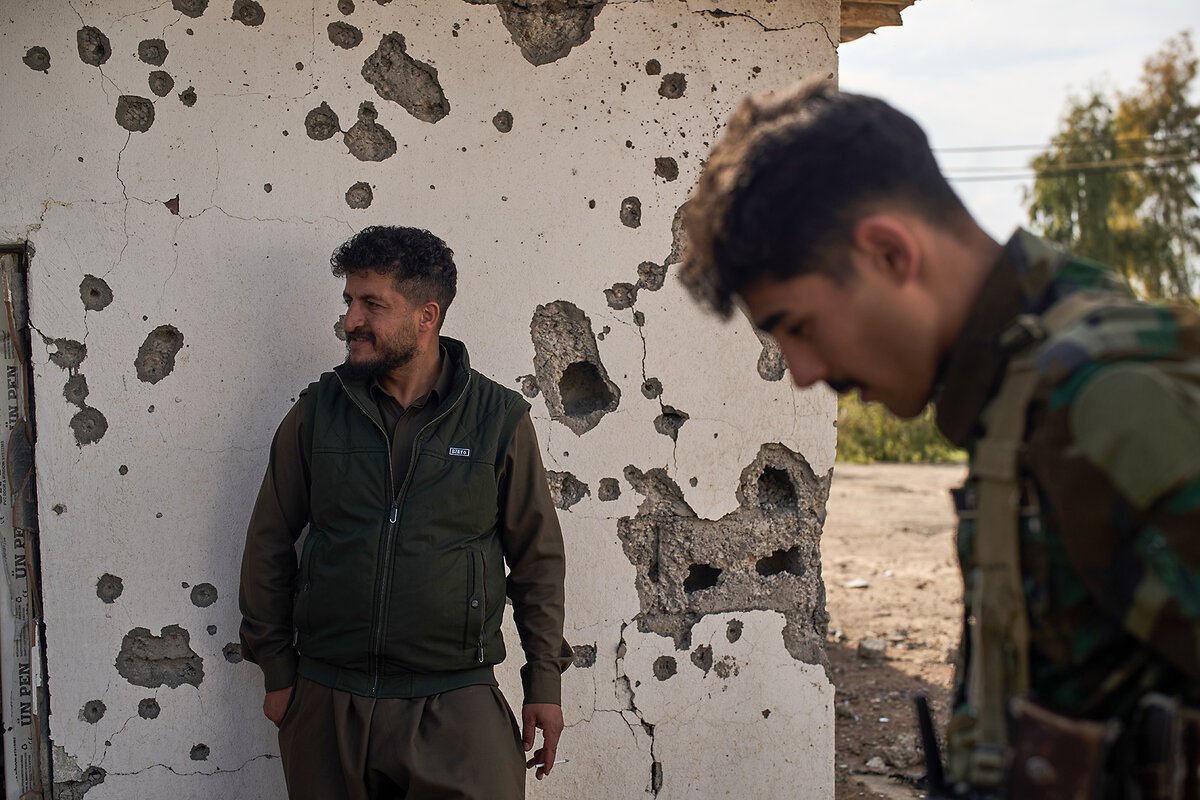
Members of the armed wing of the Kurdish-Iranian opposition group the Organization of Iranian Kurdistan Struggle, known as Khabat, show areas allegedly damaged in a strike by Iranian-backed militias in Iraq at a military base on the outskirts of Irbil, Iraq, March 16, 2026.
“It isn’t clear what policies Zaidi would have because he’s never held public office before nor has he ever run in elections and campaigned on any specific policy,” says Hamzeh Hadad, adjunct fellow at the Center for a New American Security. “We know that foreign policy is at the top of the agenda as Iraq finds itself in the middle of a war with a precarious ceasefire.”
For leaders in the Gulf, Mr. Zaidi remains an unknown, who must prove his commitment to preventing the country from being used as a springboard for Iranian attacks. They want actions, not just statements.
Shiite militias, ideologically-driven and allied with Tehran as part of what Iran considers its anti-U.S. and anti-Israel “Axis of Resistance,” have proven resistant to previous attempts by Iraqi political factions and security services to bring them under control.
In addition to targeting Gulf Arab states, the U.S. Embassy in Baghdad, and American military bases, the militias have struck Iraq’s oil and gas infrastructure, Baghdad International Airport, and the headquarters of the Iraqi National Intelligence Service, killing one officer.
Iraqi militias and their political allies have gained positions of power in recent years. Militia-aligned political parties also won seats in the November 2025 elections.
“It is not like we have a government in Baghdad that has the … tools to control all these militias,” says Dr. Muhanad Seloom, assistant professor of international politics and security at the Doha Institute for Graduate Studies and nonresident fellow at the Middle East Council on Global Affairs. “Not one entity has control on the ground.”
Gulf pessimism and Iraq-Gulf relations
Gulf Arab officials remain pessimistic that any Iraqi government can exert full control over the country.
“The Iraqi government has proven time and again it doesn’t run the show in Iraq,” says an official who did not wish to be named, describing Gulf governments as being “burned” by previous pledges. “Who do we have to go to and stop these attacks? There is no state, only dozens of factions.”
This lack of faith in Baghdad is expressed despite the possibility that Iraq could become a critical hub for a post-Hormuz Middle East. Iraq’s planned road-and-rail project linking to Turkey, often referred to as the Development Road Project, would allow Gulf exports to reach Europe more easily.
Observers say a path remains open for Mr. Zaidi to save ties with Iraq’s Gulf neighbors and prevent the country from being dragged into the conflict further.
In its bid to woo the Gulf, “Iraq always pushed economic interests,” says Dr. Mansour, but economic opportunity is proving to be linked to security and stability. “The government will have to try and find ways to use the rule of law to stop some of these attacks,” he says.
In order to maintain neutrality in the war, observers say, Baghdad’s newcomer prime minister will have to take decisive – and risky – action.
“As for improving relations with Gulf states, the Iraqi government under Zaidi needs to be proactive in its stated neutral policy,” says Mr. Hadad, the analyst. “Under [former prime minister] Sudani, neutrality meant doing nothing and hoping for the best. For Zaidi, he needs to be proactive in preventing attacks on neighbors and allies from all sides.”