
As U.S.-Iranian trust erodes under new strikes and conditions, Mideast powers from Qatar to Saudi Arabia impose their own mediation architecture. Their collective leverage now determines whether regional war escalates or stabilizes .
While Washington signals mixed intentions through renewed strikes, Mideast powers have quietly seized control of diplomatic momentum to prevent collapse. These regional actors understand that a failed truce means direct economic pain, so Mideast powers are engineering workarounds to bypass U.S.-Iranian mutual distrust and keep the ceasefire alive.
Mideast powers drive agenda
The Middle East is lurching between hope and apprehension over a potential U.S.-Iran agreement to end the conflict, as new strikes, threats of retaliation, and leaks from the talks signal that any deal might collapse before it is even signed.
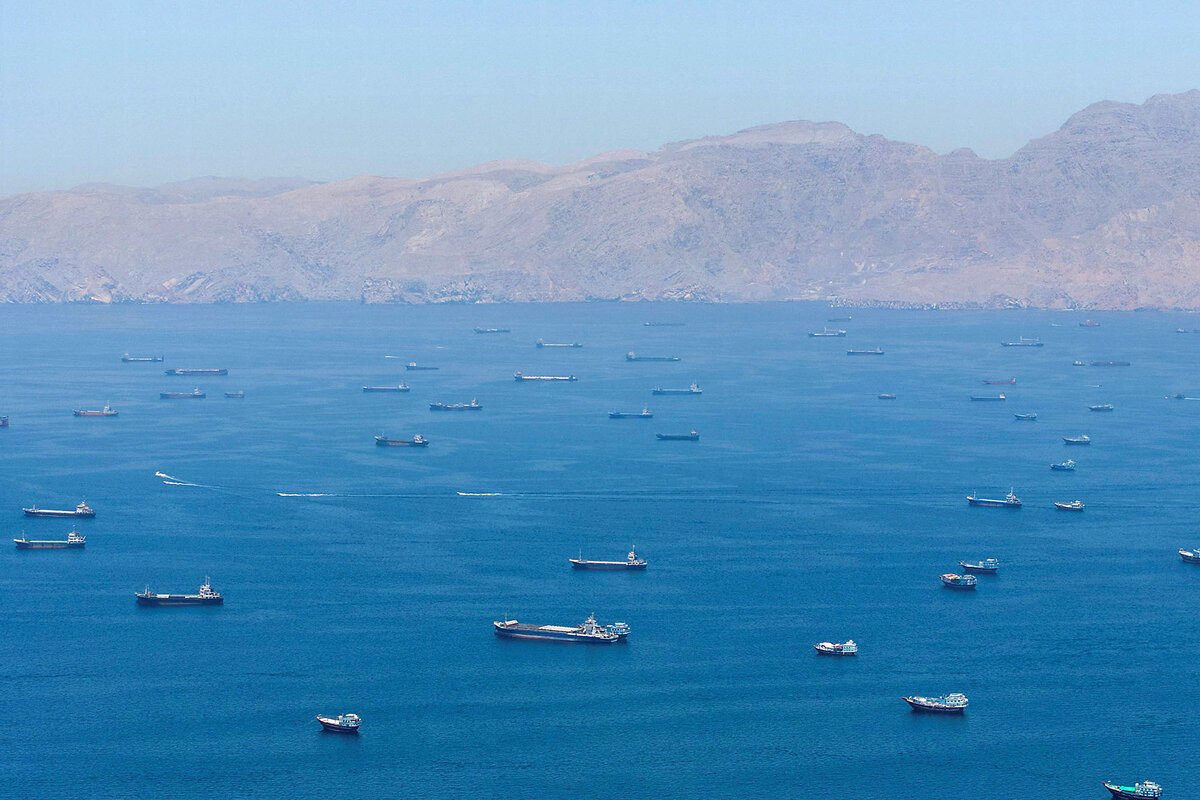
At the center is a framework that officials from both the United States and Iran acknowledge is progressing: a memorandum of understanding outlining their intention to end the dueling blockades of the Strait of Hormuz, suspend hostilities, and enter talks into a more enduring agreement.
According to leaks, the Pakistan-brokered memorandum will formalize a cessation of hostilities for 60 days – extending a ceasefire agreed to on April 8 – during which the United States and Iran would enter direct talks on the future of Iran’s nuclear program, the fate of its enriched uranium, and other thorny issues.
An upbeat U.S. Secretary of State Marco Rubio said over the weekend that he expected the deal to be announced by President Donald Trump, first late Sunday, and then Monday. Yet, as of Tuesday, no formal announcement had been made, and Mr. Rubio said the deal would “take a few days.”
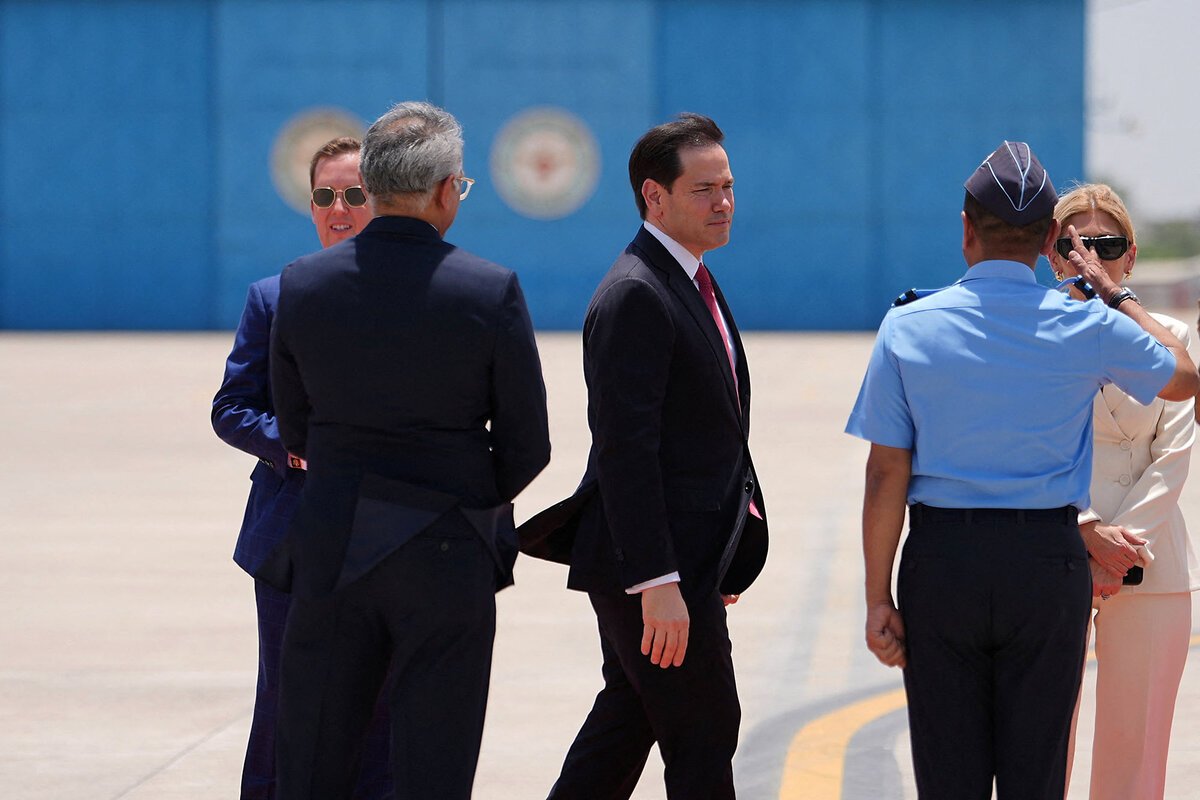
“The president’s expressed his desire to make it. He’s either going to make a good deal or no deal,” Mr. Rubio told reporters in India Tuesday.
New U.S. strikes
Despite the reported progress on a deal, the U.S. launched new strikes in southern Iran Tuesday, targeting what U.S. Central Command described as missile sites and boats attempting to plant mines. It was reported later in the day that the U.S. Navy had resumed its assistance to ships navigating the Strait of Hormuz.
Iranian Foreign Ministry spokesman Esmail Baghaei warned that though progress had been made, a deal “is not imminent.”
One of the outstanding issues, according to the Fars News Agency media outlet, which is affiliated with the powerful Islamic Revolutionary Guard Corps, is the U.S. release of frozen Iranian funds.
Quoting an “informed source” in Iran’s negotiating team, Fars stated that “no agreement is possible until the agreed-upon funds have been deposited. Given America’s history of breaking promises, Iran does not consider these understandings finalized.” Fars noted that progress had been made on the issue during talks in Doha, Qatar.
As the memorandum of understanding was still taking shape Monday, President Trump suddenly added a new condition that created a significant hurdle.
In a social media post, he demanded that the Gulf countries and Pakistan mediating an end to the conflict must also join the Abraham Accords as a condition to Washington agreeing to the memorandum. The breakthrough accords, first signed in 2020 by the United Arab Emirates and Bahrain and later expanded, normalized diplomatic, security, and economic ties between the signatories and Israel.
Why Mideast powers intervene
Even if a deal fails to materialize, one clear development is the growing collective sway of middle powers in the Middle East.
The efforts of Saudi Arabia, the UAE, Qatar, Bahrain, Kuwait, Turkey, Pakistan, and Jordan – all namechecked by Mr. Trump – to push forward a deal seen as in their common interest highlighted the increasing influence of Middle Eastern states working to keep the region stable.
The bloc includes the world’s top energy producers, a NATO member in Turkey, and a nuclear power in Pakistan. It also includes the Gulf Arab owners of sovereign wealth funds with a collective $5 trillion that invest in the U.S. and Europe.
Coinciding with the bloc’s rise, Israel reportedly has been increasingly sidelined in the Trump administration’s deliberations on how and when to end the war with Iran, which started on Feb. 28 with joint U.S.-Israeli airstrikes.
Gulf Arab states, which were not party to the war and sought to prevent violence from breaking out in January and February, have been hardest hit, absorbing thousands of Iranian retaliatory missiles and drones.
In what is seen as a sign of progress, Qatar, whose economy has been severely weakened by the Hormuz blockade, hosted Iranian Foreign Minister Abbas Aragchi and the lead Iranian negotiator, parliamentary speaker Mohammed Bagher Qalibaf, in Doha on Monday.
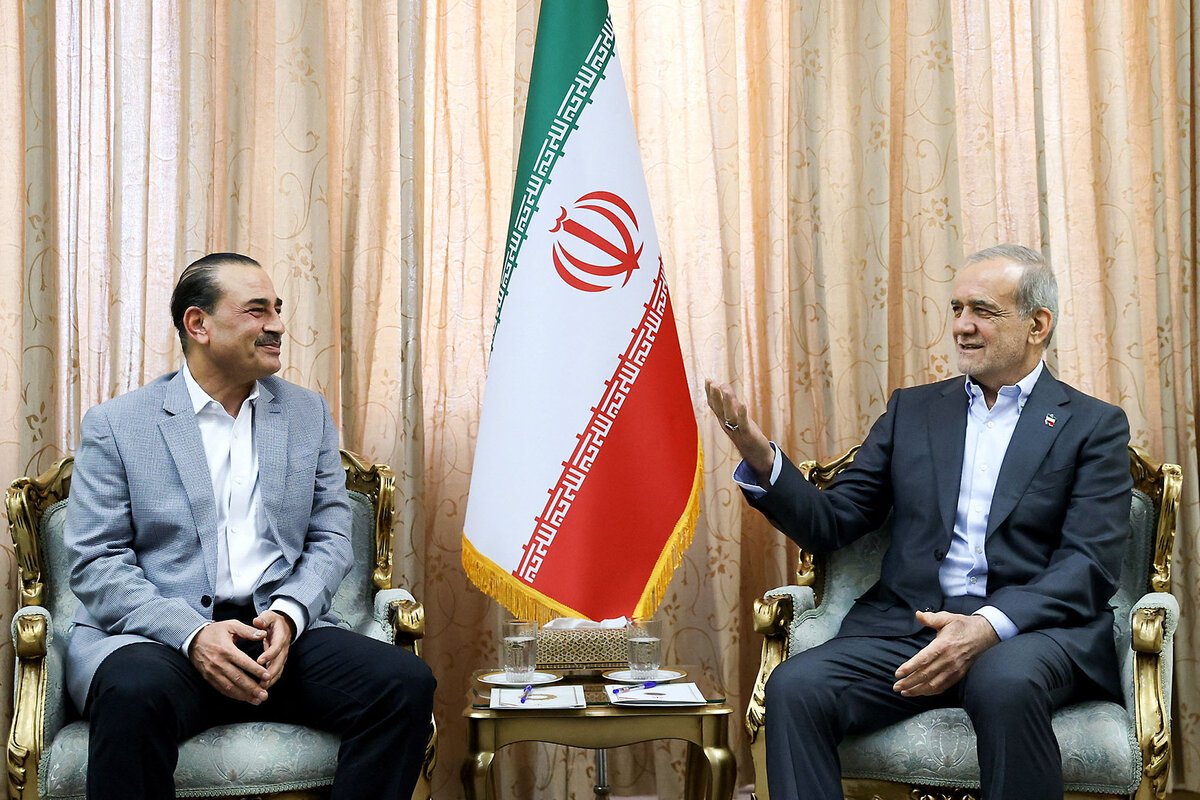
Qatar, a leading mediator of conflicts around the world, had previously stepped back from mediating between Washington and Tehran after being targeted by Iran.
The bloc’s mediation “reflects the growing role of regional and middle powers in promoting de-escalation and facilitating dialogue, particularly in conflicts where the region itself bears the greatest consequences,” says Khalid Al-Jaber, executive director of the Doha-based Middle East Council on Global Affairs.
“Their priority will not be to declare victory, but to prevent renewed escalation and ensure that the region is not left exposed to another cycle of confrontation,” he adds.
And yet, Gulf states are sending a signal they are ready to act militarily should Iran once again target them to pressure the U.S. and inflict pain on the global economy.
“I believe Gulf states are trying to tell Iran for the second time, ‘We did our best to stop a war against you. But there is no justification for Iran to attack us again; if you do, we will be in our right to respond’” militarily, says Muhanad Seloom, assistant professor of international politics and security at the Doha Institute for Graduate Studies.
“They are doing their best to prevent war as this is in everyone’s interest, but at the same time they are preparing for whatever war is coming,” Dr. Seloom says.
Collective action by Mideast powers
The push by President Trump to transform any Iran-U.S. agreement to make it part of an expanded Abraham Accords added a new wrinkle to the regional diplomacy.
The UAE, an initial signatory, has tightened cooperation with Israel throughout the war, with Israel deploying missile defense systems to the federation of emirates. Emirati officials and observers say the UAE is doubling down on its ties with Israel, as part of its diverse range of alliances regionally and globally.
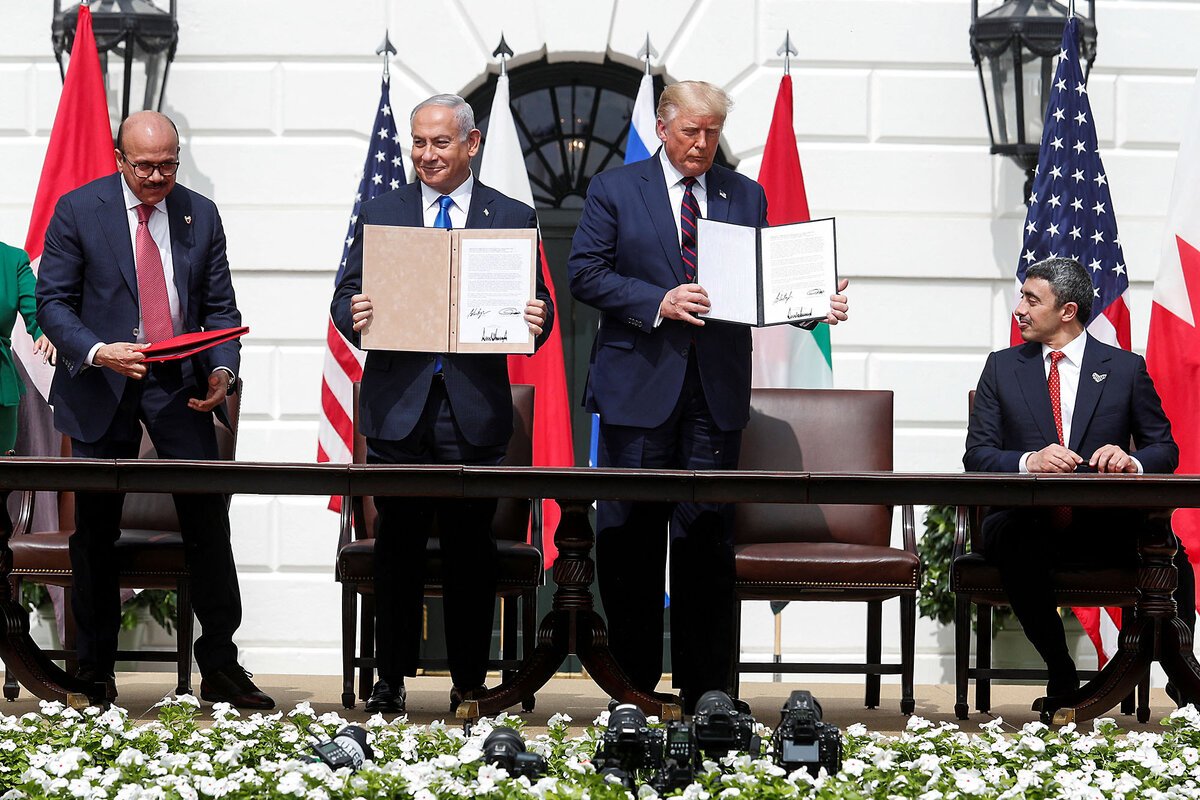
Yet for Qatar, Saudi Arabia, Kuwait, Pakistan, and others, the time for full ties with Israel is not yet right.
In interviews, multiple Gulf officials have said repeatedly they are ready to normalize ties with Israel should it moderate its “destabilizing behavior” and end aggressive military policies they believe have incited and expanded conflict in Lebanon, Syria, and Iran.
These states are also seeking steps from Israel to reverse what many regard as ethnic cleansing and annexation in the West Bank and Gaza, with the view that the lack of Palestinian rights and statehood will continue to fuel regional instability.
“Israel is turning inwards and lashing out, but no one is thinking about living with its neighbors,” a Gulf official recently told The Christian Science Monitor, referring to both Israeli government policy and opposition statements. The official did not want to reveal their nationality or position as they were not authorized to speak on behalf of their leader.
“Israel is not ready for normalization. But we hope it becomes ready for the sake of the region,” the official said.
There is also a concern among Gulf officials that entering a normalization pact with Israel now would make it appear as though the region is coalescing around an “Israeli axis.” That would signal to Iran that the bloc of states is formally becoming a front to counter Tehran, leading to further escalation and war.
Instead, Gulf states – with the exception of the UAE – believe that the future requires managing relations with a wounded but defiant Iranian regime, a neighbor with whom they must live alongside long after the current conflict ends and America turns its attention elsewhere.