
Trump’s blockade has driven Iran’s May crude exports to zero, the lowest in a decade. This naval stranglehold severs the regime’s financial lifeline, cratering revenues and inflation-spiking domestic pressure while offering Washington unprecedented bargaining leverage.
The complete collapse of Iran’s crude shipments to zero barrels in May confirms that Trump’s blockade has achieved what years of sanctions could not: total arterial severance. This Trump’s blockade now functions as the primary economic weapon, starving the regime’s war chest while Tehran remains unable to counter the naval stranglehold.
Trump’s Blockade Seizes Control
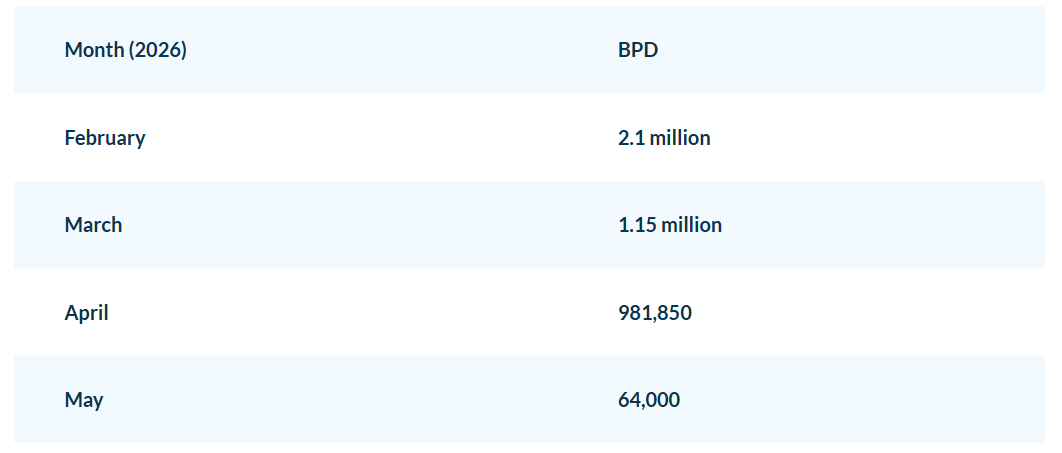
The Islamic Republic of Iran suffered a devastating blow in May, with the American blockade and sanctions biting deep into the regime’s bottom line. Iran exported zero crude oil in the month and only 2 million barrels of naphtha, equaling roughly 64,000 barrels per day (bpd), per data from Tanker Trackers. That is down from just over 2.1 million bpd in February, the last full month before the war with the United States and Israel began.
Statistically, this represents the lowest export volume from the Iranian energy sector in more than a decade. The data confirms that the U.S. naval blockade has effectively severed the regime’s primary financial artery and flipped the script on Tehran’s theocrats by targeting state solvency while Iran has closed the Strait of Hormuz.
How Trump’s Blockade Bites
Washington imposed a naval blockade against the Islamic Republic’s ports on April 13, mere days after a ceasefire with Iran brought Operation Epic Fury to an end. The blockade is part of Washington’s response to Tehran’s impediment of normal maritime traffic by closing the Strait of Hormuz. By April’s end, Iran’s seaborne exports of petroleum products plunged below 1 million bpd. This marks a steep drop from February, and from March’s 1.15 million bpd. May volumes collapsed to just 3 percent of the February baseline. Estimated export revenues for May fell below $200 million.
May crude exports reached absolute zero. Historically, crude oil has dominated seaborne shipments, alongside a diversified mix of fuel oil, condensates, and naphtha.
Evading Trump’s Blockade
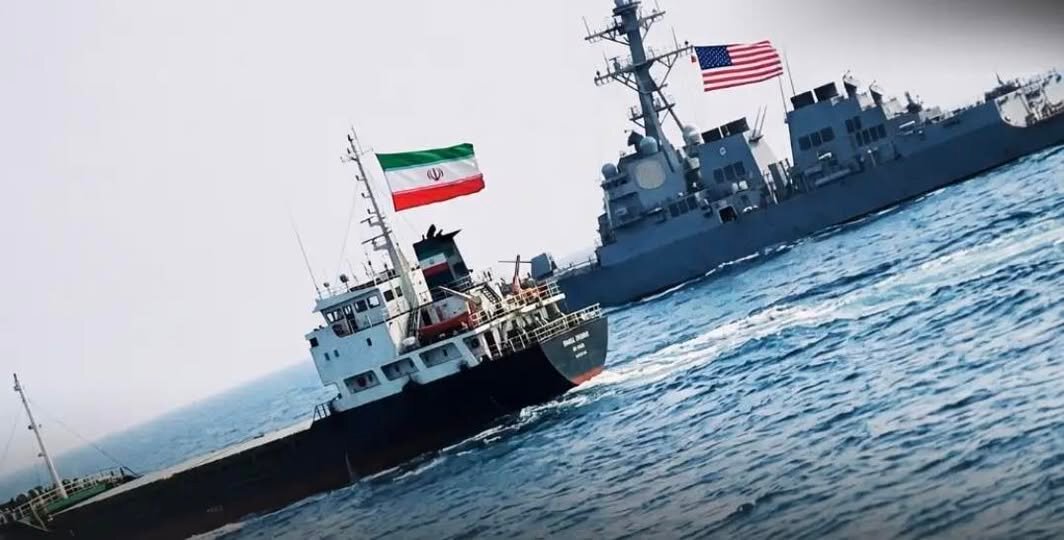
Evasion of the naval blockade was restricted to minor shipping corridors. Only four small-capacity vessels bypassed U.S. enforcement. These consisted of Panamax- and Handymax-class tankers. The vessels transported the remaining naphtha cargo exclusively to China.
Additional details can be gleaned from the tracking data. Iran’s maritime oil exports relied on two tankers flying the flag of Cameroon, one tanker flying the flag of Gambia, and one tanker flying the flag of Panama. Washington has not sanctioned any of these four vessels. Other international regulatory bodies have sanctioned only one vessel, with the other three being sanctions-free despite their history of engaging in sanctions circumvention.
Trump’s Blockade Defunds Terror
Revenues generated from illicit energy exports have long constituted the majority of foreign currency used to fund Iranian state operations, including its military and transnational terror apparatus. Enforcement of the blockade has drastically curtailed this revenue stream. The reduction compounds years of fiscal mismanagement, underinvestment, and deep economic and political isolation. It also follows two separate regional conflicts in less than a year. The loss of oil revenues removes the regime’s primary macroeconomic shock absorber.
Domestic economic indicators show intense systemic pressure. Tehran faces high inflation. In May, monthly inflation reached 8.8 percent, rising 3.3 percent from the previous month. The annual average inflation rate hit 57.7 percent.
Why Hold Trump’s Blockade Firm
If the blockade continues, Iran’s exports in June are likely to remain nearly as low as they were in May. Inflation is also set to continue, and the larger disruption in exports and imports due to the blockade will lead to a significant drop in manufacturing and have an impact on key sectors in the Iranian economy, like the service sector.
Outside of kinetic operations, the blockade remains Washington’s main point of economic leverage and gives the U.S. real bargaining power to exert over the nuclear file, ballistic missile program, support for terrorism, closure of the Strait of Hormuz, and even internal matters. Trading away this macroeconomic pressure solely to restore transit through the Persian Gulf would be a strategic mistake. Policymakers should not expect major concessions on broader security matters if such economic leverage is prematurely spent.