
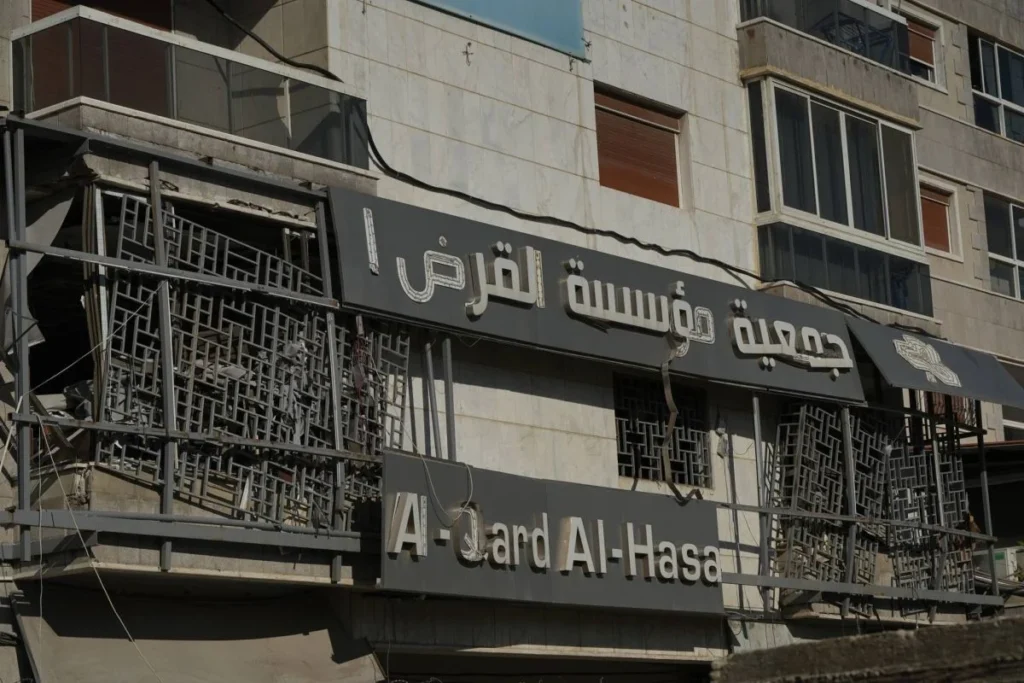
Israeli military strikes damaged Hezbollah assets like al-Qard al-Hasan, yet the group gathered over $1 billion since 2025 via Iranian support, gold laundering, and drug sales. Operational recovery relies on crypto wallets, African trade, and front companies in Turkey and Dubai.
Heavy combat losses and crippling airstrikes across Lebanon forced the militia to accelerate its covert funding channels. Disruptions to traditional funding networks have transformed Hezbollah financing into a highly resilient digital and global enterprise, sourcing funds through illicit commodity trading and cryptocurrency networks. As Tehran faces mounting sanctions, Hezbollah financing remains the operational lifeline powering the group’s postwar reconstruction efforts.
Hezbollah Financing Sustains Shadow Networks
Iran has spent more than four decades building Hezbollah into a force capable of making war against Israel in hopes of one day destroying the Jewish state. Israeli forces have inflicted tremendous damage on Hezbollah’s leadership, arsenal, and manpower, yet the terror group is rebuilding, thanks in no small part to its globe-spanning illicit finance network.
To shed greater light on this crucial subject, FDD has invited Israeli expert Dr. Iftah Burman to provide a robust overview of the transnational web of enterprises, stretching across the Middle East — and from Latin America to West Africa and into cyberspace — that sustains Hezbollah’s aggression. This work provides information essential to intelligence and law enforcement agencies in every country, including the United States, that recognizes the severity of Hezbollah’s threat to peace, stability, and prosperity in the Middle East.
Introduction
On October 8, 2023, the day after Hamas murdered 1,164 people, and kidnapped 251 people into the Gaza strip, Hezbollah, in solidarity with the terrorists, launched military operations against Israel. After almost 12 months of gradually intensifying conflict on the northern front, the Israel Defense Forces (IDF) launched Operation Northern Arrows in late September 2024. In addition to eliminating nearly all of Hezbollah’s leadership, including Secretary-General Hassan Nasrallah, the IDF inflicted severe damage on Hezbollah’s elite Radwan Force and destroyed much of the terror group’s stockpile of precision-guided munitions.
Hezbollah has also suffered extensive financial damage. The IDF physically targeted al-Qard al-Hasan, a key Hezbollah financial enterprise on which the U.S. Treasury Department imposed terror finance sanctions in 2007.1 These attacks cut off access to vital cash and gold reserves. It has also become more difficult for Hezbollah’s patron, the Islamic Republic of Iran, to support the group financially. The tightening of international sanctions and the maritime blockade of Iranian ports in April 2026 has caused a near-total paralysis of Tehran’s oil-export economy.
Nevertheless, Hezbollah’s multifaceted financial apparatus is demonstrating remarkable resilience through innovative mechanisms designed to circumvent terror finance controls and repatriate funds to Lebanon. Through networks that extend across the Middle East, to Africa and Latin America, and into cyberspace, Hezbollah continues to generate substantial revenue. Since early 2025, the organization has amassed over $1 billion in revenue, predominantly sourced from the Islamic Revolutionary Guard Corps (IRGC), to sustain operational requirements and force buildup.
The information below is based on publicly available sources but has been independently corroborated by a Western intelligence source via private communication, confirming that Hezbollah’s financial versatility remains critical to its recovery. The challenge now facing Israeli and Western intelligence and law enforcement agencies is to accelerate the exposure of front companies, seizure of assets, digital enforcement, and cross-border collaboration necessary to disrupt Hezbollah’s finances.
How Hezbollah Financing Enables Smuggling
A Globe-Spanning Network
The Middle East
Hezbollah has built a sophisticated triangular configuration encompassing the Lebanese domestic sphere, Gulf State networks, and Turkish exchange infrastructure.
The Jood Initiative in Lebanon: In September 2025, Hezbollah incorporated Jood (Jood SARL) to mitigate sanctions on al-Qard al-Hasan. Masked as a regulated commercial gold enterprise, Jood served to liquidate gold reserves and launder money by purchasing gold from Lebanese citizens. In February, the U.S. Treasury designated the entity and its leadership as components of Hezbollah’s financial enterprise. Concurrently, hundreds of millions of dollars from Iranian oil sales were funneled to Hezbollah through Lebanese money changers and exchange companies.
Illicit Narcotics: Captagon amphetamine trafficking remains a lucrative revenue stream despite the collapse of the Bashar al-Assad regime in Syria, which had been Hezbollah’s main trafficking partner. Following the regime’s collapse, significant manufacturing infrastructure relocated to Hezbollah-controlled territories in Lebanon’s Beqaa Valley and Beirut’s Dahiyeh district. Despite the Lebanese government’s numerous seizures — including 84 million Captagon tablets in the course of 2025 — the manufacturing and distribution persists.
The Iraq-Lebanon Financial Axis: In March, intelligence services uncovered a network of 16 individuals and entities headed by Alaa Hassan Hamieh, former vice president of the Investment Development Authority of Lebanon (IDAL). Between 2020 and early 2026, Hamieh siphoned over $100 million from an Iraq-Lebanon bilateral trade agreement earmarked for national reconstruction. These funds were laundered through Polish and Slovenian shell companies, financing procurement for Hezbollah’s military wing.
Kuwait and the United Arab Emirates (UAE): In March and April, Kuwait dismantled a terror-financing operation, arresting 24 operatives, including five former members of parliament, for transferring funds and coordinating sleeper cells. Kuwait also sanctioned several Lebanese medical institutions used as laundering fronts and, in July 2025, seized assets from three key financial facilitators. Similarly, the UAE dismantled a parallel Iran-Hezbollah network smuggling gold and cash to finance terror.
The Turkish Exchange Hub: Turkish currency exchange networks serve as a critical transit hub routing hundreds of millions of dollars from illicit Iranian oil sales and Dubai’s gold trade to Lebanon. Furthermore, Hezbollah-linked companies mask Iranian fertilizer sales as originating from Oman, channeling millions in profits through Turkey to acquire military hardware.
How Global Networks Power Hezbollah Financing
Africa
West Africa remains a strategic hub due to well-established Shiite diaspora communities embedded in the diamond and consumer goods trade.
Cote d’Ivoire: In January, intense U.S. diplomatic pressure, following a high-level FBI visit to Abidjan, pushed Ivorian authorities to accelerate investigations into Hezbollah’s financial networks.The inquiries primarily target indigenous shell companies used to inject capital directly into Beirut.
West and Central Africa: Hezbollah continues leveraging blood diamonds and other high-value commodities to move capital through a front-company web, facilitated by its Shiite clan networks. Coerced and voluntary remittances and donations are also a longstanding funding source for the organization, from prosperous Lebanese-owned businesses operating in Cote d’Ivoire, Guinea, Sierra Leone, Senegal, Gambia, the Democratic Republic of the Congo (DRC), and other countries. Legitimate goods trade camouflages illicit funds, originating mostly from international narcotics trafficking.
As a result, Africa-based personnel are accumulating massive cash reserves to hedge against sanctions restricting Hezbollah’s use of the Lebanese banking sector. At the same time, they are attempting to balance the accounts through the Hawala system of trust-based exchanges, offsetting value between Africa-based and Lebanon-based businessmen.
Latin America
Hezbollah maintains its involvement in money laundering, coal and oil smuggling, and the trafficking of narcotics, diamonds, and counterfeit currency within the Tri-Border Area. Recently, the group’s operations in Venezuela have faced unprecedented exposure.
The Collapsing of the Venezuelan Safe Haven: In January, a primary pillar of Hezbollah’s criminal economy was destabilized when its symbiotic relationship with the Venezuelan government was exposed following American forces’ arrest of President Nicolas Maduro. This is likely to cripple Hezbollah’s regional base, where it had enjoyed unfettered access to state-protected gold mines and narcotics-smuggling corridors. Hezbollah’s financier, Seyed Naiemaei Badroddin Moosavi, used his connections with Maduro, to covertly trade Iranian oil for Venezuelan gold, which eventually led to weapons procurement in Turkey. Reports suggested the United States would likely pressure Venezuela to evict Hezbollah-linked networks.
Continental Continuity: Despite challenges in obtaining information from local law enforcement regarding Latin American operations, intelligence assessments indicate Hezbollah continues to maintain the illicit money laundering and narcotics networks it has cultivated for decades. Legal commodities are purchased with the illicit profits, then shipped and sold in Latin America, Africa, or Lebanon. Similar to the Shiite communities in Africa, the ones in Latin America also pass back remittances and donations, willingly or otherwise. Larger donations often consist of illicit funds funneled through successful businesses to circumvent scrutiny. Also in Latin America, Hawala is a favored route for untraceable intercontinental money transfers.
China
Intelligence reports indicate that profits from the trade of Iranian energy products with China are funneled to Hezbollah through a network of shell companies in Hong Kong, the UAE, and Turkey. Tens of millions of dollars eventually reach Lebanon via Lebanese gold merchants, money exchangers, or professional couriers traversing the country’s international airports and land borders.
Russia
Russian financial actors act as procurement agents for Hezbollah, trading revenues generated by Hezbollah-linked Lebanese energy firms into advanced military technology for the organization. A key Russian operative, Andrey Viktorovich Borisov, was linked to illicit gold, commodities, and oil trading, for the procurement of weapons in favor of Hezbollah.
Hezbollah Financing Shifts to Crypto
The Cyber Frontier
In 2025, the digital asset landscape emerged as Hezbollah’s preferred operational medium for high-value transactions, utilizing digital wallets linked to the organization and Iran’s IRGC.
Billions in Digital Currency: Iran has facilitated the transfer of approximately $1 billion since early 2025. Total digital wallet transfers associated with the IRGC and its proxies — including Hezbollah — have surpassed the $3 billion mark, signaling a dramatic shift toward cryptocurrency-based financing.
Unit 4400: Hezbollah’s logistical unit has strengthened affiliations with cryptocurrency exchanges to facilitate the repatriation of military procurement funds. Unit 4400, and wider financial operations, are overseen by members of the Qasir family, a Hezbollah founding clan that manages a global network of facilitators and trading firms.
Stablecoin Trade: Syrian currency trader Tawfiq Muhammad Sa’id al-Law acts as the primary intermediary between the Qasirs and various digital exchanges. These include Moscow-based and U.S.-sanctioned Garantex (succeeded by Grinex), which utilized a ruble-backed stablecoin known as A7A5, and the Tron blockchain to trade in U.S. dollar-backed Tether (USDT) stablecoin. Digital wallets were used to collect transit fees for oil tankers navigating the Strait of Hormuz and process payments for Iranian oil. Tether also served, until recently, as the chief financial conduit for the IRGC and Hezbollah’s trade with the Maduro regime, allowing the organization to launder Iranian oil revenues for terror financing.
Current Challenges
Hezbollah’s financial requirements for organizational survival and basic infrastructure rehabilitation have created an urgent demand for liquid cash to address the following challenges:
Organizational Survival: Paying cash salaries to over 60,000 operatives and administrative staff within Lebanon to prevent internal unrest or instability
Military Rehabilitation: Reconstructing military capabilities, purchasing components for drone, UAV, rocket, and missile arrays, and rebuilding conflict-decimated strategic infrastructure
Social Compensation and Public Support: Providing financial reparations to families of deceased operatives and reconstructing residential areas in Southern Lebanon, the Beqaa, and the Dahiya to preserve Shiite-base loyalty
Regulatory Circumvention: Maintaining its dependence on bulk cash shipments to evade Lebanese government prohibitions on paramilitary activity and monitoring of domestic financial institutions .
The Appreciation of Gold: Taking advantage of gold high prices, which peaked at $5,600 per ounce in January 2026, Hezbollah is trading the stockpiles it has been accumulating for several decades, evading sanctions and regulations associated with paper currency. Dealing with physical cash, instead of digital, presents substantial challenges. It is difficult to transfer hundreds of pounds of gold internationally for every transaction, limiting the pool of willing arms dealers and financiers.
Disrupting Hezbollah Financing Through Enforcement
How To Escalate Pressure on Hezbollah Financing Networks
Hezbollah’s capacity for rapid adaptation through civilian economic fronts, cryptocurrency networks, global commodity trade, and the African and Latin American Shiite diaspora all suggest a dangerous potential for recovery. Intelligence and law enforcement agencies are engaged in an ongoing campaign against Hezbollah’s illicit financing networks, but there is a need for greater effort and impact on six fronts:
Asset Seizure: Fully implementing international sanctions within Lebanese jurisdiction and confiscating assets belonging to the organization and its associates; proceeds should be used to compensate Hezbollah’s Lebanese victims
Exposing Illicit Activity in Key Sectors: Rigorously monitoring and dismantling front companies operating within the currency exchange, gold, and energy sectors
Border Fortification: Strengthening the capabilities of the Lebanese Armed Forces (LAF) and its Internal Security Forces (ISF) to disrupt illegal manufacturing and trafficking networks and secure air, land, and seaports, coordinating with the post-Assad administration in Syria where feasible
Cyber and Crypto Warfare: Escalating enforcement against digital wallets — such as the April 20 seizure of $344 million in Tether, and taking action against terror-supporting exchanges This may have been the motive for the cyberattack on the Grinex exchange on April 16.
International Intelligence Collaboration: Enhancing intelligence sharing with Gulf and West African states to unmask clandestine financial architectures and so-called “quiet capital” maintained by Hezbollah-affiliated Lebanese communities and businesses
Israeli-Lebanese Relations: Leveraging its current bilateral negotiations with Israel, the Lebanese government should capitalize on actionable Israeli intelligence to dismantle Hezbollah’s covert financial assets.
Conclusion
The degradation of Hezbollah’s military infrastructure has created an urgent requirement for liquid capital. Over the past two years, the organization has systematically diversified its revenue streams and refined its methods for repatriating and deploying these funds.
As demonstrated, Hezbollah uses a sophisticated financial architecture to circumvent Lebanese regulatory frameworks, international sanctions, and global counter-terrorism authorities. Ultimately, the intent of this architecture is not economic gain, but the sustainment of Hezbollah, its rearmament needs, military operations, and militant agenda. To effectively neutralize Hezbollah’s financial efforts, the international community must implement robust policy packages and back them with coordinated, multilateral counter-illicit finance measures, and deepened intelligence-sharing protocols. Doing so will systematically dismantle Hezbollah as one of the Iranian regime’s mechanisms of destabilization and terror.