
Iran’s cabinet approved a bill ratifying the 2018 Caspian Sea legal treaty despite lingering security concerns and maritime share disputes. The deal enables Trans-Caspian energy pipelines, bypassing Iranian territory and completing Western-backed trade routes that isolate Tehran.
Tehran’s swift push to ratify the Caspian Sea convention signals a major strategic pivot while wartime pressures compound along Iran’s northern frontier. By approving the Caspian Sea convention without securing firm seabed boundaries or maritime shares, Iranian policymakers risk handing key energy and transit advantages to regional competitors and Western-backed trade corridors.
Caspian Sea convention risks
Last week, Iran’s cabinet revived one of the country’s most contentious regional files, approving a bill to ratify the 2018 Convention on the Legal Status of the Caspian Sea. The agreement had remained stalled for eight years amid serious legal, security, and economic objections.
Its sudden return, while Iran is engaged in a prolonged war with the US and Israel, raises an urgent question: Why surrender strategic leverage at precisely the moment the country needs it most?
The decision cannot be viewed as a narrow legal matter. It sits alongside the Trans-Caspian energy route, the so-called Zangezur Corridor in Azerbaijan, and its planned continuation through Armenia under the name “Trump Route.”
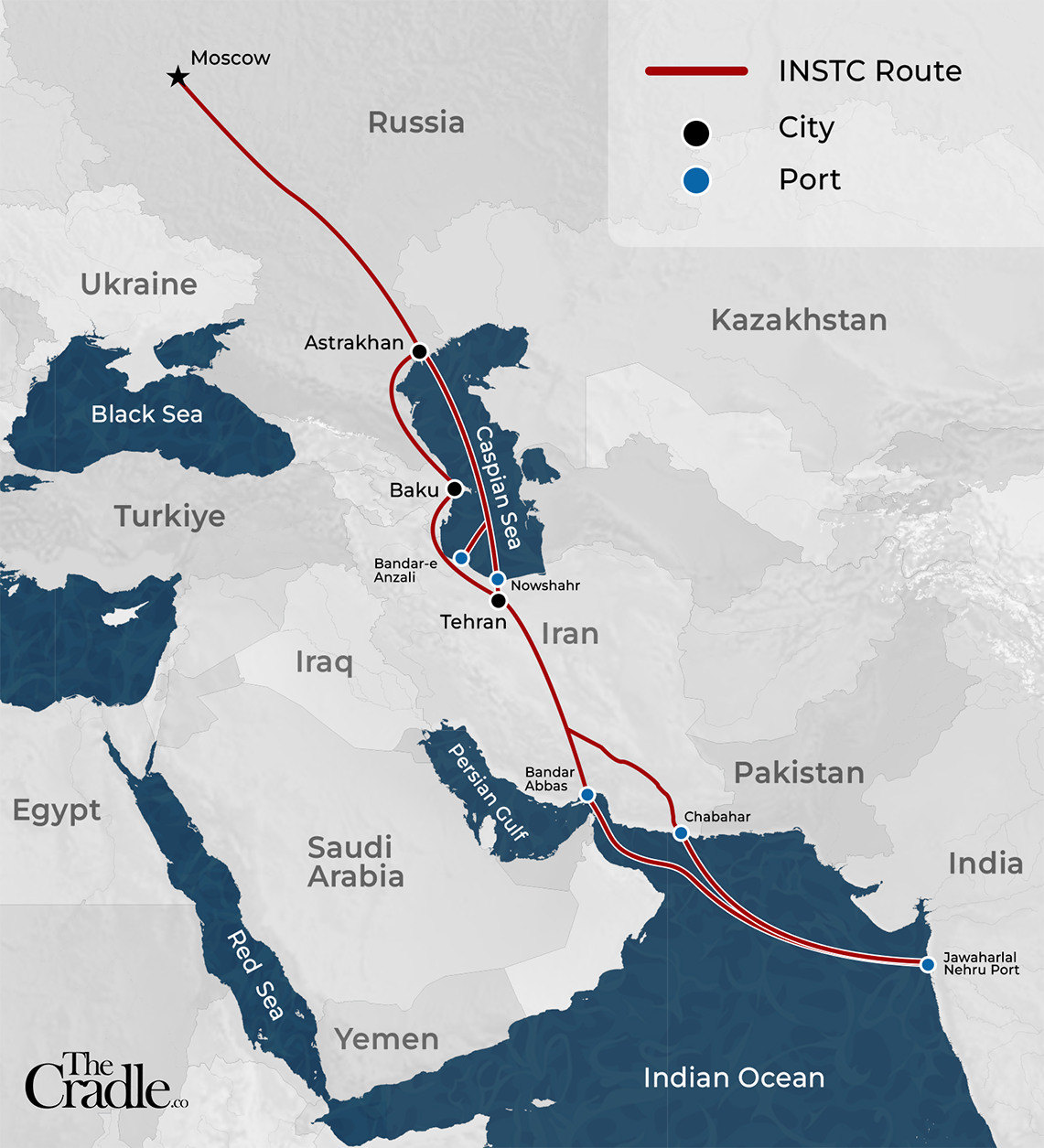
Together, these projects form an integrated East–West Corridor that bypasses Iran, strips it of geo-economic advantages, and tightens a geopolitical encirclement already taking shape along its northwestern frontier.
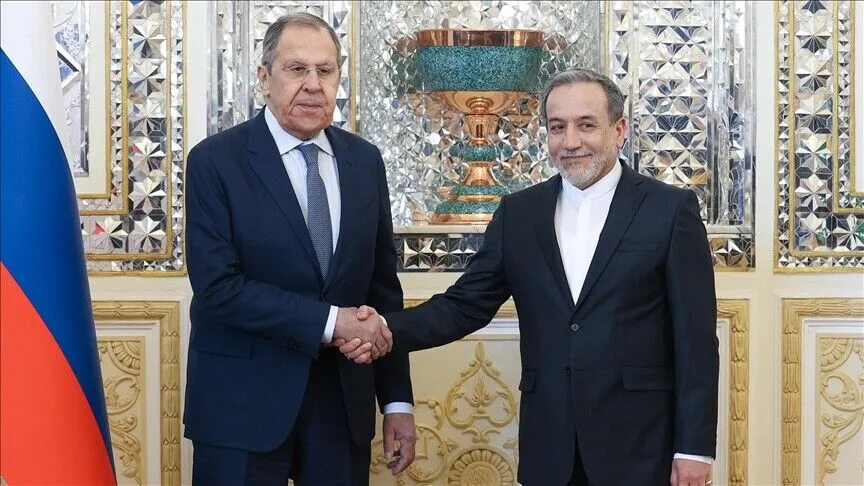
Russia has pressed Tehran to move quickly. In December, Foreign Minister Sergei Lavrov publicly expressed hope that Iran would ratify the convention before the next Caspian summit, scheduled for Tehran in August 2026.
Iran is the only littoral state yet to complete ratification. That diplomatic timetable may explain the government’s haste, but it does not answer the objections that kept the agreement out of parliament for years.
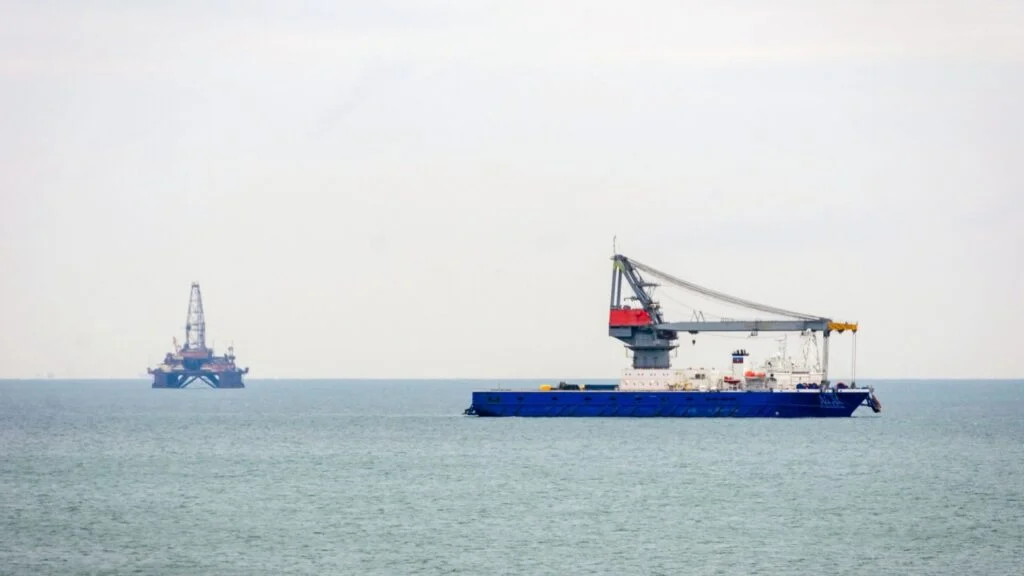
How Caspian Sea convention threatens
A disputed treaty returns
The convention was signed by Iran, Russia, Azerbaijan, Kazakhstan, and Turkmenistan at the Fifth Caspian Summit in Aktau in August 2018. Iranian specialists in international law, national security, and economics immediately challenged its technical, legal, military, and economic provisions.
Parliament withheld its final approval, and the file remained dormant for eight years. The administration of Iranian President Masoud Pezeshkian has now returned it to the legislative track despite the legal, security, and economic objections that prevented its ratification in the first place.
The convention does not itself allocate a fixed percentage of the Caspian to each country. That politically explosive question remains subject to separate agreements on baselines and the delimitation of the seabed and subsoil. Yet critics fear that accepting the new framework will weaken Iran’s position in those negotiations.
Ahmad Bakhshayesh Ardestani, a member of parliament’s National Security and Foreign Policy Committee, told Tabnak that parliament should require the government to settle Iran’s share before approving the bill.
“The government should seek to secure Iran’s 20 percent share under the Caspian legal regime, after which the matter should be submitted to parliament for approval,” he said. According to estimates cited by the lawmaker, Iran’s current share stands at around nine to 13 percent. “Of course, it should be noted that increasing Iran’s share to 20 percent might face objections from some littoral states, including the Republic of Azerbaijan, as the shares of countries are disputed based on coastline length and geographical conditions. Nevertheless, given Iran’s coastal position, a 20 percent share could be considered an acceptable share.”
A wartime decision made in the dark
“The Pezeshkian administration has ratified this convention at a time when Iran is engaged in a decisive hybrid war. In such an atmosphere, where maintaining national unity is a vital necessity, raising such a divisive issue is questionable. What is even more peculiar is that the government has announced that the clause concerning negotiations on the delimitation of the seabed and subsoil (which contain vast oil and gas reserves) has been temporarily removed from the agenda. However, such an important international treaty must be accepted or rejected in its entirety; splitting its various parts has no legal validity and indicates a kind of non‑transparent decision‑making.”
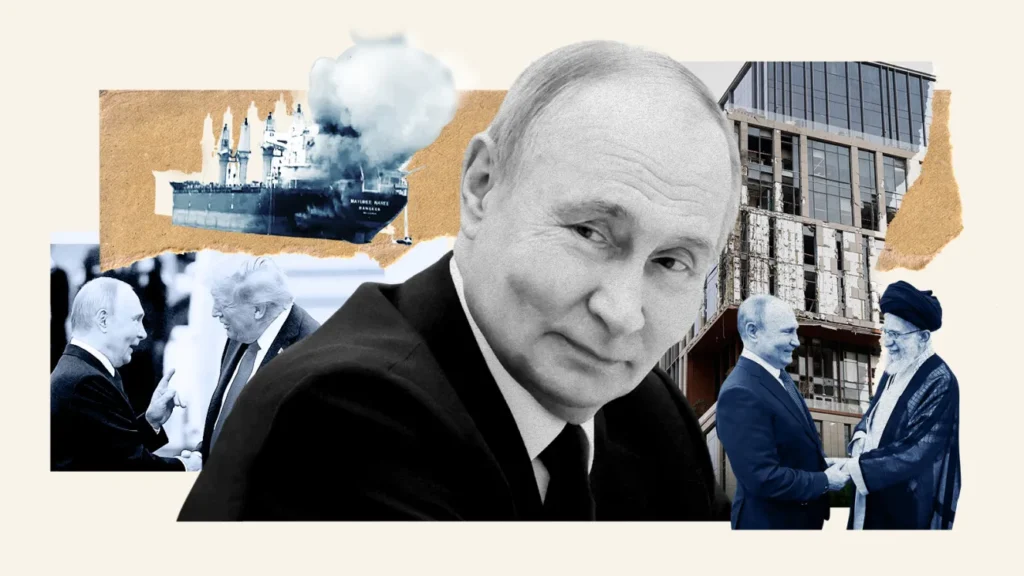
Flaws within Caspian Sea convention
Before the 2018 convention, Tehran relied on its 1921 and 1940 treaties with Moscow as the historical basis of its Caspian rights. Those agreements treated the waterway as a sea of friendship and common use between Iran and the Soviet Union, without fixing maritime boundaries. The Soviet collapse created four successor littoral states and made a new settlement necessary, but the Aktau framework went far beyond a technical update.
Bahman argues that the convention’s preamble effectively displaces the earlier treaties and abandons documents on which Iran had based its claims. He recalls Tehran’s 2001 deployment of fighter aircraft over a BP-chartered exploration vessel operating for Azerbaijan in waters claimed by Iran. The ship withdrew. Iran has since resisted a median-line division that critics say could leave it with only around seven to 13 percent of the Caspian.
Security guarantees with dangerous gaps
The convention establishes a special legal regime rather than placing the Caspian directly under the 1982 UN Convention on the Law of the Sea (UNCLOS). Each state receives up to 15 nautical miles of territorial waters, followed by a 10-nautical-mile exclusive fishing zone, while the remaining surface is designated common maritime space.
Speaking to The Cradle, Dr Hamid Hakim, a faculty member at Allameh Tabatabai University in Tehran, says: “This structure could increase the presence of military vessels of littoral states at relatively close distances to Iran’s shores; an issue that, given the population density of the northern provinces and the proximity of this area to Tehran and some sensitive centers of the country, is worth considering from a national security perspective.”
On the other hand, it should be noted that the convention prohibits the presence of armed forces of non‑littoral states in the Caspian Sea, and one of its basic principles is to prevent the deployment of foreign military forces in this water body. These protections are important, but as Hakim argues: “This prohibition does not necessarily rule out all forms of intelligence, technical, or logistical cooperation between littoral states and non‑littoral governments; thus, the potential for security challenges still exists.
For example, even Israeli vessels could appear in this area under the flag of Azerbaijan and challenge Iran’s security. Also, the convention only prohibits non‑littoral states from ‘military action’ against littoral states, not from ‘transit’; this legal gap leaves the door open for espionage and indirect military presence of these countries in the Caspian.”
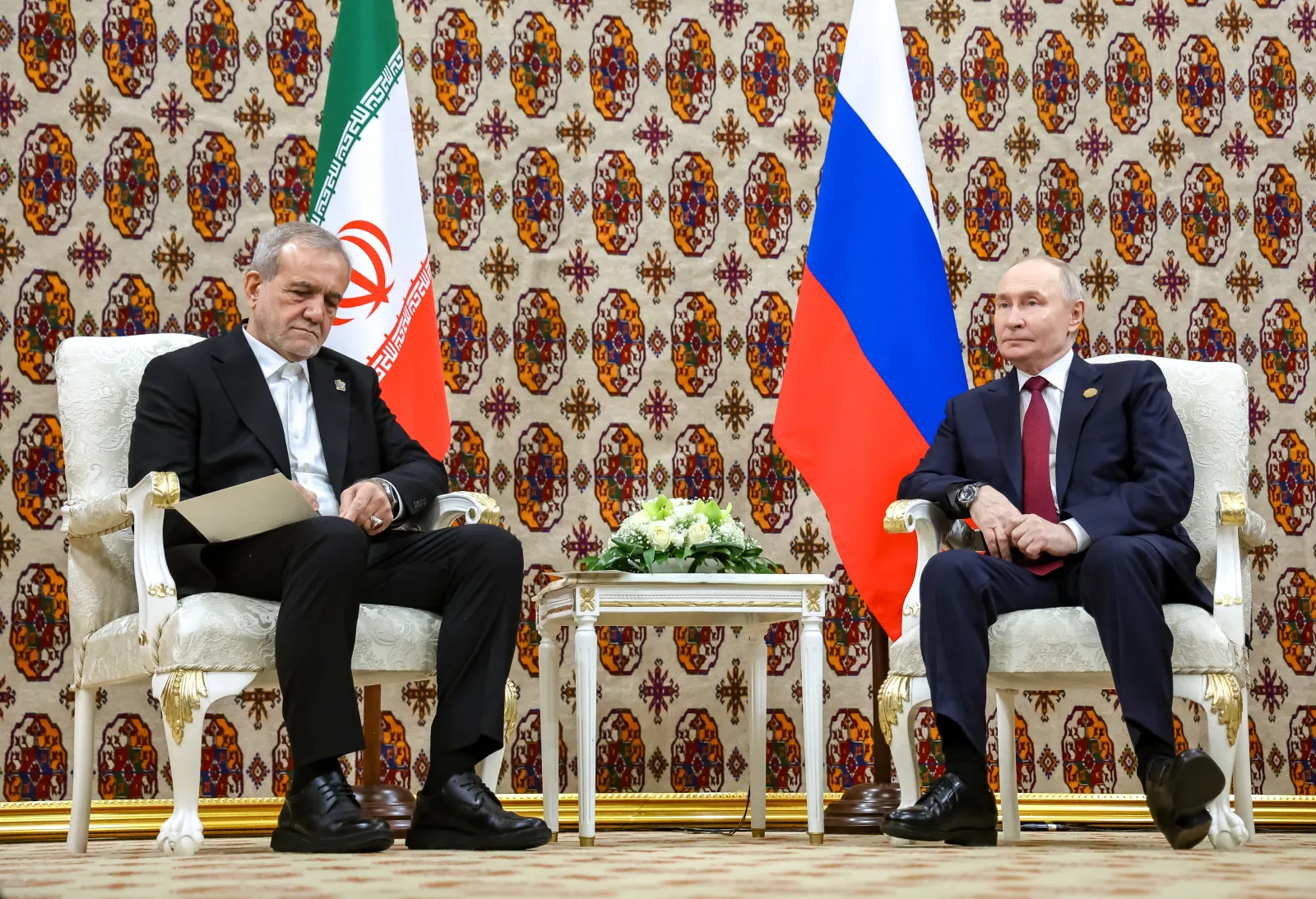
Caspian Sea convention bypasses Iran
Opening the Trans-Caspian route
The economic consequences are even more direct. Article 14 allows submarine pipelines and cables to be laid along routes agreed only by the states whose sectors they cross, subject to environmental requirements. Iran and Russia would therefore lose the ability to block a pipeline between Turkmenistan and Azerbaijan merely by withholding consent.
From an economic perspective, Article 14 of the convention can be called a full‑fledged “geo‑economic self‑harm.”
According to Dr Mohammad Mehdi Hajian, a faculty member at Allameh Tabatabai University, “Previously, no littoral state could construct pipelines on the Caspian seabed due to legal disputes, and this obstacle served as a powerful lever for Iran and Russia to benefit from energy transit routes. But with the ratification of this convention, Turkmenistan and Kazakhstan will be permitted, without Iran’s or Russia’s involvement, to build pipelines on the Caspian bed and deliver their gas directly to Azerbaijan, and from there to Europe and Israel.”
Hajian adds: “This is the well‑known Trans‑Caspian pipeline project that had been stalled for years due to environmental and geopolitical opposition from Iran and Russia. Now, with this ratification, that route is opened, and Iran not only loses huge transit revenues but also, given the circulation pattern of the Caspian that carries pollution to the southern shores – i.e., Iran – any leak from these pipelines would bring an environmental catastrophe for Iran.”
The missing link in the corridor
This is where the Caspian agreement connects to the so-called Zangezur Corridor and the Trump Route. The first is being developed across Azerbaijan and Nakhchivan; the second would continue through Armenia’s Syunik province along Iran’s border. The planned network is not limited to roads and rail. It can also carry energy pipelines, power lines, and digital infrastructure.
Dr Ahmad Kazemi of Islamic Azad University argues that gas reaching Baku through a Trans-Caspian pipeline could then move west through this network without touching Iranian territory: “Gas from Turkmenistan and Kazakhstan, which reaches Baku via the Trans‑Caspian pipeline, can be exported to Europe through the Trump Route and the Zangezur Corridor without needing Iranian territory.
In other words, the ratification of the Caspian sea Convention provides the missing link for completing the energy corridor desired by the west, and exactly fulfills what Trump is seeking: depriving Iran of its transit and corridor role, while strengthening the alternative route supported by the west and its regional allies. This scenario is designed to choke Iran geopolitically, and by approving this convention, Iran inadvertently helps advance it.”
Kazemi warns: “With the implementation of these three projects, NATO forces, Israel, pan‑Turkic separatists, and Takfiris will easily gain access to the borders of Iran, China, and Russia, threatening the security and territorial integrity of these three countries – an issue that takes on meaning against the backdrop of the broader confrontation between the US and NATO and these three great eastern powers for global hegemony.”
Why Caspian Sea convention exposes
The unanswered record
The opacity surrounding earlier Caspian decisions deepens these concerns. Bahman points to two episodes preceding the 2018 signing: “First, the granting of a 50 percent share of the Alborz oil field at the Caspian Sea to Azerbaijan – a field over which Iran had historic sovereignty claims, but half of it was ceded to the other side overnight without any explanation.”
“The second was the suspicious withdrawal of the semi‑submersible platform Amir Kabir (known as Sardar Jangal) from the Caspian Sea – a platform that could have served under international law as the baseline point for Iran’s coastal baselines and secured a larger share of the Caspian for the country, but for unknown reasons it was withdrawn one year before the signing of this convention.”
He explains that “These two actions created an atmosphere of secrecy and deal‑making, which unfortunately was completed by Iran’s failure to publish the text of the convention until its final release.”
Iran cannot sign away its leverage
The cabinet’s approval does not bring the convention into force for Iran. The bill must still pass the Islamic Consultative Assembly, and the unresolved baselines and seabed boundaries will require further negotiation. Parliament therefore retains both the authority and the obligation to examine what the government is asking the country to surrender.
Supporters present the convention as a framework for security, shipping, fisheries, environmental protection, and cooperation among the five littoral states. But no institutional benefit can be assessed apart from the corridor map forming around Iran.
The Trans-Caspian route weakens its energy leverage; the Zangezur and Trump routes bypass its territory; and outside powers gain new economic and security access to its northern frontier.
Tehran should not facilitate that architecture in exchange for an August summit deadline or diplomatic pressure from Moscow. At minimum, it must clarify the baselines, preserve its position in seabed negotiations, demand enforceable security guarantees, and subject the pipeline provisions to a full public and parliamentary review.
Iran’s adversaries have spent years constructing routes intended to make the country dispensable. For Iran itself to provide the missing legal foundation would go beyond negligence. In the middle of a war over the region’s future, signing away irreplaceable geopolitical leverage would amount to strategic suicide.