
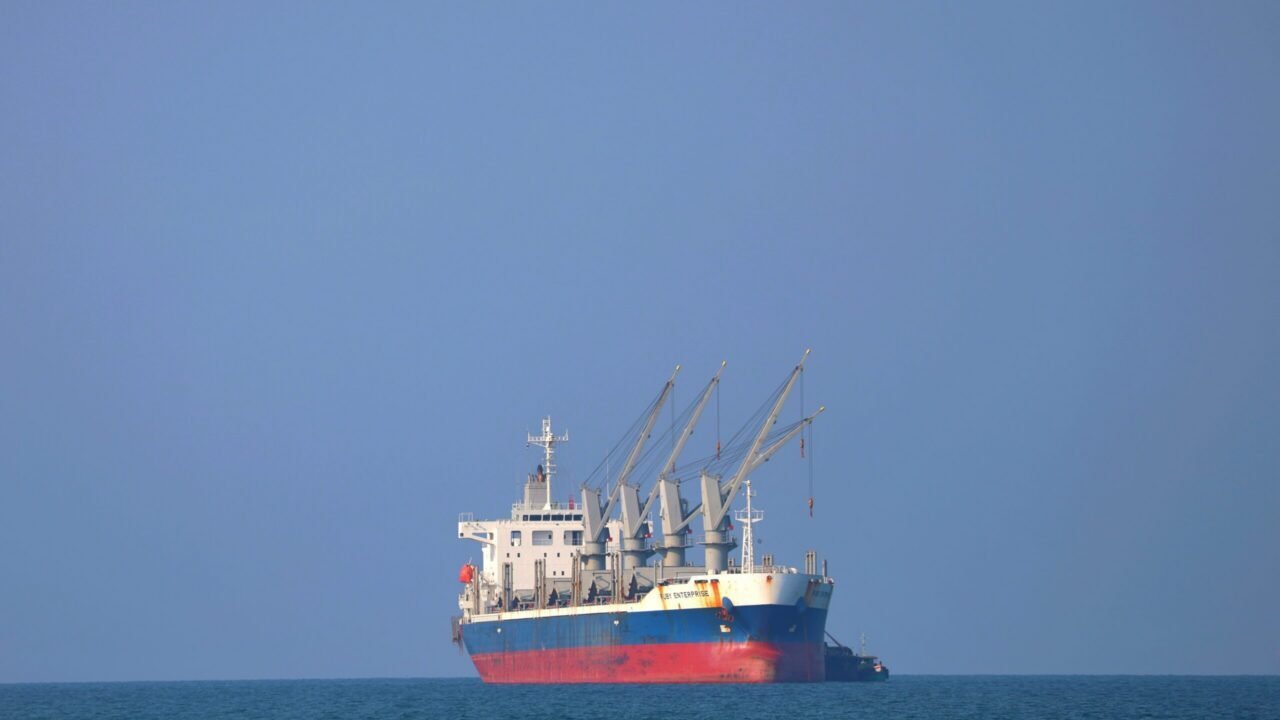
Iran declined Oman’s Strait of Hormuz co-management proposal, demanding instead a unilateral veto over transit. The Houthis, with IRGC guidance, are establishing a discriminatory fee system at Bab el-Mandeb, exempting China.
On July 28, Iran’s deputy foreign minister Kazen Gharibabadi declined a substantial Omani co-management offer for the Strait of Hormuz on television. The Malacca-style plan would have split the waterway into Iranian and Omani zones, generating voluntary payments for navigational services and granting Tehran a formal role at the oil chokepoint.
Gulf states endorsed the framework, yet Iran refused. Tehran’s counter-demand—one lane wholly within its waters and partial control of the second—exposes an Iran Hormuz strategy calibrated not for revenue extraction but for veto authority over transit. The difference between a toll and a license is categorical: a toll can be satisfied by any paying vessel, while a license confers the power to deny passage. By making the strait’s reopening conditional on a surveillance arrangement that monitors both traffic directions, Iran reveals that this Iran Hormuz strategy treats freedom of navigation as a discretionary privilege. Implications spread rapidly.
Within two days, Yemen’s recognized government disclosed that the Houthis, with IRGC advisory assistance, are constructing a parallel fee-and-permit system at Bab el-Mandeb, with Chinese exemptions. This reveals a deliberate export of a coercive licensing model that needs no blue-water navy, only the capacity to menace a waterway and an administrative office to manage the risk. Washington’s earlier assumption that Iran’s Persian Gulf Strait Authority was merely a negotiable revenue grab now looks obsolete.
Tehran’s Iran Hormuz strategy demands veto power
On July 28, Iran’s deputy foreign minister, Kazen Gharibabadi, appeared on state television and declined a hefty sum of money. Oman had offered to co-manage the Strait of Hormuz with Iran on the Malacca model, with the sea lanes divided between Iranian and Omani zones, voluntary payments from shipowners for charts, tugs, and spill response. Iran would have kept sovereign lanes, a share of the proceeds, and a formal role at the world’s most important oil chokepoint. Gulf governments had backed it. Gharibabadi refused.
The design in which ships entered through Iranian waters and left through Omani ones was Muscat’s. Tehran’s counter went further: one lane wholly within Iranian waters and part of the second lane within them as well, so that Iran could monitor traffic in both directions. Refuse, Iran said, and the strait stays shut.
Washington should read that refusal closely. Since March, the working assumption has been that Iran’s “Persian Gulf Strait Authority” is a revenue grab, a toll booth on a fifth of the world’s seaborne oil, to be haggled down or bought out. Tehran was offered the revenue and said no.
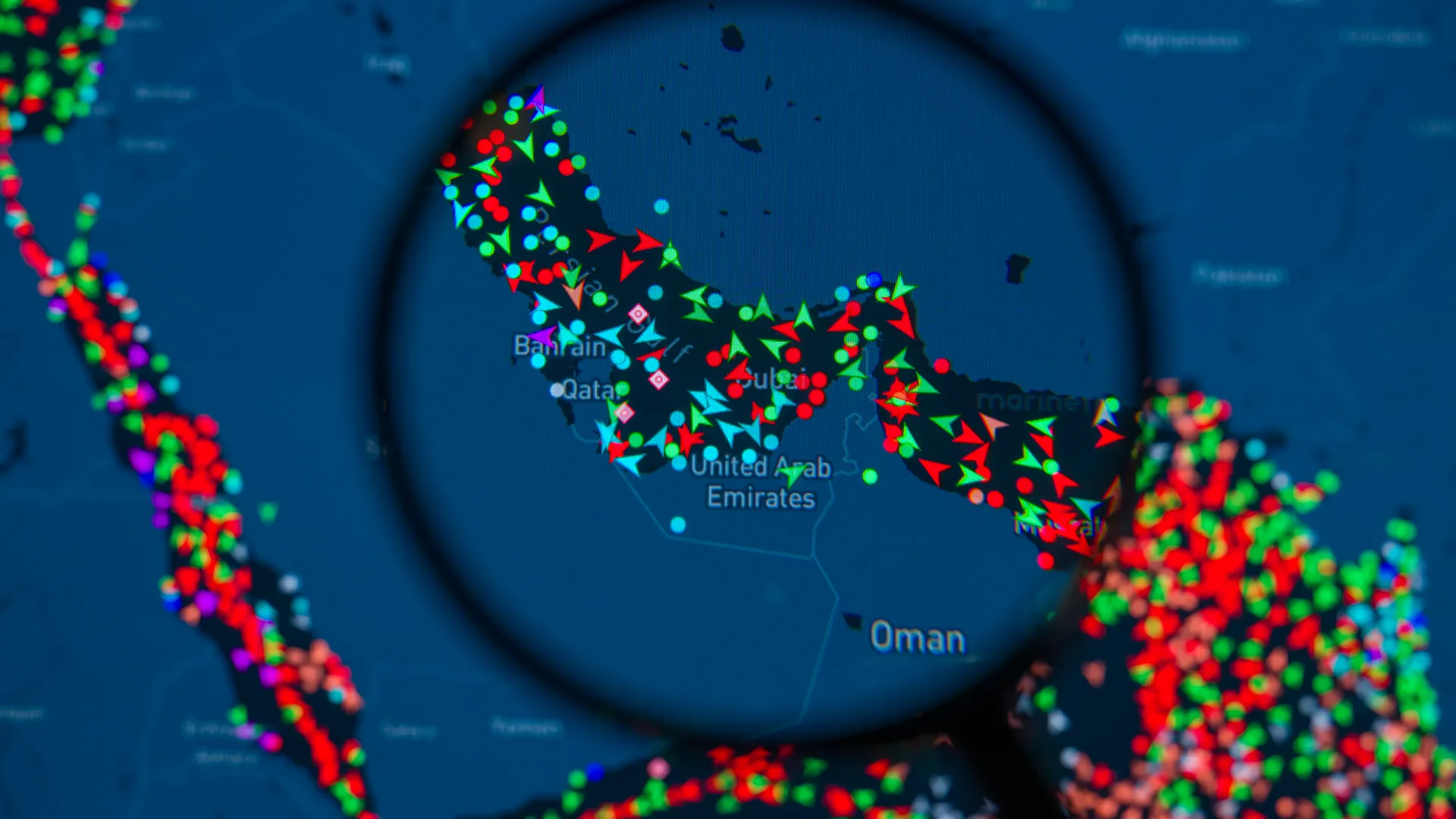
Can a price be a license?
A price and a license are distinct tools. If Oman accepts payment, Iran would be required to allow passage for all ships, including those it wishes to restrict, rendering such an agreement impossible. Progress depends on ending violence, lifting the blockade, resuming traffic, and granting the strait authority the power to issue licenses: Washington would view this as a success, but the Gulf states might see it as a surrender. Shipowners will perceive the imbalance, and no insurer would cover a route claimed as sovereign waters by both governments.
Houthi fee model discriminates for China
Two days after Gharibabadi spoke, the argument stopped being about one strait. Yemen’s internationally recognized government said the Houthis are building a transit-fee system for the Bab el-Mandeb Strait, with Islamic Revolutionary Guard Corps (IRGC) advisors designing the machinery and a dedicated body to collect from shipping companies. Chinese vessels, regional officials said, would be exempt. A fee that some ships never pay isn’t really a charge but a sorting tool. China purchased about 90 percent of Iran’s prewar crude, engaged in direct talks with the Houthis, and is already the exception to the fee that other competitors would have to pay.
Beijing controls its own strait and maritime claims. The focus has shifted from testing whether the model is effective to demonstrating the benefits from the customer’s perspective.
Moreover, the model requires neither a fleet nor overwhelming sea power, only the ability to make a waterway hazardous and an office to manage that hazard. This approach is portable and accessible to anyone with a shoreline and shore-launched missiles. Freedom of navigation was never a privilege granted by the US Navy but a collateral benefit of American alliances. Its newfound value lies in recognizing that this tool is nearly impossible to replicate at low cost.
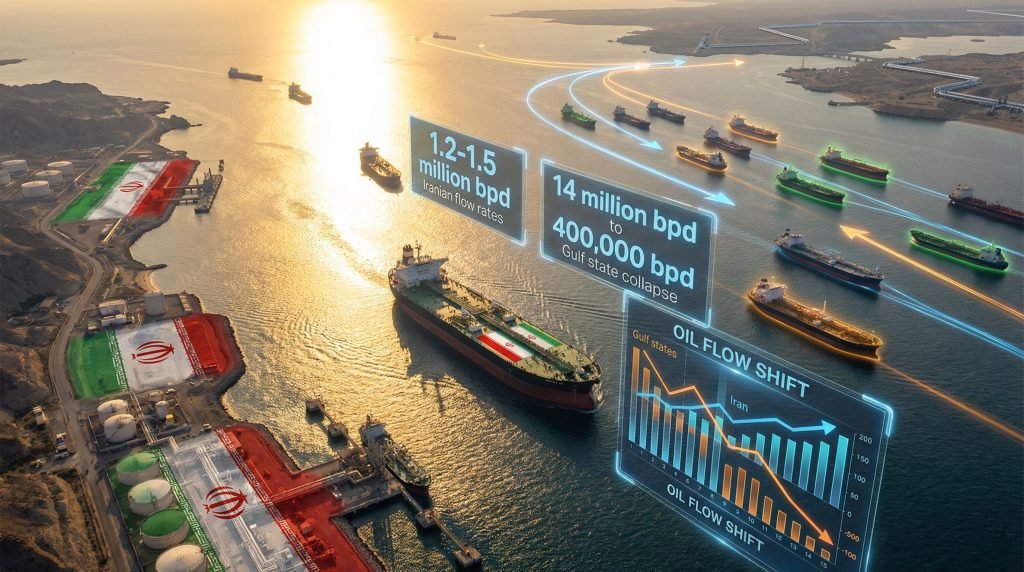
Air strikes expose pipeline vulnerability
Hours after the broadcast, Saudi and American aircraft struck Iran-aligned militias in eastern Iraq, and Riyadh claimed the operation was authorized under Article 51 of the UN Charter. Each strike is defensible on its own, but if this is repeated four times, the region is effectively at war again.
Riyadh’s predicament explains the hurry. The East-West pipeline was supposed to be the answer to a closed Gulf, and for four months it was. On July 20, the Houthis declared a blockade and began attacking Saudi tankers and refineries. Moving exports through chokepoints cannot eliminate the vulnerability.
Riyadh’s coalition avoids the licensing question
On July 30, Riyadh announced a Multinational Maritime Defense Coalition covering the Red Sea, Bab el-Mandeb, and the Gulf of Aden. Of the 51 invited governments, 43 attended, and 14 signed the agreement. Washington participated but chose not to join; Oman could not participate as a mediator at Hormuz; the Emirates also did not join. Militarily, the alliance appears limited: besides Turkey, Egypt, and Pakistan, the navies are small, and a much more capable coalition failed to prevent Houthi attacks from 2023 to 2025. Politically, however, it is not limited at all. Riyadh has decided it must protect its own exports and invited fifty governments to observe this decision.
The core issue is that the coalition supports transit but doesn’t question licensing. Its founding statement doesn’t deny that a coastal state or an armed group can grant permission for passage. Both see safe passage as a service, differing mainly in whether the payment benefits the protector or the threatener. Therefore, the core issue isn’t whether passage can be conditioned but who has the authority to impose such conditions.
Why licensing is the Iran Hormuz strategy
Washington should aim at the licensing authority rather than the toll. In any agreement that reopens the strait, American negotiators should make the lifting of the blockade conditional on a single rule binding any coastal state or armed group: no payment and no permit may be required as a condition of transit. If a rule is tailored solely to Iran, it might be ratified at Hormuz but ignored at Bab el-Mandeb.
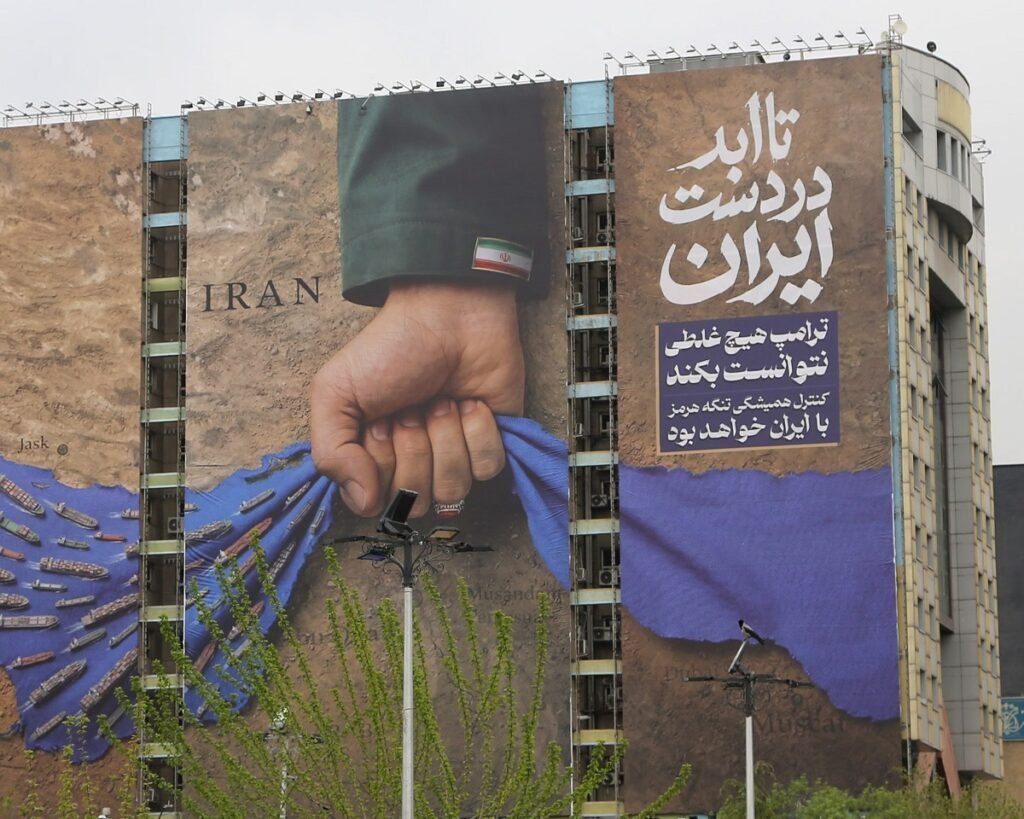
A navigation fund Tehran will resist
The founding members of the Riyadh alliance should then charter a navigation fund, seated at the International Maritime Organization and audited annually, into which shipowners pay for charts, traffic management, salvage and spill response. The fund should be disbursed to whoever performs those services, including Omani and Iranian ports and radar stations. Tehran would be paid for what it does and nothing for permission. Both provisions should be part of the Riyadh draft charter. Tehran will resist the fund more than the fee schedule, highlighting its significance.
The pause on strikes, which began on July 24, did not last the week. The greater danger to America is a deal announced before November that halts the shooting and leaves the licensing authority intact, setting the terms at two chokepoints instead of one and inviting a third. Tehran has said on television what it will not trade away. Its allies have begun to follow suit.