
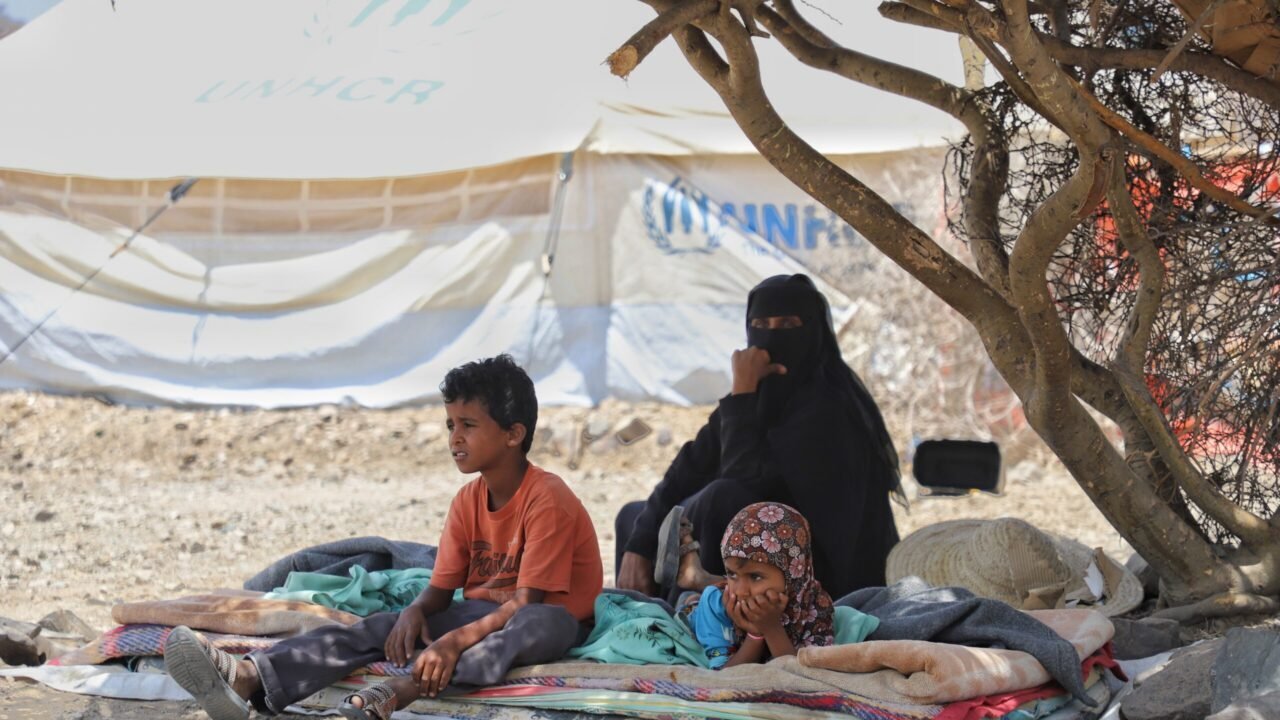
The Houthi offensive seized Bab el-Mandeb and shattered the 2022 truce, leaving 22.6 million Yemenis needing aid and nearly 5 million facing crisis-level food insecurity as all parties divert aid.
The renewed fighting in Yemen has shattered a truce that once offered civilians a fragile reprieve, and the humanitarian consequences are again being treated as collateral rather than a constraint on war. Yemen Humanitarian Crisis conditions have deteriorated sharply as Houthi forces advanced along the western coast, seizing near-total control of Bab el-Mandeb and pressing Saudi Arabia through attacks on oil infrastructure and shipping. More than 22.6 million people require aid, nearly five million face crisis-level food insecurity, and over 82 percent live in multidimensional poverty.
Both the Houthis and the Internationally Recognized Government have diverted aid, blocked access, and manipulated currency and banking systems in ways that deepen suffering. The Saudi blockade, US aid cuts, and detention of humanitarian workers compound a crisis that no military strategy can resolve. The Yemen Humanitarian Crisis therefore reflects deliberate choices by belligerents and external actors who accept mass civilian suffering as the price of leverage. Until world leaders treat international humanitarian law as binding rather than aspirational, Yemeni civilians will continue to pay the highest price for a war they did not choose.
Houthi Offensive Shatters Fragile Truce
Yemen’s civil war has reignited, with disastrous effects. With major Houthi (Ansar Allah) military advances and the subsequent pro-government counterattack amid increasing Saudi strikes and efforts to widen the war, the diplomatic track increasingly appears to be dead. Dying with it is any effort to protect Yemeni civilians from the humanitarian impacts, once again proving that their safety and needs are ignored by those fighting for pure power in the country’s long conflict.
The Houthi-led military offensive along Yemen’s coast swept through frontlines that had largely held since 2022, when a UN-facilitated truce ended the fighting. The group routed Tareq Saleh’s National Resistance Forces, loosely aligned with the Internationally Recognized Government of Yemen (IRG), from positions they held well before the truce. In succeeding on this front, the Houthis gained near-total control of the strategic Bab el-Mandeb Strait connecting the Red Sea to the Gulf of Aden, Arabian Sea, and Indian Ocean.
Yemen Humanitarian Crisis Deepens
The objective is clear: pressure Saudi Arabia into offering concessions on issues that have long defined the conflict and prevented its resolution. First and foremost is an end to Riyadh’s land, sea, and air blockade of Houthi territory. However, the Houthis will likely demand additional concessions that increase the group’s power relative to the IRG in any future talks, including frozen IRG payments to government workers in Houthi-held territory and, eventually, a request that Riyadh end support for the IRG altogether.
Saudi Strikes and Houthi Missiles Fail
Saudi oil exports remain the primary vector for pressuring the kingdom, with the Houthis proving their exceptional capabilities in missile and drone warfare targeting Saudi Arabia’s infrastructure and shipping. That dynamic is crucial to the war as the Persian Gulf and the Strait of Hormuz remain largely closed off by Iran, although Saudi oil exports are slowly increasing through this route.
Saudi Arabia has responded with air strikes and pleas to the international community to target the Houthis. Yet this strategy has failed before and is likely to fail again, with the US-backed Saudi-led coalition proving incapable of uprooting the group in military operations between 2015–22 and similar US and UK operations, named “Operation Rough Rider,” in early 2025 only minimally degrading the group before a quick ceasefire was reached. Thankfully, that ceasefire appears to be holding with the administration of US President Donald Trump, as he has reportedly rejected American strikes on Yemen. However, hundreds of US military officials are assisting the Saudis with targeting and other intelligence needs in Saudi Arabia.
Rapid frontline shifts appear to be slowing, with major fighting concentrating around the strategic cities of Marib and Taiz—Yemen’s major oil and gas refining hub and one of the country’s most crucial, if largely destroyed, industrial areas, respectively. The Houthis are disinclined to push far into the south, given strong southern resistance to a northern invasion that would only intensify with such a move. Thus, a stalemate that fails to end the escalatory spiral defining the war today appears to be the developing norm for the foreseeable future.
Aid Diversion Becomes a War Tactic
Those developments highlight an important reality that the escalation is obfuscating: The Yemeni Civil War has no military solution. More importantly, however, this context spotlights Yemen’s ongoing and worsening humanitarian dynamics and how those advocating for and actualizing the fighting accept a high degree of humanitarian pain for Yemeni civilians.
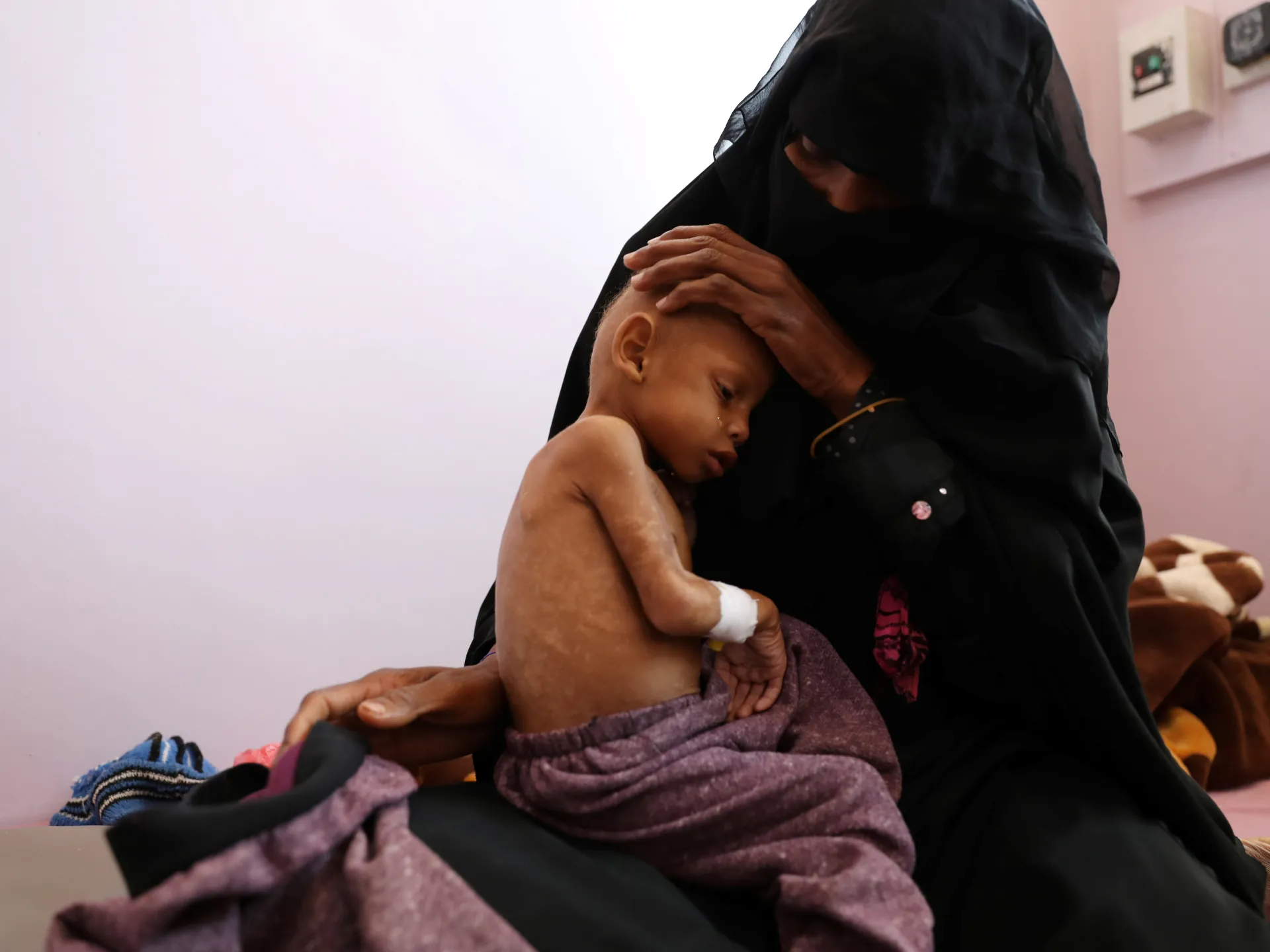
Yemen remains one of the worst humanitarian crises in the world, with 22.6 million people—well over half the estimated population of Yemen—requiring humanitarian aid. Between March and May 2026, nearly 5 million people faced crisis or worse levels of acute food insecurity, according to the United Nations Office for the Coordination of Humanitarian Affairs and the UN’s Integrated Food Security Phase Classification, its primary tool for measuring food security across the globe. As leading humanitarian organizations warn, that statistic is likely to worsen by millions in the coming months and will scale if fighting persists or worsens.
The country has struggled to recover in other key humanitarian metrics since the 2022 truce. Today, over 40 percent of health facilities remain partially or fully out of service, leaving Yemenis struggling to access basic healthcare. Over 82 percent of the population, estimated at nearly 32 million people, live in multidimensional poverty. Military operations on all sides continue to injure and kill civilians. Over 125,000 people have been internally displaced as of this writing, with more likely coming from the Taiz and Marib frontlines. Coupled with massive US aid cuts at the start of the Trump administration, what are Yemenis to do?
Yemen Humanitarian Crisis Demands Diplomacy
Policymakers should create policy with the lowest common denominator in mind, considering the humanitarian impact of their decisions on civilians. They take responsibility for leading and making decisions that matter to society. In Yemen, that means considering the civilians far too impoverished to seriously sustain a dignified life as fighting rages over issues they have no control over.
Unfortunately, in a region absorbed by geopolitics—particularly in the post-October 7, 2023, environment—the reality is that power and a willingness to resort to violence in pursuit of it reign supreme at the expense of innocent life. For Yemen, that truth is hardly new. Like that of Sudan and Syria’s civil wars, the belligerents to the conflict either intentionally cause and use civilian suffering to bolster their advantage over their rivals or extract the minimal resources available for civilians for military use.
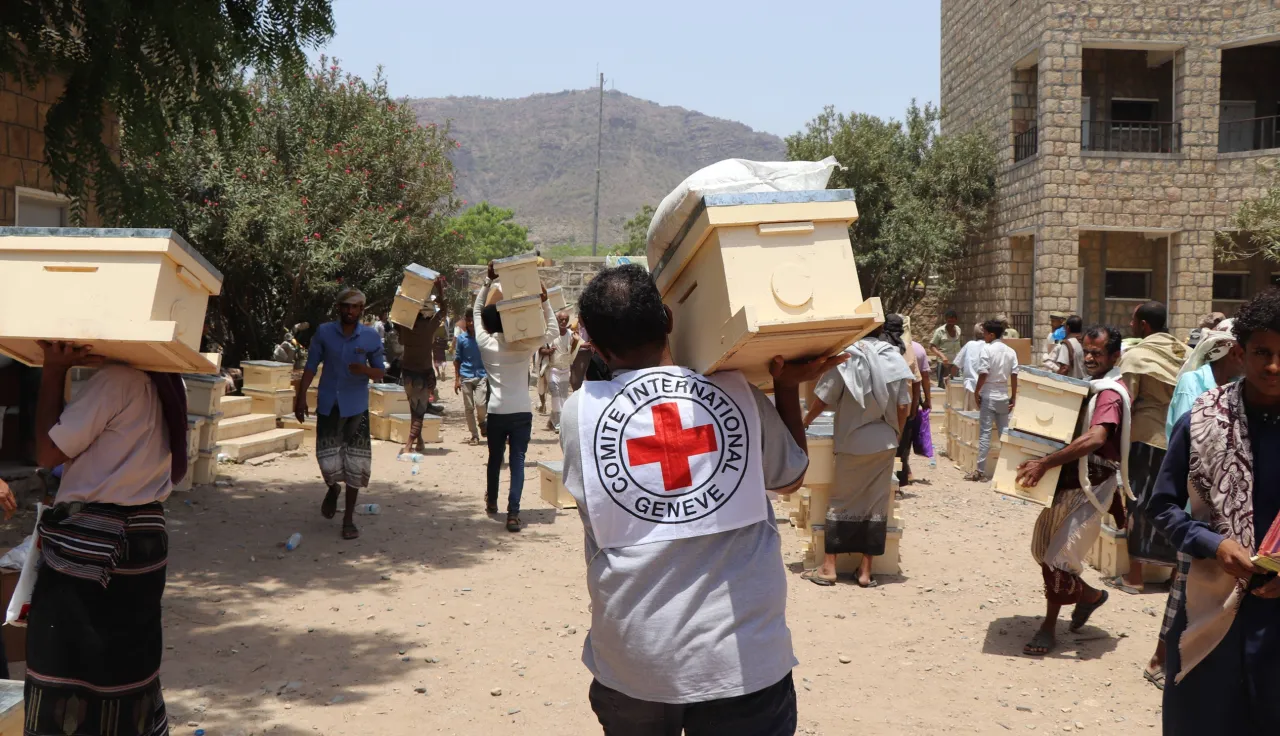
Intentional humanitarian aid diversion and access constraints define this dynamic in Yemen. The Saudi blockade of Houthi territory has long limited goods from reaching civilians, just as most Yemeni warring parties have intentionally diverted aid and fuel to both exacerbate the problem and sustain their war effort, inflating the cost of goods beyond what most Yemenis can afford.
Military Solution Remains Impossible
Factions within the IRG regularly steal from government coffers and have diverted goods and aid themselves in the south. The IRG’s refusal to pay government employee salaries in Houthi-held territory, IRG and Houthi willingness to implement conflicting currency and banking systems, Houthi detention of aid workers and UN staff, and US sanctions that have chilled some aid flows all contribute to Yemeni suffering—not a clear path to ending the war.
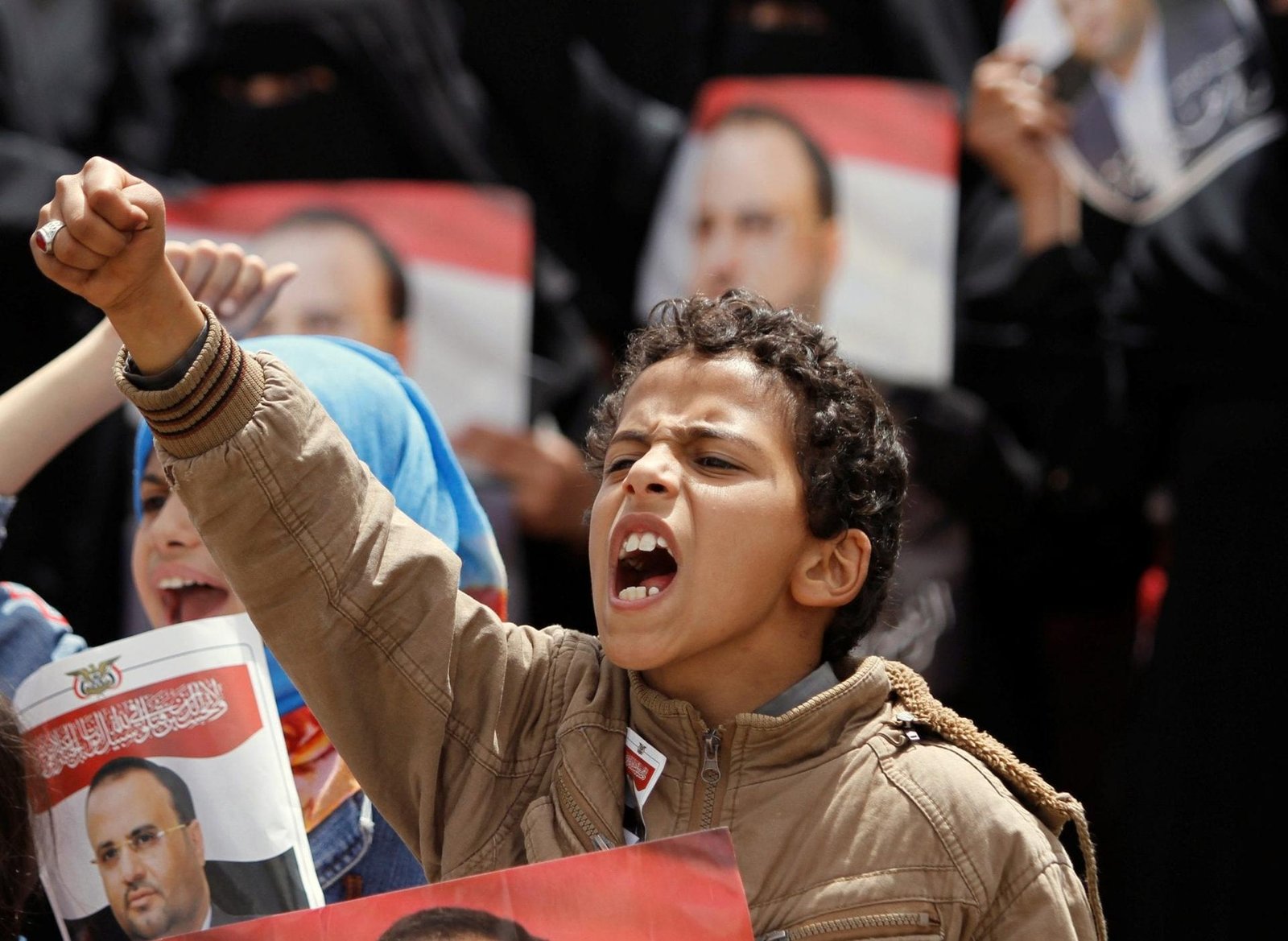
Each of these actors claims that their decisions are made in and with the support of Yemenis writ large. That argument is deceptive. Ultimately, every choice to use power in ways that clearly harm humanitarian metrics is just that: a choice to stand not for those most in need, but for those with the most wherewithal to create better conditions, instead of feeding their war machine and selfish ambition.
Accountability Requires Transitional Justice
Until world leaders accept that pure power politics and militarism cannot be a substitute for international humanitarian law, Yemeni civilians will continue to suffer under the tyranny of conflict. No argument—in the West or in the region—of “security” or “resistance” alike can atone for that fact, nor the crimes stemming from the actions behind such strategies. The answer to ending this catastrophe in Yemen is one of UN-led diplomacy and conflict resolution, even with its warts, and transitional justice and accountability mechanisms that sustainably end the war. Unfortunately, that approach appears far off today.