
Only 4 percent of Middle East security initiatives since 1945 became durable structures. Air defense alone requires $75 billion to $250 billion over five years, yet 95 percent of sustainment remains offshore and the Mecca Pact already failed.
President Trump’s meetings with Middle East leaders rest on an assumption that regional states can assume responsibility for their own collective security, yet the historical record suggests otherwise. A Middle East Shield has never consolidated in the region’s modern history, with only 4 percent of 43 regional security initiatives since 1945 becoming durable structures within five years. The Middle East Shield that Washington envisions would require sustained defense investment, an indigenous industrial base, and geopolitical convergence among states with competing interests and unresolved disputes.
Modeling estimates place air and missile defense requirements alone at $75 billion to $250 billion over five years, demanding roughly 40 percent of major procurement spending for half a decade. Yet no country in the region, including Israel, can scale a defense industrial base adequate to the task, and 95 percent of sustainment remains offshore. The Mecca Pact already failed its first operational test. Confidence is high that the region could operate a US-backed framework but low that it could own or maintain one independently.
Understanding these structural limits is essential before Washington commits to a burden-sharing model that history repeatedly rejects. Without explicit budget targets, a regional defense industrial strategy, and US engagement on bilateral disputes, the Middle East Shield will remain a concept rather than a capability.
Middle East Shield Faces Historical Odds
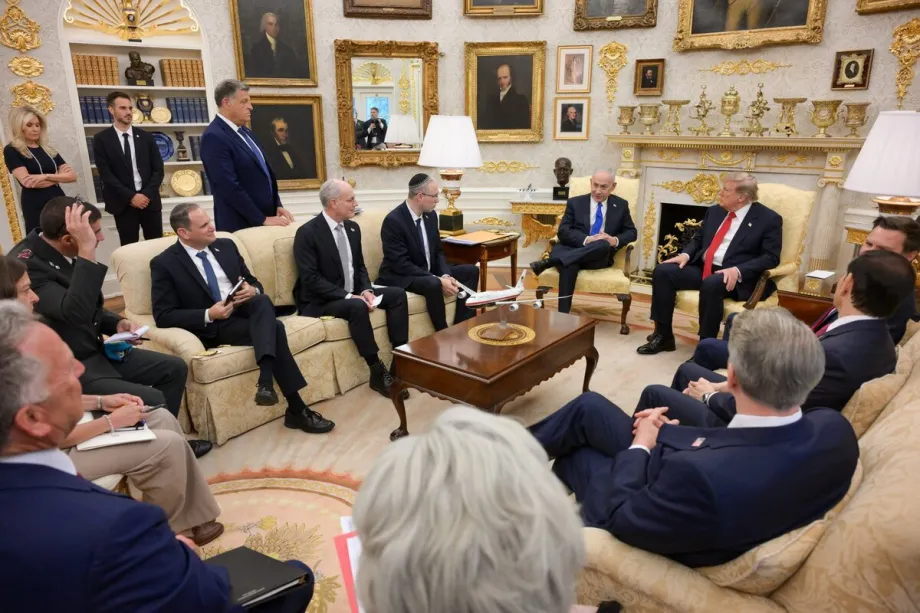
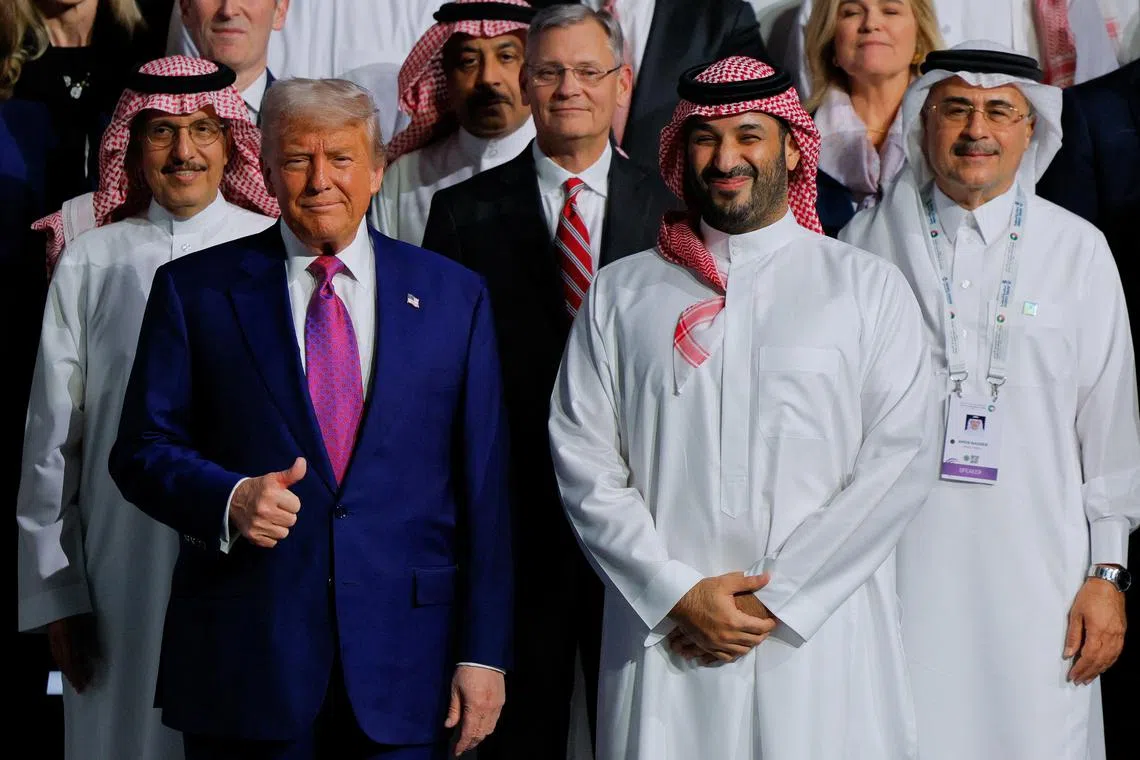
US President Donald Trump plans to hold talks with Middle East leaders today. If he wants their help shaping the Middle East, he has a lot of work to do.
Computer-assisted historical trend analysis, combined with probabilistic futures assessments based on mathematical modeling, supports the conclusion that, despite delivering critical hits on Iranian military capabilities, the Trump administration lacks the momentum to achieve its goals unless it prompts specific policy shifts by key regional actors.
Historically, Washington safeguards its global interests through two compatible security practices. One is “peace through strength,” with a significant effort to upgrade US conventional and strategic deterrence. The second is developing a network of stakeholders that take responsibility for securing peace and stability in their region. In practice, Trump is a strong proponent of “strategic autonomy,” in which US allies and partners build and sustain regional security.
Collective Security Failures Span Decades
This approach to collective security is foundational to US strategy, as reflected in Washington’s efforts to drive increases in defense investments by NATO member states and the development of the Shield of the Americas. The Trump way, however, faces a monumental challenge in the Middle East, which has a long history of failed collective security efforts.
In modern times, the Middle East has completely lacked an integrated, coherent, and effective collective security architecture, particularly one guided by Western powers. This is a historical truism. A review by SpearMind AI, a strategy consultancy, found that of the 43 regional security initiatives announced since 1945, only 9 percent became consolidated structures within five years. The success rate for the Middle East was worse at 4 percent.
President Dwight Eisenhower famously tried to assemble a Middle East NATO, perhaps his greatest foreign policy failure (as described in Michael Doran’s book Ike’s Gamble), revealing many pitfalls of aligning interests and capabilities in the region. Most recently, the Mecca Pact (Pakistan, Saudi Arabia, and Turkey) has already failed its first operational challenge addressing conflict in the Red Sea region. In the few cases where collective action succeeded, it was because of great-power patron participation or a narrow scope of purpose, or both, and these structures proved unsustainable in the long term.
At present, the situation is not much better. The region is quietly and informally integrating—while formally stalling—lacking the resources, will, and trust and confidence to fully embrace a collective security framework.
Modeling Tests Regional Cooperation Odds
To assess what could shift the odds in the favor of a future collective security architecture, I partnered with SpearMind AI, whose methodology simulated the region’s future 20,000 times against evidence graded and archived from official and published sources. The goal was to determine probabilistically which actions might deliver more suitable outcomes in support of US and regional interests.
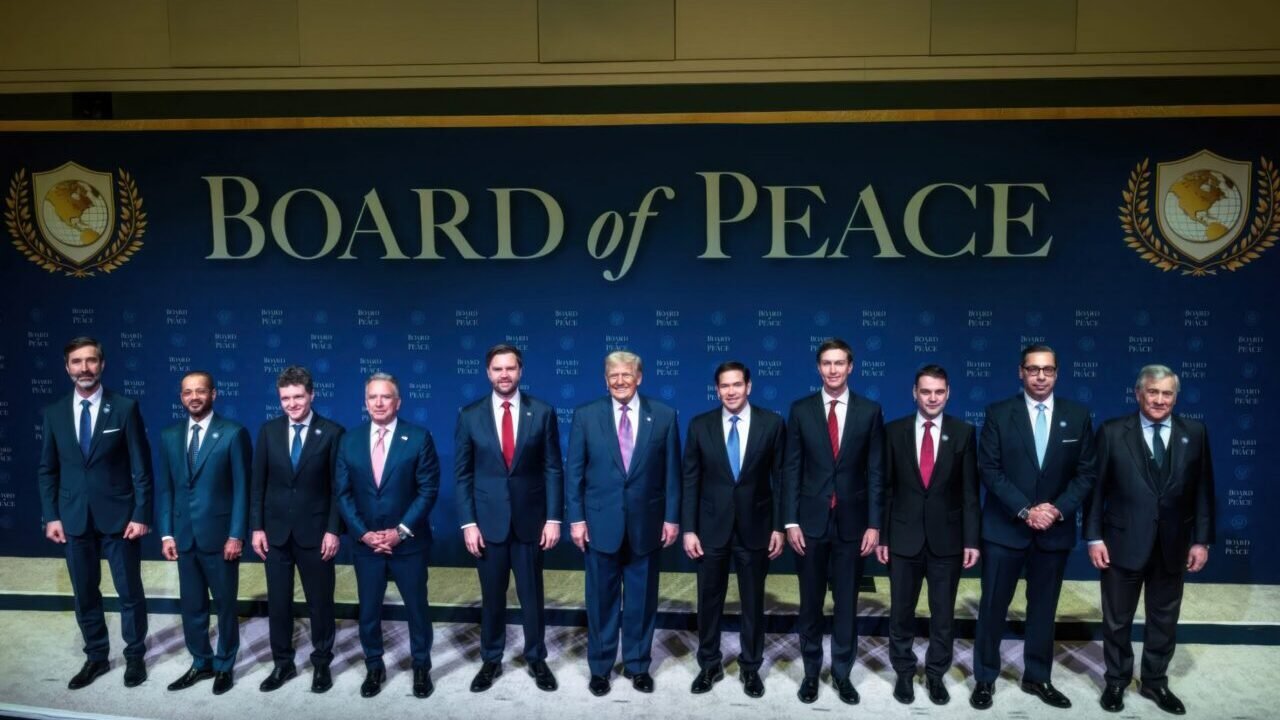
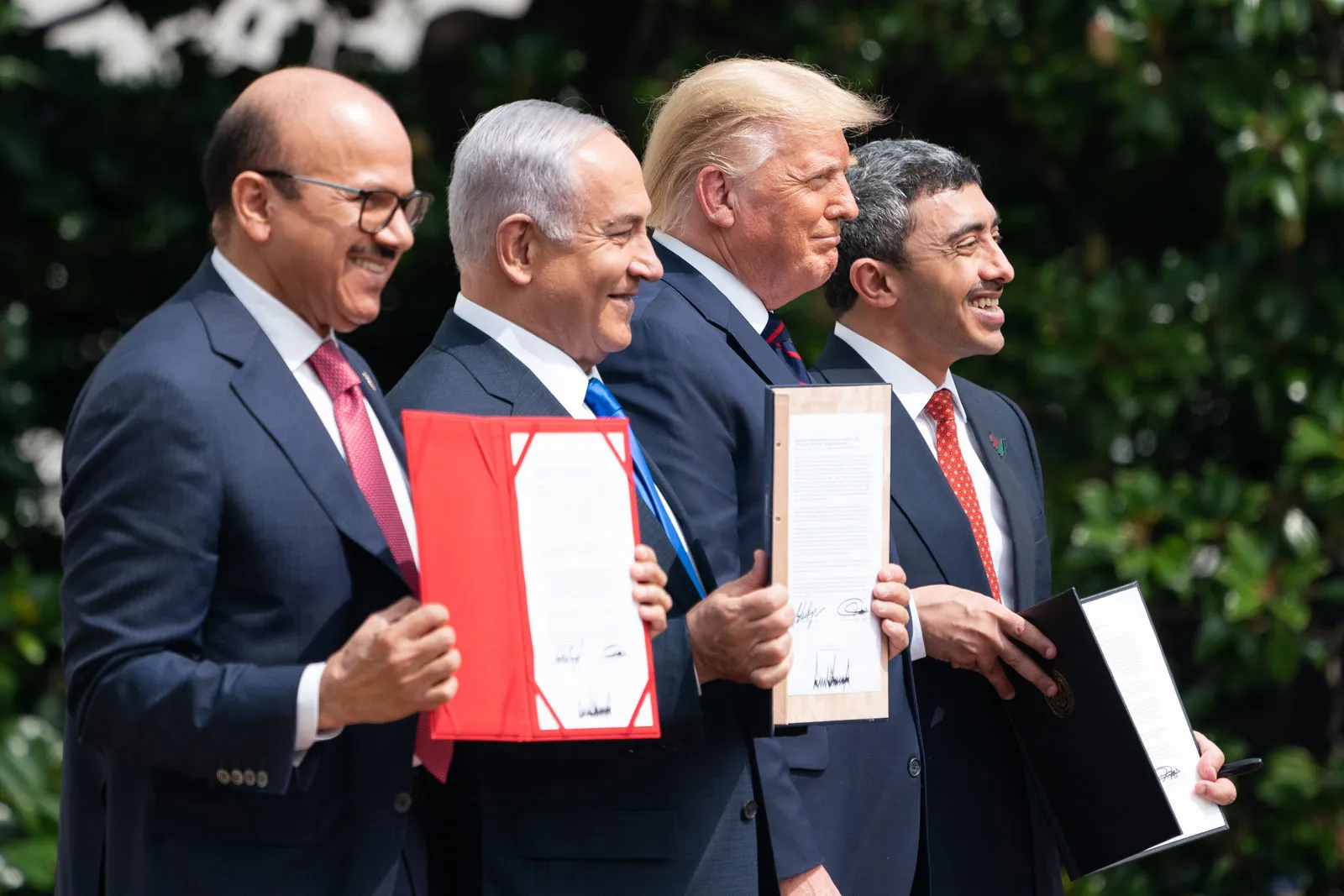
History is not a straitjacket. In addition to providing a broad visionary geopolitical architecture which bakes in long-term US participation in the region through projects like the Abraham Accords and the Board of Peace, there are numerous examples of tacit and active cooperative defense efforts among regional states, some of them near-unprecedented in modern times, demonstrating in wartime the functional equivalent of a collective security system.
That said, however, there are few indicators that the necessity of near-term cooperation will evolve into an effective regional framework that would likely need to include Egypt, Saudi Arabia, Iraq, Syria, Lebanon, Israel, the UAE, Qatar, Kuwait, Bahrain, Oman, and Jordan to be fully geographically and geopolitically coherent and integrated.
Here are the main sticking points.
Defense Investment Falls Short
First, there is the issue of investment. Will individual nations make the long-term defense investments needed for sustainable defense capacity without an overwhelming backstop from US military power? Modeling estimates that nations collectively are not spending what will be required for an adequate long-term defense shield—and these commitments are made only under the pressure of an ongoing war in the region.
Confidence is high, for example, that the Gulf states will sustain the current tempo of spending, but low to moderate that they will ramp up to meet future requirements. For example, air and missile defense requirements alone are projected at between $75 billion and $250 billion over five years, with a central estimate around $130 billion, according to SpearMind AI. Meeting that would demand roughly 40 percent of all major procurement spending for half a decade.
With average regional defense expenditure at about 5 percent of GDP, sustained military spending would require trade-offs and strong national political commitment. The UAE and Qatar can likely meet required levels of increased spending. Bahrain, Iraq, and Jordan would likely require substantial foreign assistance to hit spending targets. Saudi Arabia is a question mark.
The United States could potentially shift confidence to mid or high by pushing for a regional defense burden-sharing agreement with explicit budget and capability targets, similar to the agreements reached by NATO nations. However, even if commitments were made today, significant new domestic capabilities would not come online before 2030. Therefore, to promote momentum, the United States would have to offer backstop commitments for the next five years.
Industrial Base Cannot Sustain Defense
Second, there is the issue of sustainment. In the modern world, a defense industrial base is part of conventional deterrence, not only to deliver the capabilities to deny an enemy a quick win, but also to demonstrate the capacity to fight a protracted conflict. Every nation, even Israel, lacks the necessary defense industrial base to deliver weapons and munitions at scale for conventional deterrence. Modeling estimates in-theater production will account for under one percent of long-term needs. While there is a moderate chance countries in the region will pursue joint procurement and technical integration (such as shared early warning, a common air picture, and interoperable command under a US operational umbrella), that is not enough.
All these countries depend heavily on the United States for critical arms and munitions. That structure is fragile for long-term collective defense. Therefore, while there is high confidence the region could operate a US-backed framework, there is low confidence it could own or maintain a robust structure on its own. Diversifying defense imports from other external partners would not reduce risks. It would just fragment them.
No country in the region can scale a defense industrial base adequate to the task. While the United States has several bilateral arms agreements, Washington would have to adopt regional policy with an explicit goal of building a regional defense industrial base capable of producing at least 50 percent of critical requirements to raise confidence.
A regional defense industrial strategy must develop capabilities that reduce the cost of air and missile defense. According to SpearMind AI analysis, air defense spending in a sustained exchange would total $8.7 billion to $11.7 billion per month to protect airspace over people and infrastructure. Further, at present, domestic production covers roughly 0.3 percent of consumption. In addition, 95 percent of sustainment remains offshore. What is needed is a cheap homegrown interceptor option.
Geopolitical Convergence Remains Elusive
Third, there is the issue of geopolitical convergence. Collective security requires a shared motivating threat, but joint action also requires trust and confidence between member states. While a formal treaty alliance, particularly one including the United States, would significantly increase confidence in a future security architecture, foundational disputes between regional partners not only make a treaty framework unlikely, but also counterproductive if pursued.
US policy could build confidence by pressing solutions to key bilateral issues. For example, Israel-Jordan relations are crucially important. Presently, the trust between the two capitals is at an all-time low. Jordan is a key node for developing interregional supply chains, transportation, and industrial production. These infrastructure investments won’t happen without a robust transit and industrial hub on the Jordan-Israel border, an initiative that might only happen with direct US engagement.
Middle East Shield Needs US Backstop
Several developments could signal shifts in US policy and regional responses that could improve confidence in collective security: the United States repairs, rebuilds, and expands its basing footprint in the region; regional partners make declared commitments to burden-sharing agreements with specific targets; regional partners commit to the development of an indigenous low-cost interceptor program; and joint efforts for reconstruction in Gaza, Lebanon, and Syria move forward.
Whether some of these projects start to take shape when Trump meets with leaders next week remains to be seen, but if actions like this don’t start happening, the oft-promised “new Middle East” isn’t happening either.