
Iran conflict blocks Hormuz sulfur shipments; China bans sulfuric acid exports, raising prices. Chinese state firms purchase US sulfur, worsening supply strains that threaten the 2027 planting season and demand immediate policy action.
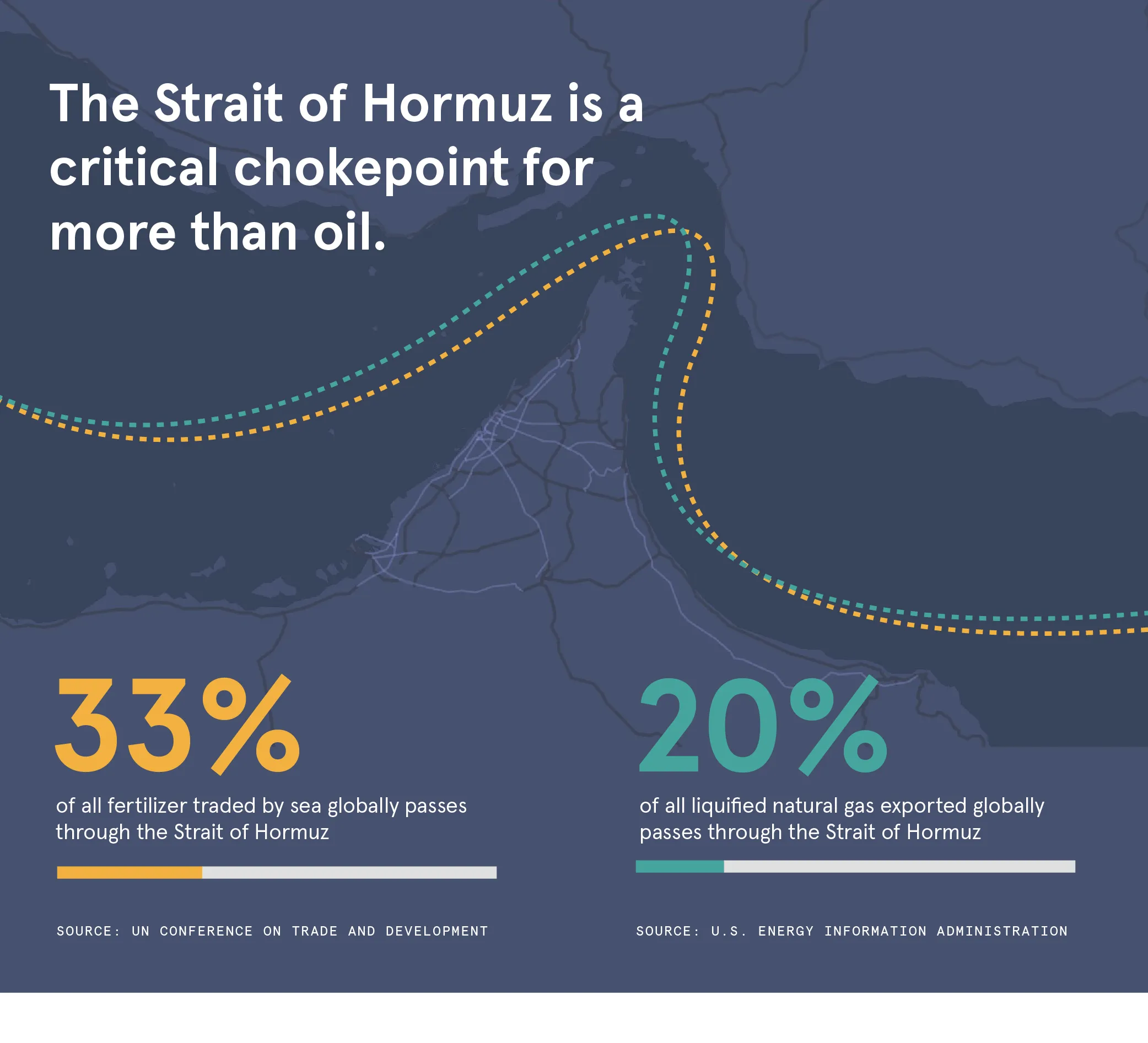
The global fertilizer supply chain faces a cascading disruption. The naval standoff in the Strait of Hormuz has removed half the world’s traded sulfur from the market, a raw material essential to phosphate fertilizers. Simultaneously, Beijing has banned sulfuric acid exports, the primary substitute, driving a near doubling of prices.
This combined shock exposes a critical vulnerability: US food security now depends on industrial inputs that hostile nations can weaponize. China’s state-directed economy does not merely seek advantage; it actively distorts global agricultural markets, buying up American-produced sulfur at inflated prices while blocking its own exports. The result is a deliberate, targeted assault on the affordability of American farming. Policymakers can no longer treat US food security as a peripheral concern—it is a direct national security imperative. Historical patterns reveal a playbook of fertilizer dumping and rare-earth manipulation, but the current escalation uses refined coercion.
The United States produces enough sulfur to meet most domestic needs, yet allows subsidized Chinese firms to purchase critical raw materials, thereby financing the very policies that inflate costs for American farmers. Without immediate intervention, the 2027 planting season will arrive with depleted inputs and elevated prices, threatening crop yields and rural economies. The strategic choice is stark: allow Beijing to exploit open markets, or erect smart defenses that protect America’s food supply by decoupling critical supply chains from state-backed market predators.
Why US Food Security Faces Sulfur Crisis
As the conflict with Iran enters its sixth month, policymakers can no longer afford to ignore the growing threat to America’s food security. Access to sulfur, a critical component of fertilizers, is in crisis. Sulfur is a byproduct of oil and gas production, and the virtual standstill in marine traffic through the Strait of Hormuz has taken 50 percent of the world’s traded sulfur off the market.
Concurrently, China has decided to restrict exports of sulfuric acid (a substitute for sulfur in manufacturing fertilizers), resulting in nearly a twofold increase in the market price. American farmers are already concerned about high fertilizer prices and short supplies impacting the 2027 growing season, and many are putting off ordering supplies, in hopes that prices will come down soon.
The problem is that unless America’s leaders act to curb China’s market distortions, prices are more likely to rise than fall before the next planting season.
China’s State Buyers Exploit Global Markets
Banning the export of sulfuric acid is not all China is doing to raise fertilizer prices worldwide. While China’s protectionist policies have secured its own fertilizer supply, its state-owned companies, such as Yuntianhua Group, are also buying up international supplies, including significant amounts of US-produced sulfur. The United States produces about 65 percent of the sulfur and sulfuric acid it needs domestically and sources the remainder from Canada and Mexico. Still, the United States also exports about 20 percent of domestic production. A significant amount of this is being purchased by Chinese state-owned companies, either for use in China or in Indonesia, where Chinese companies operate.
These companies, which the Chinese Communist government subsidizes, can easily bid up global prices by buying American-produced sulfur and sulfuric acid at the elevated prices their government contributed to by removing Chinese supplies from the global market. American companies should not be sending raw materials like sulfur to countries like China that are deliberately raising the price of this raw material with protectionist policies and are also unwilling to export finished fertilizer products.
A History of Fertilizer Market Manipulation
This is not the first time China has tried to manipulate US fertilizer prices. In 2017, the US International Trade Commission determined that Chinese state-owned companies “materially injured” the US fertilizer industry by dumping large amounts of ammonium sulfate fertilizer on the US market at prices under “fair value,” according to the Commerce Department. China has similarly manipulated the lithium trade and other rare-earth markets through its state-subsidized companies and export controls.
Prohibit Beijing’s Purchase of American Sulfur
American policymakers need to act now, because the United States cannot permit China to threaten America’s food security. Washington should prohibit Chinese state-owned companies from purchasing American sulfur for as long as Beijing keeps its fertilizers and chemical inputs off the global market.
Bolster Domestic Refinery Output and Permitting
Concurrently, the United States needs greater domestic infrastructure capacity to help ensure domestically produced sulfur and fertilizer can reach American farmers at market prices. Some steps that could be taken to address prices are the following:
1-Support domestic refinery output. Modern agriculture requires hydrocarbon-based fertilizers for sufficient yields. More refining means more raw materials, such as sulfur, can be used to produce fertilizers. Increasing domestic supply will reduce prices. Currently, US refineries are operating at full capacity to ensure sufficient fuel supplies for American and international consumers. The United States needs to do everything it can to ensure America’s refineries can continue operating at optimal levels during this crisis.
2-Advance congressionally-led permitting reform and streamline permitting for energy, mining, and manufacturing projects to support domestic production. This will help increase sulfur and sulfuric acid production in the United States, ensuring it can meet domestic needs while also supporting international demand.
Build Strategic Reserves for Supply Shocks
3-Develop strategic reserves for sulfur, ammonia, phosphate, and other supply chains that farmers depend on before the next disruption.
4-Increase domestic refining capacity to convert US energy abundance into stable raw materials supply chains. Because America’s refineries are currently operating at full capacity to turn natural gas and petroleum into the products our economy relies on, there is no redundancy in the system. The United States needs to increase our refining capacity so that refineries can cycle out for necessary maintenance without creating shortages, and to ensure resilience in the event of a hurricane or other damage.
Securing US Food Security Against Coercion
Not only has Communist China made food more expensive in 2026 with its protectionist policies, but it is also compounding this problem by using its state-subsidized economy to drive prices even higher, worsening food insecurity in the United States and around the world. This is just the latest salvo in China’s economic war against American farmers, but it should be its last. Policymakers need to take the necessary steps to secure America’s food supply against Chinese economic manipulation, both by denying China the ability to purchase our raw materials and by strengthening our domestic supply chains.