
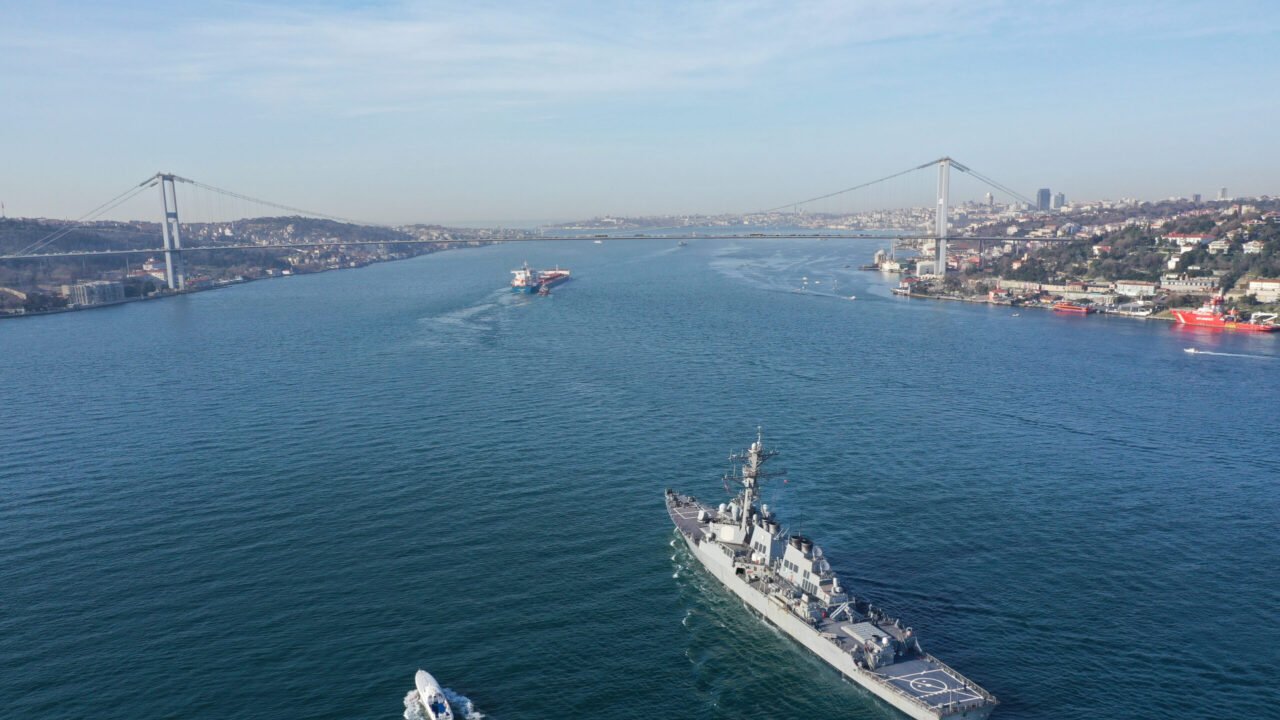
An analysis of how the Trump Maritime Doctrine reorients U.S. naval strategy from protecting global sea lanes to enforcing continental hegemony, evidenced by the Iran War’s Hormuz debacle.
The Trump administration’s prosecution of the Iran War has crystallized a profound strategic reorientation that both scholars and adversaries now recognize as the Trump Maritime Doctrine. This emerging framework signals a deliberate retreat from America’s post-1945 identity as the guarantor of open sea lanes, replacing it with an unapologetic pursuit of territorial dominion within the Western Hemisphere.
Far from a mere policy adjustment, the Trump Maritime Doctrine reframes naval power as an instrument of continental coercion rather than a shield for global commerce. The inability—and unwillingness—to reopen the Strait of Hormuz, despite possessing overwhelming naval superiority, illustrates the doctrine’s core logic: the United States will no longer underwrite the maritime commons that disproportionately benefit European and Asian economies. Instead, the full weight of maritime strength is redirected toward blockades, resource extraction, and the intimidation of adjacent states.
This recalibration draws historical parallels to land empires that used fleets to consolidate regional hegemony rather than to protect far-flung trade. The consequence is a maritime order in which choke points are abandoned, allies are left to fend for themselves, and the sea becomes a domain of exclusion rather than exchange. In this vision, the United States reclaims a continental essence it had long suppressed, but the price is the abdication of the very role that once defined its superpower status.
Trump Maritime Doctrine Abandons Global Sea Lanes
Since the start of the Iran War, one of the few clear military successes the Trump administration has been able to tout is destroying Iran’s surface fleet in the Persian Gulf and Indian Ocean. Yet while US submariners sinking an Iranian destroyer off the coast of Sri Lanka (and failing to rescue survivors) may have generated war porn for social media feeds, it has meant little as to who controls the Strait of Hormuz, through which much of the world’s energy transits.
The United States remains the world’s pre-eminent naval power, though the decline of America’s shipyard capacity raises questions about for how long. Yet by its most important measure—ability to protect the vital global sea lanes—the Iran War has been, on net, a defeat for American sea power.
What Defines a True Sea-Power State?
This may yet prove to be a feature and not a bug for Trumpism. In his 2018 book Seapower States, the British naval historian Andrew Lambert convincingly argued that the United States of America is not truly a “sea-power state” despite its impressive naval capacity. In Lambert’s view, only five true sea-power states have existed: Athens, Carthage, Venice, the Dutch Republic, and the United Kingdom.
It takes much more than a coastline or a navy to be a sea-power state. Lambert distinguishes between the American naval strategist Alfred Thayer Mahan’s definition of “sea power”, which includes the naval assets deployed by land powers, with truly being a “sea-power state”—which Lambert defines as an intentional strategy to prioritize commerce and trade by the sea, engaging in distinctly maritime warfare and strategic hedging diplomacy to protect such trade from would-be hegemons on land, and generating uniquely cosmopolitan societies and participatory political institutions to sustain this sea power identity.
Lambert argues that America, for all its undeniable naval strength and republican institutions, is ultimately not a sea power but a continental land power: an empire that spread across a large landmass by force, not unlike Russia, Ancient Persia, the Roman Empire, and Napoleonic France before us. Having a strong navy doesn’t change that.
Trump’s Embrace of Continental Hegemony
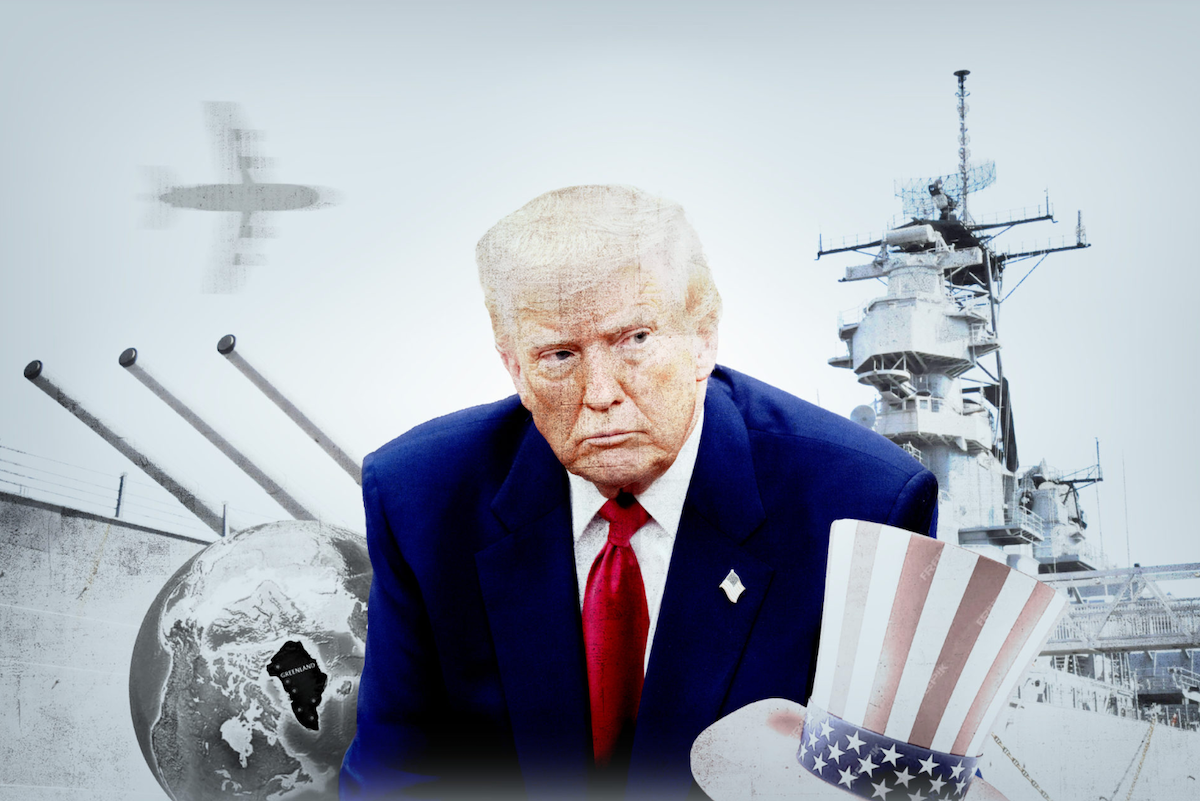
Seen this way, then perhaps Trumpism is best understood as a forceful reassertion of America’s true identity as a continental land power after many decades playing the ill-fitting role of a sea power. President Donald Trump’s foreign, trade, and even immigration policies can all be seen as a re-embrace of land power and a turn against sea power. Like Napoleon before him, President Trump seems much less concerned with affairs in lands across the ocean than with the prospect of military conquest of America’s continental neighbors, be it Cuba, Venezuela, Canada, or Greenland.
His pursuit is not one of protecting maritime trading networks; it is a pursuit of continental hegemony. Even the maritime choke points that most interest him, such as the Panama Canal, are ultimately about continental connectivity. In contrast, the traditional American role of protecting free navigation of the oceans as a global public good is one this administration recoils from.
Indeed, the Trump administration’s disillusionment with America’s role in protecting the global sea lanes has been visible for some time. In 2025, as an ultimately failed US intervention against the Houthis in Yemen began, Vice President JD Vance raised telling questions about the wisdom of such an intervention in a leaked group chat of administration policymakers. Specifically, Vance questioned how it was in America’s interest to keep the Red Sea open for commerce, writing “I just hate bailing Europe out again.”
He raised a valid question. Why does the United States defend the sea lanes that the Europeans use to import cheap goods from China? True sea-power states benefit from their maritime trade and control of the sea lanes. Trumpism can be viewed as an expression of doubt that this applies to America.
Why Defend Sea Lanes That Hurt Us?
Indeed, to the extent that Trump’s political rise was driven by anger at both foreign wars and job offshoring, Trumpism can be seen as the dawning realization that America has not benefited from its role as the global protector of the sea lanes. Instead, US taxpayer dollars have been used to defend the very cargo ships transporting the cheaper manufactured goods that undercut the industrial heartland of our own nation. In this sense, America, by acting as a sea-power state, has undermined the land-based continental foundations of its own power and prosperity. The American people have failed to benefit from the trade routes we defend.
Trumpism then is an embrace of American continental hegemony at the expense of what lies beyond the oceans. This is the thread linking Trump’s instinct for closed markets, invading the neighbors, and a rejection of the responsibility for protecting the global sea lanes. No wonder then, the Trump administration cannot be bothered to expend blood and treasure to reopen the Strait of Hormuz.
As far back as 1988, the private citizen Donald Trump was writing diatribes against the US naval presence in the Persian Gulf during the Iran-Iraq War, complaining that “we defend the Persian Gulf, an area of only marginal significance to the United States for its oil supplies but one upon which Japan and others are almost totally dependent.” (This rhetoric was notably echoed on the left by contemporary progressives such as Jesse Jackson).
Hormuz Failure Validates Trump Maritime Doctrine
The Hormuz debacle is actually confirming Trump’s prior beliefs. The United States can make do with our continental oil, whether from Texas, the Canadian shale fields (many located in Alberta, perhaps a future target for Trump’s expansionism), or Venezuela, even if US energy prices are also driven up by being linked to the global market. It is the Europeans and East Asians who really need Hormuz and Suez open. Just as ancient Athens could only feed its growing population by importing grain from the Black Sea, necessitating a strong navy that could defend this trade, today it is Europe and East Asia that most depend on the free flow of oil and gas from the Gulf by sea.
Hence Trump’s frustration that European states such as the UK refused to help him reopen the Strait of Hormuz—despite their equally large and understandable frustration that a distant land power has blundered into a war that threatens their maritime lifelines to energy security. One could also add that the Black Sea grain route, threatened by Russia’s war with Ukraine, remains just as important to much of the world today as it did to Athens 2,500 years ago. America is again relatively insulated from the food insecurity the wars in Eastern Europe and the Middle East have sown, able to rely on its own continental breadbasket.
Naval Might for Continental Hegemony
Despite the American humiliation in Hormuz, Trump still commands the world’s most imposing navy. Even as he shrinks from opening the sea lanes in the Middle East, knowing such an operation would likely incur politically damaging US casualties, Trump has found it easy to flex naval might in pursuit of his continental hegemony. The United States is slowly strangling Cuba to death with an unprecedented naval blockade. At the same time, US military operations in Venezuela, which have secured continental crude oil for our Gulf Coast refineries, were launched from and returned to the sea.
Yet this naval might is no longer used to keep the oceans open to trade for all. Under Trump, America’s maritime strength is being used for the narrow imperial purposes of building a continental empire. In this, we have become like the Romans: a land power deploying sea power to achieve continental hegemony. The Gulf of Mexico is the new Mare Nostrum (a “Gulf of America,” one might say) while the Persian Gulf is increasingly out of America’s reach.
Any reader can easily quibble with this read of American history and identity. The maritime heritage of the United States is rich and vast. California was once effectively a maritime province, taken from Mexico primarily in a seaborne invasion by the US Pacific Squadron. Subsequently, it was reached primarily by sea rather than by land until the construction of the transcontinental railroad. Even today, San Francisco and Los Angeles are as much Pacific metropolitan areas as North American ones, with their real estate markets as dependent on Chinese capital as the railroads were on Chinese labor.
The Two Americas Clash Over Identity
In his book The City-State of Boston: the Rise and Fall of an Atlantic Power, the historian Mark Peterson describes an autonomous, self-governing city that created a maritime trading empire, with traders and whalers sailing far and wide. In this view, Boston would seem to fit alongside Venice or Carthage as a sea-power state, at least until its absorption by the United States. New York City, Donald Trump’s hometown, was founded as an outpost of the Dutch sea-power state and remains as open and cosmopolitan a city of commerce, trade, and immigration as any that has ever existed.
Yet Trumpism undeniably represents a turn away from the open, cosmopolitan, trading, maritime identity that has defined American cities such as Boston and San Francisco. In both 2016 and 2024, the internal continental empire of the vast American interior can be said to have rebelled against our outward-facing maritime coastal elites.
In truth then, there are two Americas, one of which is maritime and sea-facing, the other an inward-looking land power. Historically, the balance between these two elements enabled America to achieve an unmatched global hegemony by leveraging the strengths of both. With its vast, fertile land, America was able to grow enough food to feed itself, and its population size and industrial capacity enabled it to become the world’s largest economy. Since before its founding, America has also been comfortable crossing those oceans, seeking new products and new markets, from acquiring sea otter pelts off the coast of California to exchanging them for silk, tea, and porcelain in the ports of Canton.
America was mostly equally willing to receive and integrate newcomers from across the oceans, adding their strengths to its demographic weight and cosmopolitan vigor. At its height during World War II, American sea and land power could be combined into an unbeatable industrial, demographic, and maritime giant that could bring the full force and productive capacity of the North American continent to bear across the Atlantic and Pacific oceans simultaneously, imposing a US-led order on both Western Europe and Eastern Asia.
Yet that America is gone, weakened in no small part by the costs of maintaining that order across the oceans. Today, it appears clear that America’s land-power identity is subordinating its maritime one. This is not an entirely terrible thing. America was never truly a sea power, and hollowing out the industrial interior in pursuit of maritime commerce abroad has clearly been a self-inflicted tragedy. But oceans are not moats; they are highways. For better and for worse, no continent can ever truly be sealed off from what lies on the other side of the water.