
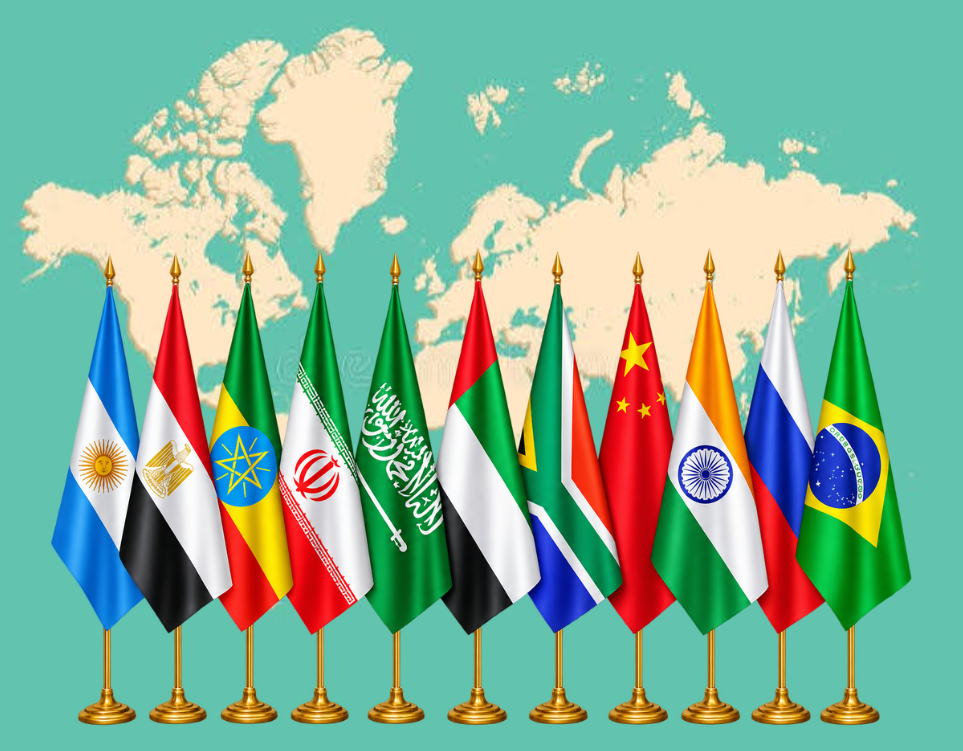
Non-oil trade between the UAE and BRICS members exceeded $312 billion in 2025, representing 31% of the UAE’s total non-oil foreign trade, as the grouping evolves into a platform for bilateral ties and supply-chain diversification.
The emerging BRICS Trade Order is not a formal trade bloc but a deep structural recalibration of global commerce, driven by geopolitical rivalry, supply-chain vulnerability, and the insistence of large developing economies on a greater voice in governance.
The postwar architecture of globalisation, centred on Western demand, is giving way to a fragmented system where resilience overrides efficiency. Within this transformation, the UAE occupies a distinctive position, not as a manufacturer of scale but as a connective hub that links markets the new geography of trade is pulling apart.
The Emirati strategy of deep commercial integration across Asia, Africa, and the Americas aligns with the BRICS Trade Order’s incremental character: a thickening web of bilateral agreements and investment corridors that dilute dependence on any single economic pole. With non-oil trade between the UAE and BRICS members surpassing $312 billion in 2025, the numbers illuminate a deliberate pivot. The UAE uses its geographic and institutional assets to embed itself in a multipolar trading environment, even as internal contradictions prevent BRICS from cohering into a formal counterweight to established institutions.
Is Globalisation Breaking Apart?
For much of the past three decades, globalisation was built around a relatively simple proposition: capital, goods and technology would flow through an increasingly integrated world economy, with the major Western markets at its centre. That model is becoming harder to sustain.
Trade disputes, strategic competition, supply-chain disruptions and the growing use of economic policy as a geopolitical tool are producing a more fragmented commercial landscape. Companies are diversifying suppliers; governments are seeking new trading partners and emerging economies are demanding greater influence over the rules governing international commerce.
This is the environment in which BRICS is becoming more consequential.
The group’s expansion has increased its economic and demographic weight, but its significance lies less in the creation of a tightly integrated trading bloc than in what it represents: a growing network of major emerging economies seeking greater room to shape global trade, investment and economic governance.
For the UAE, that shift is particularly important. Its participation in BRICS complements a broader strategy of building commercial relationships across multiple economic centres rather than depending disproportionately on any single market.
BRICS Trade Order: A Platform, Not a Bloc
BRICS began as a shorthand for a small group of large emerging economies. Its evolution has been considerably more ambitious.
With the addition of new members, the grouping now spans major economies across Asia, the Middle East, Africa and Latin America. Collectively, its members account for a substantial share of the world’s population and economic output.
Yet size alone does not make a trading bloc.
The members have different economic structures, political priorities and relationships with established Western institutions. Their currencies, financial systems and trade regimes remain far from integrated. The absence of consensus on a joint trade declaration at the latest ministerial meeting illustrates the difficulty of converting collective economic weight into coordinated policy.
That does not make BRICS irrelevant. It makes its role different from that of traditional trade agreements.
Rather than functioning as a single market, BRICS is increasingly a platform through which emerging economies can deepen bilateral relationships, coordinate positions and explore alternatives in trade and investment.
Its influence may therefore emerge incrementally, through thousands of commercial connections rather than through a single institutional framework.
The UAE’s BRICS calculation
Few Gulf economies are as exposed to the opportunities created by this shift as the UAE.
The country’s economic model depends heavily on international trade, foreign investment, logistics and its ability to connect markets. Its strategy has consequently focused on expanding commercial relationships across Asia, Africa, Europe and the Americas.
BRICS fits naturally into that approach.
Trade between the UAE and BRICS economies has become large enough to make the relationship economically material. Non-oil trade with BRICS members exceeded $312 billion in 2025, representing around 31 percent of the UAE’s total non-oil foreign trade.
The significance of that figure is not simply its size. It demonstrates how closely the UAE’s economic diversification strategy is becoming intertwined with the world’s major emerging markets.
China and India are particularly important, while relationships with economies such as Indonesia, Brazil, Egypt and South Africa provide additional channels into some of the world’s fastest-growing consumer and industrial markets.
The UAE is therefore not approaching BRICS primarily as a political project. It can also view the grouping as another layer in its strategy to expand the number of economic connections running through the country.
India shows where the opportunity lies
The UAE’s relationship with India illustrates how this strategy can move beyond diplomatic alignment into commercial infrastructure.
Bilateral non-oil trade reached $76.2 billion in 2025, according to the figures accompanying the latest trade discussions. The relationship has also expanded into areas such as services, logistics, digital commerce, food security and investment.
This matters because the next stage of global trade is unlikely to be defined solely by the movement of manufactured goods.
Data, financial services, logistics, technology, food systems, energy infrastructure and industrial investment are becoming increasingly important components of international commerce.
For the UAE, linking its financial and logistics infrastructure with India’s expanding industrial and consumer economy creates opportunities that extend well beyond conventional merchandise trade.
The same principle can apply across the wider BRICS network.
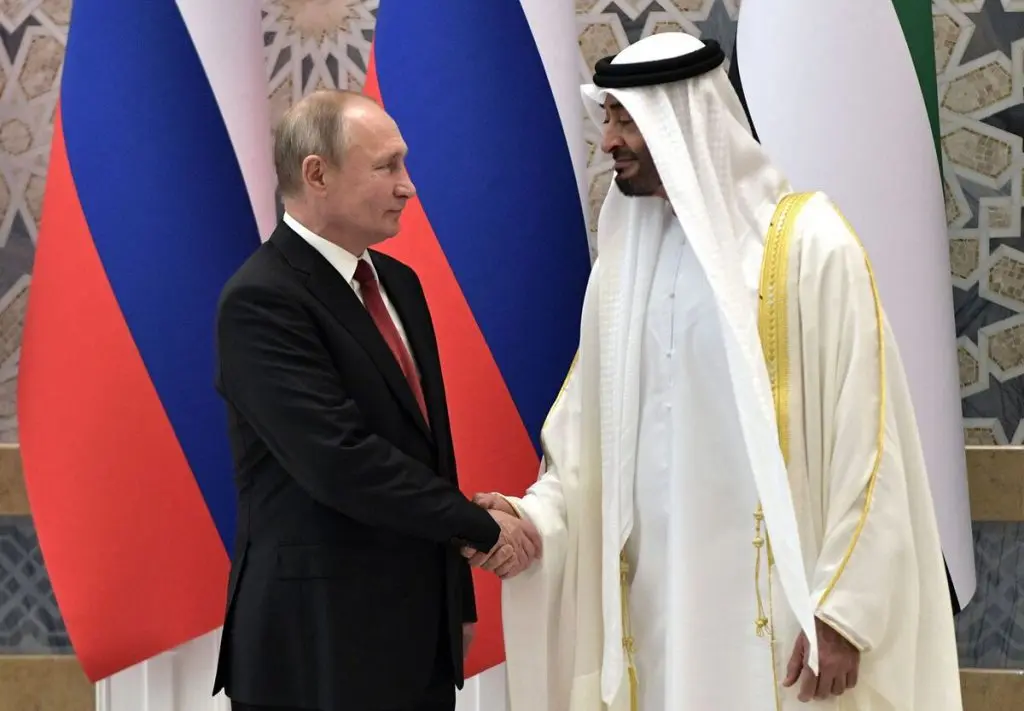
A different kind of globalisation
The rise of BRICS reflects a broader transformation in globalisation.
The old model was based largely on efficiency. Companies sought the cheapest production location, the shortest supply chain and the largest accessible market.
The new model places greater value on resilience.
Businesses increasingly want alternative suppliers. Governments want secure access to food, energy and strategic materials. Manufacturers are considering where production should be located not only according to cost, but also according to geopolitical risk.
This creates an opportunity for economies that can provide connectivity between otherwise fragmented markets.
The UAE’s ports, airports, free zones, financial institutions and logistics networks give it an unusual position in this emerging system.
Its competitive advantage is not necessarily that it produces more goods than larger economies. It is that it can help those goods, services and capital move between them.
BRICS Trade Order Faces Internal Frictions
For the Gulf, the implications extend beyond the UAE.
The GCC has historically benefited enormously from global energy trade, particularly through its relationships with Asia. But economic diversification is increasingly about creating multiple sources of demand, investment and technology.
Greater engagement with emerging economies can provide another layer of resilience.
For exporters, it creates alternative markets. For investors, it opens access to new industrial and consumer opportunities. For logistics companies, it generates additional trade corridors. For manufacturers, it can create new production and distribution partnerships.
This is particularly relevant as supply chains are reorganised around strategic considerations.
The Gulf’s geographic position between Asia, Europe and Africa already gives it an advantage. Deeper connections with BRICS economies could strengthen that position if governments and companies can translate diplomatic relationships into commercially viable projects.
The limits of the BRICS proposition
There is also a danger in assuming that a larger BRICS automatically means a more powerful economic bloc.
Its members have competing interests. China and India, for example, have their own strategic tensions. Different members maintain deep commercial relationships with the United States and Europe. Others have very different approaches to trade, currency policy and economic governance.
The expansion of the group increases its reach but also makes consensus more difficult.
This means BRICS is unlikely to replace the existing global trading system in the foreseeable future.
A more plausible outcome is a layered global economy in which traditional institutions coexist with regional agreements, bilateral partnerships and emerging-market platforms.
That may actually suit the UAE.
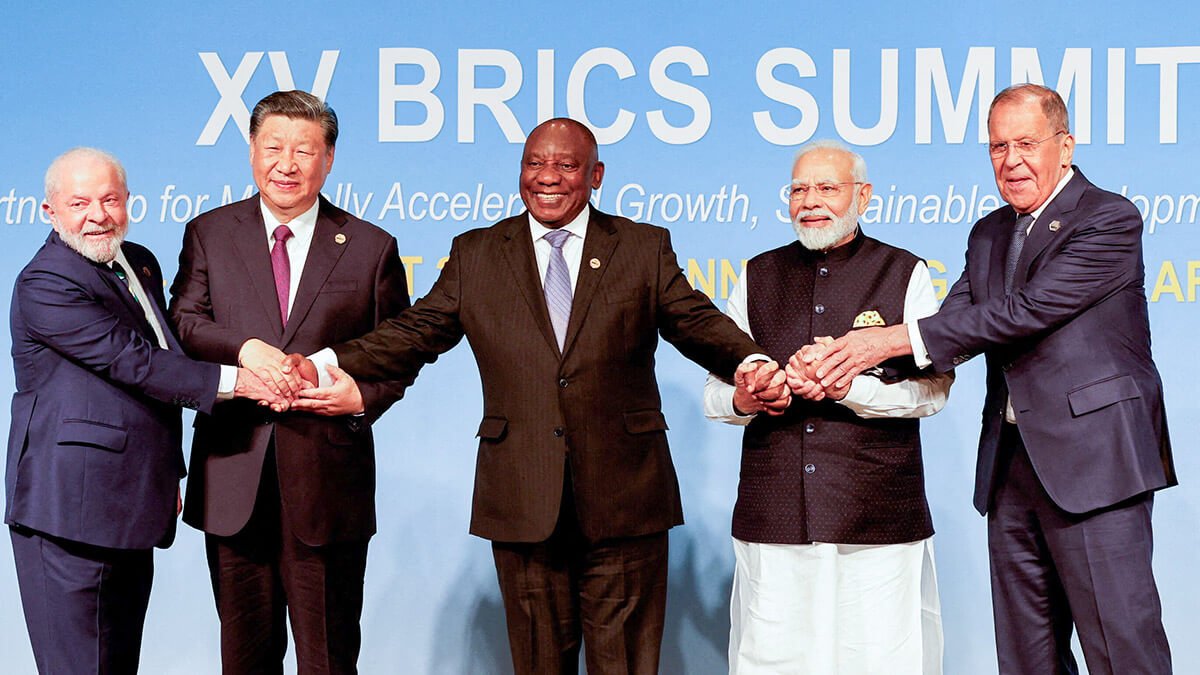
The UAE’s advantage is economic flexibility
The UAE has spent years building relationships across competing economic centres rather than choosing one exclusively.
Its CEPA programme has pursued agreements across a wide range of markets, while its participation in BRICS adds another channel for engagement with major emerging economies.
The strategy is fundamentally one of diversification.
For an economy whose prosperity depends on international flows of trade, capital, people and technology, diversification reduces exposure to disruptions in any single corridor.
It also creates opportunities to capture new flows as companies adjust their global strategies.
The UAE’s challenge will be to convert this network of agreements and memberships into measurable gains in productivity, investment and non-oil exports. Trade volume alone is not enough. The more valuable prize is participation in higher-value segments of global supply chains.
From trade hub to economic connector
The next phase of BRICS may therefore be less about constructing an alternative to the existing global economy and more about accelerating its fragmentation into multiple centres of influence.
That creates a distinctive opportunity for the UAE.
Its value to the emerging global economy could increasingly lie in its ability to connect markets that do not always connect easily with one another. Logistics infrastructure, financial services, digital platforms, investment vehicles and industrial partnerships can all reinforce that role.
For BRICS, meanwhile, the UAE provides something different from scale. It provides connectivity.
That distinction may prove important as global trade becomes less predictable.
The emerging economic order is unlikely to have a single centre. It will instead consist of overlapping networks of countries, companies and financial institutions linked by trade agreements, investment relationships and strategic interests.
BRICS is one expression of that transition. The UAE’s strategy is to make itself useful within it.
The real test will be whether that position can turn geopolitical access into durable economic value, making the Gulf not merely a participant in the new trading system, but one of the places through which it operates.