
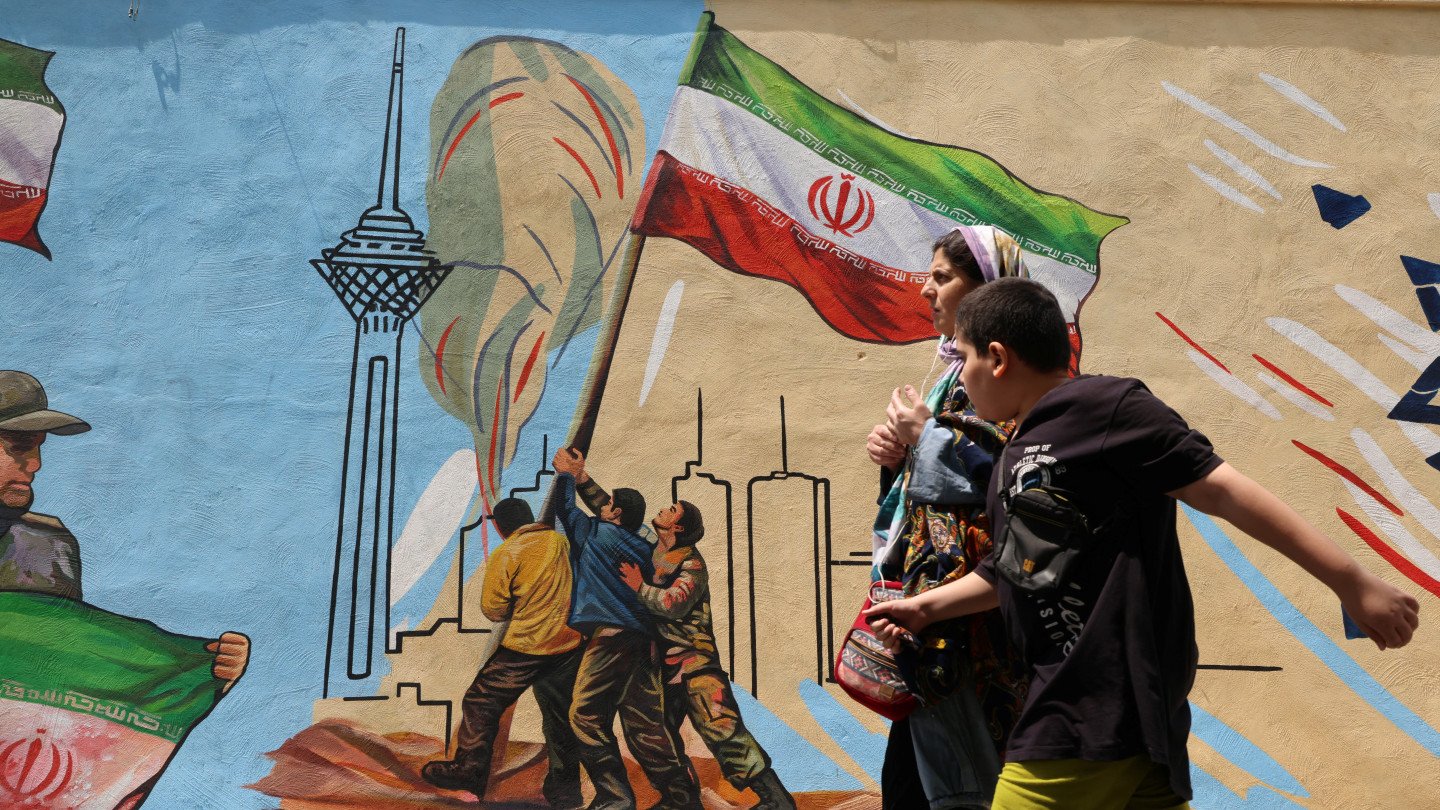
Operation Economic Outcast targets more than 60 Iranian individuals, companies, and vessels while the UAE suspends trade with Tehran. Gulf states face retaliation risks as Washington expands secondary sanctions without clear diplomatic follow-through.
The rollout of Operation Economic Outcast has transformed an already volatile security environment across the Gulf. Washington’s decision to target more than sixty individuals, companies, and vessels through Iran D-Day sanctions signals a shift away from direct military action and toward economic strangulation. For Gulf Arab monarchies, the immediate challenge is not simply compliance with American secondary sanctions but managing the risk of Iranian retaliation.
Tehran’s longstanding commercial networks, particularly through Dubai, now face unprecedented scrutiny. The new measures aim to sever financial channels, yet their enforcement depends heavily on cooperation from regional states that maintain complex economic ties with Iran.
Iran D-Day sanctions therefore test the credibility of Washington’s coercive diplomacy while exposing Gulf capitals to renewed military threats.The White House appears convinced that economic pressure can deliver political concessions without another war. However, the historical record offers little evidence that sanctions alone produce capitulation. Instead, they often harden Iranian resolve and push the Islamic Republic toward asymmetric responses. For Gulf states, the central strategic question is whether intensified economic isolation can create space for diplomacy or simply accelerate a new cycle of escalation.
Operation Economic Outcast Begins
The Trump administration is aggressively attempting to cut off Iran’s financial lifelines.
On 24 August, Treasury Secretary Scott Bessent announced “Operation Economic Outcast,” a sweeping sanctions campaign designed to isolate Tehran and pressure its government toward collapse.
The United States says it has identified the networks, companies, vessels, and financial channels helping Iran sell oil, obtain technology, and generate revenue, while warning countries and businesses that continue working with Tehran that they could face secondary sanctions.
The new measures target more than 60 individuals, companies, and vessels connected to Iran’s oil trade, nuclear and missile programs, cyber operations, and financial networks.
The campaign also focuses on Iran’s international partners, with possible secondary sanctions affecting sectors such as shipping, aviation, technology, gold, and digital assets.
China is particularly important because it purchases approximately 90 percent of Iran’s exported oil, yet Bessent stopped short of announcing specific penalties against Chinese banks or businesses.
Iran D-Day sanctions hit ordinary Iranians
The Trump administration’s escalating pressure on Iran will inevitably impose heavy human and economic costs on its population.
Iran was already grappling with severe inflation, a collapsing currency, unemployment, power shortages, and rising prices before “Operation Economic Outcast”.
The new measures will only deepen these hardships for ordinary citizens. But whether inflicting greater pain on Iranians will translate into a US victory with the Trump administration achieving its objectives is another question. There is good reason to doubt that this strategy will succeed.
Why Trump Returned to Sanctions
It is clear that the Trump administration is frustrated with the course of the war over the past six months. The White House now appears determined to pursue its goals through a new strategy that carries far lower political costs at home, where the war has long been unpopular and is becoming increasingly so.
“Trump is turning back to economic pressure on Iran because military force failed to deliver the victory he expected,” said Negar Mortazavi, a Washington-based journalist, host of The Iran Podcast, and senior fellow at the Center for International Policy, in an interview with The New Arab.
At this point, the success of “Operation Economic Outcast” is anything but guaranteed, particularly given Iran’s decades-long experience of circumventing American and European sanctions, while the strategy will also require Washington to balance its goal of isolating Tehran with the economic and geopolitical risks associated with confronting China and other major trading partners.
A Belligerent but Vague Strategy
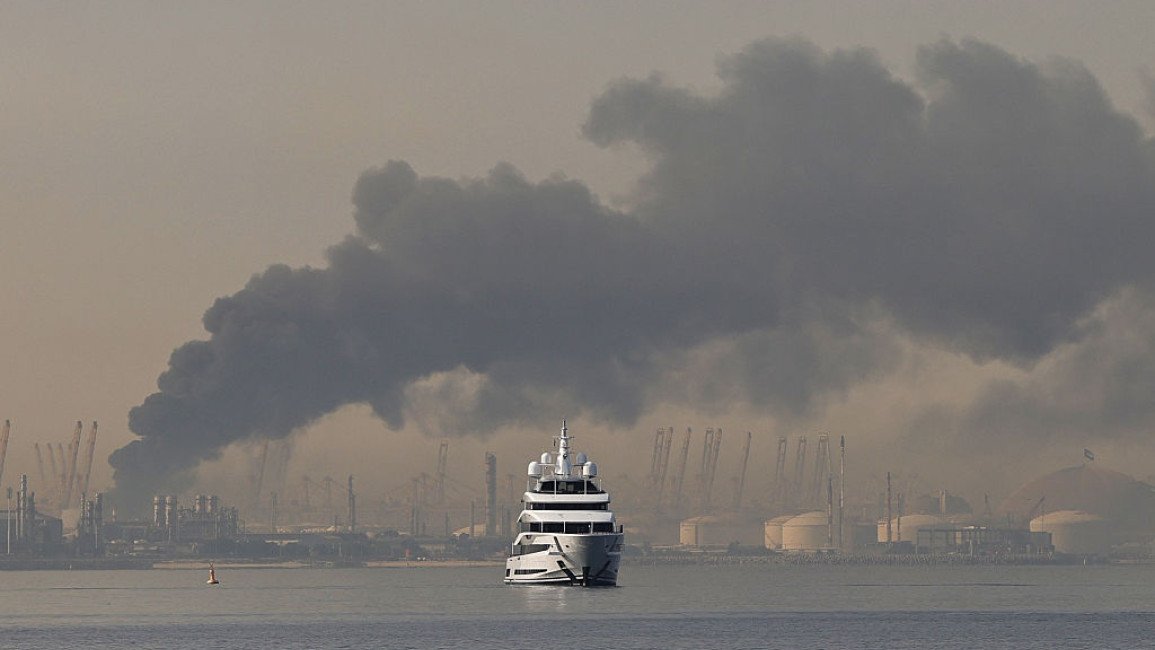
Although the administration’s sanctions strategy is strikingly belligerent, it is also fundamentally vague, with no clear answer as to what comes next, particularly given its admission that fully enforcing the measures could destabilise the global financial system, as the former American diplomat Robert Malley noted.
While the “D-Day sanctions” will inflict greater economic pain and human suffering on Iranians, they may also push the Islamic Republic toward a more aggressive posture, increasing the likelihood of military escalation if Iranian officials conclude that the White House’s ultimate goal is regime change.
The paradox is that the Trump administration is pursuing economic pressure precisely to achieve its objectives without returning to war, at least until after this year’s US midterm elections.
The UAE is key to Trump’s pressure campaign
The United Arab Emirates (UAE), and particularly Dubai, is central to this effort because of its longstanding role as an important Iranian commercial, financial, and re-export gateway.
Shortly before the Trump administration unveiled “Operation Economic Outcast”, the UAE announced its suspension of trade with Iran in response to Tehran’s ballistic missile attacks.
The UAE’s decision to suspend trade will have a “real impact” on Iran, with the significance going “far beyond the suspension of bilateral trade itself,” Mohammed Alhamed, a Saudi geopolitical analyst and president of Saudi Elite group, explained in an interview with The New Arab.
“When the historical record is available, and we inspect it, I think we’ll find that the UAE’s shutdown of Iran’s banking and financial relations was a necessary predicate for [Economic D-Day]”, David Des Roches, a professor at the Thayer Marshall Institute, told The New Arab.
“The Trump administration is right to focus on these external financial lifelines. Cutting access to banking channels, commercial intermediaries, front companies, digital assets and re-export networks makes it substantially more difficult and costly for Tehran to move money and circumvent restrictions,” noted Alhamed.
Yet, while identifying the suspension of Emirati-Iranian trade as “an important step,” Alhamed stressed that the effectiveness of this pressure campaign will come down to enforcement.
“There still needs to be much stronger monitoring of financial transactions, exchange networks, cryptocurrency activity, shell companies and informal payment mechanisms across the region. If these remaining channels are seriously restricted, the economic pressure on Tehran will become considerably harder to evade,” he told The New Arab.
The Gulf faces the risk of Iranian retaliation
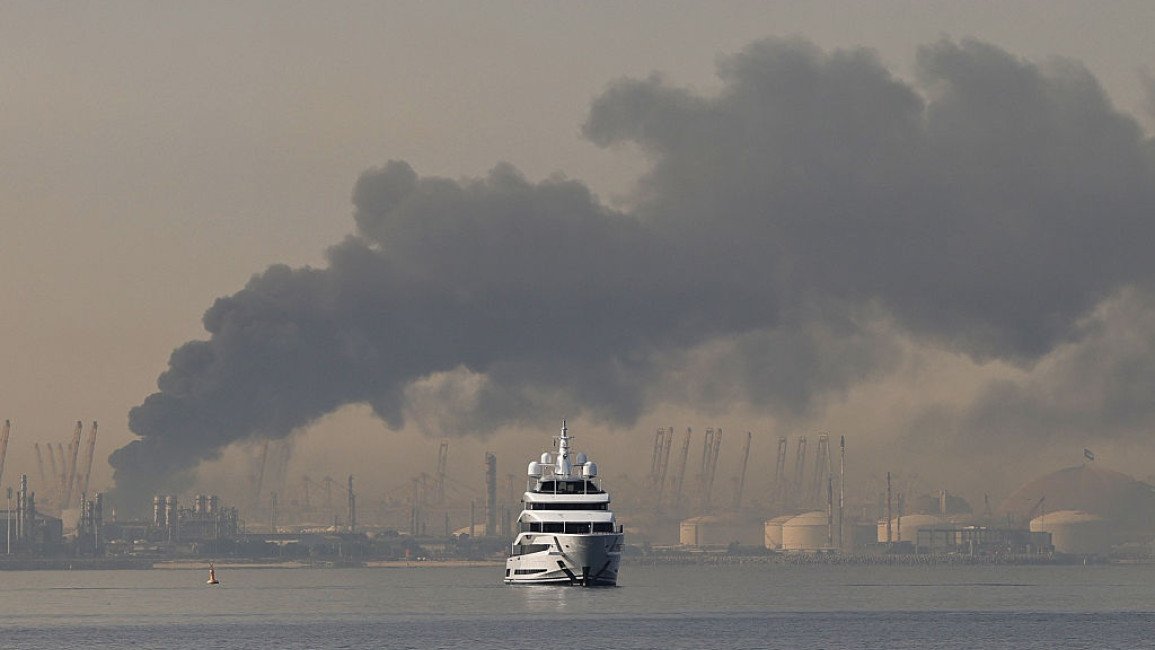
GCC states may struggle to navigate the fallout from the Trump administration’s pressure campaign. The Gulf Arab monarchies face a difficult strategic balancing act that requires maintaining strong security ties with the United States while seeking to avoid another round of regional escalation.
Iran has been clear with its threats of retaliation against countries that Tehran accuses of being complicit in “Operation Economic Outcast.”
Des Roches addressed the possibility of Iranian military strikes against GCC members, arguing that Tehran will have difficulty justifying attacks on “neutral states” in response to an economic, not military, action and that such a scenario may provide Trump with an excuse to resume military operations against Iran.
“The Trump administration never made the case for the war in the first place, but now in this relative state of peace going on here, if Iran all of a sudden initiates attacks without being attacked, I think that Trump and his party will make the case that ‘you got to support your partners here and this is no longer a war of choice,’” he told The New Arab.
If Iran retaliates against Gulf Arab states on the grounds that they are aligned with the Trump administration’s pressure campaign, Alhamed believes the move could backfire, strengthening US-GCC intelligence, maritime, missile defence, and broader security cooperation.
However, Mortazavi highlighted a longer-term concern, which is that such Iranian missile and drone strikes on GCC members could reinforce views already held in Gulf capitals that dependence on the US as a security guarantor dangerously exposes them to conflicts that they did not initiate and have proven to be beyond their control.
Will Iran D-Day sanctions spur diplomacy?
Looking ahead, the success of “Economic D-Day” will ultimately depend on what this intensified pressure produces politically.
From the Trump administration’s perspective, the ideal outcome would be for “Operation Economic Outcast” to bring Tehran back to the negotiating table, ready to make humiliating concessions to Washington in a new agreement without triggering another round of intense warfare that could severely damage the global economy.
But if the Islamic Republic responds by escalating confrontation rather than changing course, the campaign could instead deepen tensions, increase the risks facing the GCC states and contribute to another cycle of regional conflict.
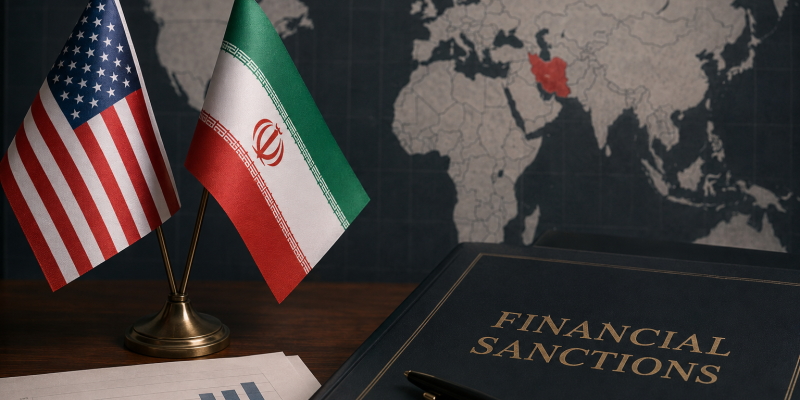
The real test, therefore, is whether economic pressure can create an opening for diplomacy rather than become a pathway to further escalation.
Pointing to the experience of previous maximum pressure campaigns led by past US administrations, which imposed considerable economic hardship on ordinary Iranians without producing political capitulation, Mortazavi is sceptical.
“Sanctions deepen the economic pain on ordinary Iranians. But years of maximum pressure showed that economic hardship does not translate into political capitulation,” she told The New Arab.
The stakes for the Gulf Arab monarchies therefore extend well beyond the immediate economic impact of the sanctions.
As Washington seeks to tighten the screws on Tehran beyond what it already has done, the GCC members will have to contend with the possibility that measures intended to avoid another wave of hostilities could instead trigger one and draw the Gulf Arab states into chaotic turmoil.
For Gulf capitals, the central dilemma is not simply how to respond to Washington’s campaign, but how to manage their relationship with Iran as a neighbouring power whose role in the region will outlast the current confrontation.
“The GCC states are once again caught between a powerful ally thousands of miles away and a powerful neighbour that has been there for thousands of years and will remain their neighbour long after this war ends,” as Mortazavi put it.