
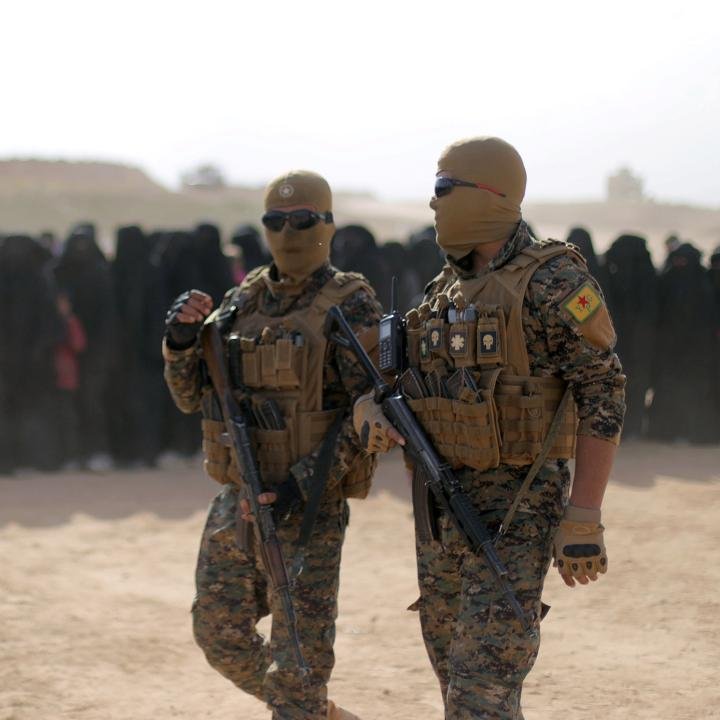
The SDF Integration process faces critical tests as Damascus absorbs Kurdish-led forces into state structures. Military numbers remain incomplete, education disputes persist, and political appointments raise questions about genuine minority inclusion.
The SDF Integration into Syria’s central state structures represents one of the most consequential tests of the post-Assad political order. After a decade of de facto autonomy under American protection, the Kurdish-led Syrian Democratic Forces have formally dissolved as an independent military actor, ceding authority to Damascus. This transition carries profound implications for minority rights, territorial unity, and the balance between centralization and decentralization.
Washington, having brokered the January agreement and facilitated subsequent negotiations, now occupies a delicate position: supporting Damascus while ensuring that former SDF personnel are not marginalized or relegated to symbolic roles. The process has already absorbed more than 20,000 public employees and begun incorporating thousands of fighters into Defense and Interior Ministry structures.
Yet the numbers reveal significant gaps. Tens of thousands of SDF personnel remain unaccounted for, the status of female YPJ fighters is unresolved, and disputes over Kurdish-language education underscore deeper cultural tensions. The SDF Integration is therefore not merely an administrative exercise but a political negotiation over the character of the new Syrian state. Success requires genuine inclusion, equitable resource allocation, and continued counterterrorism cooperation. Failure risks reigniting the grievances that fueled a decade of fragmentation.
SDF Integration Begins
Following an August 20 announcement that northeast Syria’s civil and military integration with the central government was complete, Kurdish leaders returned to Damascus last week to announce the dissolution of the Syrian Democratic Forces (SDF) as an independent military actor. As more details emerge about implementation of the U.S.-backed agreement reached in January, Washington is aptly placed to continue facilitating the country’s stabilization and unification under Damascus.
Despite support from the Trump administration, however, integrating the left-wing, Kurdish-led entity into the Islamist, Arab-dominated interim government has been a slow and contentious process since the fall of Bashar al-Assad’s regime, particularly over matters of security, autonomy, and minority rights. To properly calibrate future U.S. policy in Syria, it is important to consider how we got here and what comes next for the northeast.
Evolution of the Complicated U.S.-SDF Relationship
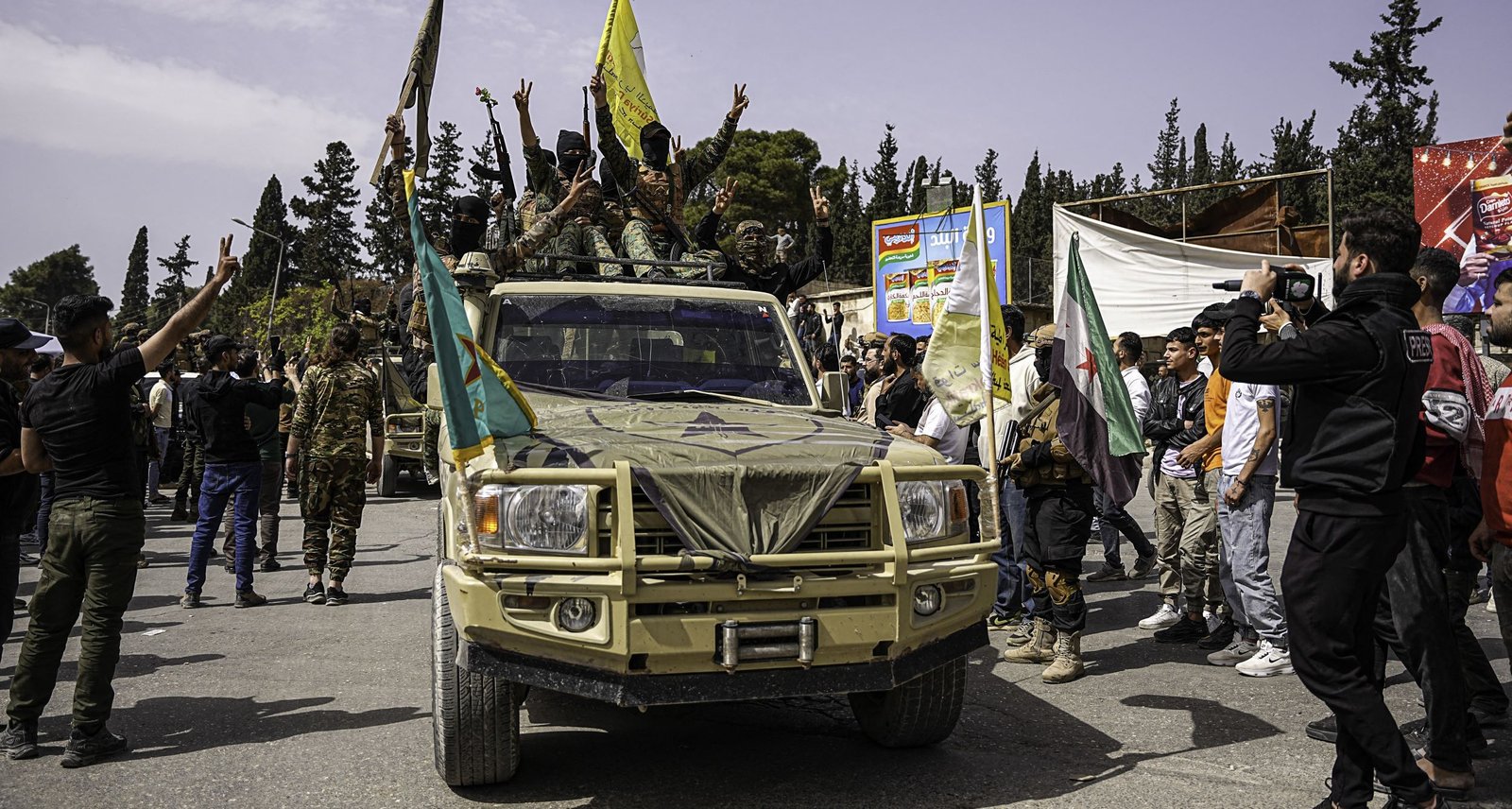
Under Assad, Syria was an undergoverned territory and a base from which terrorist groups like the Islamic State (IS) threatened security across the Middle East and beyond. In response, Washington formed a temporary partnership with what later became known as the SDF, providing training and more than $1 billion in funding toward the territorial defeat of IS. Once that goal was achieved in 2019, the partnership continued through joint counterterrorism operations and the SDF’s detention of thousands of IS members and affiliates.
The relationship was complicated by various factors—notably, Turkey’s objection to the SDF over its ties with the U.S.-designated terrorist group the Kurdistan Workers Party (PKK), as well as increased local and international accusations that some Kurdish authorities were using false claims of IS affiliation to intimidate opponents. Even so, the partnership lasted a decade, and the SDF’s political wing—the Democratic Autonomous Administration of North and East Syria (DAANES)—became the de facto local governing authority with U.S. support.
At the same time, however, Washington’s consistent policy across the Obama, Trump, and Biden administrations was to emphasize that the relationship was a temporary arrangement meant to foster wider goals, from ending the civil war and preventing an IS resurgence to removing the presence of destabilizing actors like Iran. SDF commander Mazloum Abdi himself has acknowledged this temporary nature.
New Syria, New Complexities
After Assad’s 2024 ouster, Washington quickly aligned with Damascus and helped facilitate the March 2025 agreement outlining steps toward the SDF’s integration. Talks largely stalled until Damascus launched a military campaign in the northeast earlier this year. As negotiations resumed, U.S. envoy Tom Barrack argued that the SDF’s original role as the primary anti-IS force had “largely expired,” with Damascus positioned to assume control of IS detention sites and other security responsibilities.
This coincided with progress in the Turkey-PKK peace process, resulting in fewer Turkey-SDF clashes. Washington soon withdrew its forces, evacuating its last base in April. Last week’s announcement formally ended the U.S.-SDF partnership—the challenge now is to implement the January agreement and subsequent arrangements in full, which would help unify Syria under a single government as called for by UN Security Council Resolution 2254.
Military and Security Integration Gaps
For the first time in nearly seventy years, Washington is working directly with a Damascus-based government on Syrian and regional security. The relationship remains complicated: the UN, with U.S. backing, only recently revoked President Ahmed al-Sharaa’s terrorist designation, while Washington previously regarded him, his former organizations, and his allied foreign fighters as terrorists.
The Trump administration has removed Syria from the state sponsors of terrorism list and is now cooperating with Damascus to prevent an IS resurgence, while Syria has joined the Global Coalition to Defeat IS and is working with eastern Arab tribes to target the group’s remnants. The most difficult issue remains IS detention sites—thousands of detainees escaped or were released during January’s government advance into the northeast, spurring concerned U.S. officials to arrange the transfer of 5,700 of them to Iraq, including more than 3,500 Syrians. Meanwhile, Syrian-Turkish security cooperation has expanded as Russian influence declines.
SDF Integration Faces Real Test
On the energy front, Washington supports returning northeastern oil and gas resources to state control and expanding foreign investment. Yet challenging projects like the proposed Kirkuk-Baniyas pipeline will depend on Damascus maintaining national unity and security.
Regarding wider integration, although many of the disputes between the northeast and Damascus concern the mechanics of the process, Washington’s longstanding priorities remain state consolidation, counterterrorism, and regional security. U.S. negotiators have therefore focused on expediting the incorporation of northeastern institutions into Syria’s civilian and military structures. To date, Damascus has absorbed more than 20,000 public employees from the northeast into the central state structure and helped facilitate the return of thousands of Kurds displaced by the January military clashes.
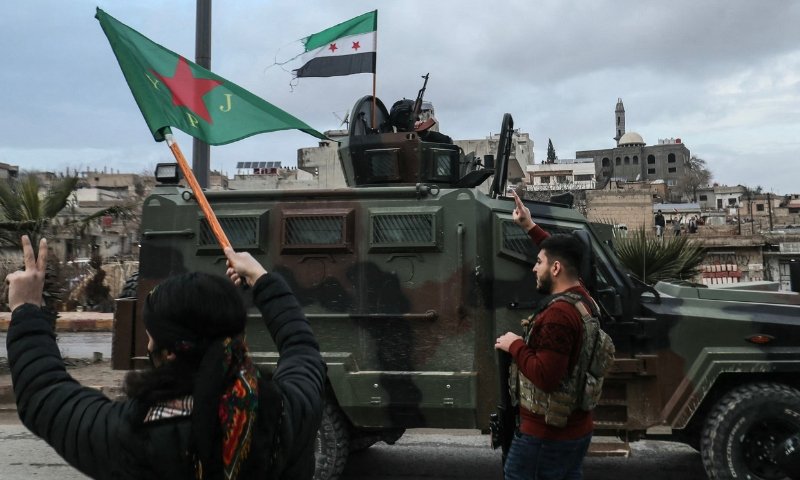
On military integration, however, the numbers do not yet add up. The oft-cited baseline for the SDF’s size is 50,000 fighters, but it is unclear whether this includes the Asayesh internal security forces or the all-female Women’s Protection Units (YPJ), leaving tens of thousands of personnel with uncertain status. So far, around 6,000 SDF fighters have entered four Defense Ministry brigades and either undergone or been scheduled for training there. Damascus has also appointed prominent SDF commanders to senior positions: Sipan Hamo as assistant defense minister for the eastern region and Jiya Kobani as deputy commander of the 60th Army Division.
Interior Ministry integration is similarly incomplete. Around 4,000 SDF personnel have reportedly been assigned there, while approximately 9,000 Asayesh are expected to serve under the ministry in Hasaka and another 1,500 in Kobane.
The announced integration of 1,500-2,000 YPJ fighters also raises questions. Damascus is reportedly opposed to women serving in the Defense Ministry and has proposed that the YPJ become an internal security and counterterrorism force under the Interior Ministry. This arrangement is reportedly now in motion, despite the YPJ’s desire to join the Defense Ministry. Damascus has “pledged to examine” possible YPJ integration into the Syrian Army “at a later stage.”
Elsewhere, roughly 3,000 SDF fighters who hail from Afrin have returned there or are in the process of doing so, reportedly to join the local Army division. Another 8,000 have no clear destination.
Education and Cultural Dispute
Beyond security integration, education has perhaps been the biggest sticking point. In January, President Sharaa’s Decree No. 13 recognized Kurdish as a national language. The SDF hoped this would provide permission to teach the national curriculum in Kurdish with Arabic taught separately, but Damascus instead envisioned an Arabic-based national curriculum with several hours of Kurdish-language instruction each week.
This matter was negotiated extensively between Education Ministry and SDF leaders, making it a key test of how Damascus and the Kurds would work through a sensitive cultural diversity issue with larger implications. As of last week, the original decree had been updated by Decision No. 493, permitting limited Kurdish-language instruction in Kurdish-majority areas, a decision more in line with the government’s wishes.
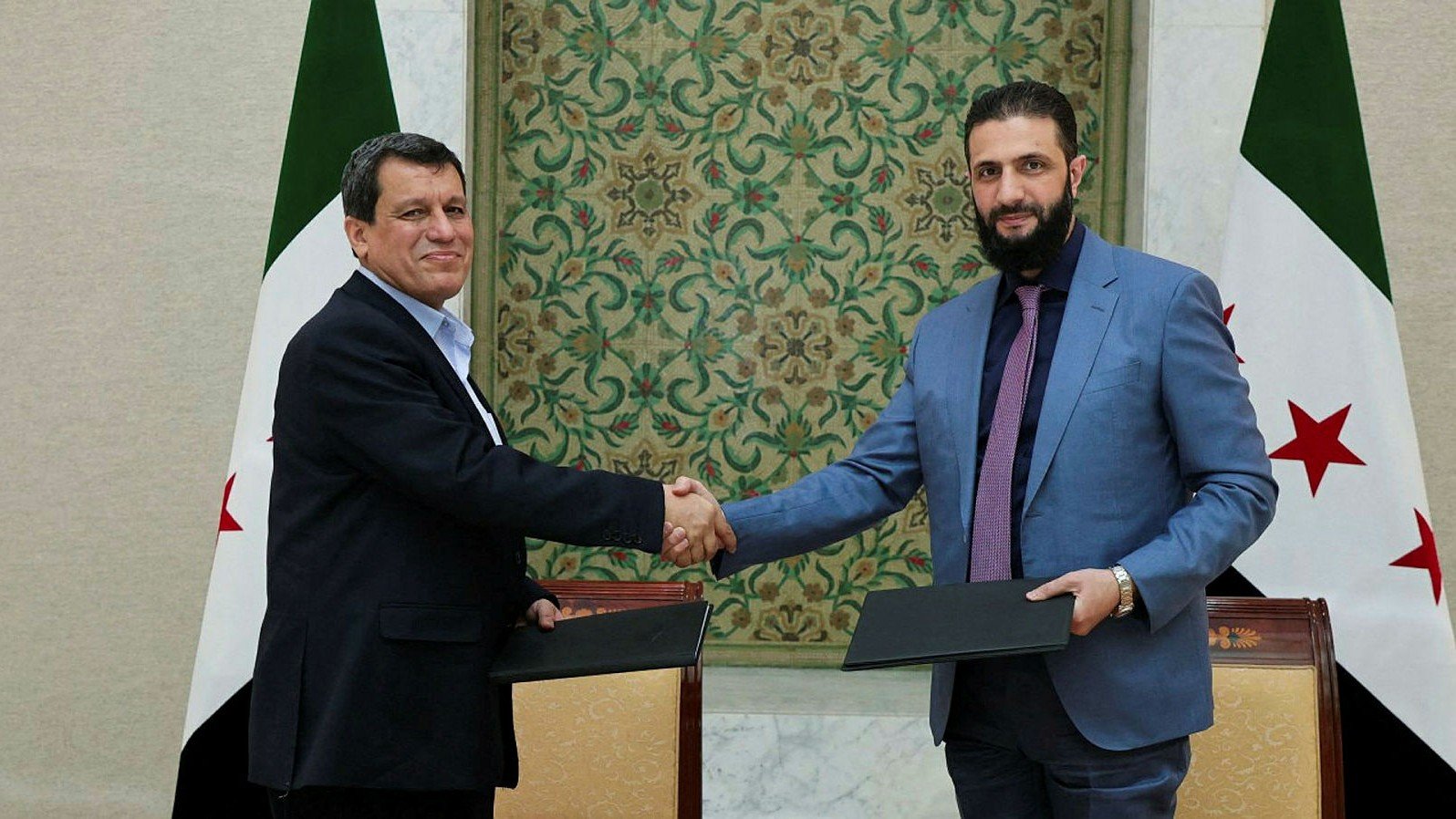
On political integration, SDF commander Abdi has been appointed a presidential advisor without military rank, with a possible mandate on Kurdish affairs to be set out via presidential decree. Meanwhile, senior DAANES official Ilham Ahmed will apparently be appointed to parliament via the “President’s List,” perhaps to help draft the new constitution or serve on the Foreign Affairs Committee. The government has also considered dispatching both of these incoming officials to Turkey to meet with imprisoned PKK leader Abdullah Ocalan, which could help appease both Ankara and more radical elements within the SDF.
Policy Considerations for Washington
After a decade of engagement, Washington has helped shape multiple agreements supporting Syria’s stability and unification, and it can continue doing so via the integration process. Absorbing SDF personnel into the central government does not erase years of U.S. relationship-building or institutional knowledge—rather, it gives Washington a unique channel to build trust with Damascus. To maximize this opportunity, policymakers should focus on four priorities:
Ensure that SDF integration is genuine, not a rubber stamp. Minority inclusion is vital to Syria’s long-term stability, while integration can strengthen the country by bridging the government’s preference for centralization with the northeast’s push for decentralization. This compromise could help prevent a return to the instability associated with Assad-era overcentralization. For the Trump administration and Congress, this means holding Damascus and the Kurds accountable in the months to come, ensuring that former SDF members receive equal opportunities, are not relegated solely to the northeast, and remain part of the Syrian state (along with their institutional knowledge).
Maintain SDF inclusion in future counter-IS cooperation. Even as Damascus becomes the primary counter-IS partner, Washington should ensure that former SDF personnel are still included in that mission. This will be critical not only to building trust and capacity, but also to addressing concerns expressed by the Pentagon Inspector General that recent disruptions have complicated partner vetting and left the mission in limbo.
As in neighboring Iraq, where the United States is shifting from a coalition to a bilateral relationship, the Counter-IS Train and Equip Fund (CTEF) can facilitate this transition. In addition to operational and intelligence sharing, having former SDF members participate in these conversations can help with locating foreigners missing from al-Hol camp, coordinating future repatriations of foreign nationals from Roj camp, and bringing Syrians transferred to Iraq back home—all portfolios previously handled by the SDF.
Rein in potential spoilers. Washington should work with Ankara to ensure that any hiccups in the Turkish-PKK peace process do not undermine Damascus-SDF integration. U.S. diplomacy should also discourage further Turkish or Israeli military intervention in northeast or southwest Syria, either of which could trigger massacres or other atrocities and make the country even more of a regional battlefield than it already is.
Encourage equitable national revenue allocation. To make good on Sharaa’s commitment to inclusion and representation, Syria’s resource-producing areas must see tangible benefits from national reconstruction and public investment. For instance, equitable revenues from northeastern oil and gas fields need to be directed in part toward that region’s economic development. The Assad regime’s exploitation and neglect of the northeast contributed to instability; Washington should urge the Sharaa government to reinforce its new arrangement with the Kurds through meaningful economic investment.