
Israel Forever Wars under Netanyahu have drained military capacity, wrecked the economy, and isolated Israel internationally. Eisenkot offers strategic discipline but faces a rightward-shifted electorate and uncertain U.S. engagement under Trump.
The concept of Israel Forever Wars has moved from rhetorical warning to declared strategy under Benjamin Netanyahu. After three years of continuous conflict, the prime minister now openly advocates preemptive military action against every potential threat, regardless of consequences. This doctrine has drained the treasury, exhausted the military, and shattered Israel’s international standing.
Gadi Eisenkot, the former IDF chief of staff now leading in the polls, presents a stark contrast: a career soldier who understands the limits of endless combat and the corrosive effects of permanent mobilization. Yet the question remains whether an Eisenkot government would genuinely break the cycle or merely manage it more competently. The Israeli electorate has drifted rightward, and the political coalition Eisenkot would need to assemble includes parties with hawkish positions on the Palestinians, Gaza, and the West Bank.
Israel Forever Wars is therefore not simply a Netanyahu phenomenon; it reflects deeper shifts in Israeli society. What Eisenkot offers is not a reversal of that trend but a restoration of strategic discipline—a recognition that wars must have defined endpoints, that alliances matter, and that domestic legitimacy cannot survive indefinite sacrifice. The extent of change depends heavily on Washington’s engagement and Trump’s relationship with a new Israeli leader.
Israel Forever Wars Strategy Unfolds
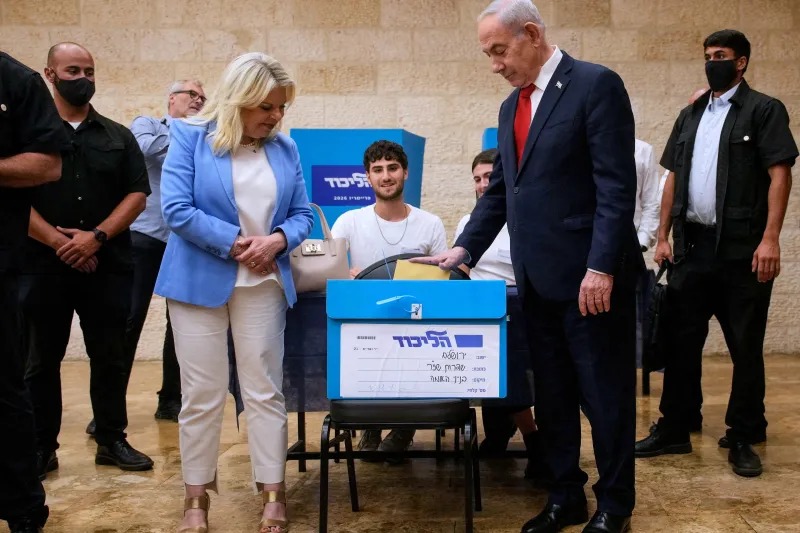
As he prepares to face Israeli voters next month after three years of incessant war, Israeli Prime Minister Benjamin Netanyahu has formulated a new strategy. Ignoring the huge costs in blood and treasure, let alone in support for Israel in the United States and elsewhere, he now publicly and explicitly supports waging wars without end. As a lesson of Hamas’s October 7, 2023, massacre, he asserts that Israel needs to take preemptive military action against every potential security threat it faces, regardless of the consequences. This has left many wondering how much of this hard-line approach might change if Gadi Eisenkot, the veteran military official who is running ahead of Netanyahu in the polls, manages to defeat him.
Thus far, Eisenkot, a classic centrist, has been blunt and sometimes caustic in making the case against the prime minister. But apart from vague statements about ending the longest war in Israeli history, he has generally avoided going into detail about his own national security strategy.
On some issues, such as dealing with Hamas in Gaza, he has sounded more hawkish than Netanyahu. And when he is asked about the future of the conflict with the Palestinians—Israel’s most politically explosive issue—he has been extremely careful to avoid binding commitments. In a rare statement on such matters in August, Eisenkot said he was opposed to a Palestinian state, endorsing what is by now a consensus position across Israel’s political center and even parts of the center left as well as the right.
Rightward Drift Shapes Election
From such statements, it might be tempting to conclude that an Eisenkot government would be little different from its right-wing predecessor. Indeed, some analysts have argued that there will be no real differences on major security issues at all.But that ignores a number of important areas, from the crisis in the West Bank to Israel’s approach to Syria to the conflict in Gaza, where new strategies could yield real dividends, even if the changes are most likely to be incremental rather than dramatic.
The extent to which an opening emerges will depend greatly on U.S. President Donald Trump and the nature of his relationship with a post-Netanyahu government, if Israelis elect one. The most important question is not whether change is possible but what kinds of changes, and with what kinds of engagement from Washington.
According to Israeli polls, Netanyahu, chairman of the right-wing Likud Party, will find it extremely difficult to form a government after the October 27 elections. For now, he appears to be devoting most of his efforts to forcing a deadlock that would prevent his rivals from assembling the next coalition. At the same time, he has promoted his strategy of continuous war.
Costs of Permanent War Mount
The new Netanyahu preaches zero concessions and zero compromises. To his domestic audience, he also emphasizes what he claims is another achievement: Israel’s seizure of territory on almost every border—in southern Lebanon, in Syria, in the Gaza Strip—as self-styled security zones. Defense Minister Israel Katz takes this approach one step further, claiming that Israel will remain in these zones for many years as part of the price it is exacting from its enemies.
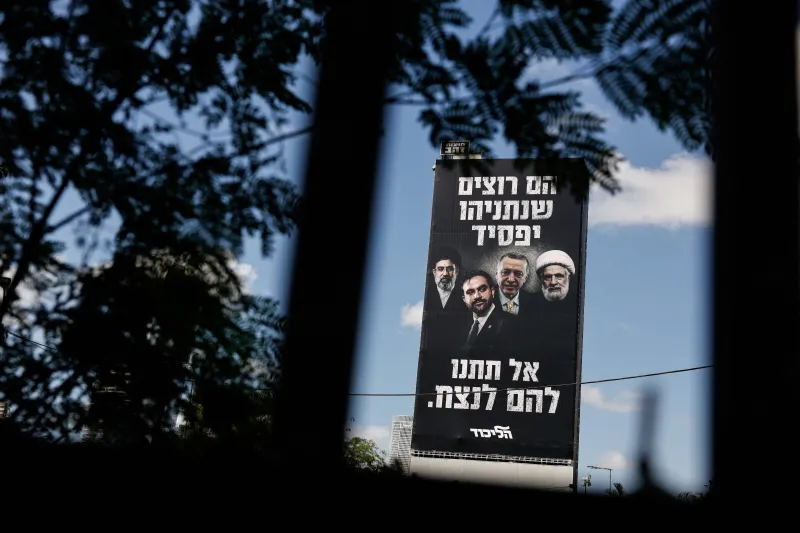
Katz and other ministers are constantly searching for new military foes: they have claimed that Turkish President Recep Tayyip Erdogan, who is deeply hostile to Israel but difficult to portray as a direct military antagonist, is now as much of a threat as Hezbollah and Hamas, an assertion that Netanyahu has also taken up. Some of these cabinet members have even maintained, without a shred of evidence, that Syria’s president, the former jihadist Ahmed al-Shara, is preparing to attack Israel.
This belligerent stance completely ignores the heavy price of the Netanyahu strategy. With large numbers of soldiers deployed on the forward fronts for months at a time, the Israel Defense Forces has had no time to train, and reservists are now bearing an enormous burden, serving on average more than 100 days a year since the 2023 attack. The Israeli economy has also taken an immense hit. According to the latest estimates, Israel has spent about $142 billion on the war since it began—equivalent to more than half of the country’s total annual budget. This is aside from the calamitous damage that the wars have wrought on Israel’s international reputation.
Why Eisenkot Leads Polls
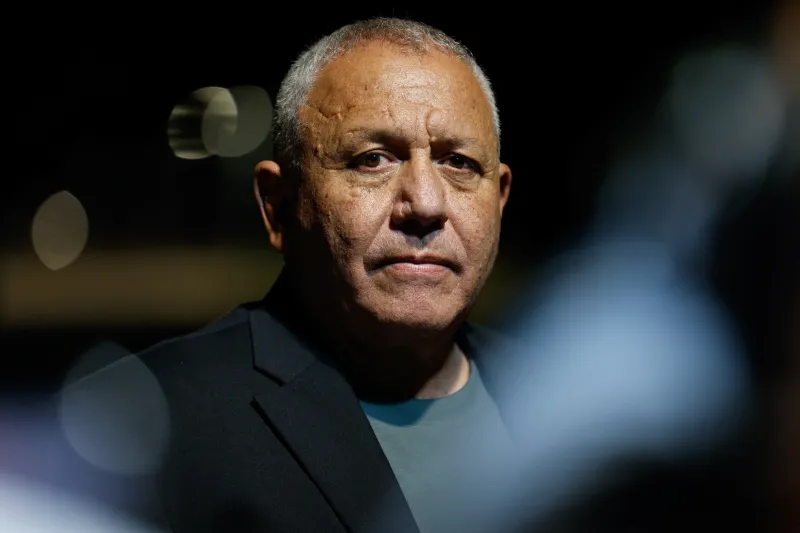
Amid these spiraling problems and the widespread unpopularity of the current right-wing coalition, Eisenkot has opened a substantial lead in the polls. As the IDF’s former chief of staff with a deep background in the security establishment, he presents a clear contrast with Netanyahu and his right-wing ministers: he has been in politics only a short time—he entered the fray just four years ago.
He joined Netanyahu’s government as a member of the war cabinet four days after the October 7 massacre. But he quickly fell out with Netanyahu about the conduct of the war, in particular over the prime minister’s insistence on slow-walking negotiations with Hamas to get back the Israeli hostages, and he left the cabinet the following June.
In December 2023, Eisenkot’s youngest son, Gal, a reservist in an elite military unit, had been killed in an operation to locate the bodies of Israeli hostages in the northern Gaza Strip. In an emotional eulogy at his son’s funeral, Eisenkot pledged to work to repair the flaws exposed in Israeli society: to answer the public demand for accountability for the security failures that led to October 7 and address the need for political change. His words were interpreted as a kind of political and moral mission spurred by his son’s death.
Amir Cohen / Reuters
Eisenkot’s Cautious Opposition Path
When Eisenkot signaled last year that he had decided to challenge Netanyahu, he gradually gained support, including a modest defection of traditional Likud voters to his new party, Yashar! (Hebrew for honest, upright). In recent polls, Yashar has taken a lead over Likud, and Eisenkot has opened a substantial gap over Netanyahu on a key question: suitability to serve as prime minister. Yet the candidate and his advisers evidently believe that the way to widen that gap is to proceed cautiously.
For one thing, the diverse opposition he leads—known informally as “Anyone but Bibi”—includes four parties that range from center-right to left. There is also a right-wing party opposed to Netanyahu whose ability to cross the electoral threshold for securing seats in the Knesset remains uncertain, as well as three Arab parties that could support an anti-Netanyahu coalition from outside the government. (There’s a scenario in which one might even join such a coalition, as it did when Naftali Bennett and Yair Lapid formed a government in 2021.)
There is also the question of where voters are now. Israeli public opinion has moved significantly rightward over the last three years. The overwhelming majority of Israeli Jews do not trust the Palestinians or, for that matter, Arab neighbors in general; they fear the prospect of a Palestinian state, and they agree that Israel should take a more offensive approach to thwarting threats. For Netanyahu, the problem is that a significant number of Israelis no longer believe he is the man to carry out that vision. (Most Arab citizens of Israel, who constitute about 20 percent of the country’s population, do not share these views.)
Taming West Bank Extremists
At times, Eisenkot has tried to outflank Netanyahu on the right, accusing the prime minister of adopting defeatist positions. The two main opposition contenders to Eisenkot’s right—Bennett, who recently joined the centrist Lapid in the “Together” alliance, and Avigdor Lieberman—voice even more hawkish positions. The only opposition figure willing to speak in favor of a peace process with the Palestinians is Yair Golan, leader of the Democrats, the leftmost party in the bloc of Zionist center-left parties. But even Golan argues that realizing the two-state vision would be extremely difficult in the immediate term, given the mutual scars left by October 7 and the war that followed.
It is thus highly unlikely that Eisenkot and his partners would fundamentally change Israeli foreign and security policy if they defeated Netanyahu. It would be delusion, for example, for anyone to expect that the next Israeli government will voluntarily cooperate with proceedings at the international courts in The Hague and open a comprehensive investigation into allegations of IDF war crimes in the Gaza Strip. This is not to say there are no opportunities for Eisenkot to change the country’s direction—especially if Trump gets involved.
One area of increasingly disastrous policy that Eisenkot will have to confront is the West Bank. For the past four years, the territory has been the domain of Bezalel Smotrich, leader of the Religious Zionism party, who serves simultaneously as finance minister and as the minister in charge of the West Bank.
Although his official writ only covers civilian affairs and not military policy, Netanyahu gave him a completely free hand, and Smotrich has used it to full effect. With the government’s approval—or turning a blind eye—he has completely transformed the reality on the ground in the West Bank. Since 2023, more than 200 new settlements and outposts have been built or are under construction. In some cases, they have displaced the original Palestinian landowners.
Settler Violence Spins Out of Control
The settlers’ campaign to take control of territory now combines a political arm with an increasingly powerful military arm. The political contingent includes ministers, members of the Knesset, and heads of regional councils, whereas the military one is now a violent group of close to 1,000 mostly young settlers (although Netanyahu has described them as “about 70 confused youths”).
This cohort is increasingly well armed: Israel’s far-right national security minister, Itamar Ben-Gvir, has expanded settlers’ access to guns and weapons since 2023. Political allies of the settlers occasionally distance themselves from the military arm’s actions, and on rare occasions even condemn them. In reality, however, they are all working toward the same goal: seizure of land and expulsion, which in its most extreme form amounts to localized ethnic cleansing.
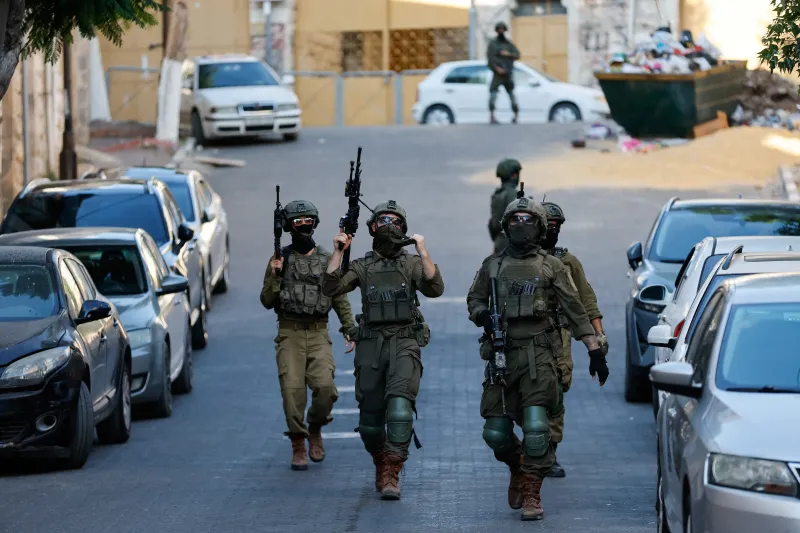
In recent months, the West Bank has been gripped by chaos, with the army and police wary of confronting violent settlers, who run riot as they please. The more this approach has led to destruction of Palestinian houses, cars, and mosques and the killing of Palestinians, the greater the torrent of criticism from foreign governments. (As Haaretz has reported, attacks against Palestinians in the West Bank have dramatically increased since 2023, with dozens of communities destroyed and hundreds of Palestinians injured.)
Even Trump’s ambassador to Israel, Mike Huckabee, who openly describes himself as a friend of the settlement enterprise, has publicly condemned the violence and urged the government to restrain the extremists. In practice, both Smotrich and the rioters treat the condemnations as a passing phenomenon: they have been given no reason to believe that the pressure could threaten their position.
Can Eisenkot Break Forever Wars?
The Israeli media frequently laments the damage the violence causes to Israel’s public diplomacy abroad. But that misses the point: settler violence in the West Bank is a moral injustice compounding the suffering caused by the extreme use of force in Gaza in response to the October 7 massacre. If this trajectory is allowed to continue, it could also mean a real loss of centralized military control by the IDF, with the West Bank increasingly in thrall to lawless militia forces.
A new centrist Israeli government could at least begin to restrain the extremists. Halting settlement expansion would be an important and achievable step, but that alone will not solve the crisis. Smotrich and his partners have dispersed new settlements in places with high tactical importance, deliberately separating areas under Palestinian control to disrupt the territorial continuity that could one day form the basis of a Palestinian state.
It is not clear that this can easily be reversed. Although governments led by Netanyahu have very occasionally approved limited measures to dismantle outposts, whether under international pressure or because of court rulings, it has been more than 20 years since the last large-scale evacuation of Israeli settlers, the removal of nearly 9,000 from the Gaza Strip in 2005 under Ariel Sharon’s leadership. Moreover, given how many IDF officers and soldiers now identify with the settlers and the religious-right parties, any order to evacuate even a handful of settlements could lead to broad noncompliance.
But the more immediate issue is the management of daily life. Over the years, and with greater intensity during the Smotrich era with Netanyahu’s approval, the settlers have tightened their grip on the military administration of the territories. Senior figures in the settler leadership effectively shape policy, influence the decisions of IDF commanders in the West Bank, and exert pressure behind the scenes so that extremists involved in acts of terrorism and harassment of Palestinians can proceed without interference.
Amir Cohen / Reuters
Since the Netanyahu era began—he has been in power for all but a year and a half since 2009— the IDF’s own organizational DNA has been progressively transformed. In recent years, there has been a discernible trend toward promoting officers close to Netanyahu, the settlers, or both. Particularly notable was the prime minister’s decision to appoint an officer he described as “discreet and loyal”—his military secretary, Major General Roman Gofman—as head of Mossad, Israel’s foreign intelligence service, and another officer with hawkish religious and ideological views, Major General David Zini, as head of the Shin Bet internal security service.
Along with other veteran figures of the security establishment, Eisenkot undoubtedly views the situation in the West Bank an imminent threat to Israel’s future, although he has been reticent on that issue in public and it is unclear how far is he willing to go to tackle it.
He could certainly make use of administrative detentions for the most violent settlers, for example, and begin to enforce accountability, with police and Shin Bet investigations of major attacks. At the moment, it seems unlikely that he and his partners would carry out a purge of the military’s senior ranks, or remove officers who cooperated excessively with violent settlers. Unlike the United States, Israel has no tradition of dismissing senior public officials when political power changes hands. And because Eisenkot previously commanded many of these officers as chief of staff, he likely thinks he can reassert authority over them rather than replacing them outright.
Trump Factor Shapes Possibilities
A new Israeli leadership would have opportunities on other fronts as well. In Gaza, a government headed by Eisenkot would be less constrained by considerations of image and national pride. Eisenkot never promised “total victory” over Hamas, as Netanyahu did, and he has publicly faulted the prime minister for the illusions he promoted among the Israeli public about what could be achieved. Not burdened with direct responsibility for the October 7 disaster and having never declared an all-out war on the Palestinian Authority, he would probably have greater room for maneuver in discussing the arrangements that Trump and the international Board of Peace have sought for Gaza.
It is reasonable to assume that Eisenkot would not veto a more active role for the PA in Gaza. This might eventually open the way, however slowly and cautiously, for the emergence of an alternative Palestinian leadership. Like Netanyahu, however, he would find it difficult to accept a military presence for Hamas in the strip and could probably tolerate only a limited political role for the organization, even with complete disarmament—in itself, an enormous challenge.
And like any other Israeli leader, he would find it extremely difficult politically to justify a complete withdrawal from the strip that would leave Israeli communities along the border relatively vulnerable to another incursion from Gaza. The most plausible best-case scenario, then, would be a reduced but still significant Israeli zone of control in Gaza, accompanied by stepwise plans for some kind of internationally supervised PA involvement in the unoccupied half.
In Lebanon and Syria as well, a new Israeli government would enjoy greater flexibility than Netanyahu allowed himself. Eisenkot would almost certainly set demanding conditions for Hezbollah’s disarmament. But unlike Netanyahu, he recognizes the value in bringing military confrontations to an end and prefers that to leaving fronts indefinitely open. In this regard, too, there may be some scope for diplomatic progress if Trump wants it.
Syria already presents a genuine opportunity: as reported in recent months, Shara is interested in reaching a security arrangement that would include an Israeli withdrawal from territories captured from Syria in 2024 in exchange for partial normalization of relations. Eisenkot could view this as a reasonable provisional arrangement, with limited inherent risk. It’s also possible that Saudi Crown Prince Mohammed Bin Salman would regard an Eisenkot government as turning a page from Israel’s toxic right-wing leadership and be more disposed to begin negotiations toward normalization.
Mussa Qawasma / Reuters
In all of these cases, however, what actually gets done will depend in large part on the rapport between Israel’s next prime minister and the U.S. president. During his first term and at the start of his second, Trump had a close relationship with Netanyahu, but things have since gone wrong. Egged on by Netanyahu, the U.S. administration is entangled in a war in Iran that has already lasted almost six months, in complete contradiction of everything Trump preached for years. The U.S. president and his circle have rejected Netanyahu’s repeated pleas to return to an all-out war with Tehran—although the possibility remains—and periodically lay blame the Israeli leader for the war’s failure.
Amid this mess, Trump is searching for a diplomatic win in one of the Middle East’s other arenas—Lebanon or the Gaza Strip. In both cases, he has applied limited pressure on Netanyahu to restrain offensive operations against Hezbollah and Hamas.
It is impossible to rule out more dramatic steps at some point—including U.S. demands for the IDF to withdraw from some of the territory it seized in southern Lebanon and Gaza, without simultaneously insisting that the promises to disarm Hezbollah and Hamas be fulfilled in the near future. For the moment, these scenarios seem unlikely. Such a push from Trump would amount to a political disaster for Netanyahu, further underscoring the extent to which his promises of “total victory” were empty fantasies.
For an Eisenkot government, however, the right kind of U.S. pressure could offer an opportunity to wind down some of the fronts, especially if there is some more narrowly defined issue on which Trump could take credit and Israeli interests would be served. More ambitiously, there might be an opportunity to dial back Netanyahu’s continuous war strategy.
But a great deal hinges on whether the new prime minister can find some chemistry with the U.S. president. Compared with Netanyahu, Eisenkot has scant diplomatic experience, and apart from chiefs of staff, he has met hardly any top foreign officials. Unlike Netanyahu, he also entirely lacks the kind of overt charisma that appeals to Trump when he deals with other leaders. And if the U.S. president disengages with the region, there is a risk that any significant changes to Israeli policy will stall.
A first White House meeting between the president and a new Israeli prime minister could prove an awkward experience. Trump might miss Netanyahu’s polished American English and partisan involvement in U.S. politics. (Netanyahu is jokingly referred to in Washington circles as “the Republican senator from Jerusalem”). If necessary, however, the American president would cope with the more restrained Eisenkot and his more basic English. After all, Trump likes political winners. Eisenkot will earn credit with him—if only he can win the election.