
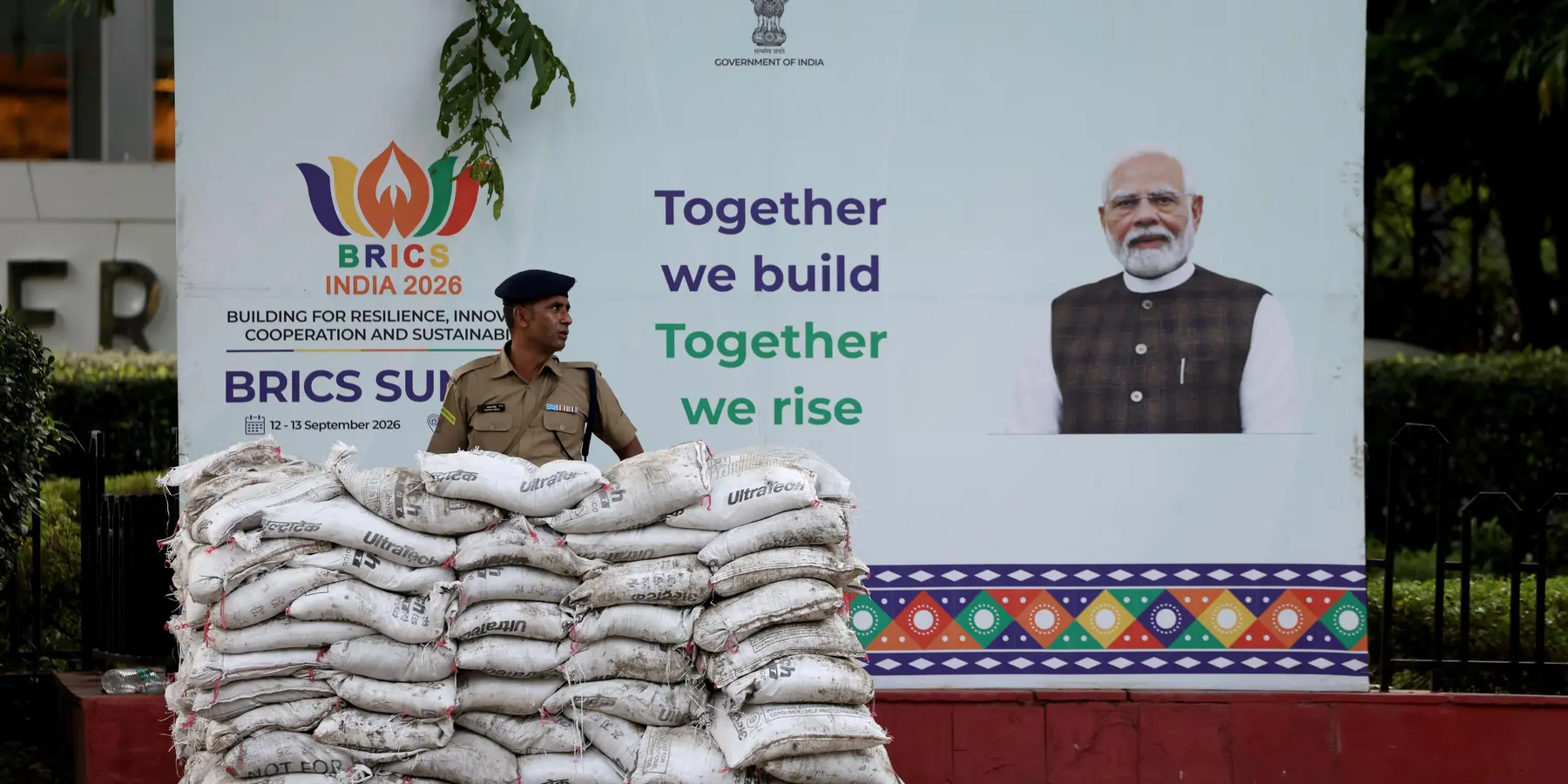
India chairs the 2026 BRICS summit as the Iran war divides its members. The UAE embargoes Tehran, China and Russia back Iran, and BRICS Pay expansion tests Western financial dominance.
The diplomatic architecture of the emerging multipolar order faces its most severe stress test as the BRICS Summit 2026 convenes in New Delhi under India’s chairmanship. What was intended to be a forward-looking agenda on trade, financial integration, and institutional reform now collides with the geopolitical aftershocks of the U.S.-Israeli campaign against Iran.
India, which assumed the chair in January, must reconcile members who are not merely divided in rhetoric but are active participants on opposing sides of an ongoing conflict. The United Arab Emirates and Saudi Arabia have absorbed Iranian projectiles and retaliatory strikes; Iran, a member since 2024, now demands solidarity that its neighbors refuse to grant.
Russia and China, meanwhile, deepen their support for Tehran, widening the rift. The absence of a unified foreign ministers’ statement in May signals that any final declaration will avoid the war entirely. At the BRICS Summit 2026, India’s capacity to hold the bloc together will rest on its ability to pivot the agenda toward economic cooperation, payment systems, and the BRICS Strategy for Economic Partnership 2030. The summit’s outcome will determine whether BRICS matures into a functional multilateral institution or fractures under the weight of its own contradictions.
BRICS Summit 2026 Opens Under Iran’s Shadow
As diplomats prepare for the BRICS Summit in New Delhi this weekend, the Iran war is looming large.
India, which assumed the BRICS chairmanship in January, was already facing the difficult responsibility of securing consensus to achieve concrete movement on a variety of trade, economic, and financial objectives. Now, the U.S.-Israeli campaign against Iran has dramatically complicated this effort, throwing the global economy into uncertainty and dividing BRICS countries, including some that are actively participating on either side of the conflict.
India Deepens Israel Ties Amid War
The tensions within the bloc are far more significant than they were leading into last year’s summit in Brazil, which took place shortly after the 12-Day War against Iran. At that meeting, leaders condemned “the military strikes against the Islamic Republic of Iran since 13 June 2025, which constitute a violation of international law.” In addition, they called for an “immediate, permanent and unconditional ceasefire, and the full withdrawal of Israeli forces from the Gaza Strip.”
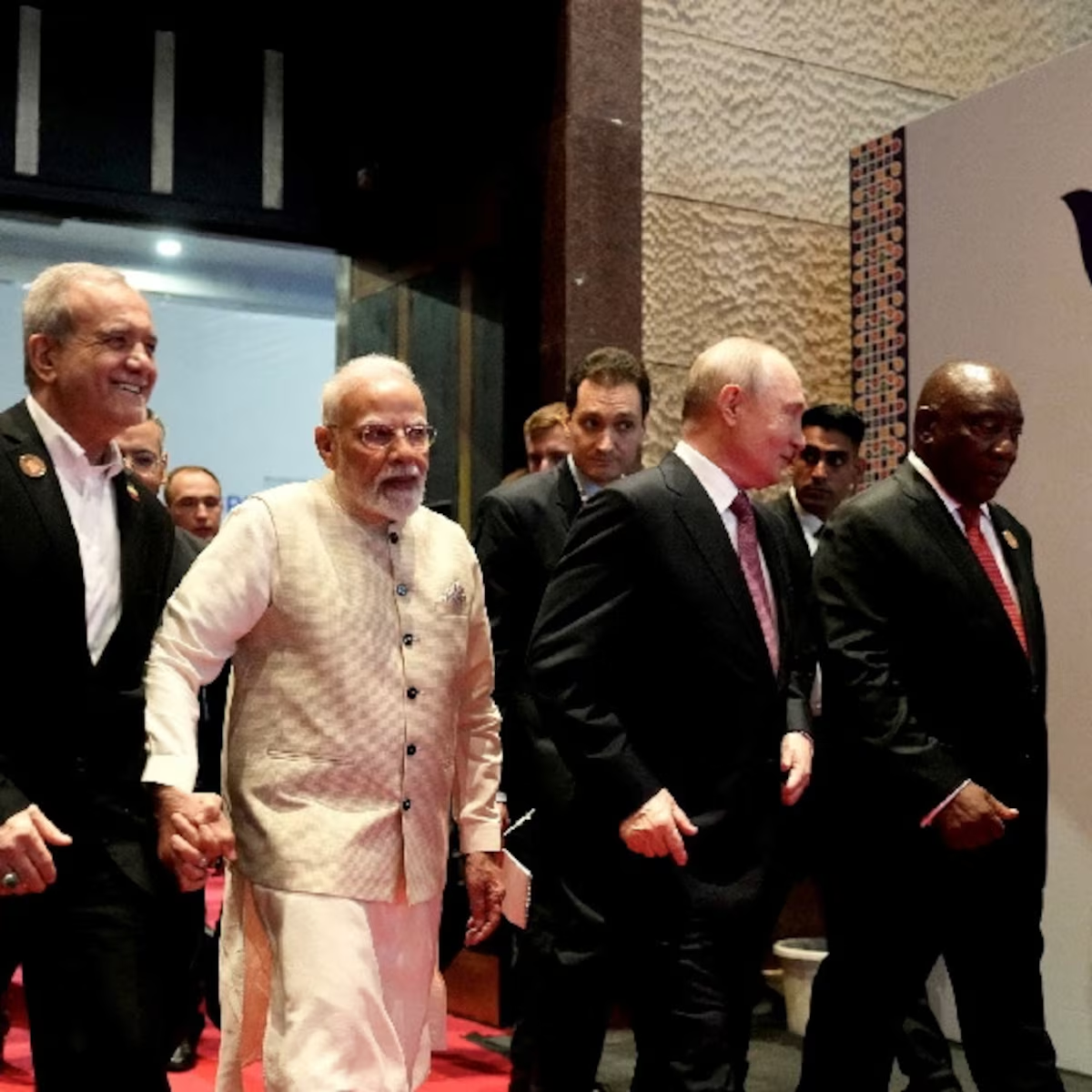
The situation in 2026 is more complicated. India — one of the five original BRICS members, alongside Brazil, Russia, China and South Africa — continues to strengthen its relationship with Israel just as the war in Iran exacerbates other BRICS members’ relationships with Tel Aviv. Prime Minister Narendra Modi visited Prime Minister Benjamin Netanyahu just a few days before Israel and the United States attacked Iran in February 2026. As the Guardian notes, the visit marked a continuation of “India’s evolving relationship with Israel, and it has deepened as conflict swept across the Middle East.”
Rival Combatants Fracture the Bloc
Given such overtures to Israel, one may understand if the majority of BRICS countries are uncomfortable with India’s chairmanship during this year’s summit. This was not the case last year in Brazil.
Another aggravating factor is the fact that several BRICS members are now rival combatants. Iran, which joined the grouping in 2024, has damaged relations with many of its neighbors by attacking infrastructure and U.S. bases located on their territory. This includes the United Arab Emirates and Saudi Arabia, both of which are also BRICS members.
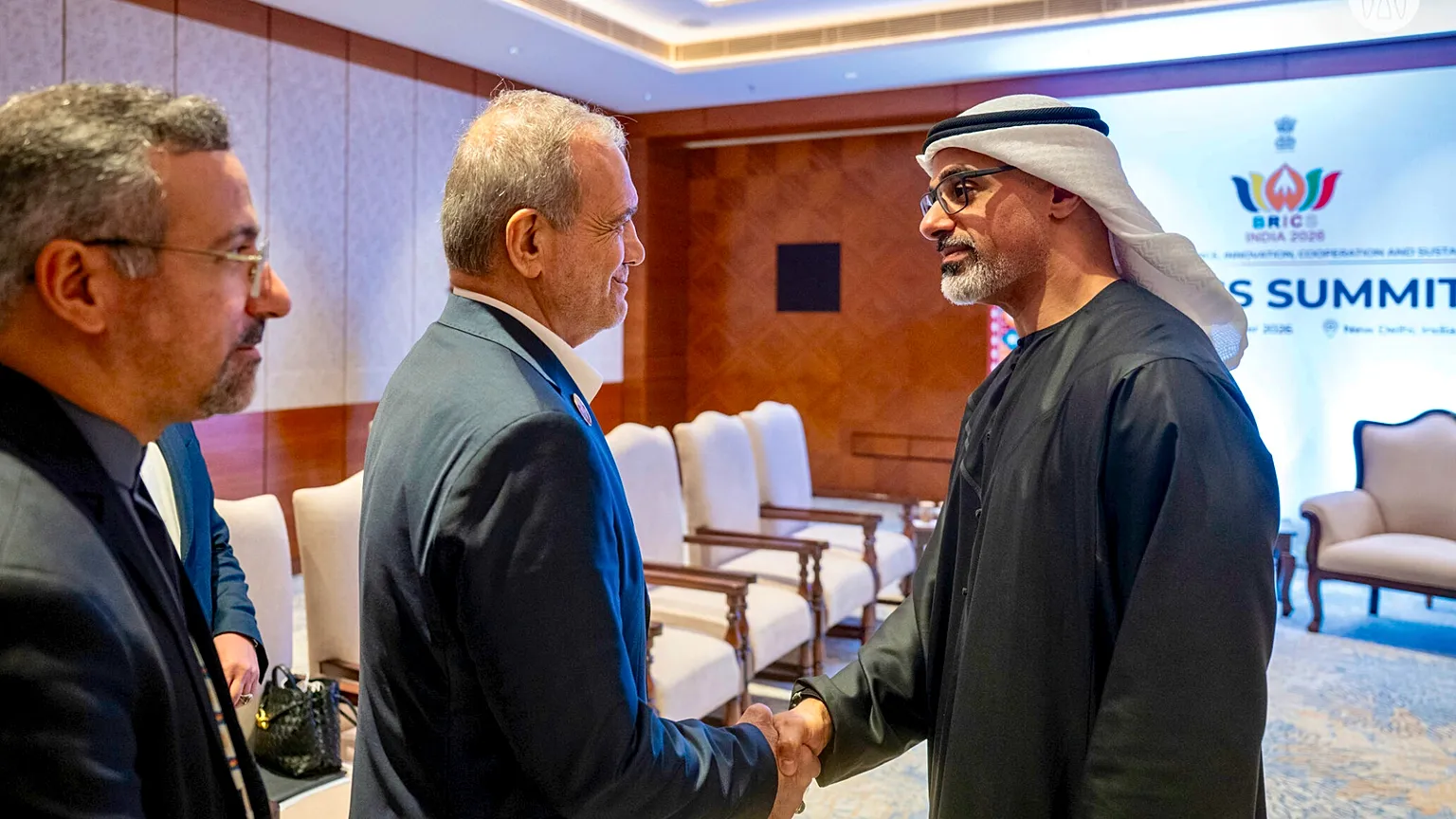
According to the International Institute for Strategic Studies, “the UAE has been attacked by more Iranian projectiles than all other [Gulf Cooperation Council] states combined and incurred by far the greatest and most varied damage within the group.” As a result, the United Arab Emirates announced an indefinite trade embargo on Iran, saying “all trade, commercial exchanges and financial transactions with Iran have been halted until further notice.”
Foreign Ministers Sidestep Iran Conflict
At the BRICS Foreign Ministers’ Meeting in May, the bloc released a comparatively weaker outcome document than that of the previous year, encouraging the international community “to continue supporting the Palestinian people in their pursuit of independence and sovereignty.” Moreover, the ministers were unable to produce a unified statement supporting Iran’s calls for “nations to condemn the U.S. and Israel over what they described as their unlawful aggression.” Therefore, we should expect that any final BRICS declaration will steer clear of any mention of the war in Iran.
Given these and other pre-existing divisions among BRICS members, the summit’s success will largely depend on whether India can achieve consensus on the economic agenda. Therefore, according to Asia One, it is important that India has centered its BRICS agenda on “institutional reforms that improve coordination while ensuring the bloc’s focus on development and cooperation rather than geopolitical rivalry.”
India Pushes Payments and Partnership 2030
According to the BRICS 2026 website, Modi defines Delhi’s objective for the summit as to redefine “BRICS as Building Resilience and Innovation for Cooperation and Sustainability.” The BRICS “Namaste” logo for India 2026 importantly symbolizes “collective strength and unity.” This important message is graphically reinforced through the petal colors which represent all BRICS member countries.
An example of BRICS cooperation and unity occurred during the BRICS Trade Ministers Meeting in Jaipur in August. As reported by India’s Nation Press, the ministers successfully finalized work on the BRICS Strategy for Economic Partnership 2030. This marks a significant achievement and now the plan will be referred for formal endorsement by the BRICS Leaders at next week’s summit. The strategy covers such issues as trade, investment, digital economy, and sustainable development.
More specifically, BRICS Pay will receive a tremendous amount of attention during the summit as a result of threats to global payments and supply chains sparked by the wars in Ukraine and Iran. The cross-border settlement platform, which launched earlier this year, is designed to complement rather than replace SWIFT and reduce dollar dependency. BRICS Pay continues to integrate sovereign payment systems, including China’s CIPS, India’s UPI, Brazil’s Pix, and Russia’s SPFS.
In addition, Reuters reported earlier this year that the Reserve Bank of India recommended to the government that a proposal to connect Central Bank Digital Currencies (CBDCs) be included in the agenda for the 2026 BRICS summit. If the recommendation is adopted BRICS will move forward with a proposal to link the digital currencies of BRICS members for the first time.
Washington Threatens Tariffs and Sanctions
Trump has been sharply critical of any BRICS efforts to get around the U.S.-led financial system, which gives the U.S. extraordinary leverage over other countries through sanctions and other similar measures. “Any country aligning themselves with the Anti-American policies of BRICS, will be charged an ADDITIONAL 10% tariff,” he wrote on Truth Social last July, adding that there “will be no exceptions to this policy.”
More recently, Trump’s Treasury Secretary, Scott Bessent, has increased the aggressive trade stance of the U.S. by issuing “Operation Economic Outcast.” The purpose of the sanctions plan is to escalate the economic pressure on Iran, while also alerting countries that cooperate with Iran that the U.S. could restrict access to the U.S. financial system if they continue doing business with Tehran.
Bessent’s policy reflects Washington’s frustration that the war in Iran has not achieved its aims. Instead, it has strengthened ties between some BRICS members and Iran, including Russia and China, which continue to provide crucial economic and political support to Iran’s efforts to withstand U.S. pressure.
Can India Save BRICS Summit 2026
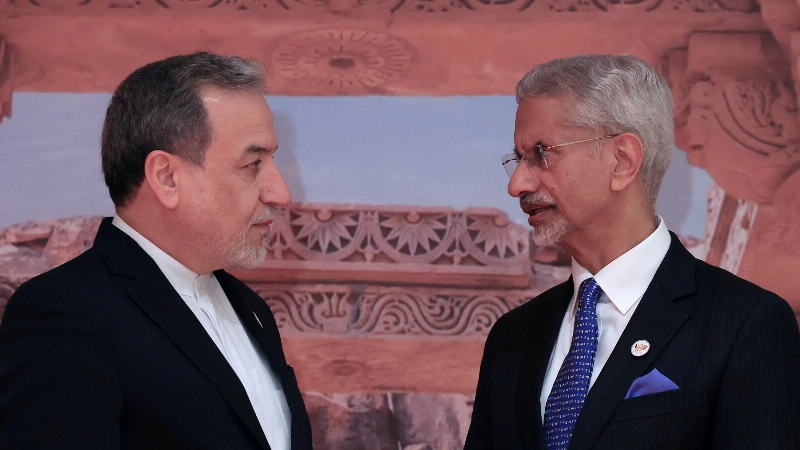
Subsequently, China and Russia now support a greater profile for Iran in BRICS institutions at the upcoming summit, which Iranian President Masoud Pezeshkian will attend. Abdolnasser Hemmati, governor of the Central Bank of Iran, had indicated Iran would seek membership to BRICS Bank during the meeting in Delhi, according to CNBC.
It is clear India will have a difficult task as this year’s BRICS Summit host, presiding over a growing and increasingly divided group. One would expect India, contrary to other BRICS members, to make a concerted effort to assure any final declaration underscores that BRICS does not exist as an anti-Western bloc or seek to accelerate de-dollarization.
However, as a champion of multipolarity, economic sovereignty, and the Global South, India is positioned to overcome existing geopolitical divisions to successfully build a consensus among like-minded BRICS members. Ultimately, its success will require achieving cooperation on core BRICS initiatives related to the building of alternative structures for global economic growth, innovation, sustainability, and governance.