
On September 10, 2026, the Ministry of Peshmerga Affairs announced unification, renaming 80 Forces as Area One and 70 Forces as Area Two. Both parties retain control, with U.S. withdrawal deadline weeks away.
The Kurdistan Region of Iraq has long presented a paradox: a semi-autonomous entity with a unified political facade but deeply fractured armed forces. On September 10, 2026, the Ministry of Peshmerga Affairs announced the completion of a process to unify the Peshmerga, the region’s storied military, under a single command. This Peshmerga Unification, however, appears to be a bureaucratic relabeling rather than a genuine consolidation.
The two ruling parties, the Kurdistan Democratic Party and the Patriotic Union of Kurdistan, have retained control over their respective forces, now renamed Area One and Area Two, with divisions allocated along partisan lines. The timing, just weeks before the September 30 deadline for U.S. troop withdrawal from Iraq, suggests a calculated appeal for continued American financial and military support.
Moreover, the inability of the two parties to form a government since the October 2024 elections casts further doubt on the sincerity of any military integration. As Baghdad, Ankara, and Tehran intensify pressure on Kurdish autonomy, the Peshmerga Unification serves not as a strategic response but as another maneuver in the parties’ enduring struggle for power. Washington must see through this mirage.
Peshmerga Unification Announcement Rings Hollow
On September 10, 2026, the Ministry of Peshmerga Affairs in the Kurdistan Region of Iraq announced the completion of the process to unify the armed forces affiliated with the region’s two ruling political parties, the Kurdistan Democratic Party and the Patriotic Union of Kurdistan. Ordinarily, this would have been cause for celebration. After all, this marks the first time that governing officials have formally placed Kurdistan’s armed forces under a unified defense command. But the reality on the ground presents a very different picture than this ostensible unification.
Decades of Division and Civil War
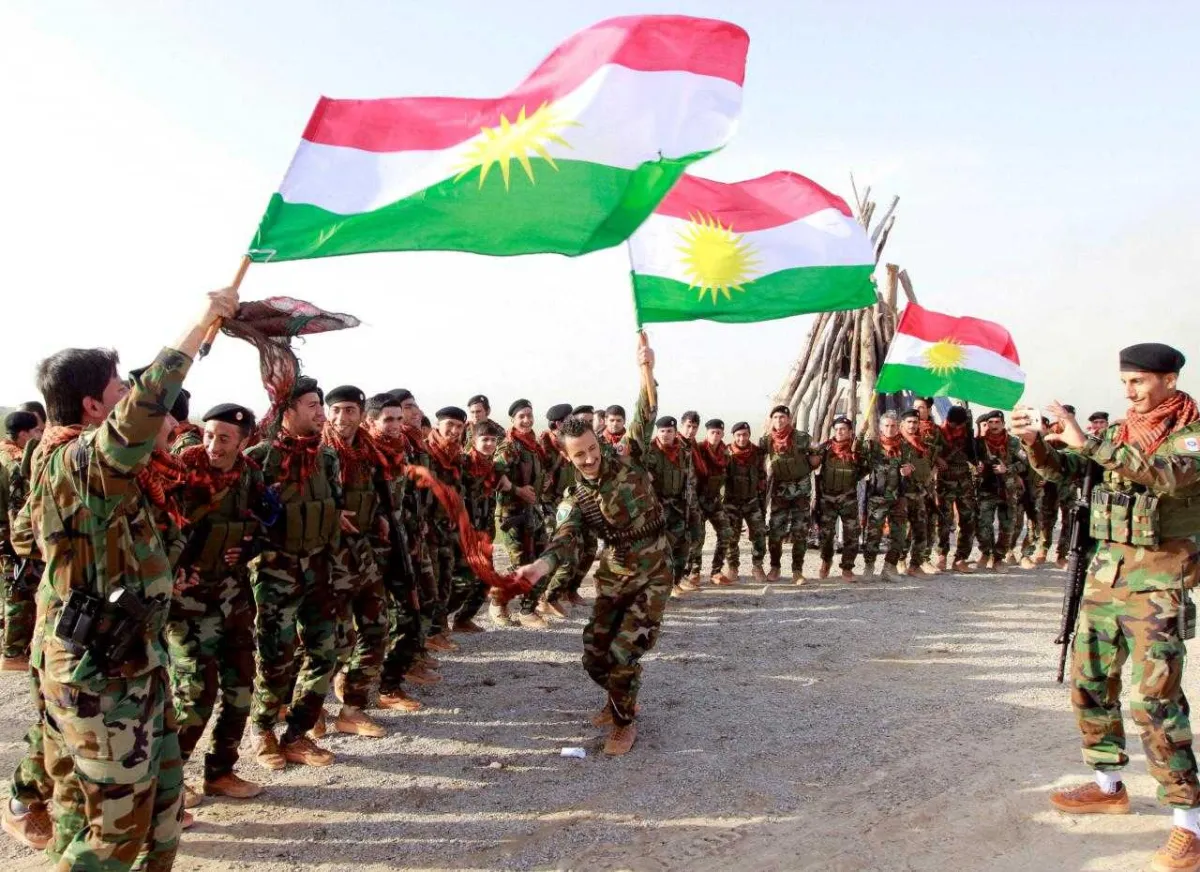
Kurdish forces, known as the Peshmerga, have remained divided and controlled by the region’s two ruling parties since the Kurdistan Region gained autonomy in 1991, despite the establishment of a Ministry of Peshmerga Affairs during the formation of the first regional government that following year. In those early years, the two sides used their respective Peshmerga forces against each other in a civil war that claimed thousands of lives. Although Iraq’s 2005 constitution formally recognized the Kurdistan Region’s status following the fall of Saddam Hussein’s regime, this did little to unify the Kurdish armed forces.
Washington’s Failed Unification Push
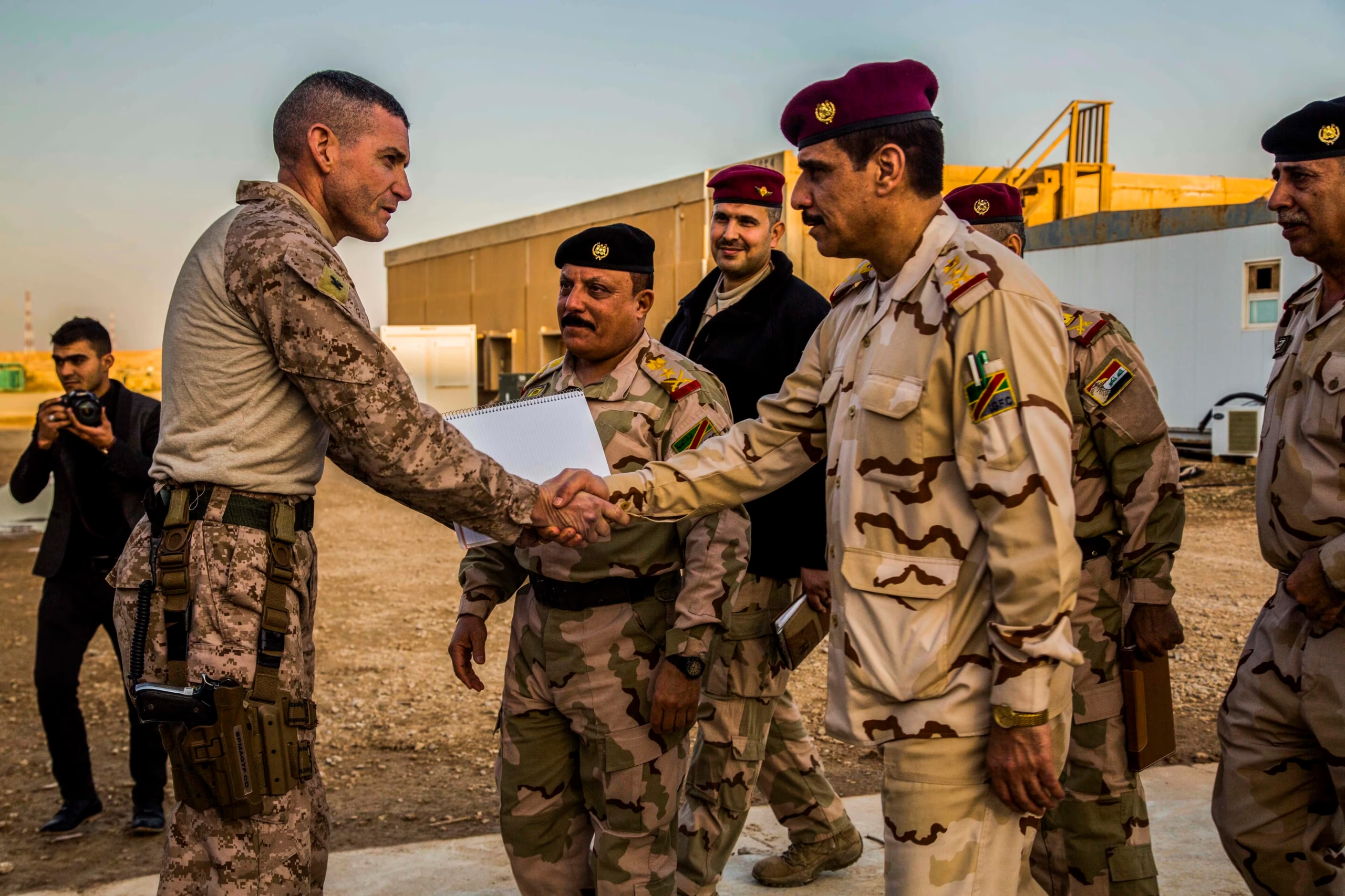
For several years, the United States has sought to bring the two Kurdish forces under the command of the Ministry of Peshmerga Affairs. During the war against the Islamic State, Kurdish forces helped the U.S.-led effort to defeat the terrorist group. Yet despite millions of dollars in annual assistance, the U.S. government was unable to persuade the two Kurdish parties to fully unify their armed forces.
Renaming Forces Without Real Change
The forces in question are the so-called 80 Forces, which are affiliated with the Kurdistan Democratic Party, and the 70 Forces, which are affiliated with the Patriotic Union of Kurdistan. The recent unification announcement, however, appears to have simply replaced the old names with new ones. The 80 Forces are now designated as Area One, and the 70 Forces have been renamed Area Two.
Within these two areas, there will be 11 divisions to operate under Ministry of Peshmerga Affairs’ command. While Kurdish authorities may describe this restructuring as reform, the reality is different: Both political parties continue to control the newly established areas and the divisions within them. The Kurdistan Democratic Party controls six divisions, those with odd numbers; the Patriotic Union of Kurdistan controls remaining five.
Why Announce Unity Now?
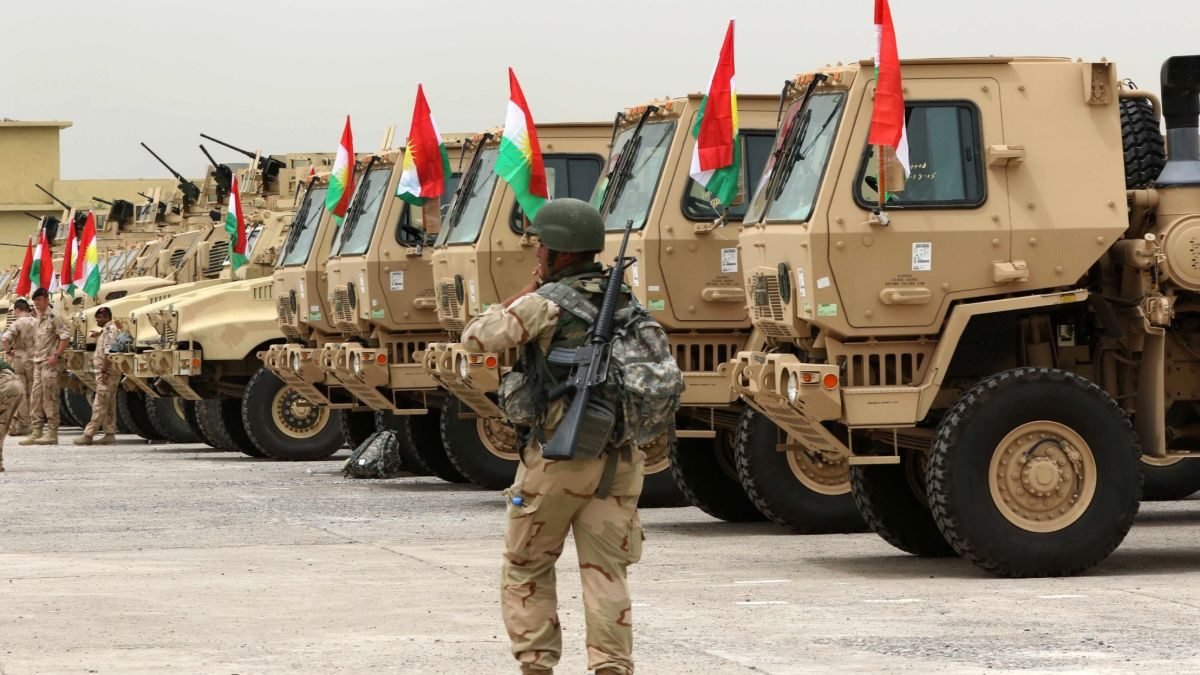
In this context, the timing of the announcement is significant, coming just weeks before the September 30 deadline for the withdrawal of U.S. troops from Iraq. Reports indicate that the U.S. military no longer will assist the Peshmerga after that date. Against this backdrop, the unification announcement appears to be a signal to Washington that its efforts over the past several years have not been futile, and that continued U.S. support for the Peshmerga remains warranted beyond the September 30 deadline.
Peshmerga Unification Doubts Amid Deadlock
The current political deadlock in Iraqi Kurdistan further calls into question the genuineness of the Peshmerga unification. The two ruling parties have been unable to form a new government since the October 2024 parliamentary elections, leaving the region’s political institutions largely paralyzed. If the two parties cannot reach an agreement on forming a government, it is difficult to see how they could have achieved real unity in the military sphere.
Losing Autonomy, Clinging to Power
Iraqi Kurdistan is gradually losing the autonomy it has enjoyed for decades. Baghdad, Ankara, and Tehran increasingly have worked together to undermine the region’s autonomous status. Yet rather than genuinely uniting to confront the existential threats facing Kurdish self-rule, the Kurdistan Democratic Party and the Patriotic Union of Kurdistan remain engaged in a struggle for political power. Neither party is likely to relinquish control over the Peshmerga forces because that control provides significant leverage over political power in the region. This has been the reality for decades and will continue, provided that Iraqi Kurdistan retains its autonomy.
The broader developments in Iraqi Kurdistan suggest that the two parties have been more focused on persevering their spheres of influence than on safeguarding the region’s autonomy. Therefore, the recent Peshmerga announcement is difficult to view as anything more than another pitch to Washington for continued financial support.