
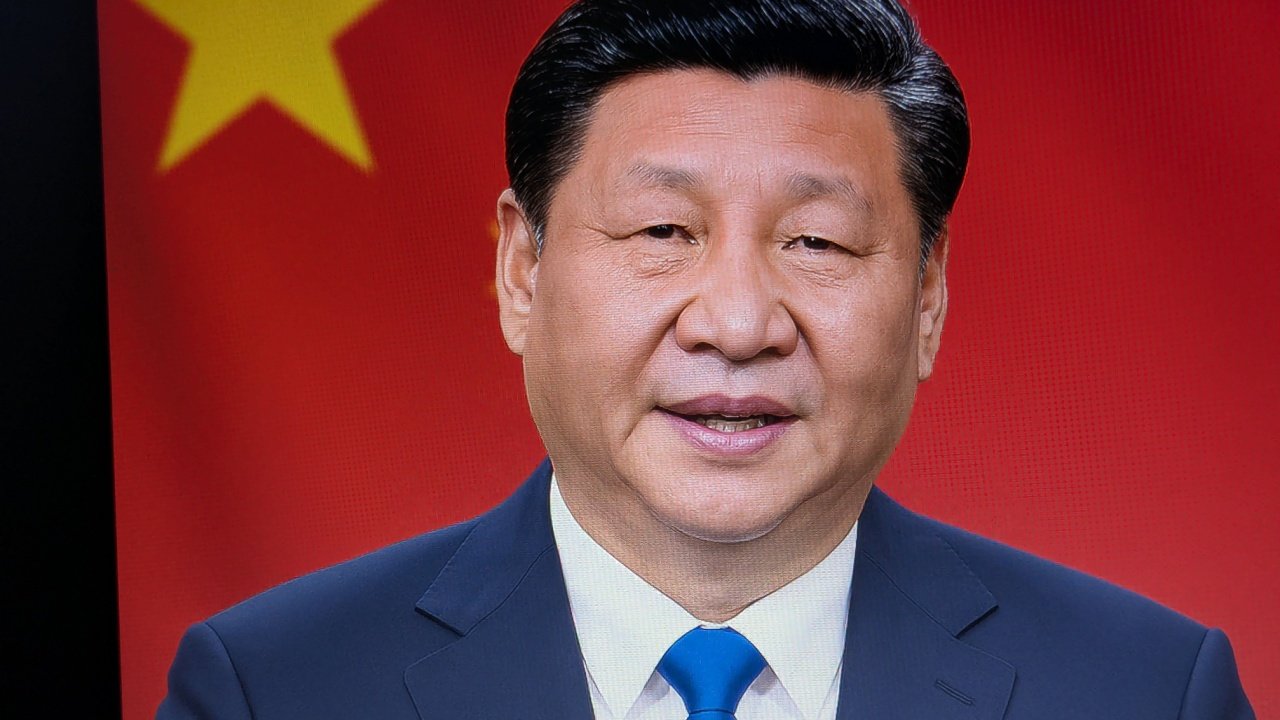
Beijing leverages the conflict to assess U.S. military effectiveness and weaken transatlantic ties, even as it provides material support to Tehran. However, renewed U.S. military assertiveness in the Gulf has reinforced GCC reliance on American security guarantees, challenging Chinese narratives of U.S. decline and complicating Beijing’s long-term regional strategy.
While China has sought to limit the escalation of the Iran War, it still wants the US bogged down in the Middle East.
President Donald Trump has strived to improve relations with Beijing in preparation for his meetings with Chinese President Xi Jinping later this year. The administration hopes to stabilize economic relations and cooperate on regional security issues. In recent days, Trump has credited Chinese diplomacy for helping persuade Iran to accept a ceasefire and engage in peace talks with the United States.
However, while President Xi has avoided publicly criticizing President Trump or the United States, Chinese diplomats have repeatedly condemned the United States and Israel. The Chinese UN delegation, for instance, said that the US-Israeli attack “lacks justification and legitimacy.”
The People’s Republic of China’s support for Iran has proven remarkably constant over the years. In 2021, the PRC and Iranian foreign ministers signed a 25-year Comprehensive Strategic Partnership agreement to sustain long-term economic and energy collaboration. For years, the PRC has helped the Iranian government acquire military drones and missile propellants and circumvent US sanctions.
Media reports indicate that the PRC is preparing to provide shoulder-fired anti-aircraft missiles to Iran—the same weapons Iranians recently employed to shoot down a US F-15 fighter jet. Discounted Iranian oil imports keep China’s production costs low while maintaining Iranian military power, since most of the proceeds flow to the government and the Islamic Revolutionary Guard Corps (IRGC).
Yet, while Iran is an important economic partner, China’s trade and investment with Saudi Arabia, Iraq, the UAE, and other Gulf Cooperation Council (GCC) countries is substantially greater. The continuation of the war presents substantial risks to Beijing. Iran’s strategy of horizontal escalation jeopardizes the PRC’s massive economic stakes in other Gulf countries. Beijing’s efforts to limit the fighting represented no favor to Washington; instead, they reflected Chinese energy security considerations and other PRC national interests.
China has been exploiting the conflict to realize other gains. Beijing would welcome a US military quagmire in the Middle East that would deplete US defense assets in Asia. PRC analysts have been assessing the US military’s effectiveness and how to degrade it. Furthermore, Beijing is manipulating transatlantic tensions over the war and other issues to accelerate reconciliation with European governments hedging against Russian hostility and US unpredictability. The PRC is also trying to counter US hydrocarbon strengths by marketing its green-energy technology to countries seeking to reduce dependence on fossil fuels.
Beijing’s behavior regarding the war is unsurprising. China has sought to weaken the United States in many areas. PRC espionage targets US companies’ intellectual property and the American government’s state secrets. According to one China expert, Chinese spying is “in scale, and in scope, and in brazenness—the biggest espionage operation against the United States in its history.”
Some Chinese entities threaten the United States directly and, via US adversaries like Iran, indirectly. A good example is Huawei, the Chinese conglomerate and global leader in 5G. Huawei is a tool of the Chinese state, leveraging its immense power to engage in cyber-espionage against the United States and help the Iranian government surveil its population and repress peaceful protesters.
However, the Trump administration’s policies regarding Iran have challenged key pillars of China’s international security strategy, including its access to global markets, cheap hydrocarbons, and free-riding on US-sustained global public goods. Trump has explicitly warned that China will have “big problems” if it delivers weapons to Iran during the current conflict.
Furthermore, the resurgence of US military power also saps the credibility of PRC propaganda narratives regarding America’s alleged global decline. Rather than accede to Iranian demands that they remove US military bases, the GCC governments indicate they plan to double down on US security guarantees. They recognize that only the United States—and certainly not China—has the will and capacity to protect them.
The Trump administration has also countered Beijing’s high-tech offensive. The United States has sustained partnerships with critical European and Asian partners to fortify global export controls and bolster international supply chains against PRC penetration. To counter Huawei, the administration recently approved a merger between two US companies, Hewlett-Packard Enterprise and Juniper Networks, creating a new tech powerhouse well-positioned to compete with the Chinese giant. Congress and the Pentagon have also launched new initiatives to induce more US small businesses to enter the historically challenging US defense procurement process.
Trump’s upcoming visit to Beijing will clarify the transformed relationship between China and the United States following the Iran War. It could also substantially shape their future competition in the Middle East and elsewhere.