
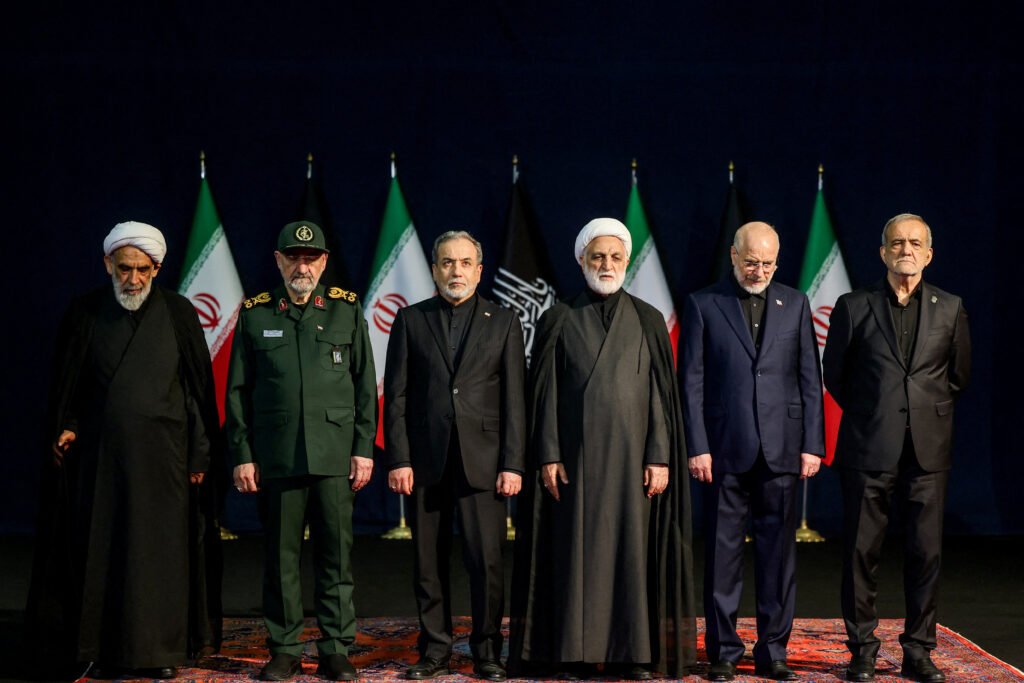
After Khamenei’s assassination, an Iran collective leadership combining government heads with IRGC and military figures now governs, mirroring a 1980s crisis precedent and relying on Mojtaba Khamenei’s name for legitimacy during wartime.
The assassination of Ayatollah Ali Khamenei on February 28 triggered a latent governing structure that had been crystallizing since his increasing isolation in mid-2025. Iran’s post-Khamenei regime is not descending into chaos but consolidating under an Iran collective leadership that melds the heads of the three government branches with representatives of the Islamic Revolutionary Guard Corps and the regular military.
This configuration draws on a historical template from the 1980s, when Grand Ayatollah Ruhollah Khomeini’s heart attack incapacitated him and a quartet of confidants – including the younger Khamenei himself – ran the state. The current collective body navigated the nonenforcement of the Hijab and Chastity Law, accepted a ceasefire in June 2025, and now operates under the symbolic cover of Mojtaba Khamenei’s name, whether he is alive, incapacitated, or dead. The structure’s emergence reflects both the IRGC’s expanded wartime role and the regime’s need to maintain continuity amid unprecedented military and political pressure. Understanding this Iran collective leadership is not an academic exercise; it is an operational necessity for any U.S. strategy, whether aimed at negotiation or at regime change.
Who Rules Iran?
On February 28, joint Israeli and U.S. strikes against Iran eliminated much of the Islamic Republic’s political and military leadership. Those killed included Supreme Leader and Commander in Chief of the Armed Forces Ayatollah Ali Khamenei; Supreme Defense Council Secretary and Islamic Revolutionary Guard Corps grandee Admiral Ali Shamkhani; Chief of the General Staff of the Armed Forces Major General Abdolrahim Mousavi; and IRGC Commander in Chief Major General Mohammad Pakpour. Nevertheless, five months into the war – and despite further assassinations – there is no indication that the regime in Tehran faces imminent collapse. This raises an essential question: Who rules Iran?
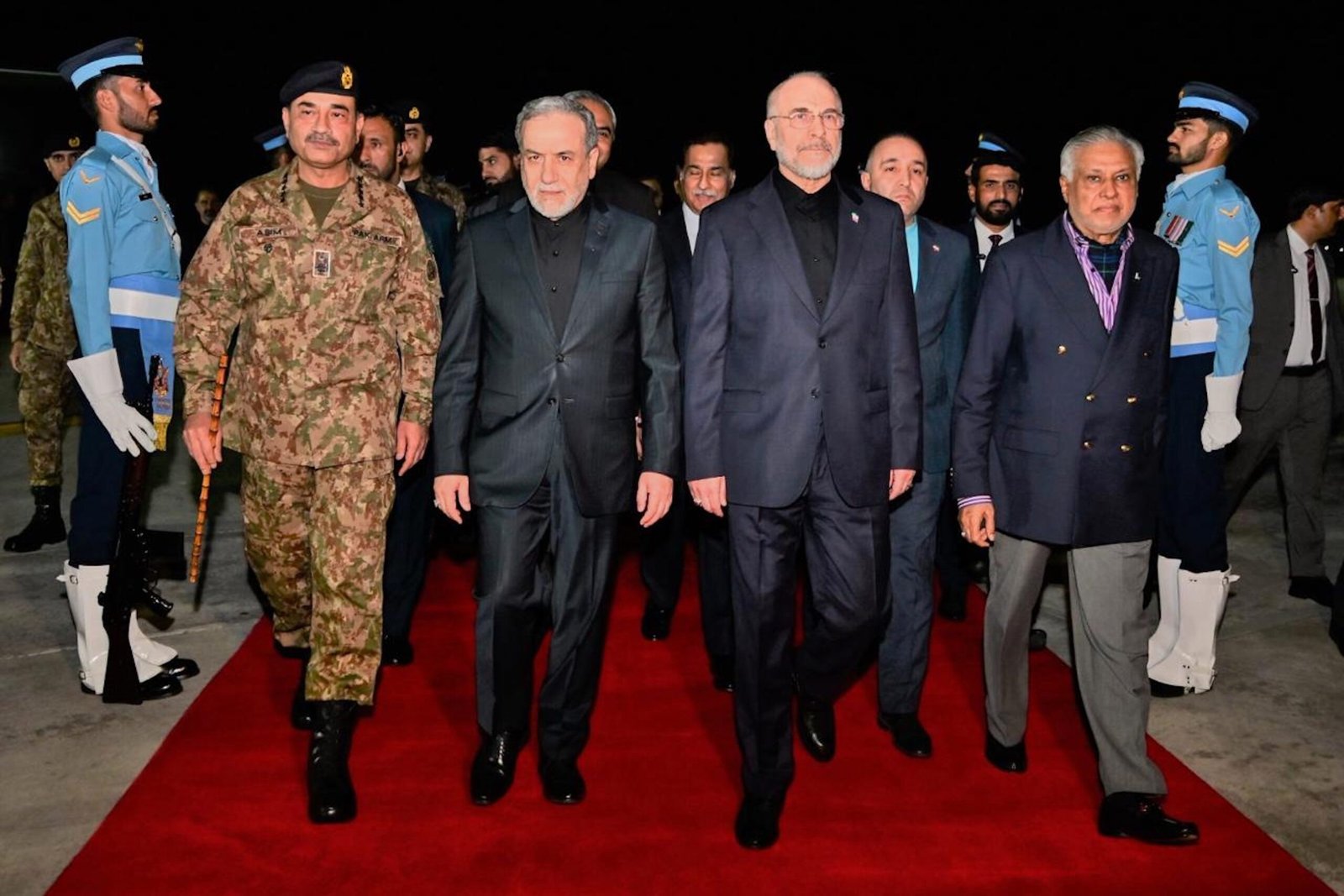
Iran collective leadership anchors the regime
Iran appears to be governed by a collective leadership comprising the heads of the three branches of government, a representative of the IRGC, and a representative of the regular military. Identifying the members of this leadership is of considerable importance for U.S. policy, regardless of President Donald J. Trump’s strategic objectives in the war, which remain unclear and appear to shift with each public statement. If the president seeks a negotiated end to the war he began, he needs to know who is in charge. The same applies if he is determined to pursue regime change in Tehran.
Historical Precedent of Collective Rule
There is historical precedent for collective leadership in the Islamic Republic of Iran. On January 23, 1980 – less than a year after the revolution’s victory and 80 days after the seizure of the U.S. Embassy in Tehran, the taking of U.S. diplomats as hostages, and the resignation of Prime Minister Mehdi Bazargan’s interim Cabinet in protest – Grand Ayatollah Ruhollah Khomeini suffered a heart attack at his home in Qom. He was immediately transferred to Tehran Heart Hospital for treatment, effectively leaving the nascent regime without an active leader.
At the hospital, a de facto collective leadership emerged around four of Khomeini’s closest confidants: his son Ahmad Khomeini; acting Interior Minister Ali Akbar Hashemi Rafsanjani; Tehran Friday prayer leader Ali Khamenei; and Islamic Republican Party cofounder Abdul-Karim Mousavi-Ardabili. Over the following 18 months, three of them, with Ahmad Khomeini’s cooperation, rose to head the principal branches of the state: Rafsanjani became parliamentary speaker, Khamenei was elected president, and Mousavi-Ardabili was appointed judiciary chief. Ahmad Khomeini, who possessed his father’s signet ring and reportedly used it to authenticate official documents, lent the collective leadership’s decisions the absent leader’s authority and legitimacy.
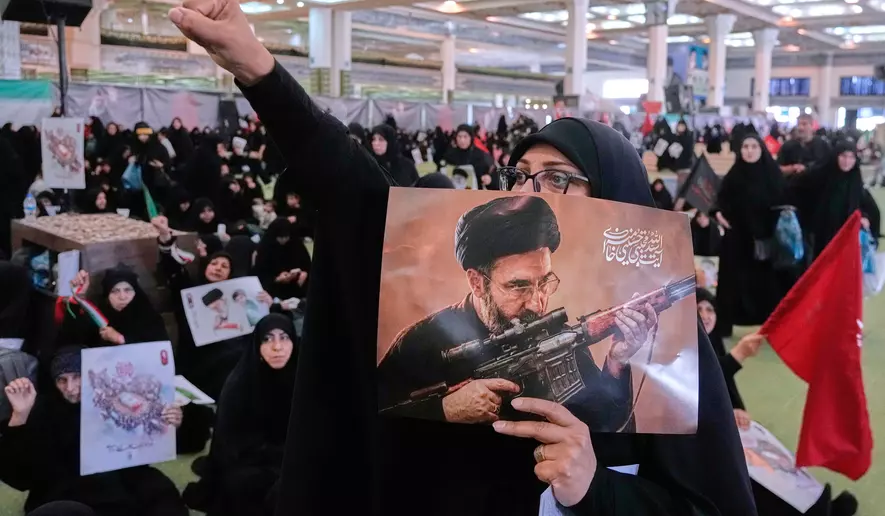
Failed 1989 Leadership Council Bid
Although Khomeini recovered, he increasingly assumed the role of strategic leader, leaving much of the regime’s day-to-day governance to this inner circle. The arrangement helped stabilize the Islamic Republic and steer it through the war with Iraq during the 1980s. Following Khomeini’s death in 1989, members of the collective leadership attempted to persuade the Assembly of Experts to establish a formal leadership council – for which there was a constitutional basis – rather than appoint an individual successor. The proposal failed to secure sufficient support, however, and Khamenei emerged as supreme leader, largely through the political maneuvering of his longtime ally Rafsanjani.
Khamenei’s Isolation Deepens Pre-War
Toward the end of Khamenei’s life, and even before the war, Iran again witnessed the gradual emergence of collective leadership. This development was initially driven by his advanced age and his reluctance to assume formal responsibility for expedient but politically difficult decisions. These included the nonenforcement of the Hijab and Chastity Law and the parliamentary prohibition on negotiations concerning Iran’s nuclear program. Khamenei’s isolation deepened after the Israeli strikes against Iran in June 2025 and public statements by Israeli officials announcing their intention to assassinate him. Forced into hiding, Khamenei became physically detached from the regime’s strategic decision making.
Informal Leaders Assume Responsibility
As Khamenei increasingly proved reluctant to, if not incapable of, accepting responsibility for expedient policies, and certainly after the June 2025 Israeli strikes that forced him underground, an informal collective leadership emerged to fill the power vacuum. The collective leadership included President Masoud Pezeshkian, Parliamentary Speaker Mohammad-Bagher Qalibaf, Judiciary Chief Gholam-Hossein Mohseni Ejei, a representative of the IRGC (possibly the senior military advisor to the supreme leader, Major General Mohsen Rezaei, or IRGC Commander in Chief Ahmad Vahidi), and a representative of the regular military.
This collective leadership assumed political responsibility for not enforcing the Hijab and Chastity Law, as its enforcement could have provoked another wave of antihijab protests. It also declined to enforce the parliamentary prohibition on nuclear negotiations, which would have severely restricted the regime’s room for maneuver in its dealings with the United States. The collective leadership likewise appears to have accepted the cease-fire ending the June 2025 conflict while Khamenei was in hiding and beyond the effective reach of the state’s decision-making apparatus.
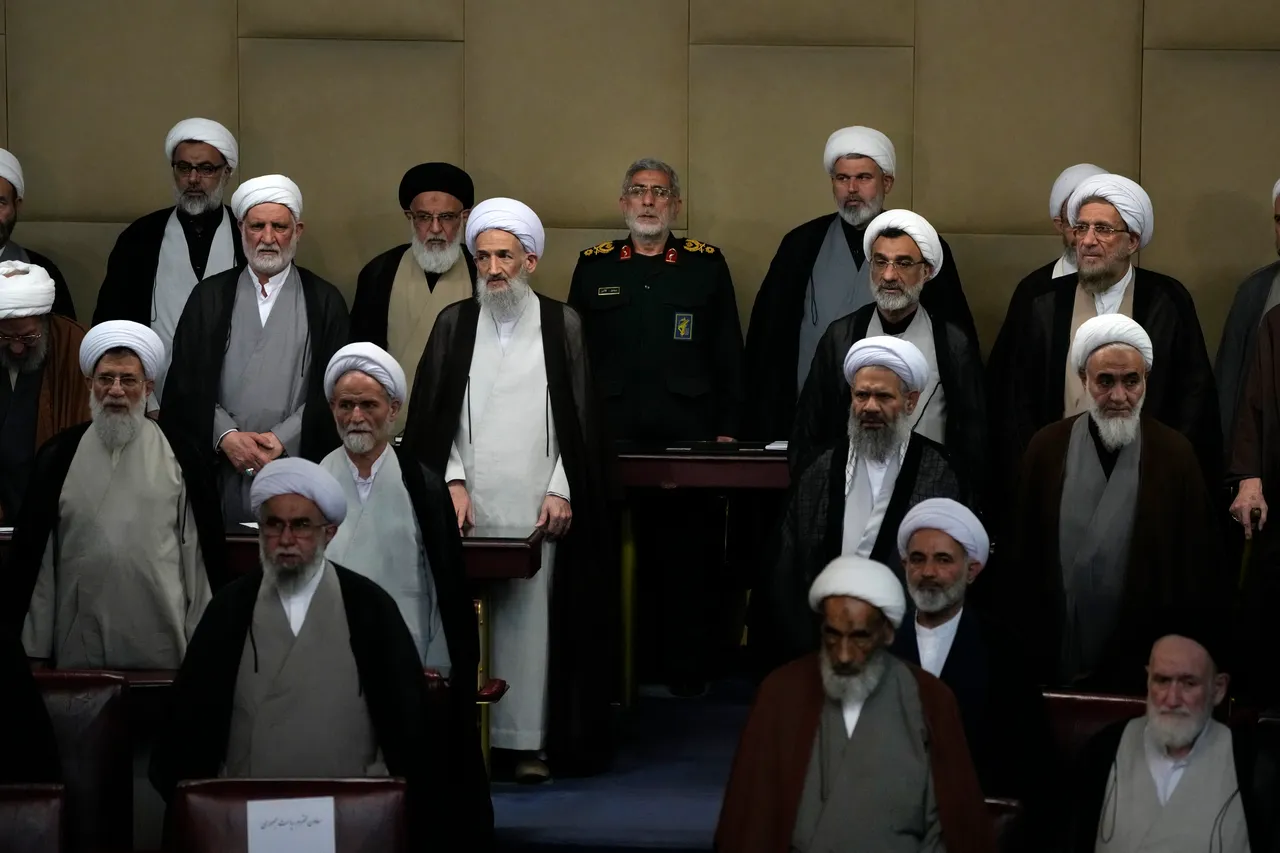
Iran collective leadership and Mojtaba’s shadow
Since Khamenei’s assassination and the subsequent election of his son, Mojtaba Khamenei, as supreme leader, head of state, and commander in chief of the armed forces, the younger Khamenei has not appeared in public. His prolonged absence has fueled rumors that he is either dead or incapacitated. Yet whether alive, incapacitated, or dead, Mojtaba continues to perform an important political function: Statements issued in his name confer legitimacy on decisions made by the collective leadership.
In this respect, the Islamic Republic’s present predicament is not entirely different from the situation it faced during Khomeini’s incapacitation in the 1980s. In both cases, an absent or inaccessible leader provided legitimacy while a small group of senior officials exercised power collectively. The principal difference is the composition of that group. The earlier collective leadership was dominated by political and clerical figures who subsequently rose to control the three branches of government. Today’s collective leadership includes not only the heads of those branches but also representatives of the IRGC and regular military – a reflection of the former’s expanding economic and political role and the necessities of governing under wartime conditions.